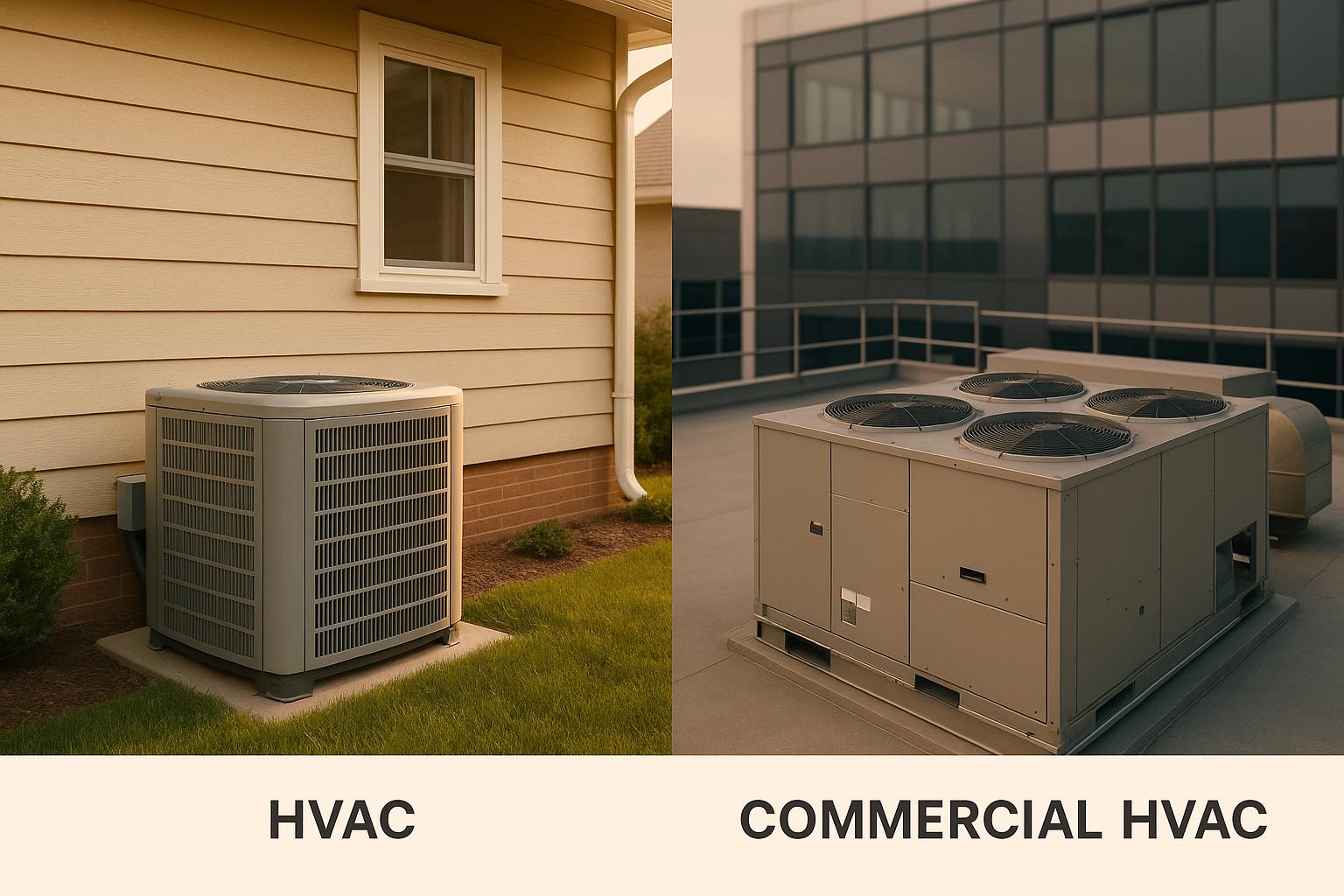
The main difference between HVAC and commercial HVAC systems lies in their purpose, size, and complexity. Residential HVAC systems are designed for single-family homes, focusing on simplicity and ease of use. In contrast, commercial HVAC systems are built to handle larger spaces like offices, hospitals, or malls, offering higher capacity, advanced controls, and modular designs.
Key Differences:
- Size and Capacity: Residential units are compact and cater to smaller areas, while commercial systems are larger, starting at 2 tons and exceeding 30 tons for heavy-use buildings.
- Design and Complexity: Residential setups are straightforward with basic thermostats, whereas commercial systems use modular designs, advanced control systems, and zoning capabilities.
- Placement: Residential units are often installed in backyards or basements, focusing on aesthetics and noise reduction. Commercial systems are usually on rooftops for accessibility and efficiency.
- Air Quality: Commercial systems meet stricter ventilation standards, using advanced filtration and air quality monitoring systems.
- Maintenance: Residential systems require basic upkeep, while commercial systems demand specialized technicians, regular inspections, and detailed servicing.
For homes, simplicity and comfort are the focus. For businesses, commercial HVAC systems provide the capacity and features needed for larger, more demanding spaces.
System Size and Capacity
Size Differences Between Residential and Commercial Systems
Residential HVAC systems are designed to be compact, standalone units that cater to single-family homes. These systems are straightforward to install, typically requiring just one or two technicians and minimal planning for space. On the other hand, commercial HVAC systems are significantly larger and modular, consisting of multiple interconnected components. They often require expansive installation areas, such as rooftops, and involve more intricate assembly processes. This design reflects the higher performance demands and complex operational needs of commercial spaces.
The difference in size naturally aligns with varying capacity and performance requirements.
Capacity and Performance Requirements
Capacity is a key factor in determining whether a system is suitable for its intended space. Residential HVAC systems typically range from 1.5 to 5 tons, which is sufficient to handle spaces between 1,000 and 3,000 square feet. In contrast, commercial systems start at 2 tons and can exceed 30 tons for facilities with heavy demands, such as hospitals. For example, modular rooftop units commonly used in commercial settings like shopping centers are available in configurations of 10, 25, and even 50 tons.
This significant capacity difference allows commercial systems to efficiently manage large areas, high occupancy levels, and varying climate control needs across tens of thousands of square feet. They are also built to handle diverse usage patterns and the fluctuating demands of different times of the day.
Additionally, commercial systems must comply with stringent ventilation standards set by ASHRAE, which vary depending on the type of building and its occupancy. For instance, health clubs require 20 CFM (cubic feet per minute) per person, while libraries only require 5 CFM.
The growing popularity of ductless HVAC systems also offers commercial property owners more flexibility in system placement.
Design, Complexity, and Placement
Design and Complexity of Systems
Residential HVAC systems are designed with simplicity in mind. Typically, these systems include a single outdoor unit paired with an indoor air handler or furnace, all connected through straightforward ductwork. This setup prioritizes ease of installation and maintenance, relying on standardized components that a single technician can service quickly and efficiently.
On the other hand, commercial HVAC systems are built for flexibility and adaptability. They use a modular design, allowing for multiple interconnected components to meet the unique demands of larger spaces. A typical commercial setup might include rooftop units, variable air volume (VAV) boxes, dedicated outdoor air systems, and advanced control panels capable of managing different zones independently.
One key difference is scalability. Residential systems operate as fixed-capacity units, while commercial systems can adjust to real-time demand. This modularity lets businesses add or remove components without needing to overhaul the entire system, making it perfect for spaces that may expand or change over time.
Another distinction lies in system controls. Residential systems typically rely on basic programmable thermostats. In contrast, commercial systems employ Building Management Systems (BMS), which can monitor and adjust multiple variables. These advanced systems optimize energy usage, track maintenance needs, and even predict potential issues before they arise.
System Placement and Noise Considerations
The placement and noise management of HVAC systems are tailored to their specific settings, reflecting their design priorities.
For residential systems, placement focuses on reducing visual and noise disruptions. Outdoor units are often installed in backyards, side yards, or on concrete pads near the home. Indoor components, such as furnaces or air handlers, are typically tucked away in basements, utility closets, or attics, keeping them out of sight and operating quietly.
Commercial systems, however, prioritize accessibility and efficiency over aesthetics. Most commercial HVAC equipment is installed on rooftops, which offers several benefits: ample space for large units, easier access for maintenance crews, and reduced noise impact on building occupants. Rooftop placement also improves air circulation and allows for shorter ductwork runs.
In many commercial setups, mechanical rooms serve as centralized hubs for HVAC operations. These rooms house essential equipment like pumps, boilers, and control systems, all in a space designed specifically for regular monitoring and maintenance. Unlike residential systems, which might share space with water heaters or storage, mechanical rooms are purpose-built with proper ventilation, drainage, and electrical setups.
Noise management is another critical factor in commercial environments. Given the size and power of these systems, noise levels can be significant. To address this, commercial systems often include features like sound dampeners, vibration isolators, and thoughtful placement to reduce noise transmission to occupied areas. Acoustic design becomes essential to ensure a comfortable environment for those working or visiting the space.
Accessibility also plays a major role in the placement of commercial systems. Building codes require that commercial HVAC equipment be easily accessible for maintenance and emergency repairs. This often means installing permanent walkways, railings, and service platforms around rooftop equipment to ensure safety and convenience for maintenance personnel.
Features and Functions
Zoning and Automation Capabilities
In most homes, HVAC systems rely on a single thermostat or a basic zoning setup with dampers in the ductwork. This works fine for spaces with consistent temperature needs. Commercial HVAC systems, however, are built for much larger, more diverse spaces, requiring more advanced solutions. Many use Variable Air Volume (VAV) technology, which allows precise control over temperature and airflow in multiple zones – whether it’s a single office, a conference room, or an entire floor.
Commercial systems also take automation to a whole new level. While a residential system might use a programmable thermostat to manage temperature changes, commercial systems often employ Building Automation Systems (BAS). These systems can adjust numerous variables in real time. For example, they optimize airflow and cooling based on occupancy levels or CO₂ concentrations. This not only boosts comfort for those inside the building but also improves energy efficiency.
Another standout feature is demand-controlled ventilation. By using sensors to monitor occupancy and air quality, these systems regulate the intake of fresh air based on actual needs. The result? Cleaner indoor air and reduced energy waste – an impressive balance of performance and efficiency.
These advanced capabilities create a solid foundation for the air quality and ventilation features discussed next.
Ventilation and Air Quality Control
Commercial HVAC systems are designed to meet stricter ventilation standards compared to residential setups. Organizations like the American Society of Heating, Refrigerating and Air-Conditioning Engineers (ASHRAE) set guidelines to ensure that commercial systems provide adequate fresh air to high-occupancy spaces. This steady flow of outdoor air helps dilute indoor pollutants, creating a healthier environment for everyone inside.
To manage the energy demands of conditioning large amounts of outdoor air, commercial systems often include Energy Recovery Ventilators (ERVs) or Heat Recovery Ventilators (HRVs). Combined with high-efficiency filters like HEPA or UV-C systems, these components maintain excellent air quality while keeping energy consumption in check.
Many commercial systems also feature integrated air quality monitoring. Sensors track levels of CO₂, volatile organic compounds (VOCs), particulate matter, and humidity. Based on this data, the system can adjust ventilation rates or activate additional air purification measures as needed, ensuring optimal air quality at all times.
Maintenance and Service Requirements
With all these advanced features, maintaining commercial HVAC systems is a more complex task compared to residential units. Homeowners might handle simple maintenance like changing filters or scheduling an annual tune-up. In contrast, commercial systems demand a comprehensive preventive maintenance program with regular inspections and servicing throughout the year.
These systems require highly trained technicians who can manage sophisticated control systems, large-scale refrigeration processes, and proper refrigerant handling. Repairs and troubleshooting often involve multiple specialists working together, reflecting the intricate nature of the equipment.
Filter maintenance is another area where commercial systems stand apart. Large buildings often have numerous filters serving different purposes, and many systems now include automatic filter monitoring to alert staff when replacements are necessary. Beyond filters, other components – like belts and sensors – may need more frequent replacements due to the system’s heavy workload. Detailed documentation is essential for tracking performance, maintenance schedules, and warranty compliance, ensuring the system runs smoothly and efficiently over time.
sbb-itb-998eb83
Comparison Table: Residential vs. Commercial HVAC
Here’s a quick side-by-side look at some of the main features:
| Feature | Residential HVAC | Commercial HVAC |
|---|---|---|
| Zoning Capabilities | Limited zoning, often relying on separate thermostats | Advanced multi-zone control with Variable Air Volume (VAV) systems |
| Control Systems | Standard or smart thermostats | Centralized control through Building Automation Systems (BAS) |
| Energy Management | Handles steady, predictable loads | Features like Variable Air Volume (VAV) and Demand-Controlled Ventilation (DCV) for variable loads |
| Air Quality Control | Basic air filtration and ventilation | Enhanced filtration and ventilation for better indoor air quality |
Key Operational and Technology Differences
Residential HVAC systems are built to handle steady, predictable loads, while commercial systems are designed to adapt to changing demands. Commercial setups often include Building Automation Systems (BAS), which provide centralized control and optimize energy use based on real-time building conditions.
Air Quality Standards
Commercial systems go a step further when it comes to air quality. They feature advanced filtration and ventilation systems to maintain cleaner air – especially important for busy, high-traffic areas.
These differences highlight why it’s crucial to evaluate your space’s unique needs when choosing an HVAC system.
Choosing the Right HVAC System for Your Needs
Factors to Consider When Selecting an HVAC System
Selecting an HVAC system isn’t a one-size-fits-all process. The right choice depends on factors like property size, how the space is used, energy efficiency goals, and the building’s unique features. For instance, the heating and cooling needs of a 1,200-square-foot home are vastly different from those of a 50,000-square-foot office.
How a space is occupied also plays a big role. Residential properties tend to have steady HVAC demands, while commercial spaces often experience fluctuating usage. These patterns directly influence the size and features of the system required to maintain comfort.
Energy efficiency is another key consideration. Modern HVAC systems come with SEER (Seasonal Energy Efficiency Ratio) ratings that indicate their efficiency. While higher-rated systems may cost more upfront, they can lead to significant energy savings over time, especially in energy-intensive commercial settings.
Don’t overlook the building’s design and structure either. Insulation quality, window placement, and layout all affect system performance. For example, a building with large south-facing windows will likely need more cooling than one with minimal exposure to natural light.
Finally, environmental and regulatory factors unique to your location must be considered to ensure the system performs well and complies with local standards.
Local Considerations for Charleston, SC
Charleston’s subtropical climate presents some unique challenges for HVAC systems. With hot, humid summers and mild winters, systems must handle both moisture control and seasonal temperature changes effectively.
Humidity is a significant concern in Charleston. Standard residential systems may struggle to remove enough moisture during the peak summer months, while commercial spaces with high occupancy levels often require advanced dehumidification capabilities. Proper moisture control is crucial for maintaining comfort and preventing mold growth.
Temperature changes also play a role. Summers are consistently hot, but winters can drop into the 40s°F, meaning your HVAC system needs to handle both heating and cooling efficiently. Heat pump systems are a popular option in this region, as they provide effective heating without requiring a separate furnace.
Local building codes in Charleston County add another layer of complexity. For example, homes and businesses in flood-prone areas may need HVAC systems elevated or specially protected. Hurricane-resistant installations often require secure mounting and backup power solutions. Additionally, properties near the coast must account for salt air exposure, which can shorten equipment lifespan. In such cases, corrosion-resistant coatings and frequent maintenance are essential.
Professional Guidance
With so many factors to juggle, getting advice from an HVAC professional can make all the difference. Experts can evaluate your specific needs by looking at details like your building’s layout, insulation quality, airflow requirements, and usage patterns.
A professional assessment ensures your system is properly sized and configured, which can lead to better energy efficiency and cost savings. Professionals can also recommend energy-efficient models with advanced features like smart thermostats, zoning controls, and variable-speed motors. They’ll ensure all connections are sealed to prevent energy loss and unnecessary expenses.
Staying compliant with local, state, and federal regulations is another reason to bring in a professional. HVAC experts stay up to date on building codes and safety standards, helping you avoid costly mistakes and ensuring your system is installed correctly from the start.
For large commercial projects or unique residential setups, professional input is invaluable. Experts can recommend the best system for your situation, design solutions tailored to your needs, and help you achieve optimal performance – all while keeping your budget in mind.
Conclusion
Grasping the differences between residential and commercial HVAC systems is key to selecting the right option for your needs. Residential systems are designed for straightforward climate control, typically featuring basic thermostats and single-zone setups.
On the other hand, commercial HVAC systems are built to handle much larger spaces, ranging from 5 to over 100 tons. They’re equipped to manage higher occupancy levels and often include advanced automation and multi-zone capabilities. These systems are tailored for continuous operation and require more sophisticated maintenance due to their complexity.
The main distinctions boil down to scale, complexity, and functionality. Commercial systems demand thoughtful design considerations, such as rooftop placement to minimize noise and advanced ventilation to maintain air quality for large groups of people. They also need more frequent and specialized upkeep to ensure everything runs smoothly.
In a place like Charleston, where humidity and seasonal weather shifts play a big role, both residential and commercial systems must manage moisture effectively. However, commercial systems often require stronger dehumidification to handle larger crowds and avoid air quality problems. Matching the system’s features to local climate challenges and the building’s requirements is critical for year-round efficiency.
Whether you’re upgrading or installing a new system, consulting with a professional is essential. A well-chosen system doesn’t just provide comfort – it also impacts energy costs, maintenance demands, and long-term performance. Taking the time to understand these differences ensures you’ll invest in a system that aligns perfectly with your heating, cooling, and ventilation needs.
FAQs
What should I consider when choosing between a residential and commercial HVAC system?
When choosing between a residential and commercial HVAC system, several factors come into play – like the size of the building, the number of occupants, and your specific heating and cooling requirements.
Commercial HVAC systems are designed for larger spaces such as office buildings, retail stores, or warehouses. These systems provide higher capacity, advanced zoning capabilities, and more sophisticated controls to meet the demands of these environments. In contrast, residential HVAC systems are tailored for single-family homes, prioritizing consistent comfort with simpler controls and smaller equipment.
It’s also worth noting that commercial systems generally come with higher installation and maintenance costs, primarily due to their complexity and larger scale. However, they’re crucial for maintaining efficient climate control in bigger spaces. Assessing your building’s size, how it’s used, and your budget will guide you toward the system that best fits your needs.
How do commercial HVAC systems ensure proper air quality and ventilation in large spaces?
Commercial HVAC systems are built to ensure proper air quality and ventilation in large spaces with high occupancy. They achieve this by combining advanced features like high-efficiency filters, such as HEPA filters, which capture airborne particles and pollutants. Additionally, these systems use outdoor air intake mechanisms to bring in fresh air, helping to dilute indoor contaminants.
To meet industry standards, many systems align with ASHRAE 62.1 guidelines, which recommend ventilation rates of approximately 5–10 CFM (cubic feet per minute) per person. These standards are designed to maintain adequate airflow and air exchange. Many commercial setups also include real-time air quality monitoring tools to track factors like CO2 levels, humidity, and particulate matter, ensuring the space remains comfortable and healthy for everyone inside.
Why should I consult an HVAC professional when choosing and installing a system, especially for commercial buildings?
When it comes to choosing and installing an HVAC system for a commercial building, working with a professional is a must. Why? Because commercial spaces come with unique demands, and an expert can ensure the system is properly sized, designed, and installed to handle them. They’ll take into account critical factors like the building’s size, layout, and how the space is used to recommend the best solution for efficiency and performance.
Skipping professional help or cutting corners during installation can lead to serious headaches – think skyrocketing energy bills, unexpected system breakdowns, or even safety risks. An experienced HVAC professional brings the know-how to avoid these pitfalls. They’ll make sure the system meets local regulations, operates safely, and provides dependable performance for the long haul.