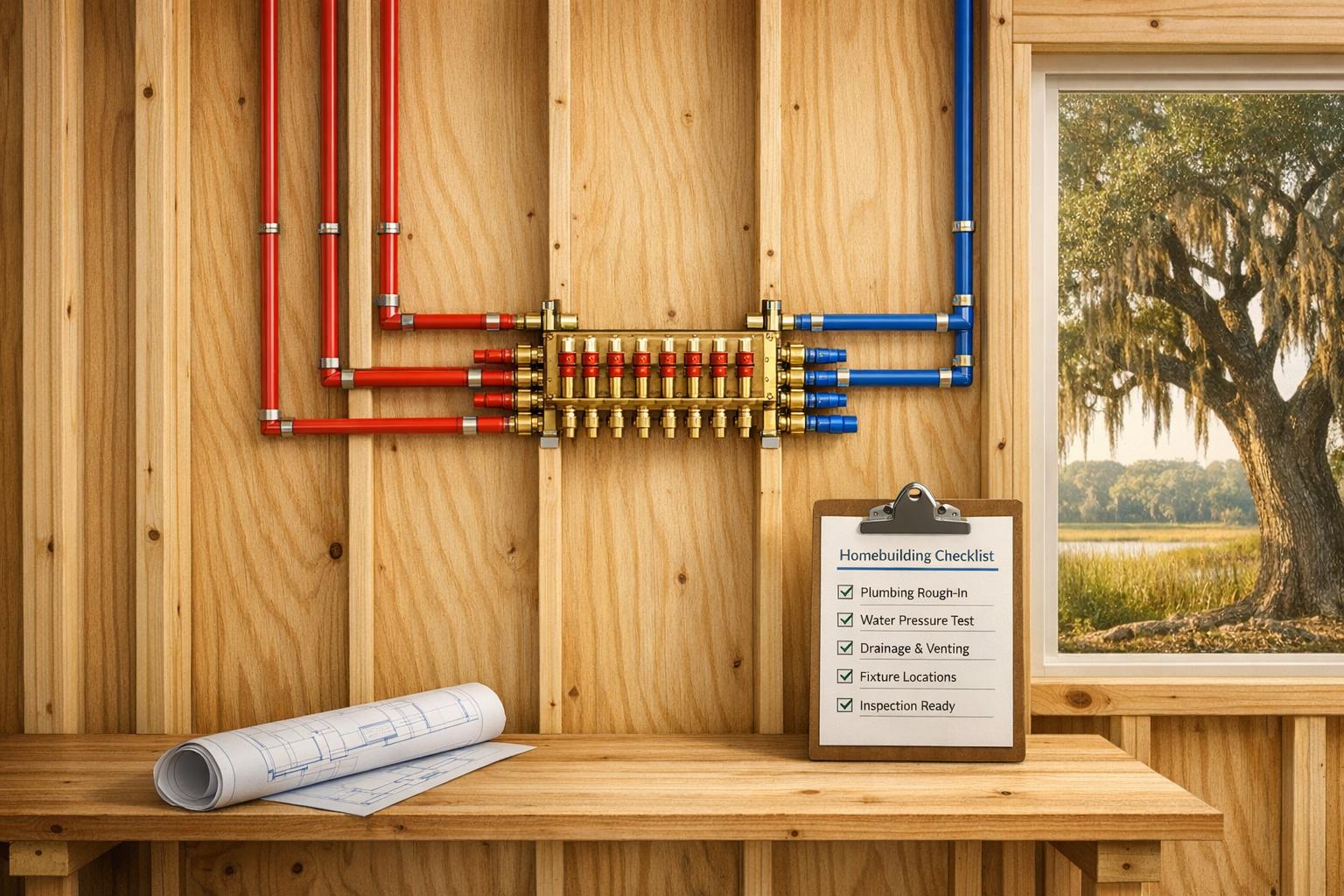
Building a home in Bluffton, SC, offers a chance to design a plumbing system tailored to your needs. Proper planning ensures safety, functionality, and compliance with local codes. Here’s what you need to know:
- Plan Your Plumbing Design: Map out fixtures, pipe routes, and maintenance access points. Follow the International Plumbing Code (IPC) and local Bluffton flood-zone requirements.
- Choose Fixtures and Appliances: Select water-saving fixtures and appropriately sized water heaters. Ensure all installations meet inspection standards.
- Pipe Routing: Use correct slopes and fittings to prevent clogs and leaks. Schedule inspections during key construction phases.
- Install Water Heaters Safely: Ensure proper venting and compliance with flood-zone elevation rules.
- Hire a Licensed Plumber: Verify their South Carolina Master Plumber license, experience with coastal construction, and insurance coverage.
Complete Plumbing Checklist for New Home Construction
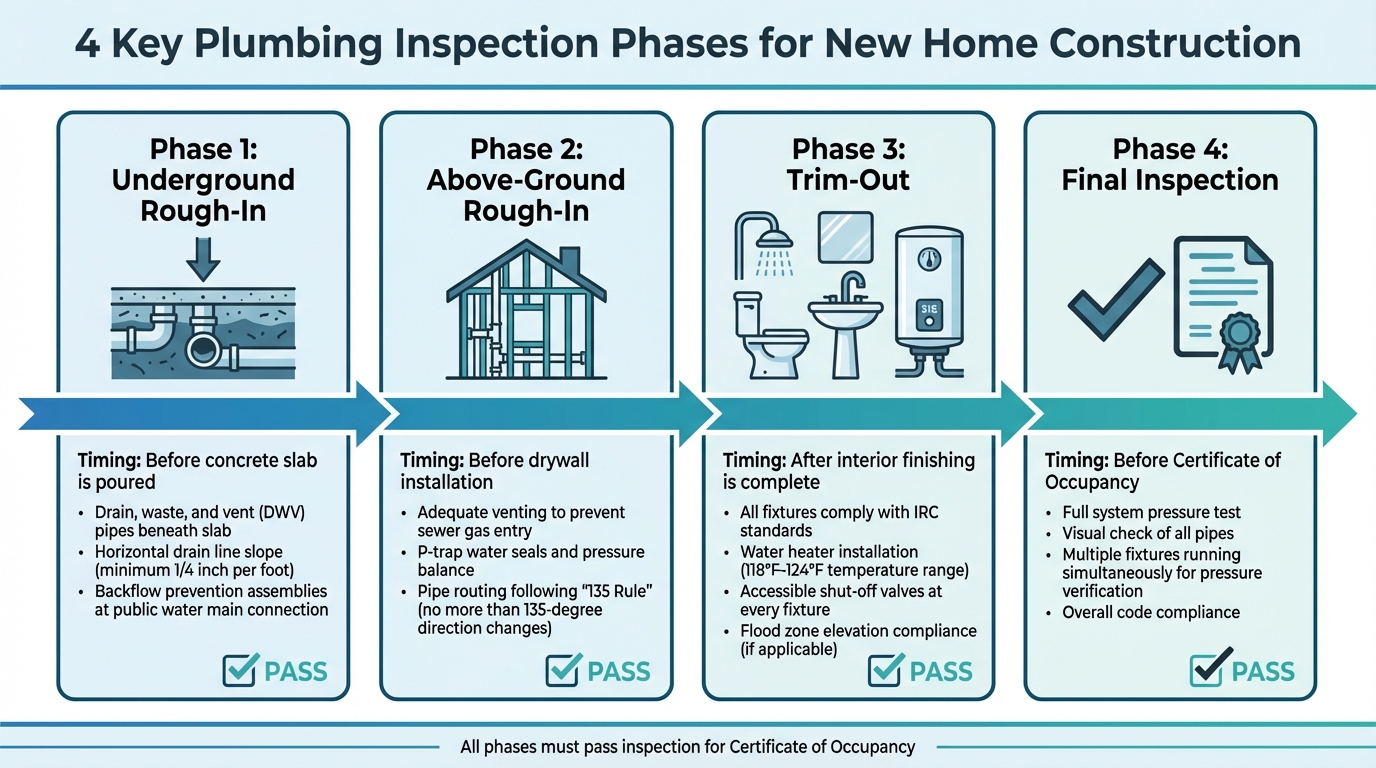
4 Key Plumbing Inspection Phases for New Home Construction in Bluffton SC
When building a new home, plumbing inspections are divided into four key phases: underground rough-in, above-ground rough-in, trim-out, and final inspection. Each stage has specific code requirements to ensure everything is installed correctly. Here’s a closer look at what each step involves.
1. Planning Your Plumbing Design
The plumbing design is the backbone of your entire system. Start by determining where fixtures will go, how pipes will run, and where access points for maintenance will be located. Make sure your design complies with the International Plumbing Code (IPC) and International Residential Code (IRC), while also considering local factors like elevation and flood-zone requirements in Beaufort County.
Before pouring the concrete slab, schedule an underground rough-in inspection. Inspectors will check that all drain, waste, and vent (DWV) pipes beneath the slab meet code. For instance, horizontal drain lines must slope at least 1/4 inch per foot to ensure proper waste flow.
In Bluffton, homes typically use either copper or PEX piping for water supply lines. Coordinate with local utility companies to ensure backflow prevention assemblies are installed correctly where your private system connects to the public water main.
2. Selecting Fixtures and Appliances
Choosing the right fixtures and appliances is essential for both functionality and efficiency. Opt for water-saving fixtures that can lower your utility bills while still meeting your style preferences. Every fixture must comply with IRC standards and pass inspection during the trim-out phase.
Water heaters, in particular, need to be sized to meet your household’s needs. Residential systems should maintain water temperatures between 118°F and 124°F. Tankless water heaters are a great energy-efficient option, but they require proper venting to ensure safety. Also, make sure every fixture includes an accessible shut-off valve for easy repairs down the line.
For toilets, check that they are securely installed and that the wax ring is properly sealed to prevent leaks. Similarly, faucets in kitchens and bathrooms should have clean aerators to maintain steady water pressure. Using high-quality, rust-resistant materials will help extend the lifespan of your water heater and plumbing components.
Once you’ve selected your fixtures, plan your pipe routing to support the design.
3. Pipe Routing and Placement
Accurate pipe placement is critical to avoid long-term issues and ensure your system passes inspections. Follow the "135 Rule" for horizontal drain lines: fittings should not create more than a 135-degree change in direction. Using two 45-degree elbows or a long-sweep 90-degree elbow instead of a sharp 90-degree elbow can help prevent clogs.
Schedule your above-ground rough-in inspection before drywall installation. During this phase, inspectors will confirm that venting is adequate to prevent sewer gas from entering the home. Proper venting ensures that pressure remains balanced, which protects the water seals in P-traps. Without this, pressure changes can siphon water out of the traps, allowing harmful gases like methane and hydrogen sulfide into your living space.
During the final inspection, running multiple fixtures at once can help verify that your pipe routing supports consistent water pressure throughout the system.
4. Installing Your Water Heater
Water heater installation happens during the trim-out phase, after the interior finishing is complete. Choose a water heater that matches your household’s needs. Tankless models are energy-efficient but require precise venting for safety.
Inspect the unit and connections for signs of rust or corrosion, and confirm that the venting complies with safety standards. If your home is in a flood zone, the water heater must be installed at the appropriate elevation according to Bluffton’s requirements. Ensure everything is up to code and passes inspection before obtaining your certificate of occupancy.
5. Meeting Plumbing Code Requirements
Hiring a licensed plumbing contractor is key to ensuring your system meets all local codes and passes inspections. The final inspection involves a full system pressure test and a visual check of all pipes.
Your contractor will manage permit applications and schedule inspections, helping to avoid costly errors. A professional installation not only ensures safety but also guarantees that your plumbing system will function properly for years to come.
sbb-itb-998eb83
What Bluffton, SC Homeowners Need to Know
Beyond system planning and installation, knowing how to manage local water practices is key to keeping your plumbing efficient over time.
Water Efficiency and Conservation
Insulating your pipes is a smart way to deal with Bluffton’s temperature swings while cutting energy use. Proper insulation keeps water temperatures steady, meaning your heating and cooling systems won’t have to work overtime. This not only trims down utility bills but also reduces your home’s environmental impact.
Fixing leaks is another critical step for conserving water and saving money. Even tiny drips from faucets or connections can waste gallons of water and inflate your monthly expenses. For context, repairing a burst pipe can cost anywhere from $1,000 to $4,000, while fixing a mainline leak might set you back $600 to $4,500. Keeping faucet aerators in good shape ensures proper water pressure and helps you avoid unnecessary water waste.
Annual plumbing inspections are a must. These inspections, which range from $350 to $1,375, often include visual and camera checks to spot hidden leaks or worn-out parts before they lead to costly disasters. Testing shut-off valves at sinks and toilets is another smart move – it allows you to quickly stop water flow in emergencies. Skipping routine maintenance can be expensive, as emergency repairs often cost up to 10 times more.
By adopting these water-saving strategies, you’ll be better prepared to handle Bluffton’s specific coastal challenges.
Plumbing for Bluffton’s Climate and Water Conditions
Bluffton’s coastal setting comes with its own set of plumbing hurdles. While the area has a mild climate, winter months can still cause uninsulated pipes to freeze and burst, leading to major water damage. Insulating your pipes not only prevents freezing but also protects against condensation caused by the region’s humid air.
Exposed cold water pipes often develop condensation when they meet warm, humid air. This moisture can lead to mold growth and structural damage. Insulating both hot and cold water pipes creates a barrier against moisture, safeguards your home’s structure, and even reduces noise from water flow.
As a coastal town, Bluffton also has to follow regulations like FEMA‘s National Flood Insurance Program and the South Carolina Coastal Zone Management Act. These rules require specific measures, such as elevated fixtures, durable pipe materials suited for coastal conditions, and enhanced backflow prevention systems. If your home is in a flood zone, you’ll need to ensure compliance with these standards, which are designed to protect both your property and the surrounding environment.
How to Choose a New Construction Plumber in Bluffton, SC
When building a new home in Bluffton, SC, selecting the right plumber is crucial. You’ll want someone who not only meets licensing requirements but also understands the unique challenges of coastal construction. This guide builds on earlier planning tips to help you choose a reliable contractor for your plumbing needs.
What to Look for in a New Construction Plumber
Start by confirming the plumber holds a valid South Carolina Master Plumber license. This license allows them to pull permits for new construction projects and ensures they meet state standards. You can verify the license’s status through the South Carolina LLR portal, checking for active credentials and any disciplinary actions.
Experience with coastal construction is equally important. Bluffton’s proximity to the coast means your plumber should be familiar with FEMA guidelines and the Coastal Zone Management Act. These standards ensure your home’s plumbing design complies with local regulations and passes mandatory inspections.
Speaking of inspections, your contractor should have a solid track record with the four key plumbing inspections: underground rough-in, above-ground rough-in, trim-out, and final inspection. A failed final inspection can delay your Certificate of Occupancy, so it’s critical to hire someone who knows how to navigate these steps smoothly.
| License Type | Experience Required | Scope of Work |
|---|---|---|
| Residential Plumber | 1 year within last 5 years | Works on buildings with fewer than 16 units, up to 3 stories |
| Journeyman Plumber | 2 years as apprentice | Works under a Master Plumber or Contractor |
| Master Plumber | 5 years as Journeyman | Can pull permits and oversee plumbing projects |
Additionally, verify that your contractor carries the required bonding and insurance. Residential plumbers need a $10,000 bond, while master plumbers require $25,000. They should also have liability insurance and workers’ compensation coverage. If your project involves gas lines, confirm they hold the necessary LLR endorsements for this work.
Questions for Your Contractor
To ensure you’re hiring the right professional, ask targeted questions that address both their qualifications and their understanding of Bluffton’s specific needs.
- Local Codes and Ordinances: How familiar are they with Bluffton’s specific building codes? Beaufort County often adopts stricter amendments than the state baseline, so it’s vital to work with someone who knows these local requirements.
- Permit and Inspection Management: Who will handle permits and schedule inspections? Managing these steps efficiently is critical for keeping your project on track. Ask for a detailed timeline and examples of how they’ve successfully navigated this process on past projects.
- Pipe Insulation and Moisture Control: How do they plan to address Bluffton’s humid climate and occasional winter freezes? Proper pipe insulation is essential to prevent freezing and condensation damage, both of which can lead to costly repairs down the line.
Conclusion: Building with Confidence
Final Tips for Successful Plumbing Installation
When building a new home in Bluffton, paying close attention to plumbing details can save you from future headaches. Choose between Copper or PEX piping for durability and compliance with local codes. Test your water pressure while using multiple fixtures at once to catch any sizing problems early.
Make sure all shut-off valves are easy to access and free of leaks, and double-check that your water heater is set to a safe range of 118°F to 124°F. It’s also a good idea to request a camera inspection for sewer lines – this can reveal blockages or structural issues before they turn into major problems.
Finally, hire licensed and insured professionals who understand Bluffton’s specific plumbing codes. Transparent, upfront pricing is a must to avoid surprises down the road. These steps will help ensure your plumbing system is built to last.
Call to Action: Let ALL Plumbing Services Help
Let ALL Plumbing Services turn your vision into reality with a plumbing system tailored to Bluffton’s unique needs. From Copper and PEX piping installations to water heater setups and fixture placements, our team ensures every detail meets local standards – all with clear, upfront pricing.
Schedule a consultation with our licensed experts to review your plumbing plans before construction begins. We’ll help with proper pipe routing, code compliance, and designing an efficient system suited to Bluffton’s climate and water conditions. Plus, with 24/7 emergency services and ongoing maintenance plans, we’re here to support your home long after you move in. Contact us today and build with confidence!
FAQs
When should I schedule the four plumbing inspections?
When building a new home in Bluffton, SC, scheduling plumbing inspections at the right stages is crucial. Here are the four main inspections to plan for:
- Rough-in Inspection: This happens after the installation of supply lines, drain lines, waste pipes, and vent systems, but before closing up the walls. It ensures everything is properly placed and up to code.
- Water Supply/Drain Line Inspection: Depending on local regulations, this may be included in the rough-in inspection or handled as a separate check. It focuses on verifying that water supply and drainage systems are correctly installed.
- Water Heater Inspection: Once the water heater is installed and connected, this inspection confirms it operates safely and efficiently.
- Final Inspection: This is the last step, conducted after all plumbing work is completed. It ensures the entire system is functioning properly and meets approval standards.
Proper scheduling of these inspections will help avoid delays and ensure your plumbing passes all necessary checks.
What plumbing upgrades matter most in Bluffton flood zones?
Key plumbing improvements for flood-prone areas in Bluffton focus on combating challenges like hydrostatic pressure, hydrodynamic forces, and corrosion over time. To safeguard your plumbing system, prioritize elevating installations, using materials resistant to flooding, and adhering to local floodplain management regulations. These steps ensure your system remains durable and functional in high-risk zones.
How do I pick the right water heater for my new home?
Choosing the right water heater means weighing factors like type, size, energy efficiency, and fuel source. You can choose from options such as tankless systems, traditional tank models, heat pumps, or solar-powered units. It’s important to pick a unit that can handle your household’s hot water needs while being compatible with the fuel sources you have. To make the best choice, consider consulting a licensed plumber – they can ensure the model complies with local codes, meets your requirements, and supports your energy-saving goals.