Planning a commercial build in Charleston, SC? Hiring a specialized plumbing contractor is non-negotiable. Here’s why:
- Strict Regulations: South Carolina requires a Mechanical Contractor license (Class I, II, or III) for commercial plumbing. General plumbers lack the legal qualifications and expertise to meet these standards.
- Code Compliance: Charleston’s plumbing codes in Charleston, SC are more complex, often requiring grease interceptors, medical gas systems, and other specialized installations. Non-compliance can delay your project and lead to penalties.
- Large-Scale Demands: Restaurants, hotels, and hospitals need high-capacity plumbing systems designed for constant use. Specialized contractors ensure proper installation and maintenance to avoid costly failures.
- Avoiding Common Issues: General plumbers often make mistakes like improper installations, leaks, and drainage problems that lead to expensive repairs and delays.
Specialized contractors, like ALL Plumbing Services, bring decades of local experience, handle permitting, and ensure compliance with Charleston’s unique requirements. They also offer advanced solutions like tankless water heaters and smart leak detection systems to keep your project running smoothly. Choosing the right contractor saves time, money, and headaches down the line.
Common Problems in Commercial Plumbing Projects
Commercial plumbing projects come with their own set of challenges, and without the right expertise, these issues can quickly throw off your schedule and budget. Here’s a closer look at three major hurdles that often arise in Charleston’s commercial builds.
Failing to Meet Charleston’s Commercial Plumbing Codes
Charleston has strict plumbing codes, and failing to meet them can lead to significant setbacks. For starters, non-compliance can delay the issuance of a Certificate of Occupancy, which means your business can’t open on time. Key areas of inspection include fixture installations, trap configurations, venting systems, and backflow prevention devices.
Rough-in inspections are another major checkpoint. These inspections ensure proper pipe routing and spacing before walls are closed up. If something’s off, you’re looking at costly rework. For food service businesses, compliance with IPC Section 1003 – requiring grease interceptors – is non-negotiable. Failing here can result in inspection failures or even operational shutdowns.
Financial risks are also on the table. Contractors working without the necessary South Carolina Mechanical Contractor license (Class I, II, or III) can face civil penalties under S.C. Code Ann. § 40-11-370. Specific industries, like healthcare and food service, add even more layers of complexity. Healthcare facilities must follow NFPA 99 for medical gas systems, while commercial kitchens need NFPA 54 compliance for gas-fired equipment. These challenges make it clear – hiring a specialized commercial plumbing contractor in Charleston is essential.
Handling Large-Scale Commercial Plumbing Systems
Facilities like restaurants, hotels, and hospitals put an enormous strain on their plumbing systems. To keep things running smoothly, these systems often require inspections every six months. Designing and installing high-capacity systems that can handle constant use demands expertise.
The regulatory process for large-scale projects reflects this complexity. Unlike residential work, commercial plumbing requires stamped engineering drawings reviewed by a licensed professional engineer before permits are issued. Even small warning signs, like fluctuating water pressure or strange noises, can signal deeper problems, such as pipe corrosion or trapped air affecting multiple floors or zones. These factors underline the importance of working with a contractor who understands the unique demands of large-scale systems.
Installing Commercial Water Heaters Correctly
Commercial water heaters come with their own set of risks, especially for units exceeding 200,000 BTU/hr. These installations require specialized inspections and contractors with proper gas endorsements. Mistakes here can wreak havoc on businesses like restaurants and hotels, causing water temperatures to swing unpredictably between scalding and lukewarm.
Improper installations often lead to hidden damage. Small leaks from faulty connections can damage floors, walls, and inventory, while Charleston’s humid climate makes mold growth a real concern. Beyond property damage, these issues can drive up water and energy bills and even jeopardize your Certificate of Occupancy if the installation doesn’t meet IPC standards or Charleston-specific amendments. These risks make it clear that the right expertise is critical for meeting commercial plumbing standards.
sbb-itb-998eb83
What Happens When You Hire General Plumbers for Commercial Work
Hiring general plumbers for commercial projects can lead to expensive consequences. The difference between residential plumbing and commercial plumbing isn’t just about size – it’s about the need for specific licenses, knowledge of building codes, and advanced training. For example, in South Carolina, commercial plumbing requires a Mechanical Contractor license (Class I, II, or III), while many general plumbers only hold residential licenses. Additionally, general plumbers may not be familiar with the International Plumbing Code (IPC) or Charleston’s local regulations. These gaps in expertise can result in failed inspections, delayed occupancy, and even civil penalties under S.C. Code Ann. § 40-11-370. Beyond the legal and regulatory issues, these mistakes can compromise the plumbing system itself, leading to recurring leaks, improper installations, and costly repairs.
These shortcomings often translate into real-world operational problems.
Recurring Leaks and Drainage Problems
One common issue is the use of residential-grade fixtures and improper rough-in techniques, such as incorrect pipe routing, insufficient support, or skipping pressure testing. These mistakes frequently result in leaks and drainage issues. Commercial plumbing systems require heavy-duty materials to handle higher demands, and using residential components can cause premature failures. Signs of trouble might include fluctuating water pressure, gurgling noises from drains (caused by trapped air), or unexplained puddles near fixtures.
The problems don’t stop at leaks; poor installation practices can create even bigger headaches.
Poor Fixture and Pipe Installation
General plumbers often lack the expertise to handle the unique requirements of commercial fixtures and piping. For instance, commercial water heaters with outputs exceeding 200,000 BTU/hr require specific inspections and may demand contractors with specialized gas endorsements – qualifications that many general plumbers don’t have. Improper installation of these systems not only causes immediate issues but also shortens their lifespan, leading to expensive early replacements. This is especially critical for specialized systems like grease interceptors (required for food service under IPC Section 1003) or medical gas systems in healthcare facilities. Without the necessary skills, these installations can disrupt operations, pose safety hazards, and result in legal penalties. Fixing these errors often costs far more than hiring a qualified commercial plumbing contractor from the start.
Why ALL Plumbing Services Works for Commercial Projects
Choosing the right plumbing contractor can make all the difference for commercial projects. Unlike general plumbers, specialized contractors like ALL Plumbing Services bring the expertise needed to navigate the complexities of commercial builds. With over 35 years of experience serving Charleston and the Lowcountry since 1987, they’ve developed an unmatched understanding of local conditions – from the coastal soil to flood zone regulations that directly impact plumbing system design and installation.
"We account for these local factors [heavy rains and coastal soil] when choosing pipe materials and layouts so that every repair and installation matches Charleston’s particular demands." – ALL Plumbing Services
Their portfolio includes projects for restaurants, retail stores, office buildings, and industrial facilities, giving them hands-on knowledge of the specific needs of each type of space. Additionally, they manage all permitting requirements, ensuring compliance with Charleston’s plumbing codes and avoiding the risks of failed inspections or delays.
Expertise in Restaurant and Retail Plumbing
Plumbing for restaurants and retail spaces requires a level of specialization that goes beyond standard commercial work. ALL Plumbing Services is experienced in installing grease traps as required under IPC Section 1003 for food service establishments. They also handle commercial kitchen gas lines and drainage systems designed to withstand heavy daily use. For these high-traffic spaces, they install durable fixtures built for constant operation.
Restaurants, in particular, face unique challenges. A plumbing issue can lead to significant revenue loss, so ALL Plumbing Services emphasizes regular inspections to catch potential problems early and minimize disruptions.
Comprehensive Plumbing Solutions for Office Buildings
Office buildings come with their own challenges, such as multi-floor drain systems, extensive piping networks, and the need to minimize disruptions during work. ALL Plumbing Services has the expertise to address these issues, ensuring compliance with Charleston’s stringent codes, especially in historic districts or flood-prone areas where regulations can be more demanding.
Their services include complete repiping projects, mechanical insulation for pipes and ductwork to prevent condensation and energy loss, and thorough system testing after installation. This final step ensures proper flow and compliance with local codes, catching any issues before occupancy and avoiding costly rework.
Advanced Plumbing Technology and Water-Saving Options
ALL Plumbing Services also integrates modern plumbing technologies to meet the growing demand for efficiency and sustainability. They install Rinnai tankless water heaters, which provide continuous hot water while reducing energy consumption. Their technicians undergo specialized training to ensure installations meet both manufacturer specifications and Charleston’s code requirements.
Other advanced solutions include:
- Smart leak detection systems: These provide real-time alerts, enabling property managers to address leaks before they cause major damage.
- Nu Flow trenchless pipe relining: This technology repairs sewer lines without the need for disruptive excavation.
- Halo water filtration systems: These systems improve water quality and protect plumbing infrastructure throughout commercial buildings.
"We offer cutting-edge technology and plumbing upgrades that not only enhance your home’s performance but also cut back on energy and water consumption." – ALL Plumbing Services
Steps to Get Your Commercial Plumbing Right
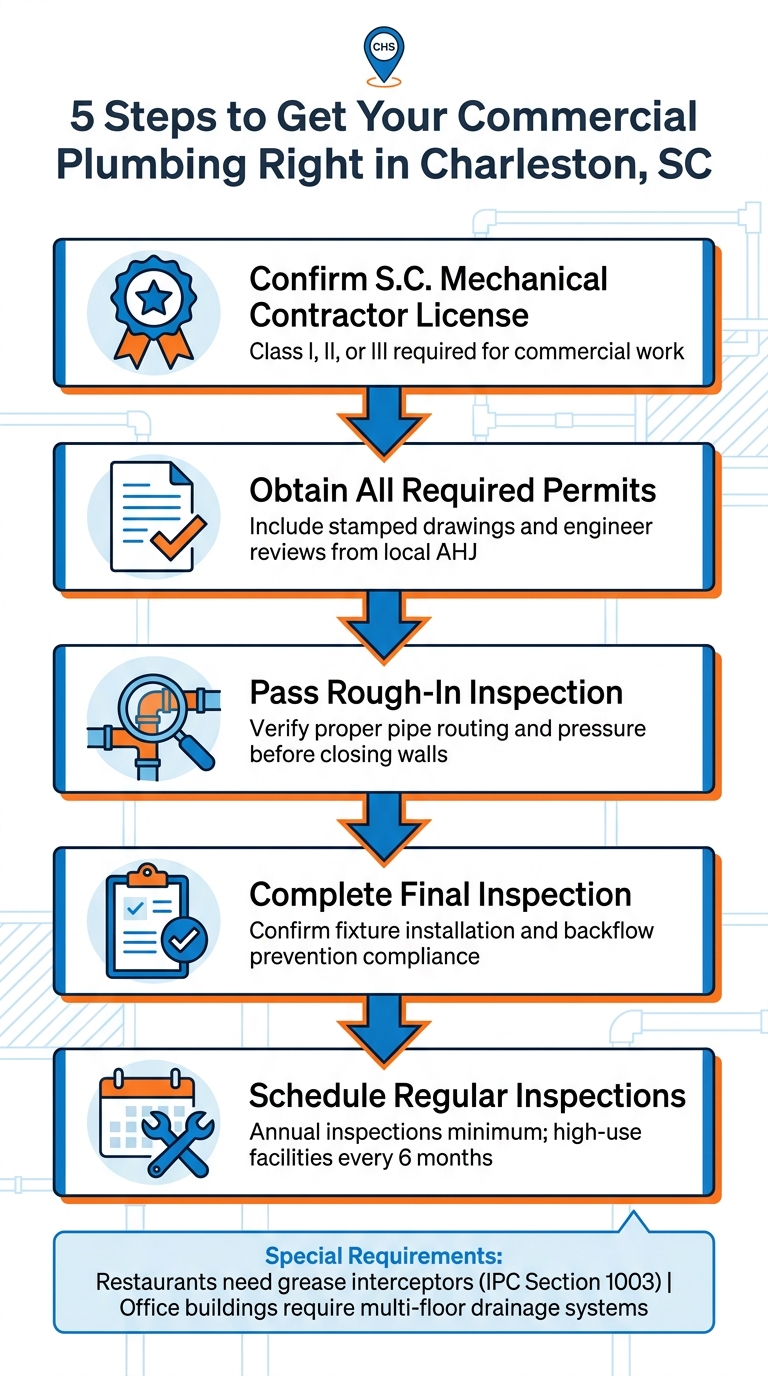
5-Step Guide to Successful Commercial Plumbing Projects in Charleston SC
To steer clear of those hefty repair bills and unexpected delays, it’s crucial to follow these steps while adhering to Charleston’s strict commercial plumbing codes.
Select a Qualified Plumbing Contractor
Start by ensuring your contractor has a valid S.C. Mechanical Contractor license (Class I, II, or III). You’ll also need to secure all necessary permits, including stamped drawings and engineer reviews from the local Authority Having Jurisdiction (AHJ). Stick to the required inspection process: rough-in inspections confirm proper pipe routing and pressure, while final inspections focus on fixture installation and backflow prevention compliance.
Make sure to discuss your project’s unique requirements upfront. For example, if you’re outfitting a restaurant, you may need grease interceptors under IPC Section 1003. Or, if you’re working on an office building, multi-floor drainage systems might be a priority. Keep in mind that local jurisdiction overlays can add extra requirements beyond the standard International Plumbing Code and International Building Code.
Once your contractor and plans are in place, the next step is to focus on maintenance.
Establish Regular Maintenance
After hiring a qualified contractor, ongoing maintenance is essential to keep your plumbing system in top condition. Scheduling regular inspections can prevent expensive repairs and operational disruptions. In general, commercial plumbing systems should be inspected at least once a year. However, high-use facilities like restaurants, hotels, or hospitals might need inspections every six months – or even more frequently.
"Regular inspections can help identify issues such as leaks, clogs, corrosion, or water pressure problems, ensuring the system remains efficient and minimizes downtime." – ALL Plumbing Services
A solid maintenance plan should include tasks like flushing water heaters to prevent sediment buildup and conducting regular backflow testing to stay compliant with regulations. These proactive steps can extend the life of your equipment and help spot small problems – like minor leaks or pipe corrosion – before they become major headaches. For food service businesses, routine checks of grease interceptors are especially important. Additionally, training staff on proper fixture usage and advising them on what should never go down the drains can help reduce preventable clogs between professional inspections.
Conclusion
When tackling a commercial build in Charleston, partnering with a specialized plumbing contractor is essential to navigate South Carolina’s licensing and code requirements while avoiding unnecessary delays.
ALL Plumbing Services has been a trusted name in the Charleston area since 1987, bringing over 35 years of local knowledge to every project. Their team understands the unique local jurisdiction overlays that modify the International Plumbing Code, handles complex permitting and inspections with ease, and incorporates modern plumbing solutions like smart leak detection systems and tankless water heaters. This expertise ensures dependable, code-compliant plumbing tailored to your commercial space.
"Your business deserves plumbing that works as hard as you do." – ALL Plumbing Services
With a proven history of excellence, ALL Plumbing Services guarantees precision in every detail, from kitchen grease interceptors to multi-floor drainage systems. Choosing a specialized contractor not only protects your investment from common issues like leaks and drainage problems but also ensures your project stays compliant and operational from the start. Proper installation and regular maintenance will keep your plumbing system running smoothly for years.
Need expert plumbing for your commercial project? Contact our commercial team today to schedule a consultation.
FAQs
What license should a commercial plumbing contractor have in South Carolina?
To work as a commercial plumbing contractor in South Carolina, it’s mandatory to have a license issued by the South Carolina Department of Labor, Licensing, and Regulation (LLR). This licensing process includes having at least two years of recent work experience and successfully passing the required exams. Make sure your contractor is properly licensed to comply with state regulations.
What permits and inspections will my Charleston commercial plumbing project need?
When undertaking a commercial plumbing project in Charleston, you’ll need to secure the necessary permits from the City of Charleston, including a specific plumbing permit. Inspections will focus on critical elements like building footings, slabs, and underground plumbing systems. It’s also essential to ensure that your project meets all local zoning and building codes to successfully pass these inspections.
How often should a commercial plumbing system be inspected and maintained?
A commercial plumbing system needs an inspection at least once a year. These regular check-ups ensure everything runs smoothly and help spot problems early, saving you from expensive repairs or unexpected interruptions to your business.