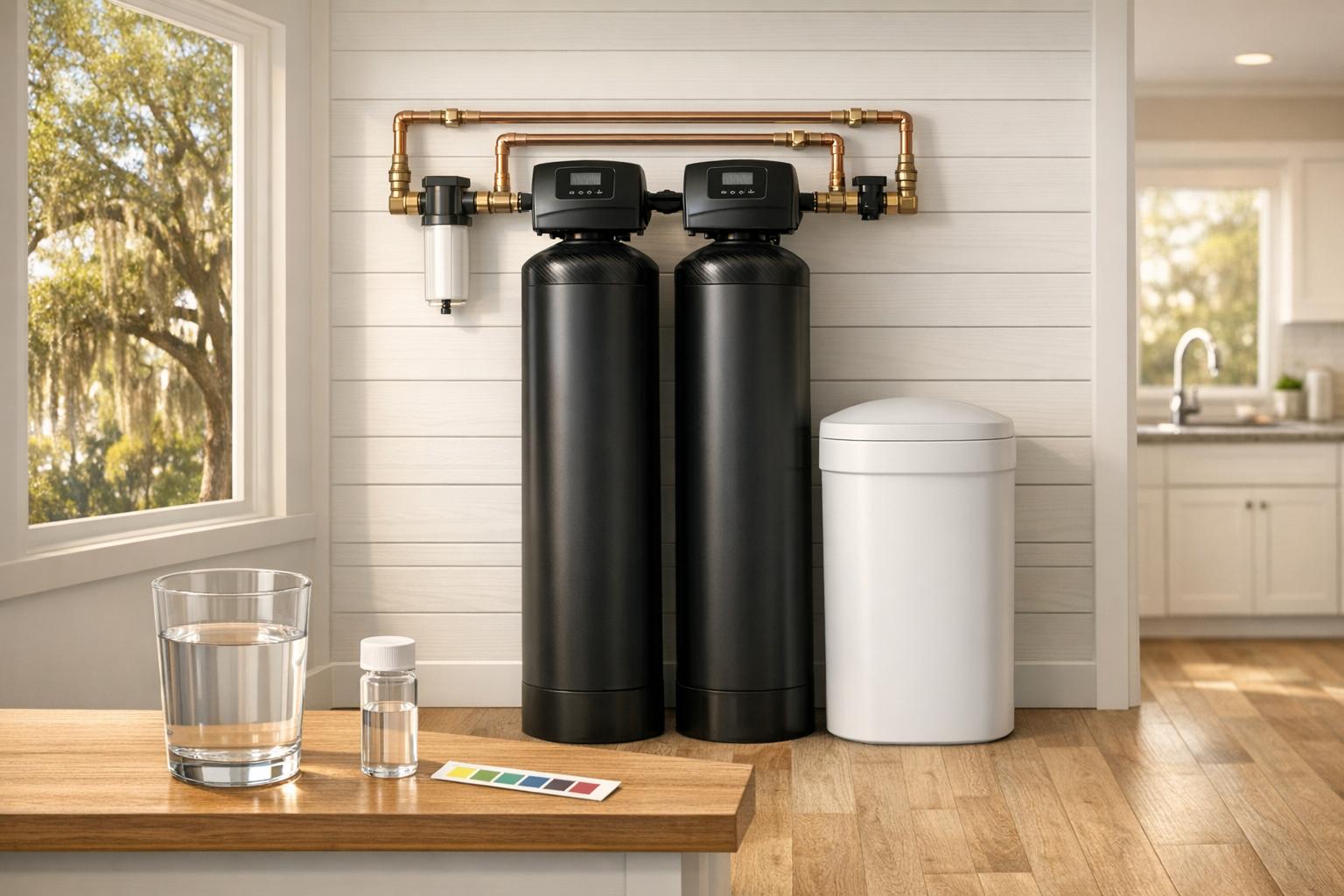
Hard water in Bluffton, SC, is more than a nuisance – it can damage your plumbing, appliances, and even your skin and hair. With water often containing over 500 ppm of minerals like calcium, magnesium, and iron, homeowners face issues like:
- White, crusty buildup on faucets and appliances.
- Rust stains on sinks and toilets.
- Rotten egg smell from hydrogen sulfide.
- Dry skin and brittle hair due to soap residue.
- Higher energy bills from inefficient water heaters.
A whole-home filtration system solves these problems by treating all the water entering your home. Unlike point-of-use filters, which only address water at a single faucet, these systems protect your entire plumbing system, improve water quality for every tap, and extend the lifespan of appliances. Installation costs range from $1,500–$3,500, plus labor, but the long-term savings and benefits outweigh the upfront expense.
If you’re tired of hard water headaches, schedule a professional water test to find the right solution for your home.
What Is Hard Water and Why Does It Affect Bluffton, SC?
Hard water forms when groundwater flows through soil and rock, picking up dissolved minerals like calcium and magnesium from limestone and chalk. It can also absorb iron, which causes rust-colored stains, and hydrogen sulfide, which gives off a rotten egg smell . In Bluffton, South Carolina, water hardness generally falls in the soft to moderate range, contrasting with the much harder water found in the Piedmont region, where granite bedrock dominates . Despite this, many Bluffton homeowners still deal with issues like mineral buildup and scaling . The town’s mix of groundwater and surface water sources means water quality can vary significantly between neighborhoods.
Water hardness is measured in grains per gallon (GPG) or parts per million (PPM). To convert PPM to GPG, divide the PPM value by 17.1. Hard water is classified as containing 120–180 PPM (7–10.5 GPG), while levels above 180 PPM (10.5+ GPG) are considered very hard. South Carolina’s state average is about 25 PPM – quite low – but some Bluffton wells can record much higher levels. These minerals help define the area’s water profile but also bring challenges for homeowners.
How Hard Water Affects Your Home
When exposed to heat, hard water minerals form deposits on fixtures, leaving behind white, crusty buildup on showerheads, faucets, and inside appliances like coffee makers. These deposits also coat water heater elements, forcing them to use 25% to 40% more energy, which can lead to premature failure . Over time, mineral buildup restricts water flow in pipes, lowering water pressure and contributing to corrosion, especially when hydrogen sulfide is present . Appliances like dishwashers, washing machines, and ice makers are also at risk, as sediment and scale wear down their internal parts.
Hard water doesn’t just affect your home – it impacts personal care too. Soap doesn’t lather well in mineral-rich water, leaving a sticky residue that can dry out and irritate skin . Hair may feel brittle or look dull due to a thin mineral coating . Laundry suffers as well, with towels and clothes feeling stiff and rough, while fabrics fade and pill faster. Dishes and glassware often come out of the dishwasher spotted and cloudy instead of clean and shiny .
In Bluffton, the presence of iron can leave rust stains on porcelain fixtures, which are notoriously hard to remove. The metallic taste of iron and the rotten egg smell from hydrogen sulfide can also affect the flavor of your drinking water, coffee, and cooked meals .
How to Tell If You Have Hard Water
If you suspect hard water, look for specific signs around your home. White, chalky scale on showerheads, faucet aerators, and coffee makers is a clear indicator . Rust stains on sinks or toilets point to iron in your water supply. Dishes with spots or cloudy glassware after washing suggest minerals are interfering with the rinse cycle .
Pay attention to how your skin and hair feel after bathing. Tight, dry, or itchy skin often results from soap residue left behind by hard water. If your towels and clothes feel scratchy or lose their softness despite using fabric softener, mineral-heavy water may be the cause. In older homes, reduced water pressure could signal that mineral deposits have built up inside your pipes. Additionally, a spike in energy bills without increased usage might mean your water heater is struggling with scale buildup.
Since Bluffton’s water can also contain chlorine (which can smell like bleach) and sulfur compounds, it’s a good idea to have your water tested. A thorough analysis identifies the exact mineral levels and any contaminants affecting your home. Once you know what’s in your water, you can choose the right treatment system to address these issues effectively.
sbb-itb-998eb83
Why Choose a Whole-Home Filtration System
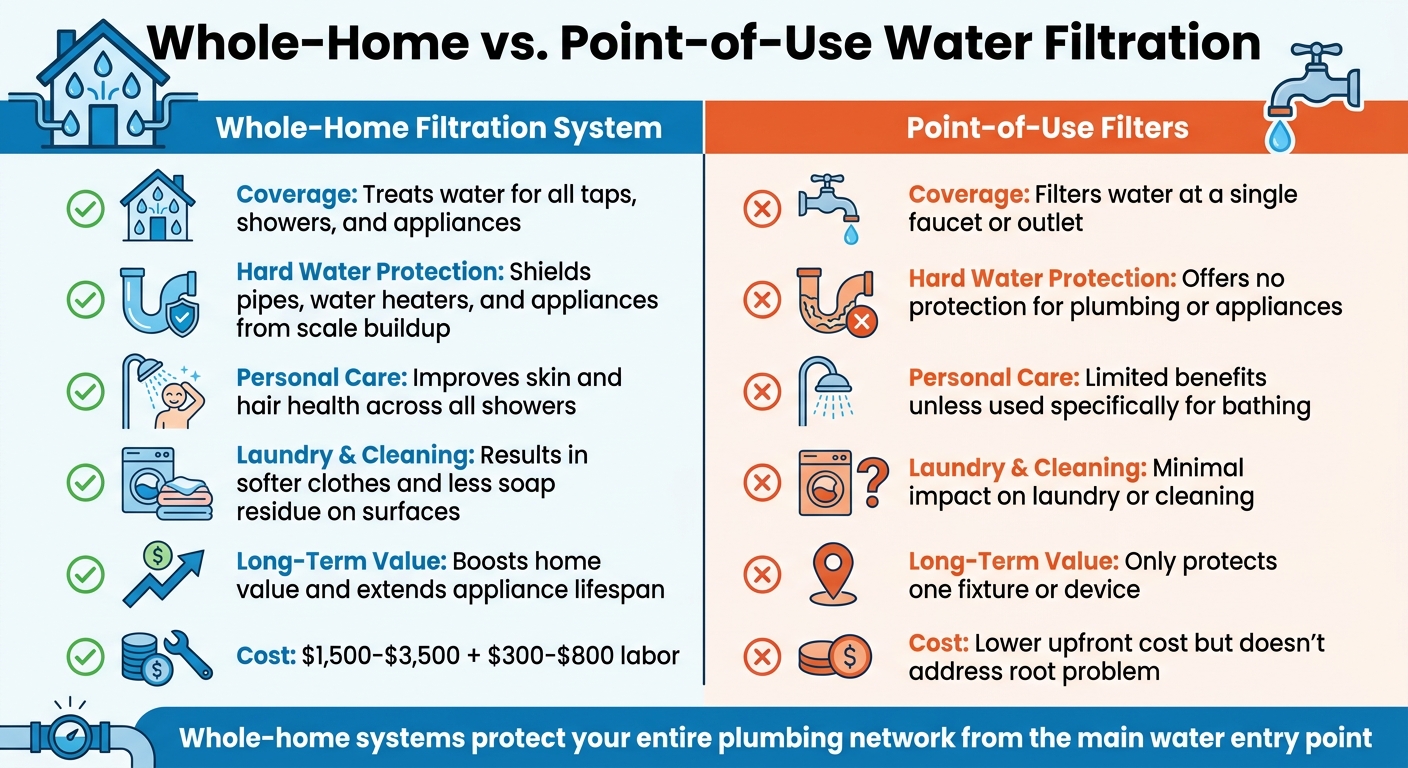
Whole-Home vs Point-of-Use Water Filtration Systems Comparison
Bluffton’s hard water challenges call for a solution that safeguards your entire home, not just isolated spots. When it comes to addressing hard water, you have two primary options: whole-home filtration systems or point-of-use filters. The key difference lies in where the water is treated and how much of your home benefits from the filtration.
Point-of-use filters attach to individual faucets or showerheads. While they improve water quality at that specific location, the rest of your home’s plumbing – like pipes, water heaters, dishwashers, and washing machines – remains exposed to hard water minerals. Over time, this mineral buildup can reduce appliance efficiency and shorten their lifespan.
In contrast, whole-home filtration systems are installed at the main water entry point, treating all the water before it reaches any fixture. This type of system protects your entire plumbing network from corrosion and clogs, enhances the performance and longevity of major appliances, and ensures softer water flows from every tap and shower.
Whole-Home Filtration vs. Point-of-Use Filters
Here’s a side-by-side comparison to highlight the differences between these two options:
| Feature | Whole-Home Filtration System | Point-of-Use (POU) Filters |
|---|---|---|
| Coverage | Treats water for all taps, showers, and appliances | Filters water at a single faucet or outlet |
| Hard Water Protection | Shields pipes, water heaters, and appliances from scale buildup | Offers no protection for plumbing or appliances |
| Personal Care | Improves skin and hair health across all showers | Limited benefits unless used specifically for bathing |
| Laundry & Cleaning | Results in softer clothes and less soap residue on surfaces | Minimal impact on laundry or cleaning |
| Long-Term Value | Boosts home value and extends appliance lifespan | Only protects one fixture or device |
Whole-home systems typically cost between $1,500–$3,500, with labor adding another $300–$800. While point-of-use filters are less expensive upfront, they don’t address the root problem: hard water minerals circulating throughout your plumbing system and causing damage.
"Investing in a whole-home water filtration system… is more than a health decision, it’s a lifestyle upgrade. It ensures that every faucet in your home delivers cleaner, safer, and better-tasting water while protecting your home and family in ways that go beyond hydration." – Pure Way Lowcountry
With these advantages in mind, let’s explore how whole-home filtration systems work to deliver these benefits.
How Whole-Home Filtration Systems Work
Whole-home systems are installed at the main water line, ensuring that every drop of water entering your home is treated before it reaches your fixtures.
Many systems rely on ion exchange to combat Bluffton’s high levels of calcium and magnesium. In this process, hard water flows through a resin tank where calcium and magnesium ions are replaced with sodium ions. Alternatively, some systems use salt-free conditioning, which employs anti-scale technology to prevent minerals from adhering to surfaces.
Comprehensive systems often feature multiple stages for thorough treatment. These may include:
- A sediment filter to trap dirt, rust, and other particles.
- A carbon filter to remove chlorine and unpleasant odors, such as the sulfuric "rotten egg" smell sometimes found in Bluffton water.
- A softening or conditioning unit to address mineral hardness and prevent scaling.
This multi-stage approach tackles both hard water minerals and chemical contaminants in a single setup.
"A whole-home filtration system from Pure Way keeps pipes clean, lowers maintenance needs, and extends the lifespan of your plumbing." – Pure Way Lowcountry
Before making a decision, it’s essential to have your water professionally tested. This will help identify its specific hardness level and any additional contaminants, such as iron or sulfur. Proper testing ensures the system you choose is tailored to your household’s water quality and flow rate needs.
Benefits of Water Softeners and Filtration Systems
Hard water can cause a host of problems, but water softeners and filtration systems offer practical solutions that improve your water quality in noticeable ways. From protecting your home’s plumbing to enhancing personal care, these systems provide benefits that go beyond just clean water.
Protect Your Appliances and Plumbing
Hard water minerals like calcium and magnesium can build up inside your water heater, dishwasher, and washing machine, creating scale deposits that reduce efficiency and shorten their lifespan. Water softeners tackle this issue by removing these excess minerals, while anti-scale technology prevents new deposits from forming. This keeps your appliances running smoothly and extends their lifespan.
Filtration systems take this a step further by balancing pH levels and removing iron, which helps prevent corrosion and rust in your pipes. This means fewer rust stains on your sinks, tubs, and toilets – stains that are often tough to clean. By stopping mineral buildup before it starts, these systems keep your plumbing in better shape and reduce maintenance headaches.
Improve Water Taste and Personal Care
Filtered water doesn’t just taste better – it’s also better for your skin and hair. Filtration removes chlorine, iron, and hydrogen sulfide odors, leaving your water fresh and clean. It also helps preserve your skin’s natural oils, which can be particularly helpful for people with sensitive skin conditions like eczema or psoriasis. Plus, scale-free showerheads maintain steady water pressure, making every shower more enjoyable.
These benefits extend beyond personal care to your home’s overall efficiency, making filtration systems a smart investment.
Lower Energy Costs and Utility Bills
Mineral deposits from hard water don’t just damage appliances – they also make them less efficient. For example, when scale coats the heating elements in your water heater, it takes more energy to heat the water. Filtration systems prevent this buildup, allowing your water heater to work more efficiently and reducing energy costs.
"Scale buildup reduces efficiency, increases energy bills, and shortens appliance lifespan." – Pure Way Lowcountry
Filtered water also boosts the performance of soaps and detergents, so you’ll need less for washing dishes or doing laundry. Over time, this means lower household supply costs and less wear on your appliances, saving you money in the long run.
How ALL Plumbing Services Installs Water Filtration Systems in Bluffton
To enjoy the perks of cleaner water and longer-lasting appliances, ALL Plumbing Services offers a custom installation process tailored to Bluffton residents. The steps to install a whole-home filtration system depend on your home’s specific water quality, and the company uses a three-step process – from water testing to ongoing maintenance – to ensure your system works seamlessly.
Step 1: Water Testing and System Selection
The journey begins with a free in-home water test. During this test, technicians check for contaminants like chlorine, iron, hydrogen sulfide, calcium, and magnesium. They also measure total dissolved solids (TDS), which can exceed 500 ppm in some water supplies deemed "safe." With professional filtration, these levels can drop to as low as 10 ppm.
pH levels are another key factor. Low pH can lead to metallic tastes and pipe corrosion. Based on the test results, experts recommend the most effective solution for your needs – whether it’s a Filox backwashing system for sulfur issues, a pH neutralizer for acidity, or a traditional water softener for hard water.
Additionally, technicians evaluate your plumbing setup and household water usage to ensure the system is sized correctly. With all this information, they help you choose the right system and prepare for a smooth installation.
Step 2: System Installation
Once the system is selected, installation typically takes anywhere from a few hours to a full day. The cost is competitive and includes both labor and any additional components needed.
The system is integrated directly into your home’s plumbing at the main water entry point, ensuring every faucet and fixture delivers treated water. Technicians also install any required components, such as backwashing systems or bypass valves, to ensure the system operates efficiently. After installation, the system is ready to provide treated water throughout your home.
Step 3: Ongoing Maintenance
After installation, ALL Plumbing Services continues to support you with maintenance to keep the system running efficiently. For traditional water softeners, they even offer salt delivery services. Filter media is replaced periodically to maintain performance.
"Our professional technicians can install a charcoal filter in less than a day. We even offer a premium Activated Carbon option which is long lasting and will reduce your replacement costs." – Kremer Water Treatment
Technicians also monitor the system’s performance over time and are available for upgrades or component replacements as needed. This ongoing care ensures your water filtration system remains effective for years to come.
Conclusion
Hard water isn’t just an inconvenience – it can wreak havoc on your home. Beyond the annoying spots on glassware, it can damage plumbing, reduce the lifespan of appliances, and drive up energy costs with frequent repairs and inefficiencies. For Bluffton homeowners struggling with mineral buildup, soap scum, and dry skin, a whole-home water filtration system offers an effective way to protect your home from the main water line and beyond.
With such a system, you can enjoy the benefits of softer laundry, spotless dishes, and healthier skin and hair, while extending the life of your water heater, dishwasher, and washing machine. Plus, you’ll save money with lower energy bills and fewer appliance repairs.
ALL Plumbing Services begins with free in-home water testing to identify your specific water issues. From there, they handle professional installation and provide ongoing maintenance to ensure your system works flawlessly. Whether you’re dealing with calcium buildup, chlorine odors, or iron stains, their team can recommend the best solution tailored to your home.
Don’t wait for costly plumbing problems to arise. Schedule your water quality testing today to find out what’s in your water and which filtration system is right for your Bluffton home. Reach out to ALL Plumbing Services to start enjoying cleaner, softer water that improves every corner of your home. Now is the perfect time to take control of your water quality.
FAQs
Do I need a water softener or a whole-home filter?
When deciding between a water softener and a whole-home filter, it all comes down to your specific water issues. A water softener is designed to tackle hard water problems, such as mineral buildup and limescale, which can damage plumbing and reduce the lifespan of appliances. On the other hand, a whole-home filter focuses on removing contaminants like chlorine, lead, and bacteria, enhancing both the safety and taste of your water.
If you’re looking for a more complete solution, combining both systems might be worth considering. To make the best choice for your home, start by testing your water quality – this will give you a clear picture of what your water needs.
Will a whole-home system remove iron and sulfur smells?
Yes, a whole-home water filtration system is capable of removing iron and sulfur odors from your water. These systems are built to tackle common water quality problems, providing cleaner and better-smelling water for your entire home.
How do I choose the right size system for my house?
To find the right size system for your home, start by looking at your household’s water usage and the flow rate you need. This usually depends on the number of people living in your home and how many bathrooms you have. For example, if you have 2–4 residents and 2–3 bathrooms, you might need a system with a flow rate of 7–10 GPM. Getting the right size is key – it ensures effective filtration, keeps mineral buildup at bay, and helps maintain steady water pressure.