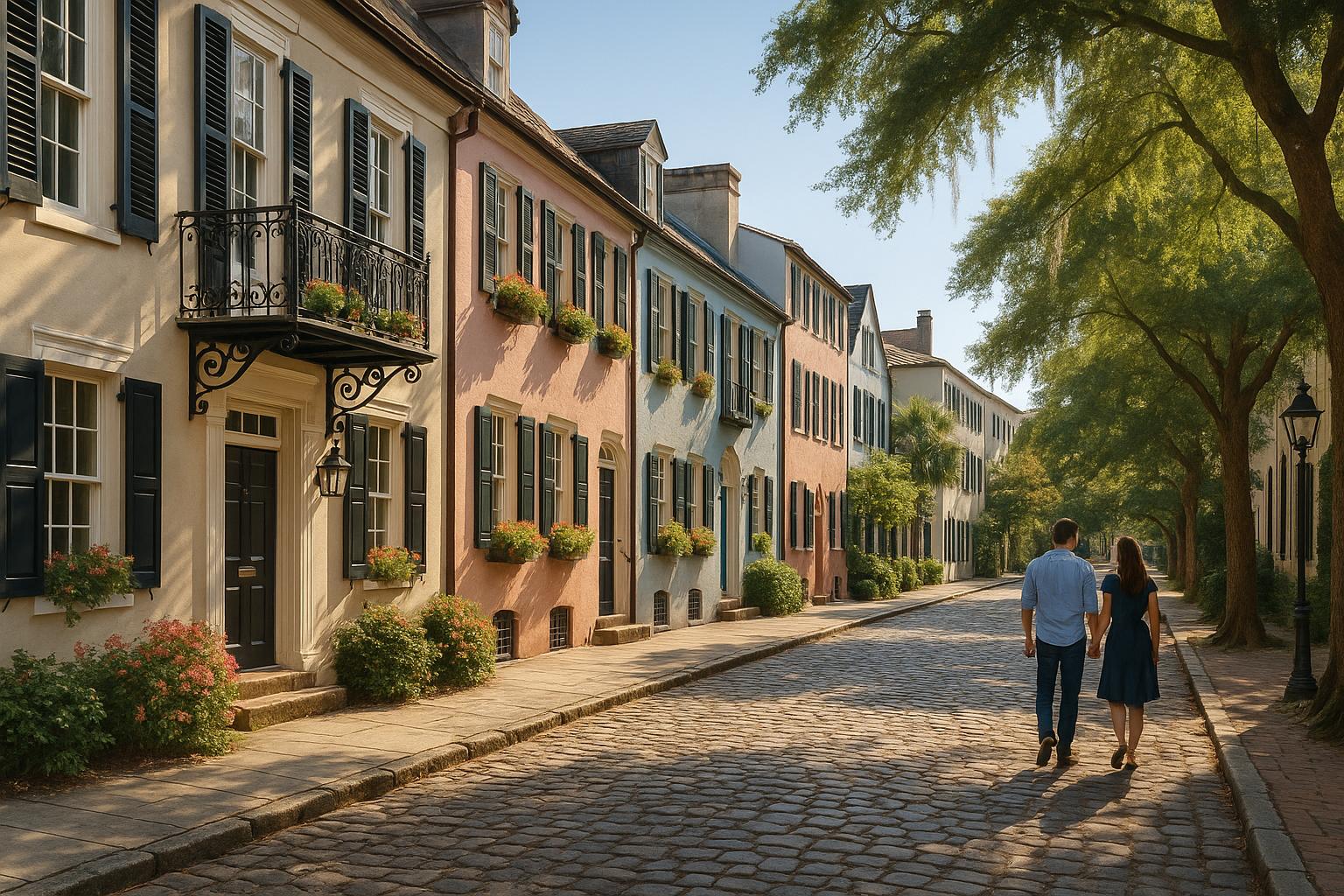
Downtown Charleston’s real estate market is thriving due to its historic charm, walkable neighborhoods, and strong investment potential. With median home prices reaching $702,500 in Charleston County and $998,000 in Downtown Charleston as of 2025, the area attracts buyers seeking a blend of history and modern living. Key highlights include:
- Historic Architecture: Homes reflect 300 years of design, from Colonial to Art Deco.
- Lifestyle Benefits: Walkable streets, waterfront views, and access to top-tier dining and cultural venues.
- Market Trends: A buyer-friendly market with rising inventory and price reductions, offering opportunities for negotiation.
- Long-Term Value: Strong appreciation potential supported by Charleston’s economy and preserved neighborhoods.
Whether you’re drawn to the iconic Rainbow Row, the bustling French Quarter, or the serene Battery, Charleston offers a unique mix of history and convenience. The city’s dedication to preservation ensures its timeless appeal while maintaining strong property values.
Historic Character and Architecture
Charleston’s rich 300-year architectural history draws buyers from around the world. Its streets are a living museum, showcasing eight distinct architectural styles – from the understated charm of Colonial designs to the sleek lines of Art Deco. These styles are more than just buildings; they define the city’s identity and provide a fascinating backdrop for exploring its districts, architectural evolution, and preservation efforts.
Preserved Historic Homes and Districts
The Historic District, one of Charleston’s crown jewels, is bordered by the Battery and White Point Garden to the south, Broad Street to the north, Meeting Street to the west, and East Bay Street to the east. Within this area, landmarks like Rainbow Row and the Charleston City Market stand as icons of the city’s past. Cobblestone streets and antebellum homes create an atmosphere that feels like stepping back in time.
A standout feature of Charleston’s residential design is the single house. These narrow homes, designed to fit snugly on limited lot sizes, also provide excellent ventilation – an essential feature in the humid Southern climate. Properties must meet strict criteria to earn historic designation, including being at least 50 years old and having ties to significant events or figures. This recognition often boosts their value, with historic homes selling for up to 26% more than comparable properties.
Charleston’s Signature Architectural Styles
Charleston’s architectural evolution mirrors the broader story of American design, with each style leaving its mark on the city:
- Colonial: Simple and symmetrical, exemplified by the Pink House on Chalmers Street.
- Georgian: Formal and elegant, as seen in Drayton Hall.
- Federal: Known for delicate arcaded piazzas, like those at the Josiah Smith House.
- Greek Revival: Featuring grand colonnaded porches, such as the ones at Roper House.
- Italianate: Characterized by low-pitched roofs and intricate details, seen in the Patrick O’Donnell House and the Dock Street Theatre renovation.
- Victorian: Marked by steep roofs and ornate gables, as at 2 Meeting Street Inn.
- Gothic Revival: Defined by pointed arches and vertical lines, like the French Huguenot Church.
- Art Deco: Bold, streamlined designs with stylized ornamentation, such as the Riviera Theater.
Local Rules and Restoration Programs
Charleston’s dedication to preservation goes beyond admiration for its architectural beauty – it’s a deeply ingrained part of the city’s identity. This commitment dates back to 1783, when the city adopted the motto, "She guards her customs, buildings and laws". By 1920, the Society for the Preservation of Old Dwellings was founded, and the Board of Architectural Review (BAR) was established in 1931 to oversee demolition and design decisions. In 1967, the historic district boundaries were significantly expanded to protect even more properties.
"Now is the time, tomorrow will be too late." – Susan Pringle Frost, Founder of the Preservation Society of Charleston
The Historic Charleston Foundation, founded in 1947, led groundbreaking efforts in neighborhood rehabilitation. For example, it revitalized the Ansonborough neighborhood through a strategy of purchasing, reselling, and placing easements on properties. After Hurricane Hugo in 1989, which damaged 85% of Charleston’s properties, preservation groups united to salvage architectural elements and guide homeowners through meticulous restorations. These efforts adhered to strict building codes and BAR standards, ensuring the city’s historic integrity remained intact.
Today, South Carolina mandates that historic preservation be part of comprehensive urban planning. These initiatives not only protect Charleston’s architectural legacy but also enhance property values. Historic homes continue to be sought-after investments and have proven to weather market fluctuations better than most, maintaining the timeless appeal that makes downtown Charleston so special.
Community Life and Lifestyle Benefits
Downtown Charleston draws homebuyers with its vibrant culture, diverse dining options, and a strong sense of community. This lively atmosphere is seamlessly intertwined with the city’s thriving arts and entertainment scene.
Arts, Entertainment, and Museums
Charleston offers residents year-round access to a rich array of cultural experiences, including museums, theaters, and art venues. The Charleston Museum, established in 1773, holds the title of America’s first museum. Its permanent exhibits – like the Lowcountry History Hall, the Armory, and Kidstory – offer a window into the city’s storied past.
The International African American Museum delves into the history and influence of the African American experience, shining a light on its impact both locally and globally. Meanwhile, the Gibbes Museum of Art showcases over 10,000 American artworks, preserving Charleston’s artistic legacy.
For live performances, residents can head to the Historic Dock Street Theatre, home to the Charleston Stage Company, or enjoy events at the Gaillard Center, a cutting-edge performing arts venue in the heart of downtown.
Art lovers also have plenty to explore. The Charleston Gallery Association Artwalk features over 40 galleries, and the popular First Friday ArtWalks, held monthly from 5:00 p.m. to 8:00 p.m., offer free admission to attendees. Beyond these venues, the city’s lively street culture adds another layer of artistic expression to everyday life.
Restaurants, Shopping, and Events
King Street serves as Charleston’s go-to shopping destination, earning recognition on multiple "Top 10 Shopping Streets" lists. This bustling area is packed with antique stores, fashion boutiques, and home design shops, making it easy for residents to browse everything from vintage finds to modern styles.
The dining scene on King Street is equally impressive, featuring acclaimed restaurants like Halls Chophouse, Maison, The Ordinary, Melfi’s, and O-Ku. For those seeking nightlife, spots like Prohibition, The Belmont, and The Cocktail Club provide lively evening options. Additionally, the Charleston City Market offers handcrafted goods and locally made souvenirs.
"Charleston oozes charm, is full of history, and is book-ended by wide beaches where people now gather for everything from music and art festivals to casual oyster roasts." – Stirling Kelso, Travel Expert & Tripadvisor Editor
Charleston’s event calendar keeps residents engaged with a variety of festivals and activities. Recent highlights include "Yoga on the Ashley" at Middleton Place, a riverside yoga session benefiting the Middleton Place Foundation, and "A Cup of History" at Drayton Hall, where guided tours paired with tea history presentations and tastings offered a unique way to connect with local traditions.
| Season | Notable Annual Events |
|---|---|
| Winter | Charleston Restaurant Week (January), Lowcountry Oyster Festival (February), Southeastern Wildlife Exposition (February) |
| Spring | Charleston Wine + Food Festival (March), Cooper River Bridge Run (April), Charleston Jazz Festival (April) |
| Summer | Spoleto Festival USA (May–June), Piccolo Spoleto (May–June) |
| Fall | Boone Hall’s Pumpkin Patch & Corn Maze (September–October), Food & Wine Classic (November) |
Walkable Streets and Waterfront Access
Charleston’s walkable downtown is a lifestyle highlight, offering a convenience often envied by suburban dwellers. Its compact layout allows residents to easily reach coffee shops, restaurants, cultural landmarks, and community events – all without relying on a car.
Research underscores the value of walkability. A 1999 study revealed that homebuyers were willing to pay $20,000 more for homes in pedestrian-friendly neighborhoods. Additionally, reducing traffic speeds by 5–10 mph can increase nearby property values by approximately 20%.
"There is something uniquely satisfying about stepping out your front door and walking to a neighborhood coffee shop – a small but tangible experience that makes a place feel connected and vibrant." – Bryan McElveen
Charleston’s waterfront access further enhances its appeal. Residents can enjoy scenic parks, promenades, and breathtaking harbor views. Iconic spots like The Battery and White Point Garden provide serene green spaces perfect for everything from morning jogs to leisurely evening strolls.
"Livability is shaped by what happens in the public realm – it’s about how we take care of our parks and our roads – are they safe for bikes and pedestrians, too?" – Amy Barrett, Director, South Carolina Chapter, Urban Land Institute
These features, combined with Charleston’s historic charm, make it an irresistible place to call home.
Real Estate Market Data and Investment Options
Downtown Charleston is currently a hotspot for buyers and investors, presenting enticing opportunities in what is clearly a buyer’s market.
Current Home Prices and Market Trends
As of May 2025, the median listing price for homes in Downtown Charleston stands at $998,000 – a sharp 33.2% drop compared to the previous year. Homes are selling at an average of 3.83% below their asking price and typically spend about 50 days on the market, further highlighting the buyer-friendly conditions. The median price per square foot in this area is $761.
Looking at the broader Charleston real estate market, price changes have been less dramatic. The overall median sales price saw a 4.1% increase in 2024, reaching $416,586. Single-family homes experienced a 4.6% rise, while townhouses and condos grew by 1.4%. Compared to the national average price growth of 6%, Charleston’s increase reflects a relatively cooler market. Inventory has surged by 36% year-over-year, with 3,696 active listings recorded. Notably, 36% of these listings have seen price reductions, giving buyers more leverage.
These trends set the stage for a deeper look at the pros and cons of buying versus renting in the area.
Buying vs. Renting: A Comparison
Choosing between buying and renting in Downtown Charleston depends on finances, lifestyle preferences, and long-term goals. Here’s a breakdown of the key factors:
| Factor | Buying | Renting |
|---|---|---|
| Upfront Costs | Requires a significant down payment (10–20% of the $998K median price) | Lower initial costs, usually just first month’s rent and a security deposit |
| Monthly Costs | Includes mortgage payments, taxes, insurance, and maintenance | Covers rent only; downtown rentals range from $1,400 to $13,500 per month |
| Flexibility | Less flexible – selling a home takes time | Highly flexible, with leases typically lasting 6–12 months |
| Equity Building | Builds wealth over time as property values rise | No equity is gained |
| Tax Advantages | Potential deductions for mortgage interest and property taxes | No comparable tax benefits |
| Maintenance | Homeowners are responsible for repairs and upkeep | Maintenance is usually handled by the landlord |
| Market Risk | Direct exposure to property value fluctuations | Renters are shielded from market volatility |
For example, two-bedroom apartments in Charleston County often rent for $2,200 or more per month. Nationally, owning a home tends to consume a smaller portion of income than renting in nearly 60% of counties, especially for three-bedroom properties. However, in Downtown Charleston, the premium location drives up costs, making the decision between buying and renting even more nuanced.
Long-Term Investment Potential
Beyond the immediate market dynamics, Downtown Charleston continues to attract attention for its enduring charm and coastal allure. Its historic character, combined with temperate weather, top-notch healthcare, strong schools, and an active outdoor lifestyle, ensures steady demand for homes in the area.
In May 2025, the Charleston Central area saw median sold prices jump by 19.2% year-over-year, reaching $1.0 million. This highlights the strong appreciation potential in prime downtown neighborhoods. The city’s economy, supported by industries like aerospace, technology, and tourism, adds further stability to the real estate market. Additionally, the market shows little evidence of distressed inventory, with very few short sales or foreclosures, reflecting high homeowner equity.
Interestingly, many buyers are now opting for smaller homes to balance their budgets while still enjoying the perks of downtown living. Although annual home value growth has slowed to just 1% this year, this market correction offers patient investors a chance to secure properties with promising long-term returns.
Top Downtown Charleston Neighborhoods
Charleston’s downtown neighborhoods are a tapestry of history and charm, each offering something unique. From grand antebellum mansions to quaint historic cottages, these areas showcase the city’s diverse appeal.
South of Broad and French Quarter
South of Broad stands as Charleston’s most prestigious neighborhood. Here, grand mansions and iconic Charleston single-style homes line picturesque, tree-shaded streets. This area is home to landmarks like White Point Garden at the Battery and the famed Rainbow Row. The average price for a single-family home is $4.3 million, while condos average $1.9 million.
"South of Broad is not just a neighborhood; it’s a living testament to Charleston’s rich history and enduring charm." – Handsome Properties
Life in South of Broad feels like stepping back in time, with cobblestone streets, centuries-old architecture, and beautifully maintained gardens creating an air of refined Southern living.
The French Quarter, on the other hand, is a vibrant mix of residential and cultural energy. Its name harks back to the French merchants who once lived there, and it earned a spot on the National Register of Historic Places in 1973, thanks to efforts to preserve its historic character. Notable landmarks include the Dock Street Theater, the Pink House, and Waterfront Park.
This neighborhood is perfect for those who want to be close to art galleries, restaurants, and the Charleston City Market. While South of Broad offers a quieter, more residential vibe, the French Quarter thrives with activity, blending history with modern-day attractions.
Harleston Village and Ansonborough
For those seeking a mix of history and convenience, these neighborhoods provide excellent options.
Harleston Village is a lively and accessible area centered around Colonial Lake and Moultrie Park. Its proximity to the Medical University of South Carolina (MUSC) and the College of Charleston makes it a hub for young professionals and academics. The neighborhood has a population of 4,033, with a median age of 39 years and average individual incomes of $76,251.
The streets here are pedestrian-friendly and lined with trees, offering a welcoming atmosphere. Single-family homes average $1.5 million, while condos are typically around $1.1 million. With King Street shopping and downtown amenities nearby, it blends historic charm with modern practicality.
Ansonborough is one of Charleston’s smallest historic districts, known for its authentic Charleston single-style homes. The Col. William Rhett House, one of the first restored homes in Charleston, highlights the neighborhood’s dedication to preservation.
This compact area offers attached homes averaging $1 million and single-family homes at about $3.2 million. Its central location provides easy access to the Harbor, Market Street, and the Gaillard Center, making it ideal for those who value both history and convenience.
Neighborhood Comparison Chart
Here’s a snapshot of how these neighborhoods compare:
| Neighborhood | Average Home Price | Key Features | Best For | Walkability |
|---|---|---|---|---|
| South of Broad | $4.3M (Single-family) | Grand mansions, Rainbow Row, The Battery | Luxury buyers, history lovers | High – cobblestone streets, waterfront views |
| French Quarter | $2.6M | Art galleries, Dock Street Theater, restaurants | Cultural enthusiasts, investors | Excellent – close to attractions and dining |
| Harleston Village | $1.5M (Single-family) | Colonial Lake, college proximity, diverse housing | Young professionals, academics | Very high – pedestrian-friendly, scenic streets |
| Ansonborough | $3.2M (Single-family) | Smallest historic district, colonial charm | History purists, downtown workers | High – central location, compact layout |
Each neighborhood has its own personality. South of Broad exudes prestige and history, the French Quarter offers cultural vibrancy, Harleston Village combines community and convenience, and Ansonborough delivers a historic, walkable experience. Whether you’re drawn to luxury, culture, or accessibility, Charleston’s downtown has a neighborhood to match your lifestyle.
sbb-itb-998eb83
How to Navigate the Downtown Real Estate Market
Navigating Charleston’s downtown real estate market, particularly when dealing with historic properties, requires careful planning and expert advice.
Working with Local Real Estate Agents
Choosing the right real estate agent is crucial in Charleston’s competitive market. Seek out professionals who specialize in historic properties and are well-versed in the city’s preservation regulations. They should also have experience navigating the Board of Architectural Review (BAR) process and a clear understanding of which renovations require special permits.
A good agent will provide a detailed market analysis of recent sales in the area. With inventory levels rising, buyers now have more options to explore. In fact, 36% of active listings saw price reductions in 2025, signaling potential opportunities for negotiation. When interviewing agents, ask about their track record with historic homes, their knowledge of flood zones, and their connections with local inspectors and contractors. It’s worth noting that the median days on market increased to 45 days in 2025, giving buyers more time to evaluate their options thoughtfully.
Once you’ve secured the right agent, it’s time to dive into the unique challenges of owning a historic home.
Plumbing Issues in Historic Homes
Historic homes often come with plumbing systems that need close attention, which can significantly affect your investment. Homes built before the 1960s frequently feature galvanized steel pipes, notorious for corrosion and clogs. Even older properties, constructed before the early 1900s, may have lead pipes – posing serious health risks and requiring immediate replacement.
Professional inspections are a must. These typically cost between $100 and $1,375, with most comprehensive assessments averaging around $575. If major plumbing updates are necessary, replacing all supply lines can start at approximately $1,200.
Charleston’s humid climate, with summer humidity levels hovering between 70–80%, creates an ideal environment for mold growth after water damage. Before finalizing a purchase, thoroughly inspect the home’s plumbing. Check for cracks, leaks, and damaged fixtures, and confirm consistent water pressure. Look for discoloration on walls or ceilings, which could indicate hidden leaks, and consider using a sewer camera to identify root intrusion or decaying pipes. These issues are particularly common in historic properties where modern updates are often restricted by preservation rules.
Partnering with experienced professionals, like ALL Plumbing Services, can be invaluable. Their expertise with Charleston’s older homes ensures accurate assessments and helps identify potential problems before they escalate into costly repairs – all while adhering to preservation guidelines.
With these factors in mind, knowing when to buy becomes a key part of your strategy.
When to Buy in a Changing Market
Timing your purchase wisely can lead to significant savings. In Charleston, February typically offers the lowest listing prices, averaging 5.4% lower than other months. October boasts the highest housing inventory, while July sees 20% more homes on the market – but often at higher prices.
The current market conditions are leaning in favor of buyers compared to recent years. Charleston’s housing market is shifting toward a more balanced state, with home value growth slowing. This creates opportunities for buyers who are well-informed and can navigate the intersection of historic charm and market trends.
To strengthen your position, get pre-approved for a mortgage before beginning your search. Research specific neighborhoods to understand their unique market patterns, such as average days on market, recent price trends, and inventory levels.
If you’re purchasing as an investment, focus on areas with steady property appreciation. For those seeking a primary residence, prioritize finding a home that fits your needs and preferences over trying to perfectly time the market.
Conclusion: Why Downtown Charleston Stays Popular
Downtown Charleston continues to captivate buyers with its blend of historic charm and modern conveniences, offering a unique opportunity to own a piece of America’s architectural past while enjoying contemporary living.
The real estate market in Charleston remains robust. Over the past year, home prices have risen by more than 20%. Homes typically sell in just 25 days, and inventory levels hover around 2.3 months. These numbers reflect a strong and competitive market, bolstered by the city’s ability to balance preservation with progress. Charleston’s growing tech industry is drawing in young professionals, further strengthening the local economy and sustaining property values. Experts anticipate home prices to climb another 4–6% by 2025.
The lifestyle in downtown Charleston is equally compelling. Its walkable streets are lined with historic homes, complemented by world-class dining and easy access to the waterfront. Cultural gems like The Charleston Museum, established in 1773 as "America’s First Museum", highlight the city’s deep historical roots and vibrant offerings. Whether you’re strolling past centuries-old architecture or enjoying the dynamic culinary scene, Charleston delivers an unmatched living experience.
For prospective buyers, downtown Charleston offers a rare combination of timeless character and modern living. From wide porches and intricate architectural details to the market’s resilience during economic fluctuations, the city promises both charm and stability. However, navigating the nuances of owning a historic property – such as preservation regulations and older home systems – requires expert guidance. Trusted professionals like ALL Plumbing Services can help address these challenges, ensuring your investment is well-maintained while you enjoy all that Charleston has to offer.
With ongoing development and a steady influx of new residents, Charleston’s appeal shows no signs of fading. Its seamless blend of history, culture, and coastal beauty continues to attract those seeking a lifestyle that celebrates both the past and the present. In a world where authenticity is rare, downtown Charleston remains a shining example of how tradition and progress can coexist beautifully.
FAQs
What factors are driving up home prices in Downtown Charleston?
Why Are Home Prices Rising in Downtown Charleston?
Home prices in Downtown Charleston are climbing, and there are a few clear reasons behind this trend. First, the area’s population is growing steadily, paired with a strong local job market. These factors keep demand for housing high, even as mortgage interest rates begin to edge up. On top of that, Charleston’s historic charm, lively atmosphere, and easy access to amenities like waterfront views and top-notch dining make it an incredibly appealing place to call home.
Looking ahead, experts are forecasting that property values in Charleston will continue their upward trajectory. Some neighborhoods could even see increases of up to 7% in the coming years. With this mix of rising demand and promising investment opportunities, it’s no surprise that home prices in Downtown Charleston are on the rise.
How does Charleston’s focus on historic preservation influence property values and the local real estate market?
Charleston’s focus on preserving its historic charm significantly impacts property values while enhancing the city’s distinctive allure. Homes within its historic districts are especially prized for their timeless beauty and unique architectural details, often fetching premium prices. For instance, the median price of homes in these areas can surpass $1,320,000, underscoring their high demand.
This preservation effort doesn’t just protect the city’s heritage – it also makes Charleston an appealing place to live for those who appreciate its cultural roots and historic elegance. Because of this, properties in these neighborhoods remain in high demand, ensuring steady home values even during uncertain market conditions. Beyond that, this dedication to preservation nurtures a dynamic, heritage-rich community that continues to attract both residents and investors, contributing to the city’s long-term growth and vitality.
What are the benefits and challenges of investing in historic homes in Downtown Charleston?
Investing in historic homes in Downtown Charleston can be a rewarding venture. These properties often gain value thanks to their distinct architectural appeal and prime location near iconic landmarks, great dining spots, and stunning waterfront views. Beyond financial benefits, owning one of these homes means becoming part of Charleston’s rich historical tapestry, which makes them especially appealing to both homeowners and investors.
That said, there are challenges to keep in mind. Maintenance and repairs can be more expensive since preserving the historical character often requires specialized materials and skilled craftsmanship. Additionally, strict renovation rules may limit what you can change, and modern conveniences – like ample parking or updated infrastructure – might not always be readily available. Taking the time to weigh these factors carefully is key to making an informed investment.