Pipe corrosion can lead to expensive repairs, health risks, and water contamination. To avoid these issues, focus on:
- Water Quality Management: Test water pH (ideal range: 6.5–8.5), monitor for dissolved oxygen, and address high chloride or sodium levels.
- Material Selection: Use corrosion-resistant materials like stainless steel, PVC, or PEX. Match materials to your water chemistry to reduce risks.
- Protective Coatings: Apply epoxy linings, coatings, or wraps to shield pipes from moisture and mechanical damage.
- Regular Maintenance: Inspect pipes, clean buildup, and test water annually to catch early signs of corrosion.
Charleston, SC, and surrounding areas face unique challenges due to humid, coastal conditions. Taking these steps now can save thousands in repairs and extend the life of your plumbing system.
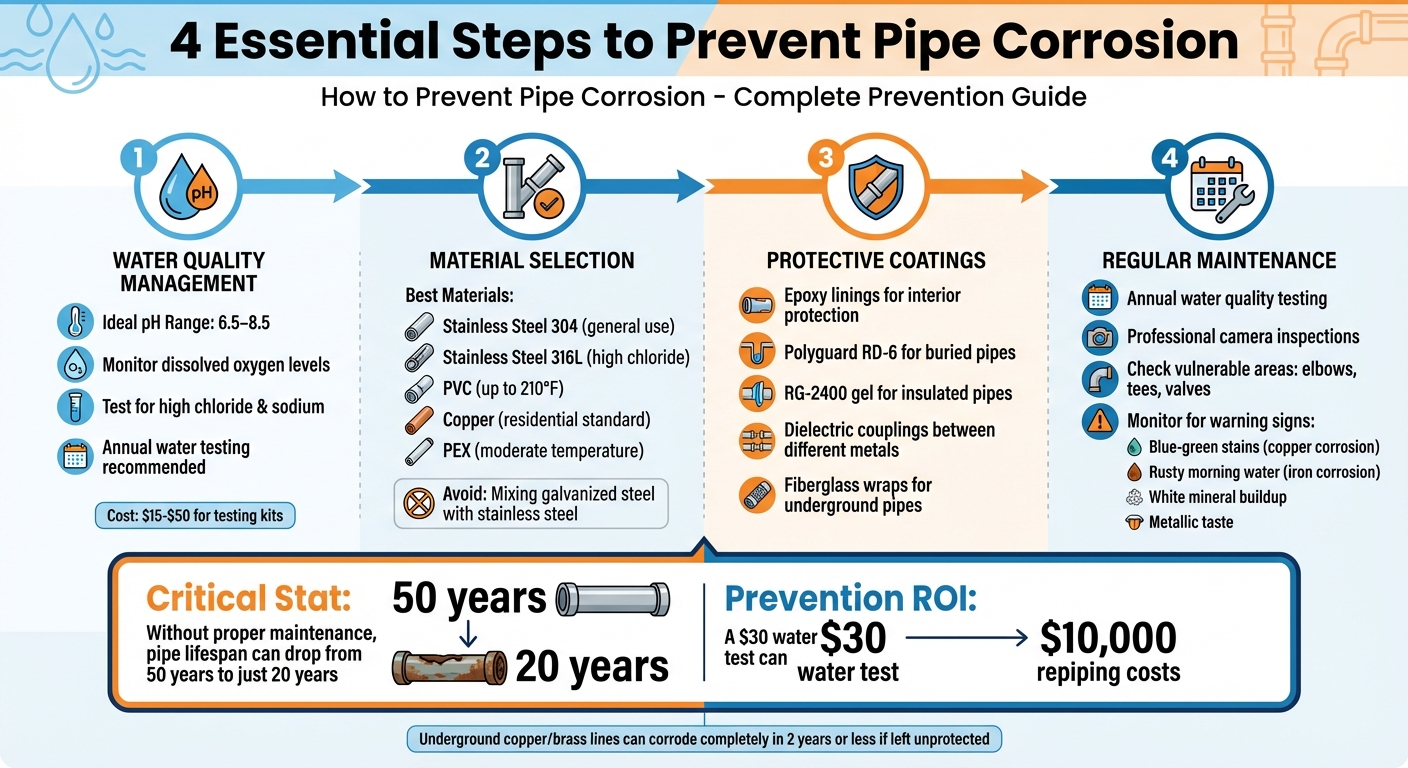
4-Step Pipe Corrosion Prevention Guide with Key Factors
What Causes Pipe Corrosion
Understanding what drives pipe corrosion is crucial to addressing problems before they escalate. Key contributors include water chemistry, environmental conditions, and mechanical stress.
How Water Chemistry Affects Corrosion
The makeup of your water plays a big role in how quickly pipes wear down. For instance, pH levels are a major factor. Water with a pH below 6.5 is acidic, which can speed up corrosion and cause metals to leach into the water. On the other hand, water with a pH above 8.5 may encourage microbiologically induced corrosion. The U.S. Environmental Protection Agency (EPA) advises keeping water pH between 6.5 and 8.5 to help reduce these risks and minimize leaching of lead and copper into drinking water.
Dissolved oxygen in water is another culprit, as it accelerates oxidation in metal pipes. High water temperatures make things worse by speeding up the chemical reactions that break down metal. While calcium carbonate can form a protective layer inside pipes, too much of it can lead to clogs. Salts like sodium chloride also increase water’s conductivity, intensifying corrosion. Even chemical additives used for disinfection or reducing turbidity can contribute to faster pipe degradation.
Although water chemistry is a direct factor in corrosion, the environment and mechanical stress often make the problem worse.
Environmental and Mechanical Factors
External conditions are just as important as water properties. For buried pipes, the type of soil matters – a lot. Soils with high conductivity, especially those containing salts or acidic compounds, can significantly speed up corrosion rates. Moisture and humidity also play a role, as they act as catalysts for corrosion when metal surfaces are exposed to oxygen.
Mechanical stress adds another layer of complexity. Galvanic corrosion, for example, happens when two different metals, like copper and galvanized steel, come into contact with water. In this scenario, the less noble metal corrodes faster. Erosion-corrosion is another issue, especially at pipe elbows or bends where high-velocity water (over 5–8 feet per second in copper pipes) physically wears down the pipe walls. Pressure surges and vibrations from pumps can lead to mechanical fatigue, causing cracks and eventual failures. Additionally, heating and cooling cycles cause thermal expansion and contraction, which can thin pipe walls over time, particularly if pipes rub against hangers or supports.
These factors highlight the importance of choosing the right materials and performing regular maintenance to combat pipe corrosion effectively.
sbb-itb-998eb83
Selecting the Right Pipe Materials
Picking the right pipe materials can save you from expensive repairs and replacements down the line. The trick is to choose materials that align with your water conditions and usage needs.
Corrosion-Resistant Materials
Stainless steel is known for its strong resistance to corrosion. For most applications, 304 stainless steel works well. However, if your water has high chloride levels, 316L stainless steel is a better option. It contains molybdenum, which helps prevent chloride-induced pitting. In harsher environments, where temperatures exceed about 750°F, alloy pipes made from steel and chromium provide better protection against chemical damage at high temperatures. For situations where intergranular corrosion might occur, using extra-low carbon stainless steel can help avoid decay along grain boundaries.
PVC and other plastic materials are also highly resistant to corrosion. Polypropylene, for instance, can handle fluids up to 210°F and is particularly durable against corrosion, second only to specialized fluoropolymers. However, PVC has its limits – it can crack when exposed to certain solvents, such as polyolester (POE) oils often used in HVAC systems.
Copper is another popular choice, especially for residential plumbing, thanks to its natural resistance to corrosion and its noble properties compared to steel. While copper is nearly twice as expensive as schedule 10 304 stainless steel, it’s a dependable option for domestic and hydronic applications. PEX is also a corrosion-resistant alternative, suitable for moderate temperature applications. However, it tends to require more frequent support and is less efficient at retaining heat compared to metal pipes.
To get the best performance, it’s essential to match your material choice to your specific water chemistry.
Matching Materials to Water Conditions
Water chemistry plays a crucial role in selecting the right materials. For starters, test your water for chloride levels. High chloride concentrations demand materials with greater resistance to pitting, like 316L stainless steel. If your water is softened and has elevated sodium content, avoid using galvanized steel. Sodium can strip away the protective oxide layer, leading to rapid pipe failure.
Mixing stainless steel with galvanized steel fittings is a bad idea. Experts Jeff Boldt and Keith Stone explain:
The dielectric corrosion that occurs between the galvanizing (zinc) and the SS is extreme because the materials are at nearly opposite ends of the metal nobility chart.
If you must connect different metals, choose ones that are closer together on the galvanic series to reduce the risk of corrosion.
For systems that use glycol, keep concentrations between 18% and 25%. This range helps prevent microorganism growth, which can lead to corrosion. In large chilled-water storage systems with stainless steel, it’s also important to monitor oxygen levels. Stainless steel relies on oxygen to maintain its protective oxide layer, and low oxygen environments can lead to microbially influenced corrosion (MIC).
Protective Methods to Stop Corrosion
Once you’ve chosen the right materials, the next step is to protect them with effective barriers. These protections work hand-in-hand with water chemistry management and material selection, creating a well-rounded approach to preventing corrosion. Industrial coatings and linings, for instance, act as a physical shield, keeping metal and water apart to stop corrosion before it starts .
Using Coatings and Linings
Coatings and linings are designed to keep water and moisture off metal surfaces. For pipelines that are buried or submerged, systems like the Polyguard RD-6 offer a geotextile-backed coating. This type of coating allows cathodic protection currents to reach the pipe even if the coating gets damaged, ensuring corrosion is kept at bay even when the coating separates from the pipe . If you’re manually applying tape-based coatings, make sure to use consistent tension to create a solid bond and avoid air pockets.
For insulated pipes, corrosion control gels like RG-2400 can be used to prevent moisture damage. These gels also come with a practical feature – they are brightly colored (usually purple), making it easy to see which areas have been treated. Tools like the AccuTrowel help ensure the gel is applied at the correct thickness, reducing waste and maximizing protection.
Underground pipes face additional risks from physical damage during backfilling. In these cases, fiberglass wraps with water-activated resin can be applied. These wraps harden quickly, forming a sacrificial layer that absorbs abrasions and protects the primary coating beneath. For pipelines exposed to extreme conditions, like sub-freezing temperatures or ammonia, multi-layer composite membranes made of aluminum foil and polyester film serve as vapor barriers to keep moisture away from the pipe.
While physical barriers are essential, addressing the risks of dissimilar metal contact is equally important, as explained next.
Stopping Galvanic Corrosion
Physical coatings are just one part of the equation. Preventing electrical interactions between dissimilar metals is also key to avoiding galvanic corrosion. One effective solution is to use dielectric couplings when connecting two different metals. These couplings include rubber gaskets that block electrical currents from passing between the metals. David Balkan, CEO of Balkan Sewer And Water Main, highlights the urgency of such precautions:
Underground copper or brass lines can be completely rotted out in 2 years or less if left unprotected.
For underground pipes, wrapping copper or brass lines in PVC or plastic irrigation tubing can shield them from stray electrical currents in the soil.
Another issue arises when electrical systems are grounded to water lines. Grounding rods typically last around 15 years. If your home’s electrical system relies on the cold water service line for grounding, it’s a good idea to have a licensed electrician install a dedicated grounding rod or consult a plumber in Charleston, SC for a system inspection. This prevents electrolysis from damaging your pipes.
Regular Maintenance to Prevent Corrosion
While protective coatings and quality materials are essential for shielding pipes from corrosion, regular maintenance is the real key to keeping your plumbing system in good shape. Even the most durable materials need consistent care. Routine maintenance can catch early signs of corrosion, making repairs easier and far less expensive. Without it, corrosive water chemistry could slash your pipe system’s lifespan from 50 years to just 20 years. Think about it: a simple $30 water test could save you from a $10,000 repiping project. Below, let’s explore the crucial testing and inspection steps that can help extend the life of your pipes.
Testing Water Quality
Testing your water quality is one of the most effective ways to protect your pipes. If you use well water, it’s a good idea to test annually for pH, hardness, chlorine, and metals. Even if you rely on municipal water, the condition of your home’s pipes can still influence water quality. As Ryan Pietrzak, an Illinois Licensed Plumber, highlights:
"Understanding your water quality and spotting early corrosion signs lets you intervene before it becomes a full repipe situation."
One reliable method is the "first-draw" test, which compares water that’s been sitting in your pipes overnight with water that’s been flushed for two minutes. This can reveal how much your pipes are contributing to water quality issues. Home testing kits are affordable, costing around $15–$30, while more detailed lab analyses range from $30–$50.
Here are some common warning signs to watch for:
- Blue-green stains in sinks: Could indicate copper corrosion.
- Rusty or brown water in the morning: May signal iron pipe corrosion.
- White mineral buildup on fittings: Often suggests a failing galvanized coating.
- Metallic taste in water: Flushing the tap for 60 seconds can help clear concentrated metals.
If your water has low pH levels, a calcite neutralizer filter can help balance it. For high chlorine levels, a whole-house carbon filter is often effective. Beyond testing, regular cleaning and inspections are essential to catch early signs of corrosion.
Cleaning and Inspecting Pipes
Cleaning your pipes regularly prevents debris and biological growth from creating corrosion hotspots. One common issue is microbiologically induced corrosion (MIC), where microbial activity inside the pipes causes unexpected internal damage. Professional camera inspections are a great way to spot internal thinning, pitting, or debris buildup that you can’t see from the outside.
It’s especially important to check vulnerable areas like elbows, tees, expansions, and valve seats. Warning signs such as pinhole leaks, recurring leaks in galvanized pipes, or persistent discoloration all suggest it’s time for a professional inspection. These inspections don’t just identify where corrosion is occurring – they also help determine whether the issue stems from your water source or the pipes themselves.
For homeowners in Charleston, SC, and nearby areas like Bluffton, SC, ALL Plumbing Services provides expert inspections and maintenance services to ensure your plumbing system stays in top condition.
Protect Your Plumbing Investment
Taking care of your plumbing system isn’t just about fixing problems when they arise – it’s about consistent attention and expert guidance to keep everything running smoothly.
One major aspect of this care is preventing pipe corrosion. This involves a mix of smart choices and regular upkeep. Key steps include maintaining balanced water chemistry, using corrosion-resistant materials, applying protective coatings, and scheduling routine inspections. Without these measures, corrosion-related maintenance and repairs can rack up billions of dollars in costs annually.
Professional plumbing services play a crucial role in this process. Experts can identify specific types of corrosion – like galvanic, pitting, or stray current – and provide tailored solutions. For instance, they might implement advanced systems like cathodic protection, which adjusts local pH levels to prevent corrosion. They can also detect hidden issues, such as internal pipe thinning or microbiological damage, while ensuring protective coatings are intact and different metals are properly insulated.
For homeowners in Charleston, SC, and Bluffton, SC, ALL Plumbing Services offers a range of solutions designed to protect your plumbing system. Their services include water quality testing, filtration system installation, and expert pipe inspections. They’ll evaluate your water conditions, recommend the best materials and protective measures, and create a maintenance plan to ensure your plumbing system lasts for decades.
Don’t wait for visible signs like blue-green stains or leaks to take action. Schedule an inspection with ALL Plumbing Services (https://allplumbingcompany.com) and get a customized corrosion prevention plan that will save you money on repairs and keep your home’s plumbing in top condition.
FAQs
Do I need a water test if my water comes from the city?
Absolutely, testing city water is a smart move. Even though municipal water is treated, it can still have issues like aggressive water chemistry. This condition can speed up pipe corrosion, which might release harmful metals into your water supply. Regular testing not only ensures your water is safe to drink but also helps protect your plumbing system from costly long-term damage.
How do I know if my pipes are corroding before they leak?
You might notice early signs of pipe corrosion if you see discolored or rust-colored water, experience a metallic taste, observe lower water pressure, or spot rust or buildup on the pipes themselves. Keeping an eye out for these issues during routine plumbing checks can help you tackle corrosion early and prevent leaks or more extensive problems.
When should I call ALL Plumbing Services for a corrosion inspection?
If you notice signs of pipe wear, reduced water quality, or suspect corrosion in your plumbing system, it’s time to reach out to ALL Plumbing Services. Regular inspections are especially important if your pipes are older or made from materials that are more likely to corrode. Staying ahead with proactive checks can save you from potential health risks and expensive repairs while keeping your plumbing system safe and working properly.