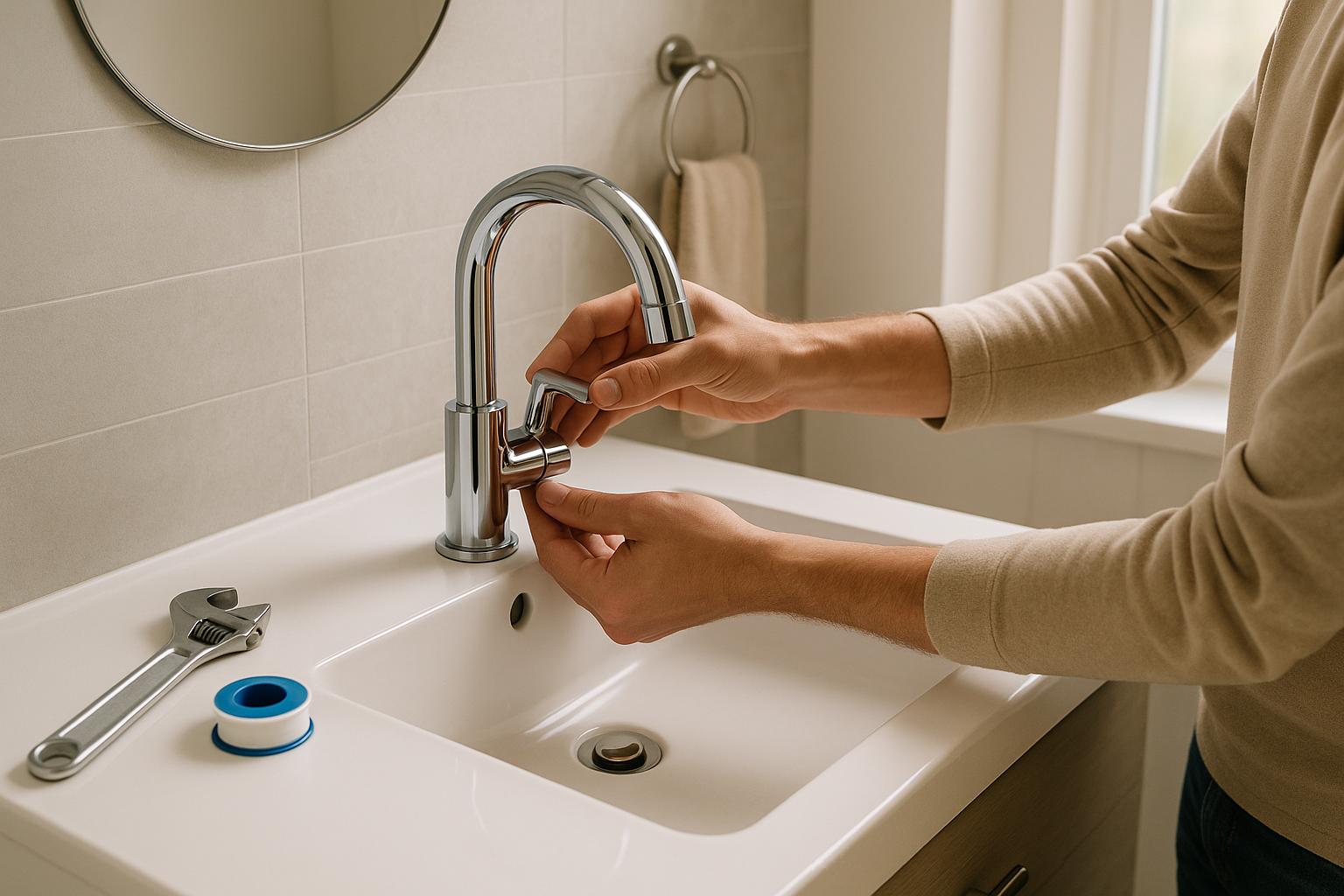
Installing bathroom fixtures yourself can save money and let you customize your space. However, success depends on proper planning, the right tools, and understanding when to call a professional. This guide covers everything from tools and materials to step-by-step instructions for sinks, faucets, toilets, and showerheads, as well as solutions to common issues like leaks and misalignment.
Key Takeaways:
- Preparation is crucial: Measure accurately, gather tools (e.g., wrenches, caulk guns), and use durable materials like brass or stainless steel.
- Follow proper techniques: Avoid common mistakes like over-tightening or poor sealing to prevent leaks and damage.
- Consider Charleston’s climate: Use mold-resistant caulk and insulated pipes to combat humidity and condensation.
- Know your limits: Complex tasks (e.g., gas lines, electrical work) or structural repairs require professional help.
Whether you’re upgrading a sink or installing a smart toilet, this guide ensures your fixtures are functional, water-efficient, and durable. For major challenges, local plumbers in Charleston are available for expert assistance.
Tools, Materials, and Preparation
Before diving into your bathroom project, gather everything you’ll need ahead of time. This keeps the process smooth and ensures your bathroom is out of commission for as little time as possible. Below, you’ll find a detailed breakdown of the tools, materials, and preparation steps to set you up for success.
Required Tools for Fixture Installation
Having the right tools on hand can make all the difference. Here’s what you’ll need:
- Basic hand tools: Start with an adjustable wrench and pipe wrench – perfect for handling most nuts and fittings. Needle-nose pliers are great for working in tight spots, like under sinks or behind toilets.
- Measuring and leveling tools: A tape measure is essential for getting accurate dimensions, while a level ensures your fixtures are aligned properly. A stud finder is also handy for locating wall framing, especially when mounting heavier fixtures like wall-mounted sinks.
- Cutting and sealing tools: A hacksaw is ideal for trimming supply lines or cutting bolts, while a utility knife helps with caulk removal and opening packaging. A caulk gun is necessary for applying sealant to prevent water damage.
- Specialty plumbing tools: A basin wrench is a lifesaver for tightening faucet nuts in hard-to-reach places. Plumber’s putty is essential for sealing drains, and plumber’s tape (Teflon tape) ensures leak-free threaded connections without over-tightening.
Materials Checklist
Your materials will vary based on the specific fixtures you’re installing, but here are the essentials:
- Supply lines and connections: Braided stainless steel supply lines are flexible and durable, available in various lengths like 12, 20, and 30 inches. For water control, quarter-turn shutoff valves are easier to use than older gate valves. Compression fittings simplify connections without requiring soldering.
- Sealing and mounting materials: Silicone caulk is ideal for humid environments, as it resists mold and mildew better than latex caulk. Choose clear or white to match your fixtures. Plumber’s putty is great for sink drains, while rubber gaskets and washers create watertight seals for joints.
- Hardware and fasteners: Lag bolts secure toilets to floor flanges, while toggle bolts or wall anchors support wall-mounted fixtures when studs aren’t available. Most fixtures include mounting brackets, but keeping extra screws and washers on hand can save time if anything goes missing.
- Specialized materials for humid climates: In areas like Charleston, pipe insulation prevents condensation on supply lines in crawl spaces or basements. Anti-seize compound protects threaded connections from corrosion caused by high humidity. A water-resistant primer can help caulk adhere better in damp environments.
Preparation Steps for Installation
Taking the time to prepare properly can save you from headaches later on. Here’s how to get started:
- Measure your space: Accurate measurements are key to avoiding costly mistakes. For wall-mounted sinks, measure the distance between studs. For toilets, determine the rough-in distance (from the wall to the center of the floor drain) – common sizes are 10, 12, or 14 inches. Also, measure the height of existing supply lines and drain connections to ensure compatibility with your new fixtures.
- Prep the work area: Turn off the water supply at the main shutoff valve, then drain any remaining water by opening the lowest faucets in your home. Remove old fixtures and clean the mounting surfaces thoroughly. If you’re working in a humid space, like a basement, allow extra drying time to ensure surfaces are ready for installation.
- Address safety and climate considerations: Test electrical outlets with a circuit tester before working near them, especially if there’s water involved. Make sure your work area is well-lit, and keep a bucket and towels nearby for unexpected spills. Running a dehumidifier during installation can help caulk cure properly and reduce condensation on tools and surfaces. If it’s summer and the heat is intense, aim to work early in the morning when it’s cooler.
Step-by-Step Installation Instructions
With all your tools and materials ready, it’s time to dive into the installation process. These step-by-step instructions will help ensure your fixtures not only look great but also function properly. Take your time to avoid leaks or misalignment.
Installing a Sink
Sink installation, whether it’s a drop-in, pedestal, or wall-mounted type, follows some common principles.
For drop-in sinks, start by placing the provided template on your countertop. Make sure it’s centered and aligned with the backsplash. Trace the outline with a pencil, then cut the opening using a jigsaw. Test-fit the sink to confirm it sits flush. Once satisfied, apply a bead of silicone caulk around the sink rim, lower it into place, and wipe away any excess caulk immediately.
Pedestal sinks require secure wall mounting. Use a stud finder to locate wall studs, which are usually spaced 16 inches apart. Mark the mounting holes according to the sink’s template and use a bubble level to ensure everything is straight. Drill pilot holes, attach the mounting bracket with screws, and position the pedestal base. Double-check the alignment before connecting the plumbing.
For wall-mounted sinks, the wall must fully support the sink’s weight. If the mounting bracket doesn’t align with existing studs, install a mounting board between them for added support. Use a level to ensure the bracket is perfectly horizontal to prevent water from pooling on one side of the basin.
Once your sink is in place, it’s time to install the faucet.
Installing a Faucet
Faucet installation varies slightly depending on the type, but the steps are straightforward.
For single-handle faucets, feed the supply lines through the center hole in the sink or countertop. From underneath, slide the rubber gasket and mounting hardware onto the shank, hand-tighten the mounting nut, and use a basin wrench to give it an extra quarter-turn. Connect the hot water supply to the left valve and the cold water supply to the right valve, ensuring all connections are snug but not overtightened.
Double-handle faucets require individual connections for each valve. Insert each valve stem through its corresponding hole, ensuring the hot water valve is on the left (as is standard in the U.S.). Wrap all threaded connections with plumber’s tape to minimize the risk of leaks.
For touchless faucets, you’ll need to connect the electrical components. These models come with a battery pack that mounts under the sink and connects via a low-voltage cable. Follow the manufacturer’s wiring instructions and test the sensor functionality before finishing up.
Once the faucet is installed, turn the water back on gradually and check all connections for leaks.
Next up: toilet installation.
Installing a Toilet
A properly installed toilet is essential to avoid leaks and ensure long-term stability.
Start by inspecting the toilet flange for any damage or instability. A damaged flange must be repaired or replaced to create a secure base and prevent leaks. Ensure the flange is level and firmly secured.
The wax ring is key to forming a watertight seal between the toilet and the drainpipe. Use a standard wax ring for most installations, or opt for a thicker one if the flange sits below floor level. Place the wax ring on the flange with the tapered side facing upward.
Carefully lower the toilet onto the flange, ensuring it’s straight and doesn’t rock or shift once it contacts the wax ring. If the toilet wobbles, use plastic shims for stability, but avoid overtightening the bolts. Insert the closet bolts, hand-tighten, and secure the toilet in place.
Connect the water supply line to the fill valve, typically located on the left side of the tank. Turn the water on and let the tank fill completely. Check for any leaks around the base or at the supply connection.
Finally, let’s move on to the showerhead.
Installing a Showerhead
Showerhead installation is often one of the easiest steps.
For fixed showerheads, remove the old head by turning it counterclockwise. Use a cloth to protect the finish while unscrewing. Clean the threads to remove any old plumber’s tape or mineral buildup. Reapply fresh plumber’s tape to the threads and screw on the new showerhead by hand until snug. Use an adjustable wrench for an extra half-turn, but be careful not to overtighten.
Handheld showerheads come with a flexible hose and a mounting bracket. Position the bracket at a comfortable height, typically 72 to 78 inches from the floor. If no stud is available, use wall anchors to secure the bracket. Attach the hose to the shower arm, ensuring a tight connection.
Rain-style showerheads are larger and heavier, so they require extra support. You may need a reinforced shower arm or additional bracing in the wall. These showerheads also work best with water pressure between 50 and 60 PSI, so check your home’s water pressure if needed.
Once installed, run the shower for several minutes to test all connections and confirm there are no leaks.
Choosing Fixtures: Function, Style, and Water Efficiency
Picking the right bathroom fixtures isn’t just about appearances – it’s about finding the perfect balance between functionality, style, and water efficiency. The choices you make will impact your water consumption, maintenance routine, and overall comfort every day.
Water Efficiency and Eco-Friendly Features
If you’re aiming to save water and reduce utility bills, look for fixtures certified for water efficiency, like those meeting EPA WaterSense standards. These products maintain excellent performance while using less water, making them a smart choice for both your wallet and the environment.
Low-flow showerheads are another easy upgrade. They’re designed to deliver a satisfying shower experience while using less water, so you can reduce your water usage without compromising comfort. Similarly, dual-flush toilets give you control over water use, offering a lighter flush for liquids and a full flush for solids.
Faucets with aerators are another practical option. By mixing air with water, aerators maintain water pressure while cutting down on flow, which can lead to noticeable savings over time.
Material and Style Considerations
When it comes to durability, brass fixtures are hard to beat. While they may cost more upfront, their long lifespan often makes them a worthwhile investment. For finishes, brushed nickel and stainless steel are popular choices because they resist water spots and fingerprints, making them easier to maintain. If you’re looking for something more distinctive, finishes like oil-rubbed bronze or matte black can add character, though they may require a bit more upkeep.
For sinks and toilets, materials like ceramic, porcelain, or vitreous china are practical and easy to clean. Whether you prefer a sleek undermount sink or a statement-making vessel sink, think about how the design will fit your space and meet your needs.
Fixtures with antimicrobial coatings are another great option, especially in humid areas like Charleston. These coatings help prevent mold and mildew buildup, keeping your bathroom looking fresh and sanitary with less effort.
Space planning is also crucial. Compact vanities work well in small powder rooms, while double vanities are ideal for larger bathrooms, offering extra storage and counter space. For added comfort, consider ergonomically designed comfort-height toilets, which many people find more accessible than standard models.
Smart and Advanced Plumbing Technologies
Modern technology has brought some impressive advancements to bathroom fixtures. Touchless faucets, for example, offer a hygienic and convenient solution by eliminating the need for manual operation.
Smart leak detection systems are another forward-thinking feature. These devices monitor your home’s water usage and can alert you to potential leaks, helping you avoid costly water damage. Some systems even qualify for discounts on homeowner insurance.
For those who love precision, digital shower systems and thermostatic mixing valves ensure consistent water temperature, even when other fixtures are in use. While these systems might come with a higher installation cost, the added safety and convenience are often worth it.
Smart toilets are another standout innovation. Features like integrated bidets, heated seats, and automatic flushing provide a luxurious experience while conserving water through precise flush controls.
If your home struggles with low water pressure, pressure-boosting systems can improve the performance of your fixtures without increasing water use. And for added efficiency, temperature memory valves in showers help maintain your preferred water temperature, reducing the time spent waiting for hot water.
Next, we’ll explore common installation challenges and practical ways to overcome them.
sbb-itb-998eb83
Common Installation Problems and Solutions
Even the most careful DIY installations can hit a snag, especially in Charleston, where high humidity and aging infrastructure add extra challenges. Identifying potential issues early can save you time, money, and a lot of frustration. Here’s a rundown of common installation problems and how to tackle them.
Avoiding Common Mistakes
Over-tightening connections: Tighten fixtures just until they’re snug, then give them an extra quarter-turn. Over-tightening can crack porcelain, strip threads, or damage gaskets.
Improper sealing: Leaks can take weeks or even months to show up if surfaces weren’t properly prepped. Always clean surfaces thoroughly before applying any sealant to ensure it adheres correctly.
Incorrect alignment: A misaligned toilet can lead to rocking, uneven wear on the wax ring, and eventual leaks. Make sure the closet flange is level and secure. If the floor is uneven, use shims to stabilize the toilet and prevent future issues.
Forgetting to turn off the water: It happens more often than you’d think! Always shut off the water at both the fixture and main supply levels. Double-check that it’s off before you begin.
Using the wrong tools: The wrong tools can damage fixtures or lead to poor connections. For example, when working on chrome or brushed finishes, wrap your adjustable wrench with protective tape to avoid scratches.
Troubleshooting Installation Issues
Persistent leaks: If you notice leaks after installation, the problem is often a damaged gasket, misaligned connection, or improperly applied thread compound. For faucet leaks, check that gaskets aren’t pinched or twisted. For threaded connections, remove the fitting, clean the threads, and reapply thread compound or Teflon tape in the correct direction. Charleston’s humid climate can accelerate mineral buildup, so proper sealing is critical.
Loose fixtures: Fixtures that won’t stay tight may indicate stripped threads or inadequate backing support. For wall-mounted sinks or vanities, ensure they’re secured to solid wood studs or use heavy-duty wall anchors rated for the fixture’s weight. Keep in mind that humid conditions can weaken drywall over time.
Water pressure issues: Low water pressure after installation is often caused by debris in the supply lines or partially closed shutoff valves. Remove aerators and showerheads to check for blockages, such as pipe compound or metal shavings. If you’re working with an older water system, mineral deposits may have been dislodged during the installation process.
Toilet rocking: A rocking toilet usually points to an uneven floor or a poorly seated wax ring. Avoid tightening the bolts too much, as this can crack the toilet base. Instead, use shims to stabilize the toilet, trim them flush with the floor, and caulk around the base, leaving a small gap at the back to spot leaks early.
Temperature fluctuations: If your new shower installation has inconsistent water temperatures, the mixing valve may need adjustment, or the hot water supply line could have air pockets that need to be bled. Water temperature can also vary seasonally, so test at different times of day to ensure stability.
Drainage problems: Slow drainage or gurgling from new sinks often stems from improper trap installation or venting issues. The trap needs to maintain a water seal while allowing smooth drainage. If you hear gurgling sounds, check for venting or connection problems.
When to Call a Professional
While many installation problems can be solved with a little patience and know-how, some situations require expert intervention.
- Gas line connections: Installing gas-powered fixtures or water heaters is not a DIY job. Local codes require licensed plumbers for gas line work to avoid serious safety risks. ALL Plumbing Services can handle these installations and ensure they meet regulations.
- Major pipe modifications: If your project involves moving supply lines, adding new drain connections, or altering the existing plumbing rough-in, it’s best to call a professional. These complex tasks can uncover unexpected challenges that need expert attention.
- Electrical work: Heated toilet seats, lighted mirrors, or exhaust fans in wet environments demand a qualified electrician. Proper grounding and GFCI protection are essential for safety.
- Structural concerns: If you discover rotted subflooring, damaged wall framing, or foundation issues during installation, stop and call a professional immediately. Ignoring these problems can lead to more extensive damage.
- Permit requirements: Large-scale bathroom renovations or fixture relocations often require permits. Licensed plumbers understand local codes and can ensure your project passes inspection.
- Emergency situations: Burst pipes, major leaks, or complete fixture failures need immediate attention. ALL Plumbing Services offers 24/7 emergency response to tackle urgent plumbing problems.
- Complex installations: Projects involving smart home integration, whole-house water filtration systems, or high-end fixtures benefit from professional expertise. Proper installation protects your warranty and ensures everything works as intended.
When in doubt, it’s always a good idea to consult a professional. Even a quick consultation can help you figure out what you can handle on your own and what’s better left to the experts. It’s a small step that could save you from costly mistakes and safety hazards down the line.
Key Points for Bathroom Fixture Installation
Getting bathroom fixtures installed correctly starts with solid preparation, using high-quality materials, and being honest about your skill level. This approach sets the stage for smooth execution and minimizes potential headaches.
Start by gathering the right tools, carefully reviewing the installation instructions, and taking steps to protect against Charleston’s humid climate, which can lead to moisture-related issues. Skipping these steps could result in costly mistakes down the line.
When choosing fixtures, go for WaterSense-certified options that save water and match your home’s water pressure and plumbing setup. If you’re eyeing advanced features, keep in mind that these often require more precise installation to function properly.
Invest in durable materials like brass or stainless steel supply lines, use high-quality thread compound, and ensure reliable seals. While cutting costs might seem tempting, using subpar materials can lead to leaks or failures later on.
Even with thorough planning, some tasks are better left to professionals. Complex work involving gas lines, electrical systems, structural changes, or smart plumbing integrations requires expert knowledge to meet safety standards and local codes.
For DIY enthusiasts, common errors like over-tightening, misalignment, or sealing mistakes can often be fixed easily – if caught early. Addressing these issues promptly can save you from bigger problems.
If your project feels overwhelming or unexpected issues arise, ALL Plumbing Services in Charleston offers 24/7 professional help. From simple replacements to intricate smart plumbing setups, their team ensures your installation meets both manufacturer specifications and local regulations. Whether it’s an emergency repair or a planned upgrade, expert support is just a call away to keep your bathroom running smoothly.
FAQs
What should I consider when choosing bathroom fixtures for a humid climate like Charleston?
When choosing bathroom fixtures for a humid area like Charleston, it’s crucial to focus on moisture-resistant materials like chrome, stainless steel, or brass. These materials are less likely to rust or corrode, making them ideal for damp conditions. Look for finishes designed to handle high humidity, as they provide extra protection against water damage and mold.
It’s also a smart move to select fixtures with sealed components to reduce the chance of moisture seeping in. To keep your bathroom in great shape over time, ensure proper ventilation – an exhaust fan can work wonders – and consider applying water-resistant finishes to nearby surfaces. These steps help create a durable and functional bathroom that stands up to the challenges of a humid climate.
How can I make my DIY bathroom fixture installation more water-efficient and eco-friendly?
To improve your DIY bathroom fixture installation and make it more eco-friendly, think about using WaterSense-labeled fixtures. These include low-flow faucets, showerheads, and toilets that are built to use less water without sacrificing performance. By installing these, you can save water and cut down on your utility bills.
Additionally, consider adding features like touchless faucets or aerators. These upgrades help reduce water waste and support sustainability efforts. Plus, small changes like these can give your bathroom a more efficient and modern feel.
When is it better to hire a professional for installing bathroom fixtures instead of doing it yourself?
If your project involves intricate tasks like rerouting plumbing, managing electrical work, or adding new lines, it’s wise to bring in a professional. These jobs demand specialized expertise, the right tools, and a solid understanding of local building codes to ensure everything is done safely and up to standard.
Not confident in your plumbing or electrical skills? That’s a clear sign to call a licensed pro. They can help you sidestep expensive errors and make sure everything is installed correctly the first time around.