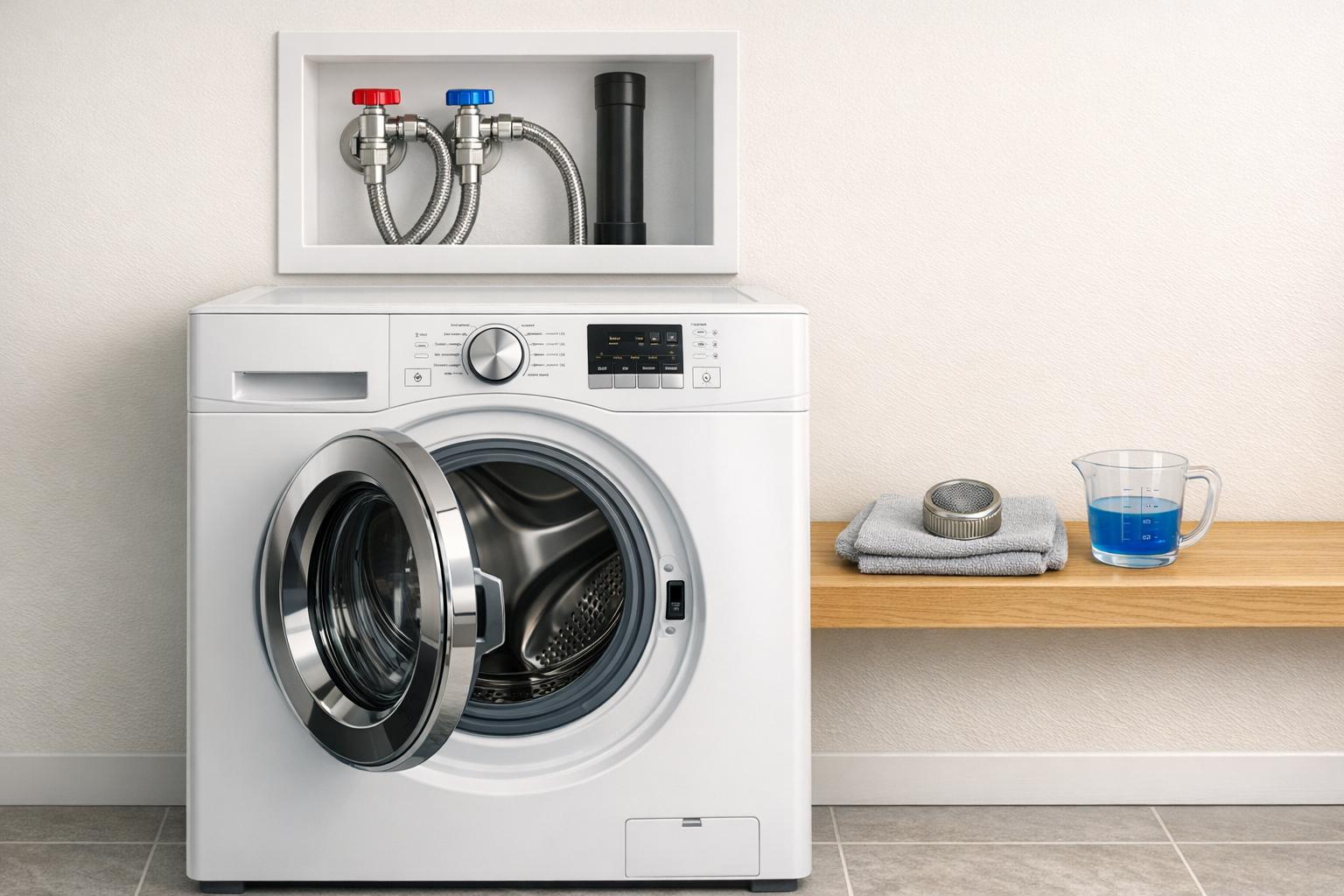
High-efficiency (HE) washers are great for saving water, but they can cause plumbing problems if not properly maintained. Here’s what you need to know:
- Leaking Hoses: Rubber hoses wear out in 5–7 years and can burst, causing flooding. Upgrade to braided stainless steel hoses for better durability.
- Drainage Problems: Clogs in hoses, filters, or standpipes can cause slow draining or water backups. Regular cleaning prevents blockages.
- Water Backups: Fast water discharge from HE washers can overwhelm older plumbing systems. Ensure drain pipes are the correct height and clear of debris.
- Clogged Filters/Pumps: Lint, coins, and small items can block filters, leading to drainage failures. Clean the pump filter every 1–3 months.
- Improper Water Fill: Low water pressure, clogged inlet screens, or faulty valves can cause overfilling or no fill issues.
Key Tips:
- Inspect and replace hoses every 5 years.
- Clean filters and drain hoses regularly.
- Use HE detergent in the right amount to prevent residue buildup.
- Keep the washer level to avoid vibrations that loosen connections.
- Call a professional for complex repairs or plumbing upgrades.
Proactive maintenance can save you from costly repairs and protect your home from water damage.
Leaking Inlet Hoses and Loose Connections
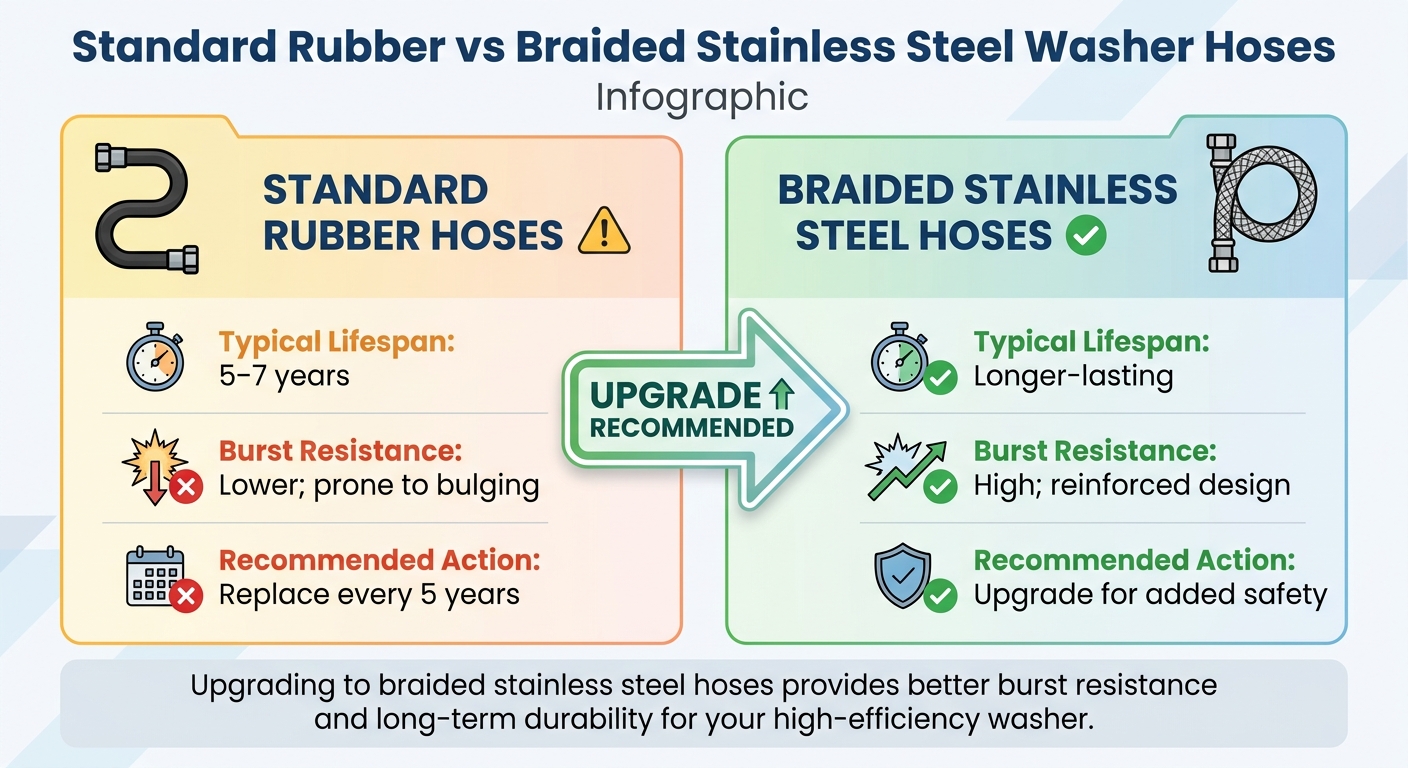
Standard vs Braided Stainless Steel Washer Hoses Comparison
Inlet hoses are under constant water pressure, even when the washer isn’t running. This ongoing pressure, combined with vibrations from high-efficiency washers during spin cycles, can loosen connections at both the wall valve and the machine inlet. Over time, this also causes the hoses themselves to wear out.
What Causes Inlet Hose Leaks
Several factors can lead to leaks in inlet hoses, and understanding these can help pinpoint the problem.
First, the rubber washers inside hose fittings often fail over time. These washers are designed to create a watertight seal, but constant exposure to water pressure and temperature changes can cause them to harden or compress, eventually leading to leaks. Additionally, standard rubber hoses are prone to cracking, bulging, or breaking down, typically after five to seven years of use. Hard water can make things worse by leaving mineral deposits inside inlet screens and valves. Improper installation, like cross-threading or over-tightening, can also damage threads, making leaks more likely.
Knowing these common causes is the first step toward fixing the issue effectively.
How to Fix Leaking Hoses
Start by pulling the washer away from the wall to inspect the hoses. Look for signs of moisture, mineral deposits, bulges, or cracks. Check the internal rubber washers on both ends of the hose – if they’re missing or damaged, they’re likely the source of the leak. Tighten loose connections by hand, ensuring they’re secure but not over-tightened, as this can crack plastic fittings.
For better durability, consider upgrading to braided stainless steel hoses. These are more resistant to bursting and are a smart safety upgrade. Experts recommend replacing inlet hoses every five years as part of regular plumbing maintenance. If you notice mineral buildup on the inlet screens, clean them to improve water flow and reduce pressure inside the hoses.
| Feature | Standard Rubber Hoses | Braided Stainless Steel Hoses |
|---|---|---|
| Typical Lifespan | 5–7 years | Longer-lasting |
| Burst Resistance | Lower; prone to bulging | High; reinforced design |
| Recommended Action | Replace every 5 years | Upgrade for added safety |
sbb-itb-998eb83
Slow or Incomplete Water Drainage
If you find water lingering in the drum or your clothes come out soaking wet after a cycle, your washer might have a drainage issue. This is especially common with high-efficiency (HE) washers, which use less water. While their water-saving design is great for the environment, it also means there’s less force to push lint and detergent residue through the drain system.
"High-efficiency washers use less water, which means there’s less flow to carry the lint away. Over time, the standpipe can choke near the trap." – Alpha Wiki
This reduced water flow can cause lint and detergent residue to accumulate inside horizontal pipes and the standpipe, eventually leading to restricted drainage or blockages.
Finding the Source of Drainage Problems
To fix the issue, you’ll first need to figure out where the blockage is. The most common culprits are the drain hose, the pump filter, and the standpipe.
- Standing water in the drum often points to a clogged drain hose or a blocked pump filter. Check the filter near the base of your washer for debris.
- Noises like gurgling or grinding during drainage can signal an obstruction in the pump caused by small items like coins, buttons, or socks.
- Water backing up at the standpipe might mean it’s not the correct height. The standpipe should be between 30 and 96 inches tall for proper drainage. If you hear gurgling sounds in nearby sinks when the washer drains, this could indicate a clog in the main drain line.
| Symptom | Likely Source of Problem | Identification Method |
|---|---|---|
| Standing water in the drum | Clogged drain hose or pump filter | Look for debris in the filter or kinks in the hose |
| Dripping wet clothes | Partial blockage or slow pump | Listen for unusual humming or grinding noises during drainage |
| Gurgling or grinding noises | Obstruction in the drain pump | Check the pump for foreign objects like coins or buttons |
| Water backing up at standpipe | Standpipe height or main line clog | Ensure standpipe is 30–96 inches high; check for gurgling sounds in nearby sinks |
Pinpointing the specific issue will help you take the right steps to clear it.
Clearing Clogs and Restoring Drainage
Once you’ve identified the problem, here’s how to fix it.
For a clogged drain hose, disconnect it from both the washer and the standpipe. Check for any kinks or debris. If you find a blockage, use a plumber’s snake to break it up. Alternatively, pour a mixture of baking soda and vinegar into the hose, followed by hot water, to dissolve residue.
"A clogged drain hose is the most common reason your washer is not emptying properly, as lint and debris block water flow during the spin cycle." – Melissa Graham, Contributing Writer, Angi
To clean the pump filter, locate the small panel at the bottom front of your washer. Lay down towels to catch any water that spills out. Remove the filter, clear out lint or trapped objects, and rinse it with warm water. Make sure it’s completely dry before reinstalling. Regular cleaning – every one to three months – can help prevent future clogs.
For the standpipe, start by confirming its height meets the manufacturer’s guidelines. Flushing it periodically with hot water can help remove residue buildup. To reduce the risk of clogs, attach a lint filter sock to your washer’s discharge hose. This simple addition catches fibers before they can enter your plumbing. Also, stick to using HE-specific detergent in the recommended amounts to avoid excessive suds and residue buildup.
Keeping your washer’s drainage system clear not only improves its performance but also helps protect your home’s plumbing from unnecessary wear and tear.
Water Backing Up into the Washer or Laundry Area
Water pooling on your laundry floor is a clear sign of a drainage issue. High-efficiency (HE) washers, which discharge water at high volumes and pressure, can overwhelm a faulty drainage system.
Why Water Backs Up During Wash Cycles
Water backups during wash cycles often point to clogs or improper setup. One of the most common causes is a clogged standpipe or P-trap. Over time, lint, soap residue, and debris can build up, restricting water flow. When your HE washer pumps out a large amount of water quickly, these clogs prevent proper drainage, causing water to back up into the drum or overflow onto the floor.
Another issue could be the placement of the drain hose. If the hose is inserted too far into the standpipe, it can create a siphoning effect, pulling water back into the washer. On the other hand, if the hose is not inserted deeply enough, it may pop out during the high-pressure drain cycle.
"If inserted too deep, [the hose] can create a siphon that pulls water from the washer unexpectedly. If too shallow, it might pop out during the drain cycle." – Jeremy Ashburn, S&S Waterworks
The height of the drain pipe is another critical factor. It should be positioned between 30 and 48 inches above the floor. A drain point lower than 30 inches can cause water to siphon out during the fill cycle, while one higher than 48 inches may exceed the pump’s capacity, leaving water trapped in the machine. Additionally, if your washer shares a drain line with a utility sink, a clog further down the line can cause water to back up into the sink.
These issues highlight the importance of proper hose placement and clear drain pipes.
How to Stop Water Backups
Once you identify the cause, fixing water backups becomes much easier. Start by checking the placement of the drain hose. Ensure it’s inserted into the standpipe at the correct depth – not too deep to cause siphoning and not too shallow to dislodge. Confirm that the drain point is between 30 and 48 inches above the floor. If it isn’t, you may need to adjust the standpipe or reroute the hose.
To clear clogs, flush the drain system with hot water for five minutes to dissolve buildup, followed by a granular drain cleaner designed to remove grease and soap. If water backs up into a shared utility sink, the clog is likely farther down the main drain line rather than in the washer’s P-trap.
Older plumbing systems with narrow 1.5-inch drain pipes may struggle to handle the high-volume output of an HE washer. In such cases, consider routing the washer’s drain into a laundry sink or tub to create a temporary reservoir, giving the drain more time to process the water. Upgrading to a 3-inch standpipe can also significantly increase capacity.
Preventing future backups is simple. Attach a mesh lint trap to the end of the discharge hose to catch debris before it enters your plumbing. Regularly inspect the drain hose to ensure it’s free of sharp bends or kinks, especially after moving the washer. If you notice unpleasant odors alongside backups, pour water into nearby floor drains to refill their P-traps, which helps block sewer gases when the washer is in use.
Taking these steps promptly can help avoid further damage and keep your laundry area functioning smoothly. If you need professional assistance, contact a plumber in West Ashley, SC.
Clogged Drain Pumps and Filters
High-efficiency washers rely on a drain filter to trap lint, soap residue, and small objects. When this filter becomes clogged, the washer may struggle to drain properly – this issue accounts for over half of all drainage failures.
Warning Signs of Clogged Pumps
Several signs can point to a clogged pump or filter. You might notice water left in the drum after a cycle, error codes flashing on the display, or unusual sounds like grinding, humming, or gurgling during the draining process.
Foul odors are another red flag. When standing water gets trapped in the filter, it creates the perfect environment for bacteria and mold to grow, producing unpleasant smells that can even affect your laundry. Additionally, if your washer refuses to start the spin cycle or halts mid-cycle, it could be because the machine can’t detect that the water has drained – often due to a clogged filter.
Common items like coins, hairpins, buttons, and socks are frequent culprits. These small objects can slip past the drum and block the filter or pump. Over time, lint and fabric fibers build up, forming a dense barrier that obstructs water flow.
"A blocked pump filter is another frequent issue. This small screen catches debris before it reaches the pump, but when it becomes clogged with lint and fabric fibers, water can’t pass through efficiently." – Jeff Niceley, Owner, Niceley’s Appliance Repair
Even a single small item can cause major issues. For instance, a coin lodged against the pump impeller can prevent it from spinning, even if the motor is still running. This might make the washer sound like it’s working, but no water will drain.
Recognizing these warning signs early can help you address the issue before it leads to more serious damage.
How to Clean and Maintain Drain Pumps
Cleaning the drain pump filter is a simple process. Start by unplugging your washer and turning off the water supply for safety. Locate the access panel – usually a small rectangular door at the bottom front of your washer. Place towels on the floor and position a shallow container under the panel to catch any water that might spill out.
Unscrew the filter. If water starts flowing too quickly, pause and let it drain into your container before continuing. Once the filter is removed, clear out any large debris by hand and rinse the filter under running water.
Next, inspect the filter housing inside the washer for any stray objects that may have bypassed the filter. Check the pump impeller – a small, propeller-like part – to ensure it moves freely. If you feel resistance or hear a clicking sound when manually turning it, there might be an object lodged deeper in the pump.
Reinstall the filter by turning it clockwise until it’s secure. On most models, the handle should end in a vertical position to ensure a proper seal. Before running a full load, test for leaks by pouring about 1 quart of water into the detergent dispenser and checking the filter area.
To keep your washer in good shape, clean the filter every one to three months. Empty all pockets before washing, use only the recommended amount of high-efficiency detergent, and run a monthly cleaning cycle with a washer cleaner or a mix of vinegar and baking soda to reduce buildup. Regular maintenance prevents debris from clogging the system and helps your pump last longer. If repairs are needed, fixing a clogged pump can cost between $125 and $450.
Overfilling or No Water Fill Issues
Dealing with water fill issues is just as important as addressing leaks or drainage problems to keep your washer and home in good shape. If your high-efficiency (HE) washer isn’t filling or is overfilling, the issue often points to the water inlet valve. This valve controls how water enters the machine. If it gets stuck closed, no water will flow in. On the flip side, if it’s stuck open or doesn’t close properly, the washer might overfill and even leak .
Diagnosing Water Fill Problems
Start with the basics. Check for a kinked or twisted supply hose behind the washer – this is a common reason water flow gets blocked . Pull the washer away from the wall and straighten any bent hoses. Then, make sure the water supply valves are fully open, as partially closed valves can reduce water flow significantly.
If your washer makes a humming sound but doesn’t fill, it’s possible the inlet valve is getting power but can’t open due to a clog or mechanical issue. Mineral deposits or debris often build up on the inlet screens, preventing water from entering . Disconnect the hoses and inspect the small mesh screens at the valve connections. If you notice white or brown buildup, it’s time to clean them.
Another step is to test your home’s water pressure. Run other faucets to see if there’s a weak flow throughout your house. If so, the issue might be with your plumbing or a pressure regulator. High-efficiency washers need sufficient water pressure to operate correctly. Low pressure can lead to incomplete filling or longer-than-normal cycles.
For top-loading washers, a faulty lid switch can stop the fill cycle from starting. This safety mechanism prevents the washer from filling if the lid is open. You can manually test the lid switch to ensure it’s engaging properly.
Once you’ve identified the problem, you can move on to fixing it.
Fixing Overfill or No Fill Problems
Before starting any repairs, unplug the washer for safety . If clogged inlet screens are the issue, disconnect the hoses from the back of the washer and carefully remove the small mesh filters. Rinse them under running water or soak them in white vinegar for a few hours to dissolve any buildup. Cleaning these screens every six months can help prevent future blockages.
If you notice corrosion, wear, or damage on the inlet valve while inspecting it, you’ll need to replace it. Make sure to buy a valve that’s compatible with your washer model and follow the manufacturer’s instructions for installation. For problems related to water pressure, it’s best to call a professional plumber to adjust the pressure regulator in your home. Although low water pressure won’t directly harm your washer, it can impact its performance by causing incomplete fills or excessively long cycles.
Preventive Maintenance Tips for High-Efficiency Washers
Taking care of your high-efficiency washer can help you avoid common problems like leaks, clogs, and backups. Regular maintenance not only saves you money on repairs but also keeps your washer running smoothly for years. A well-maintained washer can last 8–12 years, but neglecting maintenance could cut that lifespan in half. Following a few simple steps can make a big difference in performance and durability.
Regular Maintenance Steps for Homeowners
- Inspect inlet hoses every few months for any kinks or blockages. Clean the mesh filters at the water supply connection to remove sediment and mineral buildup.
- Clean the drain pump filter regularly. Blockages here are responsible for over half of all drain failures. Be prepared for water spillage by placing a shallow container under the filter cap before opening it.
"Even a single coin lodged at the impeller inlet can stop drainage completely while still allowing the motor to hum."
– Genuine Replacement Parts
- Keep the door or lid open after each cycle to allow the interior to dry, preventing mold and mildew.
- Wash the detergent dispenser, drum, and rubber gasket monthly using a mix of vinegar and water.
- Stick to HE detergent in the manufacturer-recommended amount. Using regular detergent can create excessive suds that may harm the washer’s pumps and sensors.
- Empty all pockets before washing to avoid damage from small items like coins or keys.
- Level your washer by adjusting its feet to reduce vibration during spin cycles.
Why Professional Maintenance Services Help
While many maintenance tasks are easy to handle yourself, some require a professional touch. Technicians use advanced diagnostic tools to identify problems you might miss, such as micro-cracks in hoses or loose electrical connections. They also ensure your washer is perfectly level, preventing long-term damage to bearings and suspension.
Professionals can tackle more complex repairs, like replacing worn-out bearings, fixing drive belts, or diagnosing faulty water level sensors.
"If you encounter more complex issues or are unsure about troubleshooting, it’s best to consult a professional washer repair technician. They have years of experience and the knowledge to diagnose and fix problems safely and effectively."
– Michael Foster, HomeAlliance
If your washer is still under warranty, make sure to use an authorized service provider to avoid voiding the coverage. For example, ALL Plumbing Services in Charleston and Bluffton, SC offers maintenance plans that include inspections, early problem detection, and priority repair scheduling. They can also install smart leak detection devices near your washer, which monitor for leaks and automatically shut off the water supply if a problem occurs.
Costs for professional maintenance vary: minor repairs usually range from $50–$200, moderate repairs $200–$500, and major repairs can exceed $1,000. Keeping a detailed log of professional services and part replacements can also be helpful for insurance claims or boosting resale value.
Conclusion
Tackling plumbing issues early is key to safeguarding both your high-efficiency (HE) washer and your home. While HE washers are great for saving water and energy, they can put extra strain on your plumbing system. Problems like leaking hoses, clogged pumps, slow drainage, and water backups can quickly worsen if left unaddressed. For example, standard rubber hoses often fail within five to seven years, and older 1.5-inch drain pipes may struggle to handle the faster discharge rates of modern HE washers, increasing the risk of overflows and water damage.
The good news? Most of these issues can be avoided with basic upkeep. Simple steps like upgrading to braided stainless steel hoses, cleaning filters regularly, using the right HE detergent, and ensuring your washer is level can save you from costly repairs down the line.
However, when routine maintenance isn’t enough, it’s time to call in a professional. Licensed plumbers can identify hidden problems, such as worn pump seals or corroded valves, and make necessary upgrades to your plumbing system. These upgrades ensure your home can handle your washer’s flow rate, reducing the risk of backups and extending the life of your appliance.
For residents in Charleston or Bluffton, SC, ALL Plumbing Services provides comprehensive maintenance plans. These include inspections to catch problems early, priority scheduling, and even the installation of smart leak detection systems. These systems can automatically shut off water near your washer if a leak is detected, offering an extra layer of protection. Taking proactive measures not only shields your home from water damage but also keeps your HE washer operating at its best.
FAQs
What are the first signs my washer drain line can’t handle an HE washer?
If you notice water pooling around your washing machine, slow draining, or standing water left in the drum after a cycle, your washer drain line might be having trouble keeping up with a high-efficiency (HE) washer. Other signs include leaks or even flooding, which can happen if the drain hose becomes clogged or blocked. Tackling these problems quickly is important to avoid more serious damage or unnecessary water waste.
How can I tell if a backup is from the standpipe/P-trap or the main drain line?
To figure out what’s causing a backup, pay attention to where the water is coming from. If the problem happens near the laundry area while the washer is running, it’s likely due to a clogged standpipe or P-trap. On the other hand, if multiple fixtures are impacted or water backs up in different parts of the home, the main drain line could be blocked. Small puddles or slow drainage usually point to a standpipe issue, while backups across multiple areas often mean trouble with the main line.
When should I call ALL Plumbing Services instead of trying a DIY fix?
When your high-efficiency washer faces plumbing issues that are too tricky or risky to fix yourself, it’s time to call ALL Plumbing Services. Problems like leaks, drainage issues, or water supply concerns often need a professional touch to diagnose and resolve properly. Trying to handle these repairs without the right expertise could make things worse. Trusting experts ensures the job gets done safely and effectively.
ALL Plumbing Services is equipped to handle it all, offering specialized solutions such as leak detection, drain cleaning, and water supply repairs.