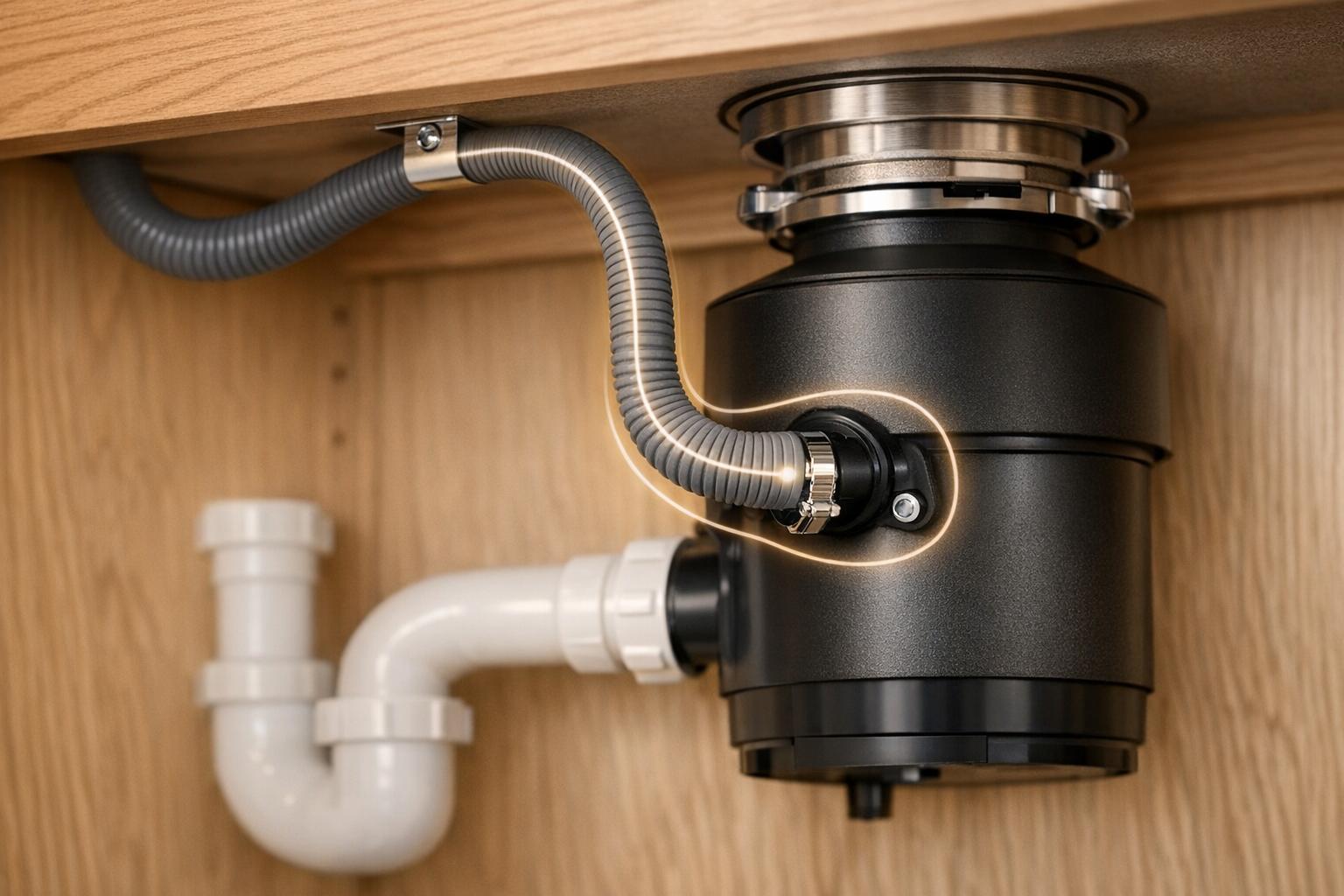
Connecting your dishwasher drain to a garbage disposal is a quick task that can save you from leaks and costly repairs. Here’s a simple summary of how to get it done:
- Turn off power to the garbage disposal at the circuit breaker.
- Remove the knockout plug inside the disposal’s inlet using a screwdriver and hammer.
- Attach the drain hose securely to the disposal’s inlet with a hose clamp.
- Create a high loop (6 inches above the connection point) or install an air gap to prevent backflow.
- Test for leaks by running a rinse cycle and activating the disposal.
Common mistakes to avoid: forgetting to remove the plug, loose hose clamps, and not cutting power before starting. If your setup involves drilling through surfaces like granite or has complex plumbing, professional help is recommended.
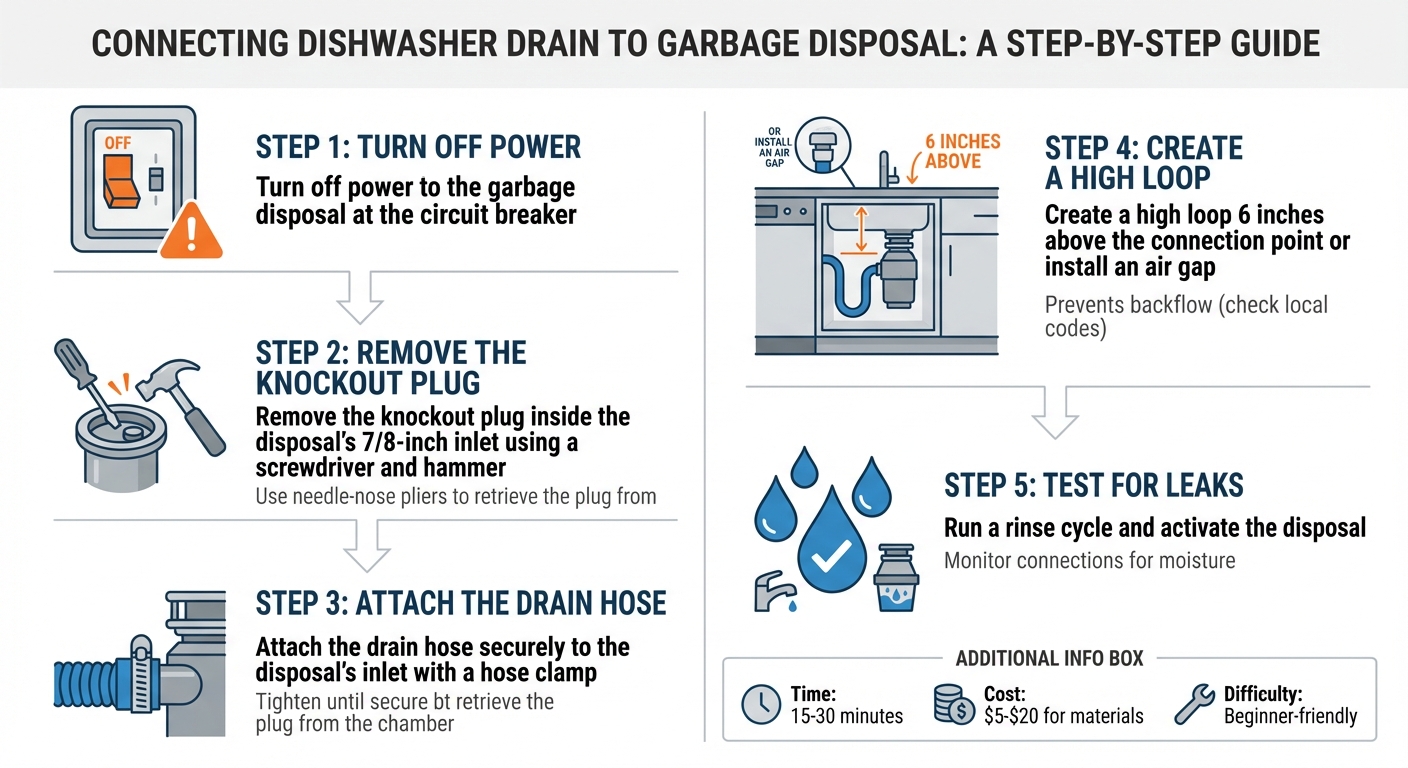
5 Steps to Connect Dishwasher Drain to Garbage Disposal
Tools and Materials You’ll Need
Before starting, make sure you have everything on hand to keep the process smooth. Luckily, most of the items are budget-friendly – materials usually range from $5 to $20 for the whole project. You can find replacement dishwasher drain hoses for less than $10 at many home improvement stores. Here’s a breakdown of the key tools and safety supplies you’ll need for the job.
Required Tools and Equipment
To begin, grab a screwdriver and hammer to remove the perforated disc (knockout plug) inside the garbage disposal’s dishwasher inlet. Once that’s out, you’ll need needle-nose pliers to retrieve the plastic plug from inside the disposal chamber – leaving it in there could jam the motor the first time you use it. A large drain hose clamp and adjustable pliers will help secure the hose connection around the disposal inlet.
Depending on your area’s plumbing codes, backflow prevention might be required. This could mean installing an air gap fitting on your sink or countertop or creating a "high loop" under the counter using a hose bracket or clamp. If you’re adding a new air gap and your sink doesn’t already have a hole, a 1 1/4-inch diameter hole saw will be necessary to cut one.
Safety Gear and Preparation Supplies
Keep a bucket handy to catch any leftover water when disconnecting or testing the system. Work gloves are a good idea for handling sharp edges or reaching into the disposal. If you’re installing an air gap fitting, use plumber’s putty to seal the base and prevent leaks where it meets the sink or countertop. Finally, locate your main water valve so you can quickly shut off the water if needed.
With these tools and supplies ready, you’re all set to start connecting the dishwasher drain to the garbage disposal.
sbb-itb-998eb83
How to Connect the Dishwasher Drain
Connecting your dishwasher drain is an essential task that helps prevent leaks and ensures proper drainage. The process usually takes about 15–30 minutes and involves three key steps: preparing the disposal, attaching the drain hose, and testing the setup for any issues.
With your tools and safety gear ready, follow these steps to get the job done.
Prepare the Garbage Disposal
Start by turning off the power to the garbage disposal at the circuit breaker. This ensures safety while you work. Locate the dishwasher inlet port on the disposal – this is a small 7/8-inch nipple typically found on the upper side of the unit.
If the disposal is new or hasn’t been connected to a dishwasher before, you’ll see a knockout plug blocking the inlet. To remove it, use a flat-head screwdriver and a hammer to gently tap the plug until it falls into the disposal chamber. Then, retrieve the plug using needle-nose pliers.
"Skip this step [knocking out the plug] and the dishwasher water has nowhere to go." – Ryan Pietrzak, Licensed Plumber
Once the plug is removed, shine a flashlight into the inlet to ensure there are no leftover fragments. Even small pieces can obstruct drainage and cause problems during the first use.
Attach the Dishwasher Drain Hose
Slide a stainless steel hose clamp onto the dishwasher drain hose before connecting it. Firmly push the hose onto the disposal’s 7/8-inch inlet nipple. To prevent backflow, create a high loop by routing the hose upward and securing it beneath the countertop – this loop should be at least 6 inches above the connection point. Be aware that some areas may require an air gap device instead of a high loop, so check your local plumbing codes.
Position the hose clamp just past the flared end of the inlet nipple and tighten it with a screwdriver. Be cautious not to overtighten, as this could crack the plastic inlet or damage the hose.
Secure and Test the Connections
Double-check that all connections are secure but not overly tightened. Restore power and water, then run a short rinse cycle while monitoring for leaks. Activate the garbage disposal during the drain phase to clear any residual water. If you notice moisture around the clamp or inlet, tighten the connection slightly and test again until everything stays dry. Once the system runs without leaks, your dishwasher drain is ready for regular use.
Common Installation Mistakes to Avoid
Even when you follow the right steps, missing small but crucial details can lead to expensive and frustrating issues. Flooding, equipment damage, and even safety risks are common consequences of these oversights – but they can all be avoided with careful preparation and attention.
Not Removing the Knockout Plug
The knockout plug is a small perforated disc, usually made of plastic or metal, that blocks the dishwasher inlet port on new or unused garbage disposals. If you forget to remove this plug, your dishwasher’s wastewater won’t drain properly. This can result in flooding or even damage to the motor. Worse yet, if the plug becomes loose and falls into the disposal, it can jam the impellers and permanently harm the motor.
"Forgetting to knock out the disposal drain plug — causes dishwasher backup on the very first cycle." – Ryan Pietrzak, Illinois Licensed Plumber
After removing the plug, take a moment to shine a flashlight into the disposal chamber to ensure it’s completely clear before moving forward.
Loose Hose Clamps
Loose hose clamps are another common issue that can lead to hidden leaks and water damage. If the drain hose isn’t securely clamped, it can detach under the pressure of pumped wastewater. Regular vibrations from the garbage disposal can also loosen clamps over time, making them a potential weak point.
To avoid this, tighten the clamp until it feels secure and the hose cannot be rotated or pulled off by hand. Be cautious, though – over-tightening can damage the rubber hose or crack the plastic inlet port of the disposal, which might mean replacing the entire housing.
Forgetting to Turn Off the Power
One of the most dangerous mistakes is neglecting to disconnect the power before working on a garbage disposal. This can lead to serious injuries. Always locate the circuit breaker that controls the disposal and switch it to "off" before starting any work. To be extra safe, test the wall switch after flipping the breaker to confirm that the disposal is completely powered down.
When to Call ALL Plumbing Services

Sometimes, tackling plumbing issues on your own just doesn’t cut it. When problems persist or things get too complicated, it’s time to bring in the pros.
Professional Help for Complex Installations
Connecting a dishwasher drain to a garbage disposal might seem simple enough, but not every setup follows the standard "Y" tailpiece design. In cases where your kitchen plumbing deviates from the norm, DIY fixes can lead to leaks, requiring custom solutions and specialized tools.
Another tricky task? Installing an air gap. This involves drilling a 1 1/4-inch hole – something that can easily go wrong, especially with surfaces like granite or stone. ALL Plumbing Services has the tools and know-how to handle these delicate jobs in Charleston, SC, and Bluffton, SC, ensuring your countertops stay intact and your installation meets local codes.
If you’re dealing with persistent problems like standing water, bad odors, or leaks that don’t go away even after tightening clamps, it might point to bigger issues. These could include a cracked disposal inlet port, an improperly installed high loop, or hidden damage that’s hard to spot without professional-grade equipment. When these problems escalate, calling in experts quickly is the smart move.
24/7 Emergency Plumbing Assistance
Sometimes, things go south fast. If your dishwasher connection fails suddenly – flooding your kitchen or causing water to pool under your cabinets – you can’t afford to wait. ALL Plumbing Services offers 24/7 emergency help to stop the water damage in its tracks. Delaying could mean turning a quick repair into a costly restoration job involving your floors, cabinets, and walls.
Kitchen Plumbing Upgrades and Remodeling
Planning a kitchen remodel? Professional installation ensures everything works smoothly and looks great. ALL Plumbing Services can handle fixture upgrades, including luxury air gaps in finishes like matte black or champagne bronze to match your high-end faucets. They also offer smart leak detection systems – perfect for catching drips before they damage your new cabinetry. If you’re redoing your kitchen, having experts on board can make all the difference.
Conclusion
Connecting a dishwasher drain is a quick task – usually taking just 15 to 30 minutes – that can save you from leaks and expensive repairs down the line. With a few basic tools and materials, most homeowners can handle this project by following key steps: removing the knockout plug, securely attaching the drain hose with a hose clamp, and ensuring backflow prevention. According to licensed plumbers, many dishwasher drain backups occur because one of these steps gets overlooked.
Skipping any of these steps can lead to problems. For instance, if the knockout plug isn’t completely removed, it can cause motor jams. Similarly, loose hose clamps might result in hidden leaks that damage your kitchen over time.
If your installation involves unique challenges – like complex drain setups or drilling through granite for an air gap – it’s wise to seek professional help. In Charleston, SC, and Bluffton, SC, ALL Plumbing Services specializes in these types of installations and ensures everything complies with local plumbing codes.
Whether you’re tackling this project yourself or need expert assistance, it’s crucial to get it right. For emergency repairs or kitchen remodels, ALL Plumbing Services is available 24/7 to help keep your kitchen plumbing in perfect working order.
FAQs
Do I need an air gap or is a high loop enough?
A high loop can usually do the job of preventing backflow from the sink into the dishwasher – if it’s installed correctly. But an air gap takes things a step further by adding an extra layer of safety. It creates a physical barrier, ensuring dirty water can’t make its way back into the dishwasher. In fact, some plumbing codes mandate the use of an air gap, particularly to guard against contamination risks.
What happens if the knockout plug falls into the disposal?
If the knockout plug accidentally falls into the garbage disposal, it can block the drainage system and lead to backups. This plug needs to be removed completely to connect the dishwasher drain hose properly. If it ends up inside the disposal, it might obstruct the drain or cause clogs. To resolve this, you can retrieve the plug yourself or have the disposal serviced to remove the debris. Always double-check that the plug is fully removed during installation to avoid these issues.
Why is my dishwasher backing up into the sink after connection?
If your dishwasher is backing up into the sink, it’s likely a drainage issue. Common causes include missing a high loop or an air gap. A high loop involves routing the drain hose up under the countertop, which helps prevent wastewater from flowing back into the dishwasher. An air gap, on the other hand, is a small device installed on the sink or countertop that ensures dirty water doesn’t re-enter the dishwasher.
To fix the issue, check that the dishwasher’s drain hose is installed correctly with a high loop or air gap. Also, inspect for clogs or blockages in the garbage disposal or sink drain, as these can interfere with proper drainage. Addressing these problems should help resolve the backup.