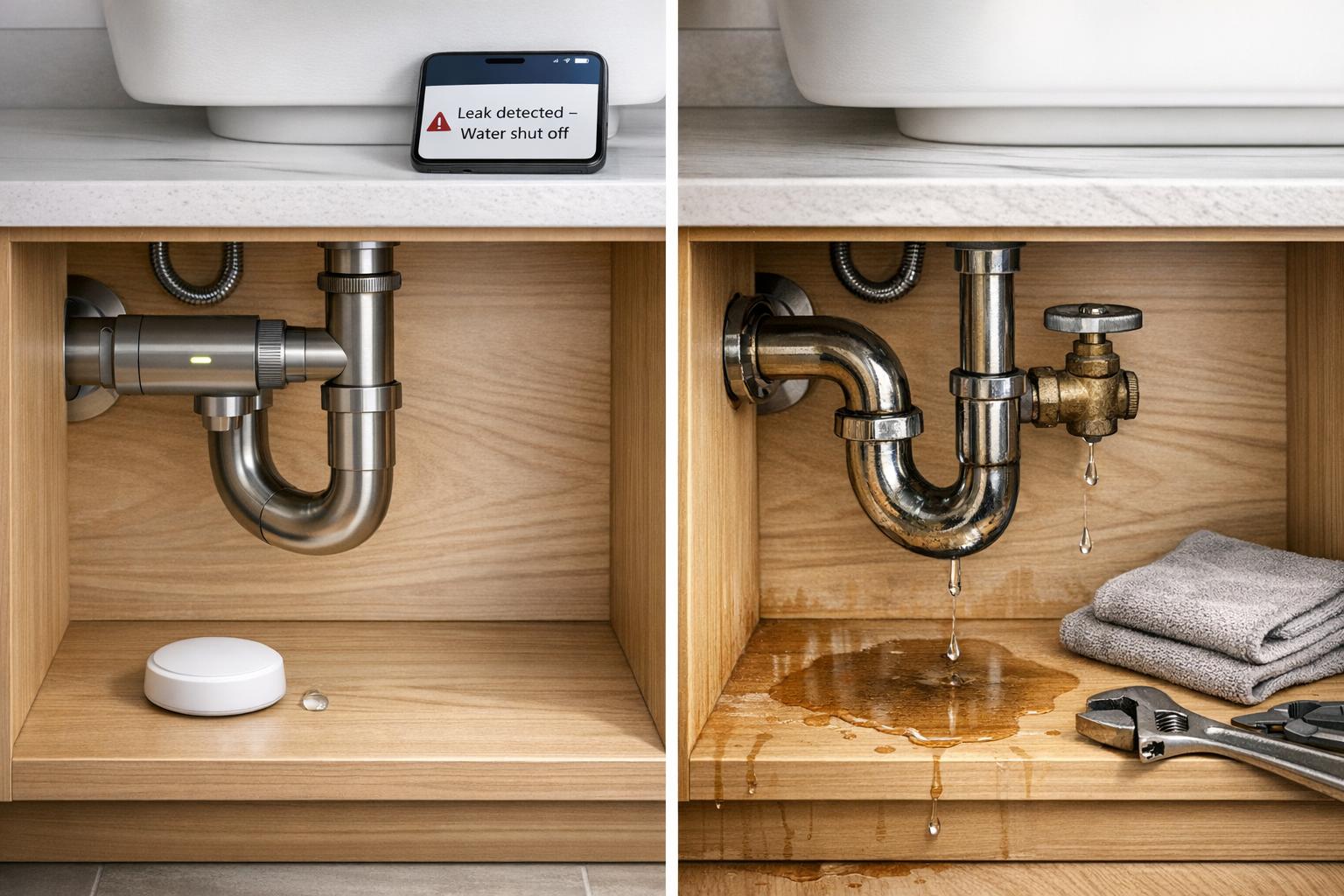
Water damage costs are skyrocketing – averaging over $12,500 per claim in 2026. Choosing between smart leak detectors and manual methods can save you thousands. Here’s what you need to know:
- Manual systems rely on visible signs (like water stains) and tools like moisture meters or acoustic devices. They’re affordable ($150–$300) but only work after damage is noticeable.
- Smart detectors monitor plumbing 24/7, send alerts to your phone, and can shut off water automatically. They’re pricier ($650–$1,200 with installation) but catch small leaks early and reduce major damage by up to 96%.
Quick Comparison:
| Feature | Manual Systems | Smart Leak Detectors |
|---|---|---|
| Monitoring | Periodic/manual checks | Continuous, 24/7 |
| Response | After damage occurs | Prevents damage instantly |
| Cost | $150–$300 | $650–$1,200 |
| Detection | Visible leaks | Hidden and micro-leaks |
| Insurance Discounts | None | 3%–10% savings |
For homes with aging pipes, frequent water issues, or high water bills, smart systems offer peace of mind and long-term savings. However, manual methods are better suited for smaller budgets and visible leaks.
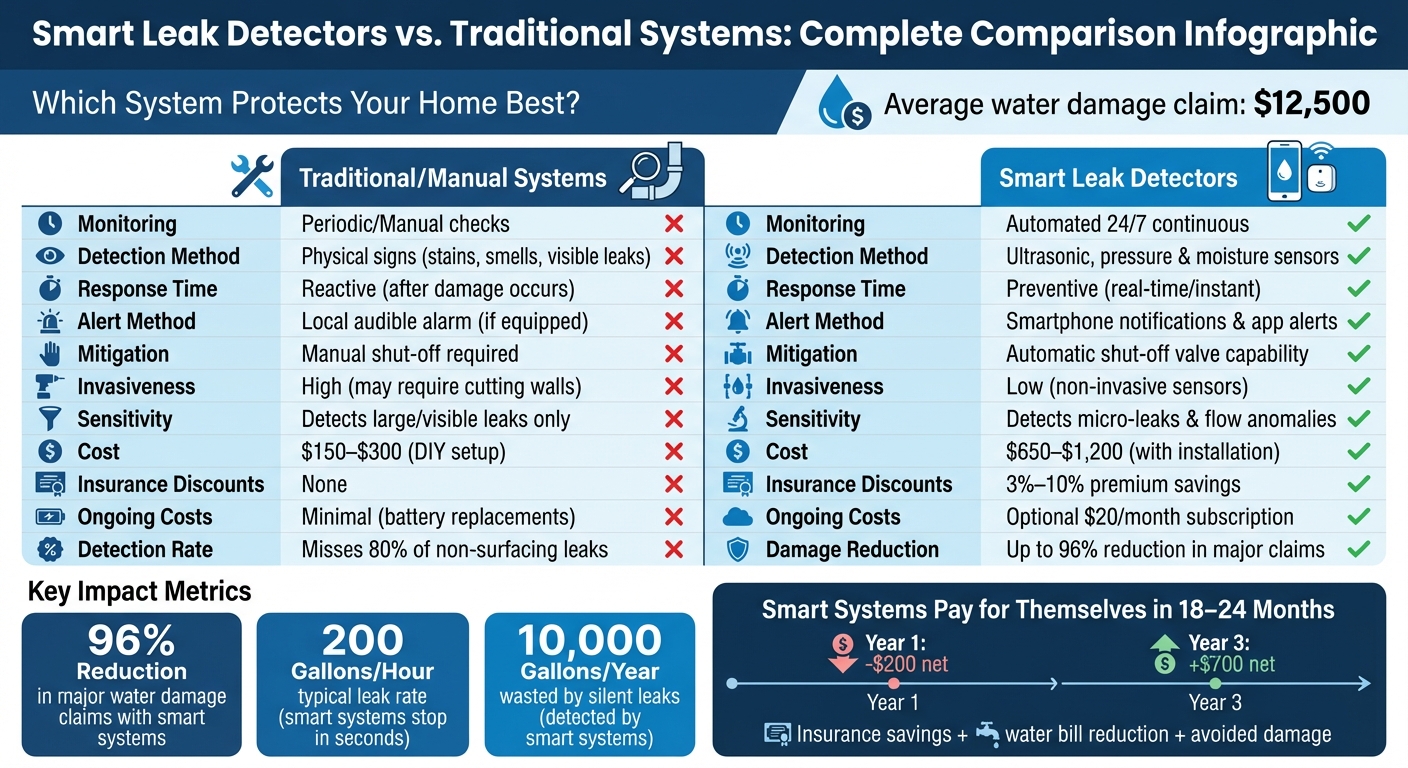
Smart Leak Detectors vs Traditional Systems Comparison Chart
What Are Traditional Leak Detection Systems?
Traditional leak detection methods rely on manual techniques and tools, often addressing problems only after visible damage has occurred. As ASTERRA explains:
Reactive leak detection generally requires waiting for a leak to ‘surface,’ to present evidence of itself, and then everyone reacts.
Common practices include visual inspections for signs like water stains, mold, or peeling paint. Tools such as moisture meters and thermal imaging are used to uncover dampness hidden within walls or floors. For leaks that are underground or otherwise concealed, technicians often turn to acoustic devices – headsets and ground microphones designed to pick up the sound of water escaping from pressurized pipes.
Other standard tools include video pipe inspection, where waterproof cameras examine the interior of pipes, and pressure testing, which monitors for drops in water pressure. When a leak is suspected, confirming its presence often involves invasive measures like cutting into walls or removing floor slabs.
While these methods have been in use for years, they come with notable challenges. For instance, over 99% of leaks identified by professionals do not show visible signs on the surface. Acoustic sensors are particularly effective on metal pipes but struggle with plastic ones, which do not transmit sound as efficiently. External noise, such as traffic or construction, can further complicate detection. Additionally, surfacing leaks – those detectable by these traditional methods – only account for about 20% of water loss. The remaining 80% comes from non-surfacing leaks, which are often missed by these techniques. While reliable in specific scenarios, these methods are limited when leaks remain hidden.
Key Features of Traditional Systems
Traditional systems are heavily reliant on physical evidence and manual effort. A common first step is checking the water meter – if it continues to move when no water is in use, it likely signals a hidden leak. From there, plumbers look for visible signs like discolored flooring, soft spots in walls, or other damage. Acoustic devices and moisture meters help locate dampness that isn’t immediately visible.
These methods generally require scheduled inspections and may not detect small or concealed leaks until they worsen. For example, a slow leak behind a wall might remain unnoticed for months until mold growth or structural damage becomes apparent. Acoustic detection often involves technicians physically walking the property with a headset, guided by a map. For larger systems, this process can be labor-intensive and time-consuming, with findings that may quickly become outdated.
Ultimately, the effectiveness of traditional systems hinges on the visibility and accessibility of the leak.
When Are Traditional Systems Effective?
Traditional methods work best when a leak is already visible or the problem is straightforward. For instance, if you notice a spreading water stain on the ceiling, a damp patch on a wall, or the sound of water running when no fixtures are in use, a plumber can often diagnose and resolve the issue using basic tools and visual inspection. These methods are also practical during scheduled plumbing checks or renovations, where invasive inspections – like cutting into walls – are less of a concern.
Traditional techniques are typically the most affordable option for localized, accessible leaks. However, as Sweetwater Plumbing points out:
Traditional techniques might look cheaper at face value. But detecting leaks earlier with modern approaches prevents structural damage that would otherwise require you to pay for repairs.
For concealed leaks, such as those under concrete slabs or deep within walls, traditional methods can be both invasive and time-consuming. In many cases, they end up being more costly than modern alternatives like smart detection systems, which can monitor and identify leaks automatically without disruption.
sbb-itb-998eb83
What Are Smart Leak Detectors?
Smart leak detectors are a step ahead of traditional methods that only react once water damage is visible. These devices work proactively by monitoring your plumbing system 24/7 and sending real-time alerts directly to your smartphone. Thanks to their connection options – like Wi-Fi, Matter, or Zigbee – you can manage them remotely from almost anywhere.
These devices go beyond just sounding a moisture alarm. They use advanced technology, such as ultrasonic sensors and pressure transducers, to monitor water flow patterns. By learning your household’s typical water usage, they can tell the difference between routine activities (like running the dishwasher) and the subtle signs of a leak. When something unusual happens, you’ll get notified immediately through push notifications, emails, or text messages.
One of their standout features is the ability to take automatic action. Many smart leak detectors come with shut-off valves that can stop the water supply in seconds if a major leak is detected. For context, a typical leak can spill 200 gallons of water in just an hour, but these systems can limit the damage to mere seconds of water flow. This quick response can save homeowners from costly repairs or insurance claims, which average over $12,500. Homes equipped with these systems have been shown to reduce the risk of major water damage by up to 96%. On top of that, many insurance companies offer premium discounts – ranging from 3% to 10% – for homes with automatic shut-off valves. Considering that about 14,000 U.S. homeowners face water emergencies daily, these systems are a game-changer for peace of mind and property protection.
This proactive approach lays the groundwork for understanding their features and how they operate.
Key Features of Smart Leak Detectors
Smart leak detectors combine several advanced components to provide thorough home protection. Flow sensors and pressure monitors use ultrasonic technology to track water movement and detect pressure changes that might indicate a leak. Additional sensors for humidity and temperature can warn you about freezing conditions that could burst pipes or moisture buildup that could lead to mold in as little as 24 to 48 hours.
A standout feature is the automatic shut-off valve, which can quickly cut off your main water supply during emergencies. Paired with these features, smartphone apps offer real-time monitoring, instant alerts, and even manual control to shut off the water if needed. These apps also provide detailed analytics, helping you spot "silent" leaks – like those in toilets or irrigation systems – that could waste up to 10,000 gallons of water annually.
How Smart Leak Detectors Work
Smart leak detectors rely on continuous and intelligent monitoring. Spot sensors, for example, use metal probes that trigger an alert when they come into contact with water by completing an electrical circuit. For broader protection, in-line monitors can be attached to your main water line without cutting pipes. These devices analyze water flow patterns around the clock.
Advanced systems take it a step further by using machine learning to differentiate between normal water usage and potential problems. For instance, they can learn your routine – when you typically shower, run the washing machine, or water the lawn – and flag anomalies, like a tiny 1/8-inch crack that could leak hundreds of gallons of water in a day. This smart detection minimizes false alarms and catches issues early, often long before they would be noticeable with traditional methods.
Traditional Systems vs. Smart Leak Detectors: Side-by-Side Comparison
When deciding between traditional and smart leak detection systems, understanding their differences can help minimize water damage risks. Traditional methods depend on visual and auditory clues – you might notice water stains, hear dripping, or spot an unexpected surge in your water bill. These systems are reactive, meaning they only come into play after the damage has already started. By then, you could be dealing with mold (which can form in just 24 to 48 hours), warped floors, or even structural damage. On the flip side, smart systems are preventive. They detect micro-leaks and pressure changes early, often stopping water flow within seconds using automatic shut-off valves.
Another major difference lies in how intrusive they are. For hidden leaks behind walls or under floors, traditional methods often require cutting into drywall or flooring to find the source. Smart systems avoid this hassle by using non-invasive tools like thermal imaging and acoustic sensors, making repairs faster and potentially less expensive. This sets the stage for a closer look at how these systems compare.
Key Differences in Detection Capabilities
Here’s a side-by-side look at how traditional systems and smart leak detectors differ:
| Feature | Traditional Systems | Smart Leak Detectors |
|---|---|---|
| Monitoring Type | Manual/Visual (Periodic) | Automated (24/7) |
| Detection Method | Physical signs (stains, smells) | Ultrasonic, pressure, & moisture sensors |
| Response Time | Reactive (Post-damage) | Preventive (Real-time/Instant) |
| Alert Method | Local audible alarm (if equipped) | Smartphone notifications & app alerts |
| Mitigation | Manual shut-off required | Automatic shut-off valve capability |
| Invasiveness | High (may require cutting walls) | Low (non-invasive sensors) |
| Sensitivity | Detects large/visible leaks | Detects micro-leaks & flow anomalies |
Homes equipped with automatic shut-off valves can reduce the risk of significant water damage claims by up to 96%. In contrast, traditional methods often miss "silent" leaks, such as a running toilet or a faulty irrigation system, which can waste up to 10,000 gallons of water annually. Considering the average water damage insurance claim now exceeds $12,500 as of 2026, catching problems early can have a major financial impact. These distinctions highlight the strengths and weaknesses that will be explored further in the following sections.
Pros and Cons of Traditional Leak Detection Systems
Advantages of Traditional Systems
Traditional leak detection systems are appealing because they’re affordable and effective for spotting visible leaks. For example, basic manual leak alarms typically cost between $35 and $60 per unit, and a complete DIY setup for an entire home generally falls in the $150 to $300 range. This affordability makes them an accessible option for homeowners who might not want to invest in more advanced technology.
When it comes to visible leaks, these systems shine. A dripping faucet, a running toilet, or water stains on the ceiling are often easy to spot. In these cases, a simple visual inspection is usually enough to identify the problem, especially for minor leaks that are easy to address without professional help, or learn how to detect hidden water leaks that aren’t as obvious.
For more complex issues, trained professionals using traditional tools like acoustic listening devices or moisture meters can pinpoint the exact location of a leak. This is particularly useful when structural damage has already occurred. For instance, if wood is rotting or walls are cracking, cutting into the structure to confirm the leak’s source won’t significantly worsen the situation.
While these advantages make traditional systems useful in certain scenarios, they come with notable downsides.
Limitations of Traditional Systems
The primary drawback of traditional systems is that they’re reactive. They depend on manual detection, meaning they only work after damage has already started – and only if someone is present to notice and respond. For example, by the time you see peeling paint, smell a musty odor, or notice warped flooring, mold may already be growing. Mold can take hold in as little as 24 to 48 hours.
Another major limitation is that approximately 80% of real water loss comes from non-surfacing leaks, which traditional visual methods simply can’t detect. If you’re away from home when a pipe bursts, even a $35 alarm won’t stop the damage.
Additionally, inspections with traditional tools can be labor-intensive and less effective in certain situations. For example, PVC pipes don’t transmit sound as well as metal pipes, making acoustic detection less reliable. Environmental conditions, like clay-rich soil or extremely dry summers, can also obscure leak symptoms. This means small leaks can go unnoticed until they escalate into major problems.
Pros and Cons of Smart Leak Detectors
Advantages of Smart Leak Detectors
Smart leak detectors bring a level of responsiveness that traditional systems simply can’t match. By using Wi-Fi and ultrasonic technology, these devices can send instant alerts to your smartphone, allowing you to act quickly – even if you’re not at home. They’re also designed to differentiate between normal water usage and hidden micro-leaks, like those sneaky ones behind walls, which are often hard to detect.
Another big plus? Many systems come equipped with automatic shut-off valves. These valves kick in as soon as a major leak is detected, cutting off the water supply in seconds. To put it into perspective, a standard leak can release up to 200 gallons of water in just an hour. With a smart system, that kind of damage is drastically minimized. In fact, homes with these valves have been shown to reduce the risk of major water damage claims by as much as 96%.
On top of emergency protection, these detectors can catch the smaller, hidden leaks that waste thousands of gallons of water every year. And here’s a bonus: many national insurance companies offer discounts on premiums – usually between 3% and 10% – if you have a professionally installed and monitored leak detection system.
While these advantages are impressive, it’s also important to consider the limitations of these devices.
Limitations of Smart Leak Detectors
The biggest downside to smart leak detectors is the upfront cost. A basic Wi-Fi sensor will set you back between $35 and $60 each, but if you’re looking at a whole-home shut-off valve, the hardware alone costs between $400 and $700. Add professional installation, which ranges from $250 to $500, and you’re looking at a total investment of $650 to $1,200. That’s quite a jump compared to the $150 to $300 you’d spend on a traditional DIY setup.
Another challenge is the reliance on power and internet connectivity. While most smart shut-off valves can still operate locally during an internet outage, you won’t get notifications on your phone until the connection is restored. Battery-powered sensors also need regular maintenance, like battery replacements, and advanced systems often require professional calibration to ensure they don’t mess with your home’s water pressure. These factors can make smart leak detectors less appealing for those who aren’t tech-savvy or who deal with spotty internet service.
Cost Comparison: Initial Investment vs. Long-Term Savings
Upfront Costs
Traditional manual alarms come with a low initial price tag. These basic moisture alarms are budget-friendly and require no professional setup – just place them near potential leak areas, and you’re good to go. However, they only work when someone is nearby to hear them.
Smart leak detectors, on the other hand, demand a higher initial investment. Stand-alone Wi-Fi sensors typically range from $35 to $60 each. Since most homes need multiple units, the total cost lands between $150 and $300. For more comprehensive protection, a whole-home shut-off valve system costs between $400 and $700 for the hardware, plus $250 to $500 for professional installation, bringing the total to $650–$1,200.
For specific examples, the Shelly Flood Gen4 is a budget-friendly option at $32.99, while the high-end Flo by Moen Smart Water Shutoff costs $583.09. Whole-home systems require cutting into the main water line, which typically means hiring a licensed plumber – this is not a DIY job.
While the upfront costs vary widely, the real difference shows up in the long-term financial benefits.
Ongoing Expenses and Savings
After the initial setup, the ongoing financial impact is where these systems truly set themselves apart. Smart systems reduce water damage risks and offer savings through insurance discounts and lower water bills. Research from the Calcix Research Team shows that most smart leak detection systems pay for themselves within 18 to 24 months, thanks to these combined savings. Insurance companies often provide premium discounts of 3% to 10% for professionally installed systems, with some advanced "active" shut-off systems qualifying for discounts as high as 15%.
Smart detectors also help identify hidden leaks, which can waste up to 10,000 gallons of water annually. Fixing these leaks can save families between $100 and $300 per year. Add in the potential to avoid a $12,500 water damage claim, and the financial advantages become even more compelling. As the Calcix Research Team notes:
Spending $500 today to prevent a $12,000 loss with a 2% annual probability is a statistically sound move for any portfolio.
However, it’s worth noting that some smart detectors come with subscription fees of around $20 per month, which adds up to $1,200 over five years. Opting for subscription-free hardware can save money in the long run. Meanwhile, traditional systems have minimal ongoing costs – mainly battery replacements – but they don’t offer utility savings or insurance discounts.
| Expense/Saving Category | Year 1 Impact | 3-Year Cumulative |
|---|---|---|
| Hardware & Installation | ($650) | ($650) |
| Insurance Discount (5%) | +$90 | +$270 |
| Water Bill Reduction (10%) | +$120 | +$360 |
| Avoided Risk Value (Probability Adjusted) | +$240 | +$720 |
| Net Financial Position | ($200) | +$700 |
(Source: Calcix Research Team 2026)
Why Smart Leak Detection Works Well for Charleston Homes
Charleston homes face unique challenges that make smart leak detection systems an important investment for homeowners. The area’s expansive soil movement and aggressive root growth often lead to structural issues and pipe damage. Many homes in the region are built on concrete slabs, where leaks can develop beneath foundations. Smart detectors excel in these conditions, identifying pressure changes early and potentially avoiding costly demolition work.
South Carolina’s occasional winter freezes are another concern, as they can cause pipes to burst. Smart systems provide 24/7 monitoring of water flow and temperature, offering protection even when you’re not home. This is especially valuable for seasonal property owners or frequent travelers in the Lowcountry. With smartphone apps, you can monitor your home remotely and even shut off the water automatically, no matter where you are.
In Charleston’s humid climate, mold can form within 24–48 hours of a leak. Early alerts from smart detectors help prevent mold damage and the associated health risks. For older homes in the area, which often feature aging copper or galvanized pipes prone to pinhole leaks and joint failures, these systems provide a proactive way to address wear and tear before it becomes a serious problem.
Smart leak detection systems also contribute to water conservation efforts. They can pinpoint "silent" leaks in toilets or irrigation systems that might otherwise go unnoticed, saving thousands of gallons of water annually. With detailed water usage analytics, homeowners can lower their utility bills while supporting eco-friendly practices. These systems pair well with modern plumbing upgrades like tankless water heaters and high-efficiency appliances, both of which are gaining popularity in the region.
ALL Plumbing Services: Your Trusted Partner

Local expertise makes a big difference, and ALL Plumbing Services is well-equipped to handle Charleston’s unique plumbing challenges. Their team understands issues like pipe wall thinning caused by chemical reactions and age-related corrosion common in Lowcountry homes. They specialize in installing whole-home shut-off valves, which require precise work to cut into the main water line while maintaining proper pressure regulation.
Beyond installation, ALL Plumbing Services offers ongoing maintenance plans to ensure your smart leak detection system continues to work effectively. They also integrate these systems with other plumbing solutions, such as tankless water heaters and water filtration systems, creating a comprehensive approach to protecting and modernizing your home.
Conclusion: Choosing the Right Leak Detection System
Selecting the best leak detection system depends on factors like your home’s risk level, how often you’re home, and your budget. For older homes with aging copper or galvanized pipes – or for frequent travelers – a smart leak detection system with automatic shut-off features can provide peace of mind. These systems excel at identifying hidden leaks that might otherwise go unnoticed.
A whole-home shut-off valve typically costs between $650 and $1,200 to install and can cut down major water damage claims by up to 96%. Some insurance companies even offer premium discounts of 3% to 10% for professionally installed systems, which could mean an annual savings of about 10% – a solid return on investment. If you’re not ready for a full system, starting with basic leak detectors in high-risk areas like near water heaters or dishwashers is a practical first step.
Keep in mind that smart systems often require stable Wi-Fi and a smartphone for monitoring. However, most smart shut-off valves are designed to operate locally, meaning they can shut off the water supply even if the Wi-Fi goes down. Notifications resume once the connection is restored, making them reliable even in areas with irregular connectivity.
For homeowners in places like Charleston and Bluffton, where aging infrastructure and humid conditions pose unique risks, smart leak detectors are especially helpful. ALL Plumbing Services can evaluate your specific situation and recommend the best system for your home. Their expertise includes handling local challenges like old pipes and humidity-related issues, and they can install anything from simple sensors to advanced whole-home shut-off systems – all while ensuring your water pressure stays consistent.
Acting quickly can save you big. A single leak can waste 200 gallons in just an hour, with average repair claims exceeding $12,500. Investing in prevention is far more cost-effective than dealing with the aftermath.
FAQs
Do smart leak detectors work without Wi‑Fi?
Yes, some smart leak detectors can function without Wi-Fi, but their capabilities might be restricted. Many standalone devices rely on alternatives like Bluetooth or cellular networks to detect leaks and trigger local alerts, such as audible alarms. However, features like remote monitoring and smartphone notifications usually depend on a Wi-Fi connection.
Where should I place leak sensors in my home?
Place water leak sensors in areas where leaks or water damage are most likely to occur. Typical locations include near water heaters, under sinks, around washing machines, and in basements or crawl spaces where pipes are more prone to freezing or deterioration. By installing sensors in these vulnerable spots, you can catch potential issues early, avoiding expensive repairs and extensive water damage.
Is a whole-home shutoff valve worth it?
A whole-home shutoff valve can be a game-changer for your plumbing system, especially when combined with smart leak detection technology. This setup automatically halts water flow the moment a leak is identified, helping to prevent severe damage and expensive repairs. Considering that the average water damage claim surpasses $12,500, having this system in place provides an extra layer of protection and reassurance – particularly in homes with aging pipes or those located in regions prone to freezing temperatures.