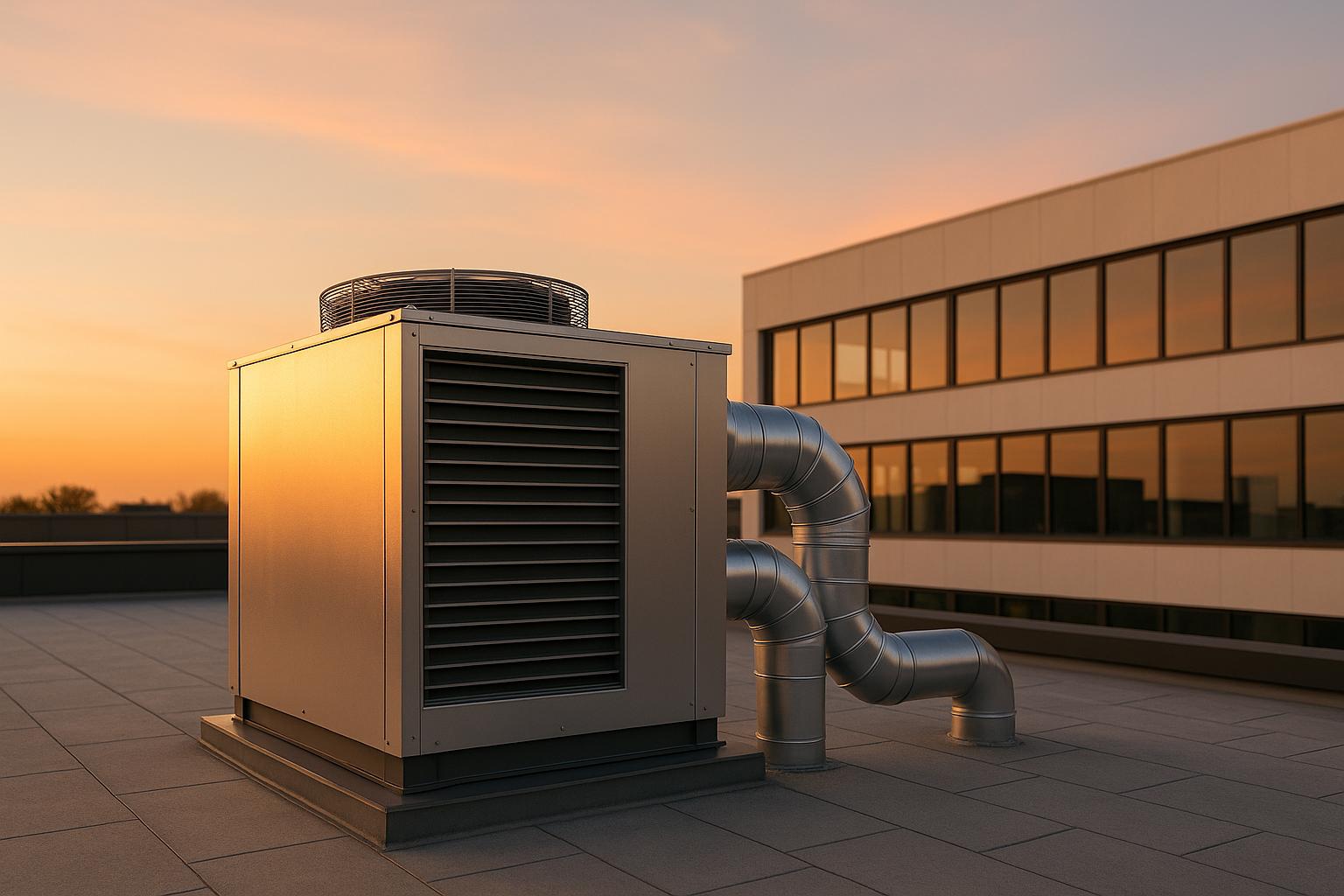
Commercial HVAC systems typically last 15–25 years, depending on factors like maintenance, usage, and environmental conditions. Regular maintenance can extend this lifespan significantly, while neglect can shorten it by up to 50%. Key components like compressors or ductwork may wear out at different rates, requiring staged replacements. Coastal climates, like Charleston‘s, can also accelerate wear due to humidity and salt exposure.
Key Takeaways:
- Lifespan: 15–25 years with proper care.
- Maintenance Impact: Quarterly servicing can extend life by up to 50%.
- Signs of Aging: Higher energy bills, uneven temperatures, frequent repairs, unusual noises, and declining air quality.
- Replacement vs. Repair: Older systems with costly repairs often warrant replacement, especially if using outdated refrigerants.
- Pro Tips: Regular tune-ups, filter changes, and energy-efficient upgrades can improve performance and longevity.
A proactive approach to maintenance and professional evaluations ensures your investment lasts longer and operates efficiently.
Factors That Affect Commercial HVAC Lifespan
The lifespan of a commercial HVAC system depends on several key factors. Understanding these can help you make better decisions about maintenance, installation, and overall system care. In Charleston, SC, where the coastal climate adds unique challenges, paying attention to these factors is especially important for protecting your investment. Here’s how maintenance practices, equipment quality, and local conditions influence HVAC longevity.
Maintenance Practices
Regular maintenance is the most important factor in keeping your HVAC system running for as long as possible. With proper care, systems can last 20–25 years, and in some cases, even longer. The frequency of maintenance plays a big role here:
- Quarterly maintenance can extend lifespan by up to 50%.
- Semi-annual maintenance can increase it by 30–50%.
- Annual servicing can boost it by 20–30%.
On the flip side, skipping regular upkeep can cut your system’s life by 30–50%.
"Proper maintenance is essential in prolonging the lifespan of HVAC equipment. Preventive maintenance helps identify and resolve issues before they escalate into serious problems that may lead to equipment breakdown or failure. By addressing minor issues and maintaining optimal system performance, the overall life of the equipment can be extended significantly." – Atmosphere AC Systems
Key maintenance tasks include replacing air filters every 1–3 months, cleaning coils, lubricating moving parts, and inspecting refrigerant levels, thermostats, and ductwork. These steps not only improve efficiency but also help avoid costly breakdowns.
System Quality and Installation
The quality of your equipment and how it’s installed are critical to long-term performance. Professional installation is a must for commercial HVAC systems. Improper setup can lead to airflow issues, strained components, and inefficient operation – all of which shorten the system’s life. High-quality equipment, on the other hand, often includes better materials and more advanced engineering, which naturally leads to longer durability. Energy-efficient models are particularly designed to minimize wear and tear, further extending their lifespan.
Correct system sizing is another important factor. An oversized unit may cycle on and off too often, causing unnecessary wear, while an undersized system might overwork itself, leading to premature failure. Professional load calculations ensure your system is perfectly matched to your building’s needs, avoiding these common pitfalls.
Climate and Usage Factors
Charleston’s coastal climate presents unique challenges that can impact HVAC longevity. High humidity levels force systems to work harder to remove moisture from the air, putting extra strain on components. Additionally, salt in the air accelerates corrosion, particularly affecting outdoor units and ductwork.
Charleston summers often see temperatures above 85°F combined with high humidity, which means HVAC systems must handle heavy loads for long stretches. Buildings with high occupancy or 24/7 operations, like hotels or data centers, experience even greater wear since their systems rarely get a break. A retail store running 12 hours a day will face very different demands compared to a manufacturing facility with heat-generating equipment.
These environmental and usage factors create unique wear patterns for your HVAC system. In such conditions, frequent maintenance and proactive monitoring – such as addressing early signs of salt corrosion or humidity-related wear – are essential to avoid major problems and extend the system’s lifespan.
HVAC Component Lifespans
The lifespan of HVAC components varies widely, and understanding these differences can help you make smarter decisions about maintenance and replacements. By knowing how long each part is likely to last, you can plan ahead, avoid unexpected breakdowns, and keep your system running smoothly.
Average Lifespan by Component
Not all HVAC components age at the same rate. Moving parts like compressors and fans tend to wear out faster than static ones like ductwork. While manufacturers often give general lifespan estimates, it’s a good idea to consult a professional for advice tailored to your system and environment.
For example, compressors face heavy workloads, especially in humid climates where they also handle dehumidification. Mechanical thermostats and older controls typically have shorter lifespans compared to modern digital models, which offer better precision and energy efficiency. Ductwork, on the other hand, can be affected by environmental factors like coastal moisture and salt, which may shorten its lifespan.
Why Some Components Last Longer
The durability of HVAC components often comes down to how much stress they endure and their exposure to environmental factors. Moving parts, such as those in compressors and fans, naturally experience more wear and tear. In contrast, static components like heat exchangers or ductwork are less prone to mechanical stress. Boilers, for instance, often last longer because of their simpler design and steady operating conditions, provided they receive regular maintenance.
Targeted care can also make a big difference. Routine cleaning, timely filter changes, and proper lubrication reduce strain on high-stress parts, helping them last longer. Outdoor components, like condensing units, have a tougher job – they deal with weather, debris, and temperature swings, which can shorten their lifespan compared to indoor parts.
Staged Replacement Strategies
Instead of waiting for a complete system failure, many property managers choose a staged replacement approach. This involves replacing high-wear components, such as compressors and controls, as they show signs of aging. Not only does this improve overall performance, but it also spreads out the cost of replacements over time.
Scheduling major upgrades during planned maintenance can extend your system’s life and reduce downtime. Keep in mind that newer energy-efficient components may require updates to controls or electrical systems to ensure compatibility. If possible, plan replacements during slower business periods to minimize disruptions. Also, be prepared for cascading repairs, as replacing one part can sometimes reveal other issues that need attention.
Signs Your Commercial HVAC System Needs Attention
Spotting early issues with your commercial HVAC system can save you from costly repairs and unexpected breakdowns. Most problems don’t appear overnight but develop gradually, giving you time to address them before they become major headaches.
Warning Signs of an Aging System
Higher energy bills are often the first clue. If your utility costs are creeping up without changes in usage or rates, your system might be losing its efficiency.
Uneven temperatures throughout your building can signal poor air distribution. If some rooms are too warm while others are uncomfortably cold – even with steady thermostat settings – it could point to problems with ductwork, dampers, or an aging unit.
Frequent repairs are another red flag. If you’re calling for service more and more often, it might mean critical components are wearing out and the system is nearing the end of its life.
Unusual noises should never be ignored. Grinding sounds might mean worn bearings, while banging or clanking could indicate loose or broken parts. Whistling noises often point to ductwork issues or failing seals. If your system starts making odd or louder noises, it’s time for a professional inspection.
Declining air quality is another sign. If you notice more dust, stale odors, or complaints about stuffiness, your HVAC system may not be filtering and circulating air effectively anymore.
Humidity problems can also indicate trouble. Condensation on windows, musty smells, or static electricity could mean your system isn’t controlling moisture levels as it should.
Catching these warning signs early can help you decide whether a repair or replacement is the better option.
When to Repair vs. Replace
Once you’ve noticed these signs, the next step is deciding whether to repair or replace your HVAC system. The decision often depends on the system’s age, condition, and the cost of repairs.
If your system is older and requires frequent or costly repairs, replacing it might be the smarter choice in the long run. On the other hand, if the system is relatively new and the issues are isolated, repairs could be the more economical option.
When repair costs start to approach the price of a new system, it’s usually better to invest in a replacement. A new system not only eliminates repair expenses but also offers benefits like better energy efficiency and reliability, which can save you money over time.
The type of refrigerant your system uses can also influence your decision. Older systems that rely on phased-out refrigerants like R-22 can be expensive to repair, making replacement a more practical choice.
Professional Evaluations
While recognizing warning signs is helpful, a professional evaluation provides a deeper understanding of your system’s condition. Qualified technicians can perform annual inspections, thermal imaging to uncover hidden issues, and performance tests to extend the life of your HVAC system.
Comprehensive audits assess airflow, temperature consistency, electrical systems, and energy usage. Detailed reports from these evaluations help you plan your maintenance budget and schedule replacements before a crisis hits.
Tracking performance metrics – like energy usage, temperature stability, and humidity control – over time can also reveal gradual declines. Scheduling these evaluations during off-peak seasons like spring or fall ensures issues are addressed before the heavy demands of summer or winter.
sbb-itb-998eb83
Tips for Extending HVAC Lifespan
Taking care of your commercial HVAC system isn’t just about avoiding costly replacements – it’s about ensuring it runs efficiently for as long as possible. A consistent and proactive maintenance routine is the foundation for achieving that goal.
Follow Regular Maintenance Schedules
Sticking to a regular maintenance schedule is one of the simplest ways to keep your HVAC system running smoothly. For starters, make it a habit to replace filters regularly. The frequency will depend on factors like building occupancy and air quality. For example, high-traffic commercial spaces often require filter changes more often than facilities with lighter use.
Seasonal tune-ups are another must. Aim for at least two checkups a year – once before the cooling season and once before the heating season. These tune-ups should include tasks like coil cleaning, refrigerant checks, lubrication, and electrical testing. This kind of routine care doesn’t just improve performance; it also helps catch small problems early, saving you from expensive repairs down the road.
Don’t overlook duct cleaning and sealing, either. Clean, sealed ducts ensure efficient airflow, prevent leaks, and reduce unnecessary strain on your system caused by debris buildup or air escaping where it shouldn’t.
And when routine maintenance isn’t enough, upgrading your system can make a big difference.
Upgrade to Energy-Efficient Solutions
Once you’ve got a solid maintenance routine, consider upgrading outdated components to improve your system’s efficiency and longevity. Modern technology like smart thermostats and building automation systems can help optimize operation schedules, reducing unnecessary runtime during off-hours and keeping temperatures stable without constant cycling.
Another smart upgrade is installing variable speed drives on motors and fans. These allow for smoother operation by avoiding harsh starts and stops, which not only extends motor life but also makes the system more energy-efficient.
If you’re ready to invest further, high-efficiency components like ECM motors, advanced compressors, and improved heat exchangers can reduce the strain on your HVAC system. While these upgrades may require upfront spending, they typically pay off through lower energy bills and reduced repair costs.
Don’t forget about the building itself. Improving insulation, sealing air leaks, and installing energy-efficient windows can significantly reduce heating and cooling demands. This, in turn, eases the workload on your HVAC system. Adding zone control systems is another way to use energy more effectively, allowing you to heat or cool only the spaces that are in use.
Use Local Experts
When it comes to HVAC maintenance, having local experts on your side can make all the difference. For instance, ALL Plumbing Services offers maintenance plans that include regular inspections, priority service, and detailed performance tracking to help you get the most out of your system.
Local professionals bring valuable knowledge of Charleston’s specific climate. They can tailor maintenance strategies to handle challenges like high humidity, seasonal temperature swings, and local air quality concerns. This expertise ensures your system stays efficient year-round.
Another advantage of working with local experts is their ability to provide fast emergency responses. Quick action can prevent small issues from turning into major breakdowns, saving you both time and money. Regular performance monitoring by these professionals also helps identify gradual efficiency declines, so you can make timely decisions about repairs or replacements.
Get the Most from Your Commercial HVAC System
Your commercial HVAC system represents a significant investment, and its performance and longevity depend heavily on proactive maintenance. Consistent care is the foundation for keeping it running smoothly.
Key Takeaways
Maintenance is your strongest tool for success. A well-structured maintenance routine – including regular tune-ups, duct cleaning, and inspections – can reduce the likelihood of breakdowns by up to 95%. This not only prevents emergency calls but also helps you avoid unexpected expenses.
Energy efficiency saves money. Routine maintenance improves energy efficiency, which directly lowers energy consumption and operating costs. Many commercial properties find it effective to allocate 1-2% of their operating budget for HVAC maintenance, as this investment leads to long-term savings and extends the system’s lifespan.
Professional evaluations catch issues early. Regular HVAC audits and professional inspections can identify inefficiencies before they turn into expensive repairs. This proactive approach allows you to make informed decisions about whether to repair or replace components, ensuring your resources are spent wisely.
Start with quality installation. A properly installed and correctly sized system sets the stage for decades of reliable performance, reducing the risk of early failures.
Your building’s environment plays a role. Factors like high foot traffic, extreme temperature demands, and poor indoor air quality can accelerate wear and tear on your system. Understanding these influences allows you to adjust maintenance schedules and make better decisions about upgrades or replacements.
By applying these principles, you can create a plan to optimize your system’s performance and protect your investment.
Next Steps for Commercial Property Owners
To put these insights into action, start with a thorough evaluation of your HVAC system. Review past maintenance records and inspections to identify gaps or recurring issues. A professional assessment will give you a clear picture of your system’s current condition and help you prioritize necessary maintenance or upgrades. If you’re noticing signs like uneven temperatures, rising energy bills, or frequent repairs, it’s time to act.
Remember, HVAC performance impacts more than just comfort – it can also affect productivity. A study from Harvard University and Syracuse University revealed that doubling office ventilation improved employee cognitive performance by over 100%. This highlights the broader benefits of maintaining an efficient HVAC system, from energy savings to enhanced workplace satisfaction.
Looking to get the most out of your HVAC system? ALL Plumbing Services offers tailored maintenance plans and expert evaluations designed to address Charleston’s unique climate challenges. From managing humidity to navigating seasonal temperature shifts, our team has the local expertise to keep your system running efficiently. Schedule a consultation today to create a customized plan that protects your investment and ensures reliable performance for years to come.
FAQs
What maintenance steps can help a commercial HVAC system last as long as possible?
To keep a commercial HVAC system running smoothly for as long as possible, regular maintenance is a must. This includes scheduling professional inspections, cleaning the coils, swapping out air filters, and monitoring refrigerant levels. Don’t overlook the electrical components – inspect them regularly, ensure proper airflow throughout the system, and lubricate moving parts to minimize wear. Sealing ductwork is another smart move, as it boosts efficiency and reduces unnecessary strain.
Staying on top of these tasks not only helps you avoid expensive repairs but also improves energy efficiency and ensures your HVAC system delivers reliable performance for years.
How do coastal climates impact the lifespan of commercial HVAC systems, and what steps can help protect them?
Coastal environments are tough on commercial HVAC systems. The combination of high humidity, salty air, and intense sunlight speeds up corrosion, wears down components, and lowers efficiency.
To keep your HVAC system running smoothly in these conditions, take a few proactive steps. Applying anti-corrosion coatings can help protect vulnerable parts. Rinsing outdoor units with fresh water regularly removes salt buildup, and using protective covers adds an extra layer of defense against the elements. Don’t forget to schedule routine inspections and maintenance – catching problems early can make all the difference in keeping your system efficient and extending its lifespan.
When should you replace a commercial HVAC system instead of repairing it?
Replacing a commercial HVAC system makes financial sense when repair expenses climb beyond 50% of the cost of a new unit or when the system is 15 years or older and starts experiencing frequent breakdowns, declining efficiency, or higher energy bills. Older systems naturally face more wear and tear, and the cost of repeated repairs can quickly pile up.
If repair costs exceed $3,000 or the system struggles to maintain steady temperatures, it’s often smarter to replace it. Upgrading to a new system can lower maintenance costs and boost energy efficiency, potentially leading to noticeable savings over time. Regular inspections and staying on top of maintenance can help you decide when it’s the right time to replace your system.