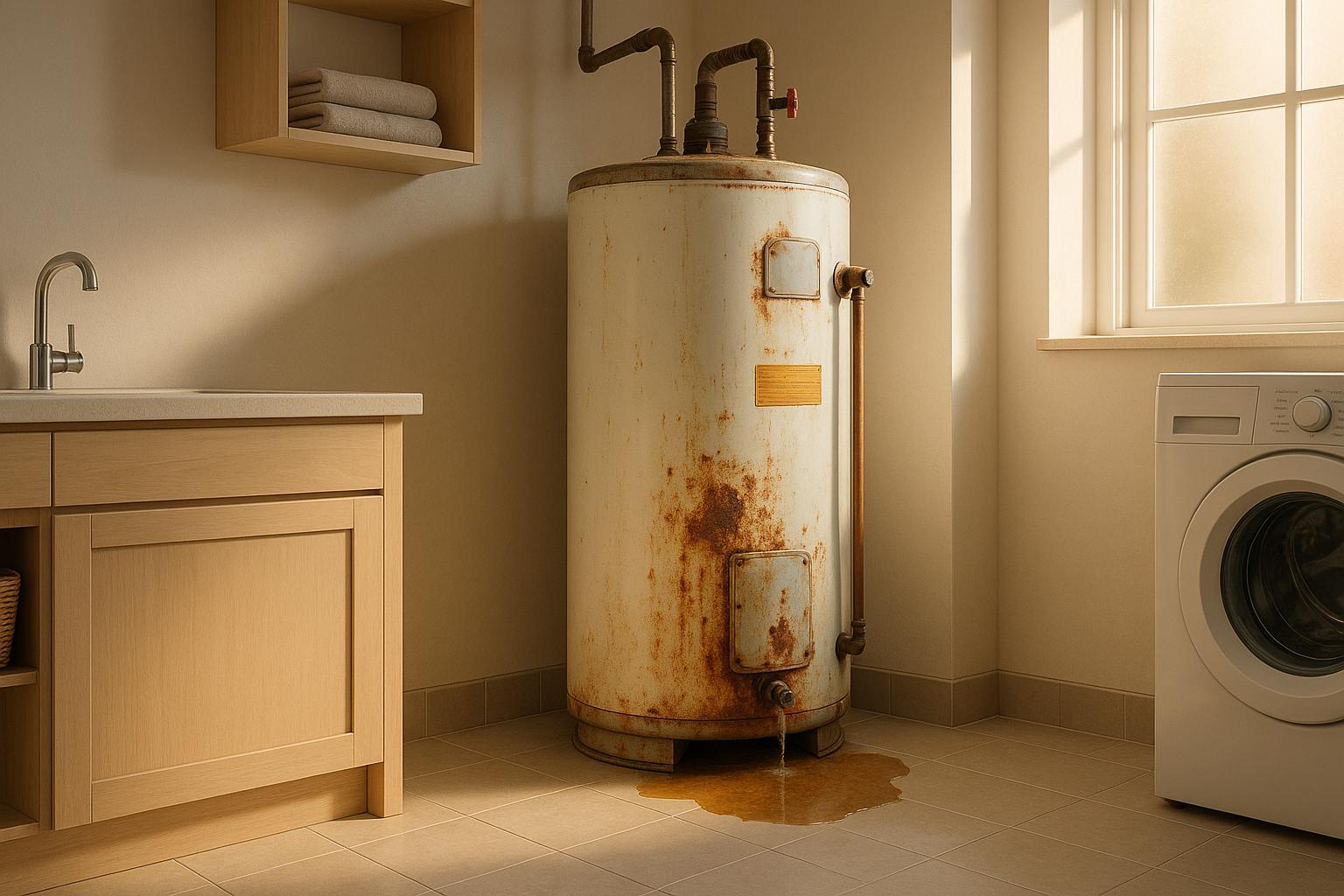
Your water heater is critical to your home, but it won’t last forever. Ignoring warning signs can lead to costly repairs, water damage, or even complete failure. Here are 5 key signs it’s time to replace your water heater:
- Inconsistent Water Temperature: Sudden shifts between hot and cold water often mean sediment buildup or failing internal components.
- Unusual Noises: Popping, banging, or screeching sounds could indicate sediment buildup or internal issues.
- Leaks: Even small leaks can lead to significant water damage and mold growth.
- Rusty Water: Corrosion inside the tank causes brown or rusty water, signaling the need for a replacement.
- Old Age: Most water heaters last 8–15 years. If yours is older, start planning for a new one.
Acting quickly when these issues arise can save you from expensive repairs and keep your home safe. If you’re noticing any of these signs, consult a professional plumber to assess your water heater immediately.
1. Water Temperature Changes Without Warning
Few things ruin a relaxing morning shower faster than water that suddenly turns ice cold or unbearably hot. If your water heater struggles to maintain a steady temperature, it’s a clear sign that something inside the tank isn’t working as it should.
Inconsistent water temperatures often point to a failing water heater. You might notice the water starts out hot but quickly turns lukewarm, or it never gets as hot as the thermostat setting. These issues are often caused by internal problems, such as buildup inside the tank that disrupts heat transfer.
The Hidden Culprit: Sediment Buildup
Charleston’s water supply carries minerals that can settle at the bottom of your water heater tank over time. If your home has hard water, this buildup happens even faster, creating a thick sediment layer.
"Sediment from the water supply can build up on the bottom of the water heater tank over time, especially in homes with a hard water problem. Enough sediment buildup on the bottom of the tank can eventually insulate the water inside from the burner assembly. This prevents the system from properly heating the water, leading to a drop in output."
– Sunset Air
This sediment traps steam bubbles and insulates the water from the burner, forcing your water heater to work harder while still failing to heat the water evenly.
When Internal Components Start Failing
In addition to sediment buildup, failing internal components can also cause temperature issues. For electric water heaters, problems with the thermostat or heating elements are common culprits. In gas units, a malfunctioning thermocouple can lead to cooler water or even complete loss of hot water.
What You Can Do Right Now
Start by adjusting your thermostat, then wait three hours and check the water temperature with a thermometer. If you have an electric water heater, it’s best to call a professional to safely adjust the temperature.
To tackle sediment buildup, flush your tank annually to remove deposits and improve efficiency. Draining the tank once a year can help prevent these issues from escalating. For long-term prevention, consider installing a whole-house water softener to minimize future sediment problems.
When to Call for Professional Help
In Charleston’s challenging climate, addressing persistent water temperature issues promptly is crucial. If adjusting the thermostat doesn’t fix the problem, it’s time to call in a professional. Components like thermostats, thermocouples, and heating elements require specialized tools and expertise to repair safely.
For gas water heaters, extra caution is essential. If you suspect a gas leak, turn off the unit immediately, ventilate the area, leave your home, and contact both a professional plumber and your local gas utility company. Never attempt to fix gas appliances on your own – it’s not worth the risk.
2. Loud Noises From Your Water Heater
Your water heater is designed to operate quietly. While soft humming, gas crackling, or ticking are normal sounds, loud and unusual noises can signal a problem that needs attention.
Normal vs. Problematic Sounds
It’s common for water heaters to make some noise during normal operation. For instance, gas water heaters often produce a soft crackling sound as they heat up, and you might hear light humming or ticking. However, sounds like popping, rumbling, banging, sizzling, screeching, or hammering are not normal. These disruptive noises often point to underlying issues, such as sediment buildup inside the tank.
Sediment Buildup: The Usual Suspect
One of the most frequent causes of loud noises is sediment buildup. Over time, minerals and debris can collect at the bottom of the tank. When water heats around these sediment layers, steam bubbles form and escape violently, creating popping or rumbling sounds. According to an October 2024 report from The Spruce, popping noises are often linked to limescale and sediment accumulation. To fix this, the tank needs to be flushed and drained to clear out the sediment. Additionally, if the aluminum anode rod inside the tank is exposed to high alkalinity, it may need replacement with a magnesium anode rod, which requires professional assistance.
What Different Sounds Might Mean
- Sizzling: This could indicate water leaking onto hot components.
- Screeching: Often caused by restricted water flow.
- High-pitched whistling: Points to a clogged valve.
- Banging or hammering: Signals more severe internal problems.
When to Act Fast
"If you hear loud rumbling, banging and clanking noises, shut off the water heater immediately, and call a plumber."
For screeching sounds, inspect the temperature and pressure relief valve. If this valve is causing the noise, turn off the gas, electricity, and water supply to the tank, then contact a plumber right away. Similarly, if you hear sizzling, shut off the power and water immediately and seek professional help.
Why You Need a Professional
Dealing with these warning signs on your own can be risky. While it might be tempting to troubleshoot, water heater repairs require specialized knowledge and tools.
"Most problems with a water heater should be dealt with exclusively by a professional trained to work with hot water tanks."
For persistent popping or rumbling sounds, a professional should flush the tank to resolve the issue. Addressing these problems promptly can save you from more costly repairs in the future.
3. Water Leaks Around Your Water Heater
If you notice water pooling around your water heater, it’s a clear sign that something’s wrong. Unlike subtle noises, leaks are visible and demand immediate attention. Even a small puddle can signal a bigger problem waiting to happen.
Spotting the Warning Signs
One of the most obvious indicators is water collecting at the base of your heater. Make it a habit to check for moisture or standing water regularly. Look for rust or corrosion on the tank’s exterior, especially around valves and fittings. Discoloration in these areas often means water has been present long enough to cause oxidation, pointing to an ongoing leak rather than a one-time issue.
In places like Charleston, where water quality and the humid climate can speed up corrosion, these problems are even more common. Spotting these signs early can help you figure out where the leak is coming from and take action before it gets worse.
Where Leaks Come From
Leaks usually originate from a few key areas: the tank itself, valves, or pipe connections. Common causes include corrosion, high water pressure, or faulty components. If the tank is leaking, it’s often a sign that it’s nearing the end of its 10–15 year lifespan. Once corrosion compromises the tank, replacement is typically the only solution.
Leaks around fittings and valves might seem small at first, but they can quickly worsen under constant water pressure, leading to more significant issues over time.
The Hidden Costs of Waiting
Delaying repairs for a leak can lead to serious consequences. Water damage can harm your home’s structure, ruin flooring, and damage your belongings. On top of that, the damp conditions caused by leaks can encourage mold growth, which is both costly to address and harmful to your home’s air quality. Even minor leaks can escalate into major structural damage if left unchecked.
Health Risks You Can’t Ignore
Persistent water leaks create an ideal environment for mold, which can trigger respiratory problems and allergic reactions – especially for individuals with sensitivities. Addressing leaks promptly is critical to maintaining a safe and healthy environment for your household.
Taking Immediate Action
Considering the risks to both your home and health, it’s crucial to act quickly. If you spot any signs of a leak, turn off the power, gas, and water supply to your heater immediately to prevent further damage. Avoid attempting DIY repairs; instead, call a professional plumber to assess and fix the problem.
Don’t underestimate the seriousness of even a small leak. If the tank itself is leaking, replacement is often the only viable option since repairs rarely work once the metal is compromised. Addressing leaks promptly can save you from expensive repairs and protect your home from further damage.
4. Brown or Rusty Water From Your Taps
Seeing brown or rusty water flowing from your hot water taps is a red flag that your water heater may be failing. Just like temperature issues or strange noises, discolored water points to internal problems. In this case, it’s often a sign of corrosion inside the tank.
What’s Happening Inside Your Tank
The rusty color in your water comes from iron particles breaking off the corroded walls of your water heater. As Complete Comfort Heating, A/C & Plumbing Repair explains:
"The inside of the tank is metal, and constant exposure to water can cause rust over time. The older the water heater, the more likely a corroding tank is the reason for discolored water."
This process speeds up once the anode rod – the component designed to attract corrosive particles – has worn out. When the anode rod can no longer protect the tank, corrosion becomes irreversible, leaving replacement as the only viable option.
Why Replacement Is Often Necessary
Corrosion inside the tank weakens its structure. Even if you replace the anode rod at this stage, the damage already done cannot be undone. Eventually, the rust will compromise the tank entirely, making replacement the only way to prevent further damage or failure.
Health and Practical Concerns
The EPA considers slightly discolored water safe to drink, but water with iron levels between 1.0 and 3.0 mg/L can cause stomach discomfort, including nausea or vomiting. Long-term exposure to high iron levels may pose more serious health risks. Beyond health concerns, rusty water can stain sinks, tubs, and clothing, and it may encourage bacterial growth.
Taking Action
If rusty water is coming specifically from your hot water taps, it’s a strong indication that the water heater is the source of the problem. Experts warn:
"Rusty water coming from the hot water heater, in particular, requires prompt attention, as there’s a good chance you’ll need a new one very soon."
Ignoring this issue could lead to more severe consequences, such as complete tank failure or flooding. Given that most water heaters last 10–15 years, seeing rusty water is often a sign that your unit is nearing the end of its lifespan. Don’t wait – contact a professional plumber to inspect your water heater and discuss replacement options. Acting quickly can protect your home from costly damage. Up next, discover how professional assessments can help keep your home safe.
sbb-itb-998eb83
5. Your Water Heater is Getting Old
Even if your water heater isn’t acting up, age alone can be a red flag. Every water heater has a limited lifespan, and knowing when yours is nearing the end of its life can save you from an inconvenient and costly breakdown.
In Charleston homes, the lifespan of a water heater depends on its type and fuel source. For example, tank water heaters generally last 8–12 years, electric models can go for 10–15 years, and tankless systems often run effectively for about 20 years.
To figure out how old your unit is, check the serial number or the manual for the manufacture date. As A.O. Smith explains:
"Most heaters have a lifespan of 8-20 years. The serial number (usually found on a sticker on your unit or in your manual) often includes the date of manufacture."
As water heaters age, they face natural wear and tear, which can lead to reduced efficiency. You might notice longer wait times for hot water or a gradual increase in your energy bills. Frequent repairs are another telltale sign that your water heater is on its last legs.
Visible damage, like rust or wet spots, is a clear signal that it’s time to act. Certified and Licensed Home Inspector Ronald Greene stresses the importance of replacing a deteriorating unit quickly:
"If you see wet spots or rust on the exterior of the water heater, make plans to have it replaced expediently, for it’s not long for this world."
Should You Repair or Replace Your Water Heater?
When repairs become frequent or visible wear is evident, replacing your water heater is often the smarter choice. Older units not only require more maintenance but are also less efficient, making replacement a more reliable and cost-effective solution in the long run.
Upgrading to a newer, ENERGY STAR®-certified model could cut your energy use by up to 30%, which means lower utility bills. Plus, modern water heaters come with improved designs that enhance performance and reliability.
If your water heater is nearing the end of its expected lifespan, it’s wise to start planning for a replacement now. Being proactive can help you avoid unexpected breakdowns and potential water damage to your home. A little foresight today can save you a lot of trouble tomorrow.
How ALL Plumbing Services Can Help

If your water heater starts acting up, you need local professionals who understand the unique plumbing needs of Charleston homes. Since 1987, ALL Plumbing Services has been the go-to team, bringing over three decades of expertise in water heater solutions. Here’s how they handle every water heater challenge with skill and precision.
Water Heater Solutions
ALL Plumbing Services tackles all types of water heater problems, from leaks and pilot light issues to malfunctioning thermostats and heating elements. Whether you have a traditional tank model, a tankless system, or an energy-efficient heat pump water heater, their technicians are equipped to get your hot water running again.
When repairs aren’t enough, they offer fast and accurate replacements. Their team ensures your new water heater is properly sized and installed for peak performance and energy savings. This meticulous approach means your Charleston home will have reliable hot water for years to come.
Emergency Services When You Need Them Most
Water heater breakdowns don’t follow a schedule, and that’s why ALL Plumbing Services offers 24/7 emergency support in Charleston.
"At ALL Plumbing, we understand that plumbing disasters don’t wait for a convenient time to strike. That’s why our team is always ready, 24/7, to handle any emergency plumbing needs in Charleston."
Their goal is to provide same-day service whenever possible, minimizing damage and restoring your home’s comfort quickly. Whether it’s a cold morning with no hot water or a sudden leak, their team is ready to respond immediately.
Proven Track Record of Excellence
ALL Plumbing Services has built a reputation for professionalism, responsiveness, and punctuality. With a stellar 4.9 out of 5 rating from 19 reviews, their customers’ feedback speaks volumes about their commitment to quality service.
Matt W. shared his positive experience:
"He gave me real, meaningful advice on additional improvements I could make to our home’s plumbing without making the experience feel uncomfortable or pushy (something you rarely get nowadays)."
Angel J. praised their overall service:
"Awesome Customer Service. Absolutely wonderful experience. Awesome customer service. Good price. Quick appointment. Service tech so polite and knowledgeable. Could not have asked for a better company over all!"
Maintenance Plans for Long-Term Peace of Mind
ALL Plumbing Services also offers maintenance plans to help prevent water heater problems before they escalate. Regular maintenance not only extends the life of your water heater but also helps avoid unexpected breakdowns that could leave you without hot water – or worse, cause water damage.
Their skilled technicians perform routine inspections and servicing, ensuring your water heater operates safely and efficiently. Given Charleston’s humid climate and mineral-rich water, this kind of care is especially important to avoid common issues.
To make their services even more accessible, ALL Plumbing Services provides special discounts for senior citizens, military personnel, first responders, and first-time customers. It’s just one more way they’ve shown their commitment to serving the Charleston community for decades.
Don’t Wait – Protect Your Home Now
If you’ve noticed uneven temperatures, odd noises, leaks, rusty water, or that your water heater is getting old, it’s time to take action immediately. These problems won’t fix themselves. In fact, they tend to get worse over time, potentially disrupting your daily life and causing costly damage to your Charleston home.
Charleston’s humid weather makes these issues even more urgent. A small leak can quickly turn into a flooded utility room, and fluctuating temperatures could lead to a complete system breakdown.
Delaying repairs can hit your wallet hard. Emergency fixes and water damage repairs are far more expensive than regular maintenance. Acting quickly can save you from these unnecessary expenses.
"Professional water heater repair services ensure that your system is fixed correctly and efficiently. Trained technicians have the expertise to diagnose and address issues accurately, preventing further damage." – Purpose Plumbing
Routine maintenance not only prevents major issues but also extends your water heater’s life. A well-maintained storage tank water heater can last about 12 years, while tankless systems can run for up to 20 years. Ignoring minor problems, however, can shorten these lifespans significantly, forcing you to replace the unit sooner than necessary.
ALL Plumbing Services offers 24/7 emergency support in Charleston, ensuring quick repairs and restoring hot water without delay. Don’t put your home and comfort at risk – address problems as soon as they arise.
If you’ve spotted any of these warning signs, take the first step in protecting your family and property by reaching out to ALL Plumbing Services today.
FAQs
What could happen if I ignore the warning signs that my water heater needs replacing?
Ignoring the red flags of a failing water heater can spell trouble for your home. Leaks or bursts, for instance, might not seem like a big deal at first, but they can quickly escalate into costly water damage, affecting your home’s structure and even leading to mold growth. On top of that, an aging or malfunctioning water heater tends to lose efficiency, which can inflate your utility bills and leave you without dependable hot water when you need it most.
Putting off repairs or replacement might save you time now, but it often turns small problems into major headaches. These can result in pricier repairs or even the need for an emergency replacement. Tackling the issue early on not only saves you money but also keeps your home safe, efficient, and comfortable.
What are the signs that sediment buildup is affecting my water heater?
Sediment buildup in a water heater can lead to some pretty obvious problems. Pay attention to rumbling or popping sounds, which happen when trapped sediment heats up and forms steam bubbles. Other warning signs include fluctuating water temperatures, discolored or bad-smelling hot water, longer heating times, or even minor leaks near the drain valve.
If you spot any of these issues, it’s a good idea to have your water heater flushed or checked by a professional. This can help prevent further damage and keep it working efficiently.
How do I know when it’s time to replace my water heater?
If your water heater is more than 10 years old, has noticeable leaks at the base, or starts producing rusty or discolored water, it might be time for a replacement. Other red flags to watch for include unusual noises, frequent temperature swings, or an unreliable hot water supply.
Upgrading to a newer, energy-efficient water heater can not only improve performance but also lower your utility bills. Taking action before a total failure can help you avoid unexpected repairs or potential water damage.