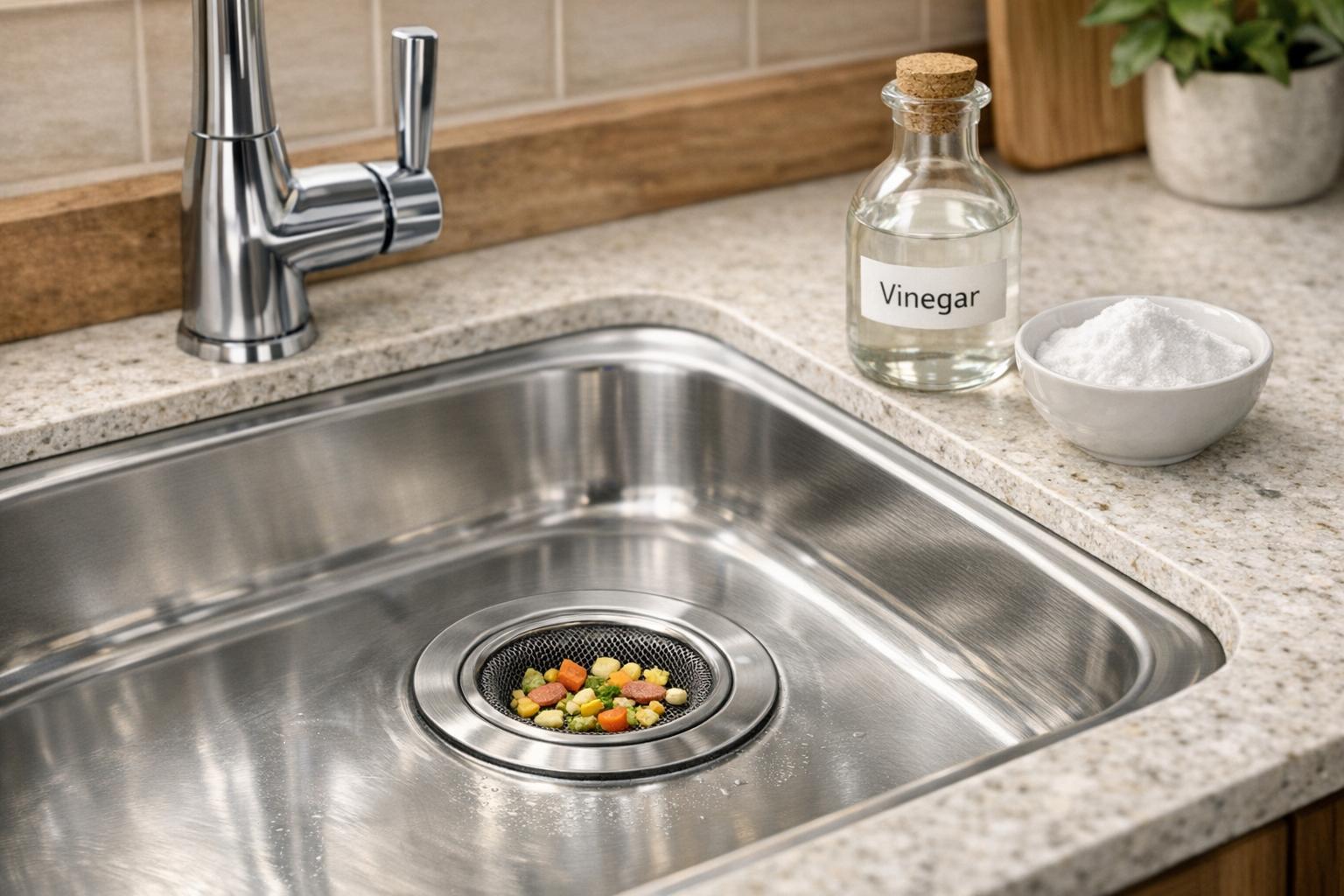
Clogged drains can disrupt your daily routine and lead to costly repairs. The good news? You can prevent most clogs by adopting simple habits. Here’s a quick rundown of seven practical tips to keep your drains running smoothly:
- Use and clean drain strainers: Trap hair, food, and debris with strainers and clean them regularly.
- Avoid pouring grease down the drain: Let grease cool, then dispose of it in the trash.
- Flush drains weekly with hot water: Helps clear buildup like soap scum and grease.
- Try baking soda and vinegar: A natural, eco-friendly way to clean and deodorize drains.
- Maintain drain stoppers and use hair catchers: Clean stoppers weekly and catch hair before it clogs pipes.
- Be cautious with garbage disposals: Avoid fibrous, starchy, or sticky foods like celery, rice, and coffee grounds.
- Flush only toilet paper and human waste: Never flush wipes, hygiene products, or other items.
These easy steps can save you time, money, and hassle. For persistent issues or severe clogs, consult a professional plumber to address deeper problems.
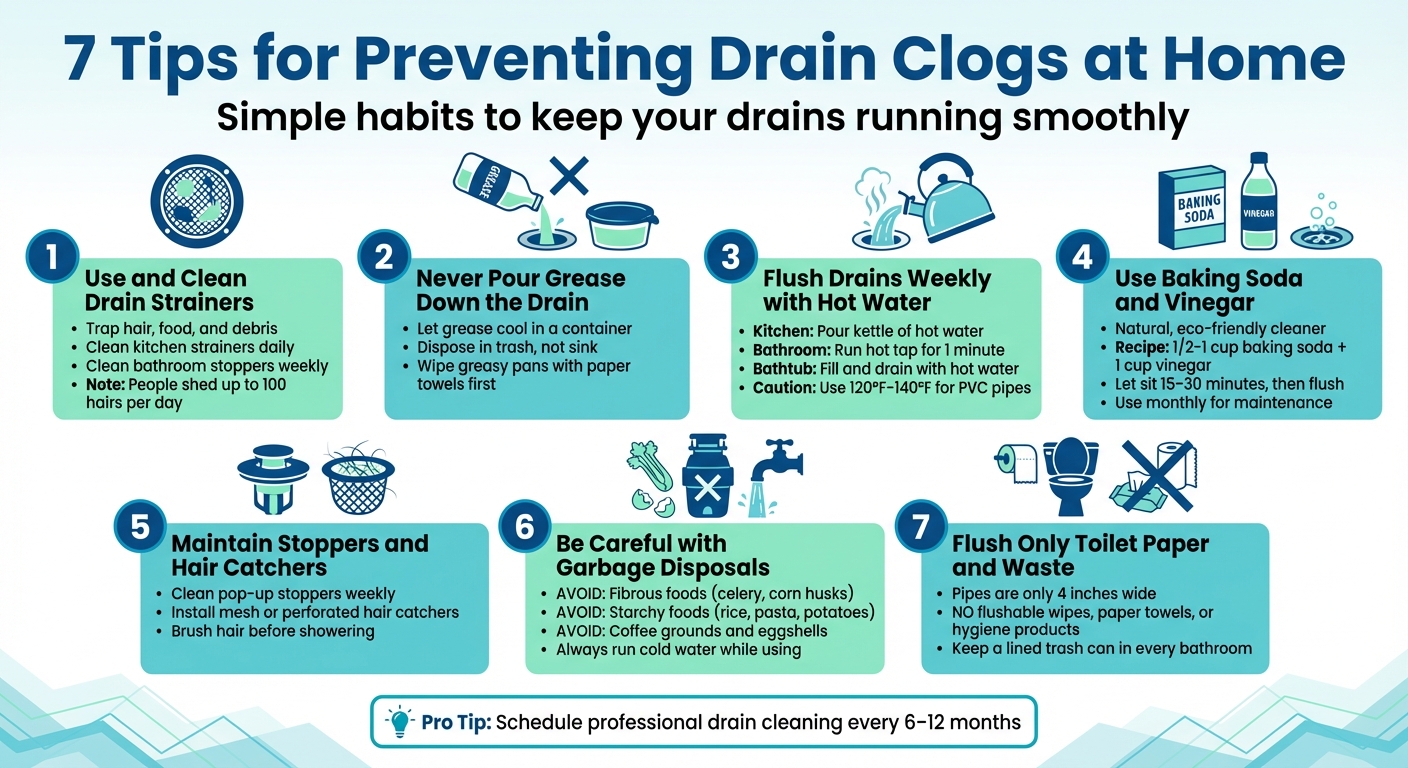
7 Essential Tips to Prevent Drain Clogs at Home
1. Install and Clean Drain Strainers
Drain strainers – also called mesh screens or hair catchers – are a simple yet effective way to prevent debris from clogging your pipes. In the kitchen, they catch things like food scraps, coffee grounds, and eggshells. In the bathroom, they trap hair and soap scum before they can cause blockages.
These strainers are usually made of stainless steel or silicone and are quite affordable, often costing just a few dollars. For kitchen sinks, go for a fine-mesh strainer that can catch even the smallest particles. For showers, a perforated screen is a better choice since it allows water to flow freely while still capturing hair. If you’re bathing a pet, you can even use a washcloth over the drain to catch excess fur. The key is to pick the right strainer for the job and keep it clean.
Cleaning your strainers regularly is essential to keep them working properly. In the kitchen, empty them daily to avoid food decay and unpleasant smells. For bathroom drains, clear out hair from pop-up stoppers at least once a week. Considering that people shed up to 100 hairs a day, it doesn’t take long for hair to build up. Use a small wire brush to scrub off any residue, then rinse the strainer under hot water. Remember, a strainer can only do its job if it’s clean – neglecting this step can lead to blockages and poor water drainage.
2. Never Pour Grease or Oil Down the Drain
Pouring grease or oil down the drain is one of the most common causes of kitchen clogs. While grease may seem harmless when it’s hot and liquid, it quickly cools and solidifies inside your pipes. This creates a sticky, thick buildup on the pipe walls. Over time, it reacts with calcium – often from corroded concrete – and forms waxy, soap-like deposits called "fatbergs." These fatbergs block wastewater flow and trap food particles, hair, and other debris, making the problem even worse.
The best way to dispose of grease is to pour it into a sealable container, let it cool, and then throw it away. For smaller amounts, you can line a bowl with aluminum foil, pour the grease in, refrigerate it until it hardens, and then toss the foil.
Before washing greasy pots and pans, wipe them with a paper towel to remove as much oil as possible. Avoid shortcuts like pouring boiling water or dish soap down the drain. These might temporarily move the grease further down the pipes, but it will eventually cool and solidify in harder-to-reach areas, causing bigger blockages. Stick to these simple habits to keep your plumbing free of grease-related problems.
3. Flush Drains Weekly with Hot Water
Giving your drains a weekly flush with hot water can help keep them clear by melting fats, dissolving soap scum, and washing away debris that often causes slow drainage.
For kitchen sinks, carefully pour a kettle of hot water down the drain to reduce splashing. In bathrooms, let the hot tap water run for about a minute to rinse away toothpaste, shaving cream, and soap residue. For bathtubs, fill the tub with hot water and then drain it to create a powerful flush that pushes debris through the pipes.
A word of caution: If your home has PVC pipes – commonly used in residential plumbing – stick to hot tap water (around 120°F–140°F) to avoid damaging the material. Also, never pour boiling water into porcelain sinks or toilets, as the sudden heat can crack the surface.
Incorporating this simple habit into your weekly routine can go a long way in preventing stubborn clogs and keeping your drains running smoothly.
4. Use Baking Soda and Vinegar as Natural Cleaners
Looking for a safer, eco-friendly alternative to chemical drain cleaners? Baking soda and vinegar might be your answer. This simple combination is great for tackling minor clogs and keeping odors in check. When mixed, these two ingredients create carbon dioxide bubbles that help lift away organic buildup, soap scum, and grease – all without harming your pipes.
This method works wonders for keeping drains fresh and preventing debris from accumulating. It pairs perfectly with regular hot water flushes. Here’s how to do it: Start by pouring a kettle of boiling water down the drain to loosen any surface debris. Then, add 1/2 to 1 cup of baking soda directly into the drain, followed by 1 cup of white vinegar. The mixture will fizz immediately. Cover the drain with a stopper to focus the reaction for 15 to 30 minutes. Afterward, flush the drain with another kettle of boiling or very hot water to clear out the loosened buildup.
For maintenance, try this method once a month – or weekly for drains that see heavy use. It’s biodegradable, safe for all pipe types (even older plumbing), and works well with septic systems.
In bathrooms, it’s effective at breaking down soap scum and hair clogs. In kitchens, it helps deodorize garbage disposals, especially when paired with grinding ice and citrus peels.
5. Clean Drain Stoppers and Use Hair Catchers
After regularly flushing your drains, it’s time to tackle the parts where debris loves to settle. Bathroom drain stoppers are notorious for collecting hair, soap scum, and other debris that can slow things down – or worse, lead to a complete clog. As Drano puts it:
Hair, soap scum and other gunk can collect on the stoppers and slow down the drainage or cause completely clogged tub drains.
Make it a habit to lift and clean pop-up stoppers weekly. Use a small brush or even a bent wire to remove any trapped hair and debris, rinse everything thoroughly, and then put the stopper back in place.
Another smart move? Install affordable mesh or perforated hair catchers over your drains. These simple tools trap debris before it can sneak into your pipes. As 1st American Plumbing explains:
These inexpensive drain covers are your first line of defense against drain clogs and can give you peace of mind that unnecessary debris isn’t slipping down your drains.
Opt for stainless steel or silicone hair catchers for bathroom drains, and clean them regularly by removing the trapped hair and rinsing them off. For an extra preventative step, brush your hair before hopping into the shower to catch loose strands – this small effort can significantly cut down on the amount of hair reaching your drain. And if you’re bathing a pet, try placing a washcloth over the drain to catch the extra fur that might overwhelm a standard hair catcher. These easy practices, combined with routine cleaning, will help keep your drains running smoothly.
sbb-itb-998eb83
6. Be Careful What Goes in Garbage Disposals
Using garbage disposals properly is just as important as regular drain cleaning when it comes to avoiding clogs. While these devices are powerful, they’re not designed to handle all types of waste. Certain foods can jam the motor, clog the pipes, or even damage the disposal itself. Developing good habits – like knowing what to avoid putting down the disposal – can go a long way in keeping your plumbing clear.
Fibrous foods such as celery, corn husks, asparagus, and rhubarb are a common culprit. These stringy items can wrap around the impeller and cause jams. Eric Schultz, Director of Product Management at InSinkErator, explains:
Stringy food waste materials often pass through most standard disposals without being ground properly. This can result in food waste material balling up in the downstream plumbing and potentially causing a clog.
Starchy foods like rice, pasta, and potatoes are another no-go. When broken down, they turn into a sticky, glue-like mush that can clog drains. Paul Abrams, Public Relations Director at Roto-Rooter, notes:
Large quantities of starchy foods like rice, pasta, and potatoes break down into a mush that can clog your drain and also gum up your disposal.
Other offenders include coffee grounds – which clump together into sediment that can block the line – and eggshells, which have a sticky membrane that traps other debris, leading to clogs.
To keep your disposal running smoothly, always run cold water while using it and for 15–30 seconds afterward. This helps solidify small amounts of grease and flush out particles. Jeremy Gattozzi, Senior Category Manager for Disposals at Moen, highlights:
Cold water is key… It causes small amounts of grease to solidify.
Also, avoid dumping large amounts of food at once. Feed scraps gradually, and as a rule of thumb, if you wouldn’t chop it easily with a kitchen knife, it’s probably better off in the trash than in your disposal.
7. Only Flush Toilet Paper and Human Waste
Your toilet is built for one job: handling human waste and toilet paper. That’s it. Anything else – no matter what the label says – belongs in the trash. Jessica Bennett, Editor, sums it up perfectly:
Your pipes are only four inches in diameter at their widest, which means even small, seemingly harmless items can cause major plumbing problems.
Sticking to this simple rule is the easiest way to avoid costly plumbing repairs. It works hand-in-hand with other precautions to keep your pipes clear of materials that won’t break down.
One of the biggest culprits? Flushable wipes. Despite their name, these wipes don’t disintegrate quickly like toilet paper. Instead, they often get stuck in drains and sewer lines, leading to clogs that can cost hundreds of dollars to fix.
Other items to avoid flushing include paper towels, feminine hygiene products, cotton balls, swabs, and dental floss. These materials can swell, tangle, or combine with other waste, creating stubborn blockages. When in doubt, toss it in the trash.
To make proper disposal easier, keep a lined trash can in every bathroom. This simple step encourages everyone to dispose of wipes, hygiene products, and other non-flushable items responsibly.
When to Call a Professional
Even with regular maintenance, some plumbing problems require expert attention. While preventive care can keep things running smoothly, certain issues – like severe clogs – are beyond DIY fixes.
For instance, if multiple fixtures, such as your kitchen sink and shower, start backing up at the same time, or if water unexpectedly backs up when you flush the toilet, it could point to a blockage in your main sewer line.
Other warning signs include persistent sewage odors, gurgling noises, or rising air bubbles in your pipes. These can indicate trapped organic matter, sewer gas leaks, or pressure buildup. Brian Sloan from TR Miller explains:
Pipes will eventually break, leak or explode due to the strain and pressure that [trapped air] puts on your plumbing system.
If clogs persist despite your best efforts, deeper problems like mineral buildup, tree root intrusion, or even pipe collapse might be to blame. For example, Charleston’s hard water, rich in minerals, can lead to scaling inside pipes, narrowing them over time and increasing the risk of blockages. Additionally, repeated use of chemical drain cleaners can corrode metal fittings and crack plastic pipes, causing further damage.
This is where professional plumbers come in. They can address advanced issues that routine care can’t resolve. ALL Plumbing Services, a trusted name in Charleston, SC since 1987, offers 24/7 emergency drain cleaning and routine maintenance services for homes and businesses. Their team uses state-of-the-art techniques like hydro jetting to clear tough blockages and provides eco-friendly plumbing solutions tailored to Charleston’s unique water conditions and humid climate. To stay ahead of potential problems, consider scheduling professional drain cleaning every 6–12 months.
Licensed plumbers also rely on tools like motorized augers and camera inspections to safely and effectively clear stubborn clogs. If you notice any of these warning signs, reaching out to a professional promptly can help you avoid costly repairs down the line.
Conclusion
Keeping your drains clog-free starts with consistent care and smart disposal habits. Simple steps like using drain strainers, avoiding grease down the drain, flushing with hot water weekly, using natural cleaners, and maintaining stoppers can make a big difference in keeping your pipes clear.
These small efforts can save you money by helping you avoid expensive repairs and emergency plumbing calls. As Roto-Rooter wisely puts it:
A little preventative drain maintenance goes a long way in preventing costly plumbing problems.
Regular upkeep not only extends the life of your plumbing but also keeps minor issues from turning into major (and costly) headaches.
Think of drain maintenance as another essential household task – right up there with cleaning floors or scrubbing toilets. Add weekly hot water flushes to your to-do list, use baking soda and vinegar treatments monthly, and keep tools like a plunger and drain snake handy to tackle small clogs before they escalate.
Of course, even with the best maintenance routine, some issues may require a professional touch. Scheduling professional plumbing inspections every 6 to 12 months can help catch buildup or problems that DIY solutions might miss. ALL Plumbing Services offers preventive care and maintenance plans for Charleston homeowners, helping to avoid costly repairs and ensuring your plumbing runs smoothly. Their team can address deeper concerns that routine maintenance might overlook.
FAQs
What should I do if my drains are still clogged even after trying these tips?
If your drains are still clogged after trying these preventative measures, it might be time to call in a licensed plumber. Professionals have the tools and expertise to handle tough blockages and uncover any deeper plumbing issues.
For those in Charleston, SC, and surrounding areas, ALL Plumbing Services provides expert drain cleaning and a range of plumbing solutions. Their skilled team can quickly pinpoint and fix the problem, helping to restore your plumbing system to optimal condition.
Is it safe to use baking soda and vinegar to clean my drains?
Yes, combining baking soda and vinegar is a safe and natural way to clean your drains. This duo can help tackle minor clogs and leave your pipes smelling fresh without the risk of damage. That said, it works best for routine maintenance or clearing up small blockages – it’s not a fix for major clogs.
For more stubborn problems or ongoing maintenance, professional drain cleaning services might be a better option to ensure your plumbing stays in great condition.
How often should I have my plumbing inspected by a professional?
Scheduling a professional plumbing inspection every 6 to 12 months is a smart move. These regular check-ups can identify small problems – like tiny leaks or sluggish drains – before they escalate into expensive repairs.
However, if you’re dealing with frequent clogs, strange smells, or shifts in water pressure, it’s worth arranging an inspection sooner. Routine maintenance keeps your plumbing system running smoothly and helps avoid unpleasant surprises later on.