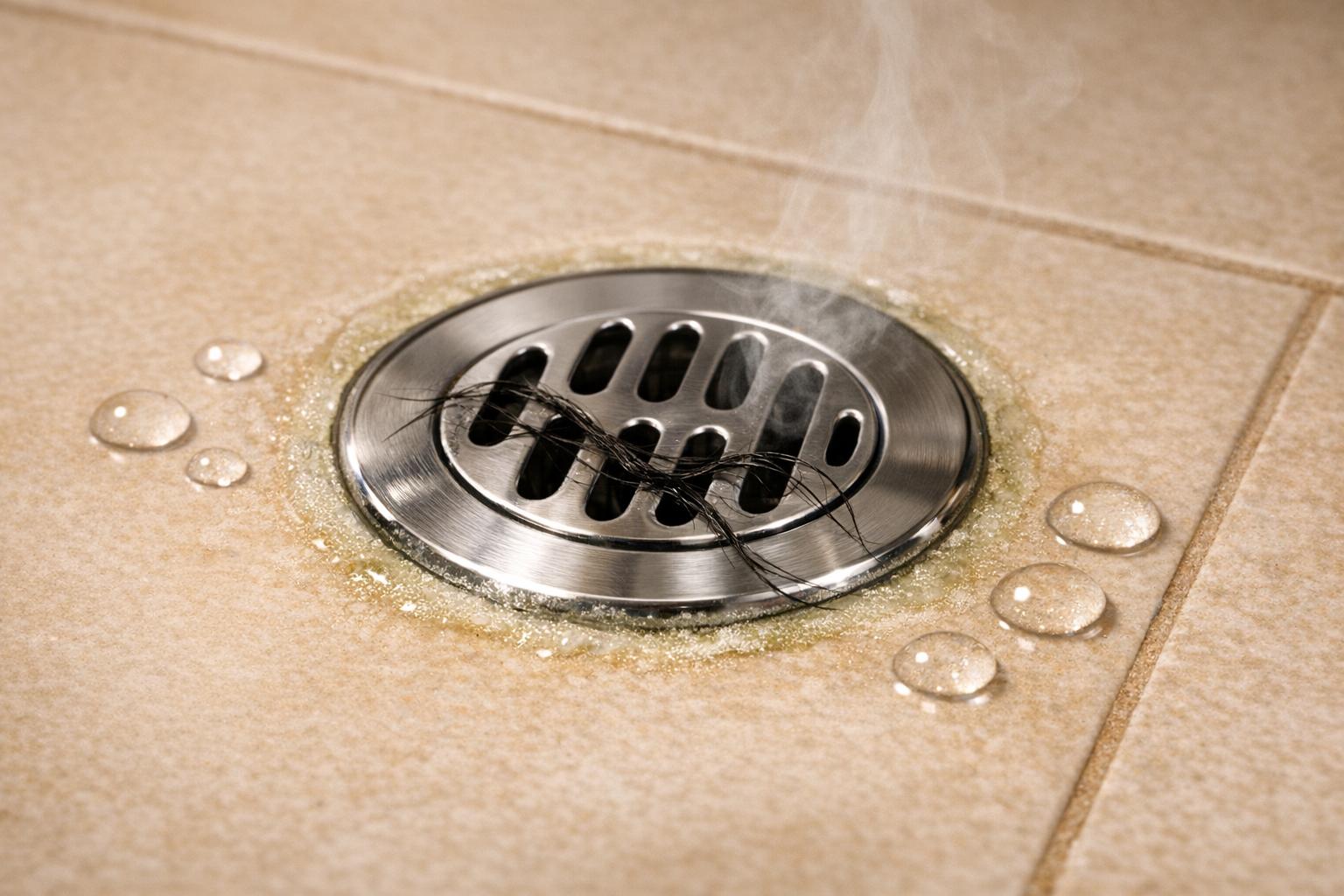
Dealing with a smelly shower drain? The culprit is usually one of these: biofilm buildup, a dry P-trap, mold growth, or clogs from hair and soap. These odors can range from musty to sewage-like, and they’re not just unpleasant – they could signal health risks or plumbing issues. Here’s a quick breakdown of what might be causing the smell and how to fix it:
- Rotten Egg Smell: Likely due to bacteria in biofilm or a dry P-trap.
- Musty Odor: Mold or mildew thriving in damp conditions.
- Sewage-Like Smell: A dry P-trap allowing sewer gases to escape.
- Sour Odor: Decomposing soap scum and organic matter.
DIY fixes include cleaning with baking soda and vinegar, refilling the P-trap, or using a drain snake to remove clogs. For persistent smells, professional help might be necessary, especially if you notice gurgling sounds, multiple slow drains, or water stains.
If you’re in an apartment, shared plumbing systems can complicate things, so regular maintenance like flushing with hot water, using enzyme cleaners, and cleaning hair catchers is essential to prevent odors from returning.
What Causes Shower Drain Smells
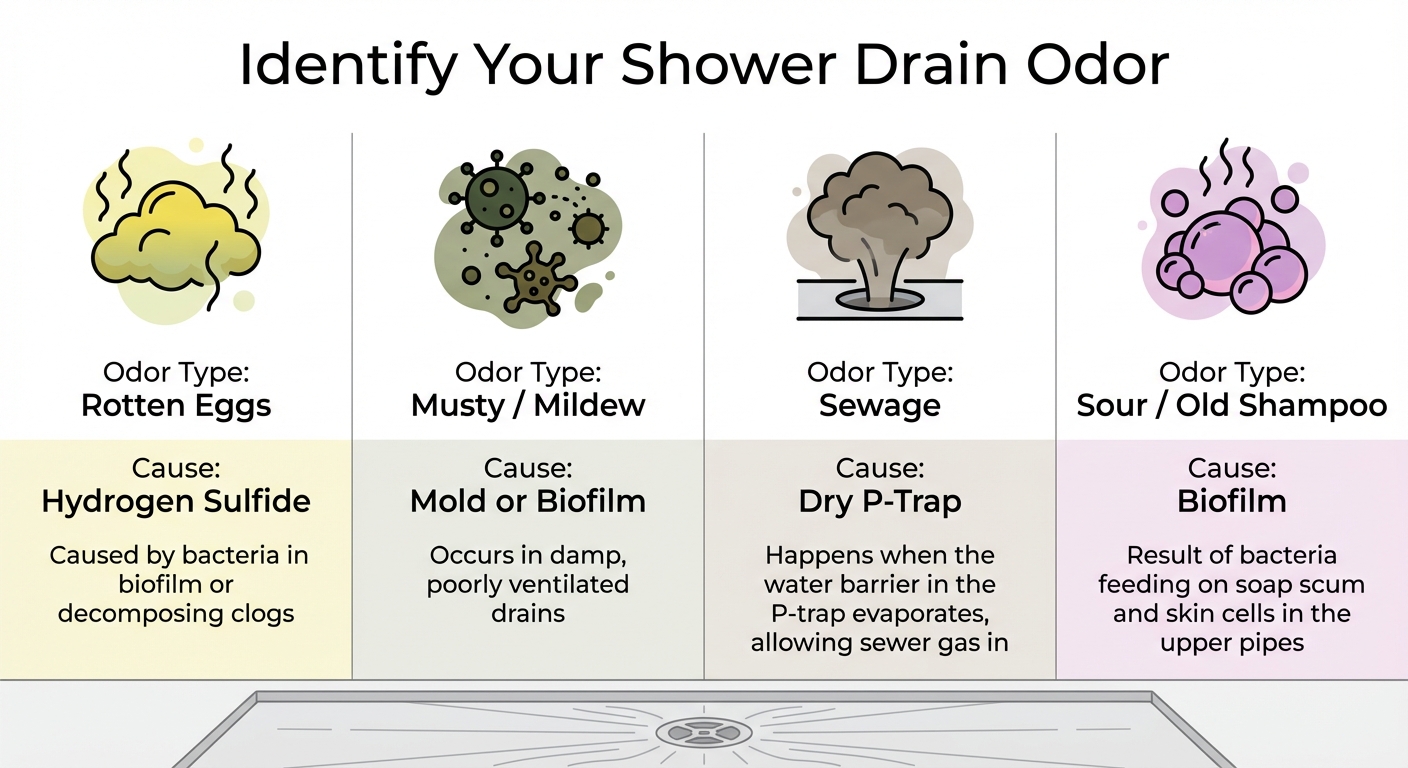
Shower Drain Odor Types: Causes and Identification Guide
Here’s a closer look at the most common culprits behind those unpleasant odors.
Biofilm and Bacteria Buildup
Every time you shower, soap residue, oils, shampoo, and dead skin particles wash down the drain. Over time, these materials form a sticky layer called biofilm inside your pipes. Bacteria thrive on this buildup, releasing hydrogen sulfide gas – the source of that distinct rotten-egg smell. Surprisingly, biofilm can start forming within just 24 hours and grow significantly in a matter of weeks.
"Biofilm is a glue-like substance formed when bacteria attach to the inside of your drain pipe and multiply. This sticky layer traps soap scum, hair, oils, and other debris, creating a thick coating along the pipe walls."
Dry P-Trap Problems
The P-trap, a U-shaped pipe beneath your shower drain, is designed to hold water. This water acts as a barrier, preventing sewer gases from escaping into your bathroom. However, when the water evaporates – often in unused guest bathrooms or during long absences – those gases, including hydrogen sulfide, can rise through the drain. A blocked plumbing vent can also cause this issue by creating a vacuum that drains the water from the trap.
"The P-trap’s water seal is your odor shield. If a guest bath goes unused or a joint weeps, the water evaporates and sewer gases enter the room."
- Ben Foster, Owner, Ben’s Plumbing
If the smell disappears after running the shower for a minute, it’s likely due to a dry P-trap. This issue is a common cause of recurring odors and highlights the importance of regular maintenance.
Mold and Mildew Growth
The area around and beneath your drain cover provides the perfect environment for mold and mildew to thrive: it’s dark, damp, and often poorly ventilated. These fungi give off a musty, earthy smell that’s distinct from the sulfur-like odor caused by biofilm. While mold typically grows on surfaces near the drain rather than inside the water seal, it can still contribute to persistent odors. Beyond the smell, mold and mildew can also pose health risks, especially in poorly ventilated bathrooms where moisture lingers.
Hair, Soap, and Debris Clogs
Hair clogs are more than just an annoyance – they act like a net, trapping soap scum, skin cells, and other debris. Over time, this mixture forms a thick, sludgy mass that restricts water flow and creates the perfect breeding ground for bacteria . As the debris decomposes, it releases unpleasant odors. If your drain is slow to empty, it’s often a sign of a clog that’s already forming. Left unchecked, these clogs can worsen both the smell and the drainage.
| Odor Type | Likely Cause | Description |
|---|---|---|
| Rotten Eggs | Hydrogen Sulfide | Caused by bacteria in biofilm or decomposing clogs. |
| Musty / Mildew | Mold or Biofilm | Occurs in damp, poorly ventilated drains. |
| Sewage | Dry P-Trap | Happens when the water barrier in the P-trap evaporates, allowing sewer gas in. |
| Sour / Old Shampoo | Biofilm | Result of bacteria feeding on soap scum and skin cells in the upper pipes. |
Identifying the specific smell can help you trace its source and choose the best way to eliminate it. Up next, learn practical DIY solutions to tackle these odors and keep your bathroom fresh.
sbb-itb-998eb83
DIY Solutions for Smelly Shower Drains
Tackle unpleasant odors in your shower drain with these easy and budget-friendly fixes.
Clean the Drain with Baking Soda and Vinegar
Baking soda and vinegar make a powerful duo when it comes to clearing odors. Baking soda works to neutralize smells and scrub away grime, while vinegar’s acidity cuts through grease and soap buildup. Together, they create a foaming reaction that helps dislodge biofilm and small debris from your pipes. Best of all, this method costs just $1–$5.
Start by removing the drain cover and clearing out visible hair or debris. Pour 1/2 to 1 cup of baking soda down the drain, followed by an equal amount of distilled white vinegar. Quickly cover the drain with a stopper or plate to trap the foaming action inside the pipes. Let it sit for 10 to 30 minutes, then flush it thoroughly with hot tap water (avoid boiling water if you have PVC pipes, as it can cause damage).
"Vinegar and baking soda are effective at naturally removing odors from stinky drains without harming your plumbing."
- Mary Marlowe Leverette, Housekeeping Expert
For ongoing maintenance, repeat this process every one to three months. Be cautious not to overuse baking soda, as it can harden if not flushed properly.
Refill the P-Trap with Water or Mineral Oil
If your shower smells like sewage or rotten eggs, the P-trap might have dried out. This water-filled bend in the pipe keeps sewer gases from entering your home but can evaporate if the shower hasn’t been used for a few months. To fix it, run hot water for 1 to 2 minutes or pour about 1/2 gallon of water directly into the drain. Wait 30 minutes to check if the smell has disappeared.
For showers that are rarely used, you can slow evaporation by adding 1 tablespoon of mineral oil after refilling the P-trap. The oil forms a barrier on top of the water, extending its lifespan. If mineral oil isn’t handy, 4 ounces of cooking oil can do the trick.
"The oil floats on the water and significantly slows down evaporation, extending the seal’s life."
Remove Mold and Mildew with Bleach or Enzyme Cleaners
Mold and mildew thrive in damp, dark spaces like drains, often causing a musty odor. If you spot mold on the drain cover or nearby surfaces, remove the grate and scrub it using a soft-bristled toothbrush dipped in a bleach solution (1 part bleach to 10 parts water). Rinse everything thoroughly with water afterward.
For a gentler option, enzyme-based cleaners are a great choice. They use natural bacteria to break down organic buildup without harming your pipes, making them ideal for older plumbing systems. Avoid harsh chemical cleaners with sulfuric acid or sodium hydroxide, as these can lead to corrosion.
Use a Drain Snake to Clear Clogs
Hair and debris often accumulate into stubborn clogs that trap odors. A drain snake is a reliable tool for tackling these blockages. Plastic models cost around $3, while powered versions with longer cables (25+ feet) average about $80.
To use, remove the drain cover and insert the snake slowly, turning the handle clockwise as you push it through the pipe. When you feel resistance, continue turning to latch onto the clog, then pull it out carefully. Flush the drain with hot water to remove leftover residue. For smaller clogs near the surface, a straightened wire coat hanger or a plastic "zip-it" tool can also be effective.
"Clean your shower drain once a week. Make sure you’re getting all the hair out, and remove anything that’s stuck in the drain. If the drain is already clogged, your best bet is either a coat hanger or a drain snake."
- Chris Willatt, House Cleaning Professional
Consistent cleaning and maintenance will help keep those nasty odors at bay.
How to Prevent Shower Drain Odors in Apartments
Once you’ve tackled existing odors, the next step is keeping them from coming back. A few consistent habits can go a long way in maintaining a fresh-smelling bathroom.
Regular Maintenance and Cleaning
Simple, regular upkeep can prevent odors from taking hold. Start with weekly hot water flushes – run hot water for 30–60 seconds after using heavy hair or body products to wash away soap scum and oils.
Incorporate monthly sanitization using baking soda and vinegar to break down biofilm and neutralize odors. Don’t forget to clean your hair catcher weekly and scrub the drain cover monthly to remove hidden mold or mildew.
For deeper maintenance, use enzyme-based cleaners every 2–3 months. These cleaners break down organic waste naturally, making them a safer choice for older plumbing systems. If you have a rarely used shower, run water for 15–30 seconds every two weeks to keep the P-trap’s water seal intact.
| Maintenance Task | Frequency | Purpose |
|---|---|---|
| Hot Water Flush | Weekly | Dissolves soap scum and oils |
| Clean Hair Catcher | Weekly | Prevents buildup in pipes |
| Baking Soda & Vinegar | Monthly | Neutralizes odors and breaks biofilm |
| Scrub Drain Cover | Monthly | Removes mold and mildew |
| Enzyme Cleaner | Every 2–3 Months | Safely breaks down organic waste |
| Professional Inspection | Annually | Detects leaks or venting issues early |
Proper Use of Shower Drains
Preventing odors isn’t just about cleaning – it’s also about managing what goes into your drain. Install a drain strainer to catch hair and debris before they clog your pipes, and always dispose of the collected debris in the trash. Reducing the use of oily bath products or thick hair treatments can also help minimize biofilm buildup.
Another easy step is to run your bathroom exhaust fan during and after showers. This reduces humidity, preventing mold growth and helping to keep your entire bathroom fresh. These small measures complement regular cleaning and can alert you to potential problems before they escalate.
Schedule Professional Inspections
Even with consistent care, some issues require a professional touch. Schedule a plumbing inspection at least once a year, especially in older apartments with aging pipes. On average, professional drain cleaning costs around $225. For extra peace of mind, consider scheduling a thorough cleaning every six months.
"Professional plumbers use specialized tools and inspections to identify the exact source of the odor and address it properly… ensuring the smell from shower drain problems are fully resolved rather than temporarily masked."
If odors persist shortly after using baking soda and vinegar or if multiple drains in your apartment are affected, it could signal a more serious issue. Problems like cracked sewer lines, damaged P-traps, or blocked vent stacks may require advanced diagnostics, such as video camera inspections, to pinpoint and resolve the underlying cause.
When to Call ALL Plumbing Services for Drain Odors

Sometimes, routine maintenance and DIY solutions just don’t cut it. That’s when it’s time to bring in the pros.
Signs You Need Professional Help
If you’ve tried everything – like baking soda and vinegar – and the rotten egg smell keeps coming back, it’s a red flag. Persistent odors could mean you’re dealing with a more serious issue, such as a problem deep within your plumbing system. Another telltale sign? Gurgling sounds in your shower or sinks when water runs elsewhere. This often points to a blockage in the vent stack or even the main sewer line.
When the smell spreads to multiple drains, it’s likely a system-wide problem. Slow drainage that doesn’t improve with a drain snake – or worse, bubbling and backups – means the clog is beyond what DIY tools can handle. Also, if you notice water stains, moisture, or mold on walls or ceilings, it could indicate a leaking drainpipe that needs immediate attention.
Here’s a quick guide to help determine when it’s time to call a professional:
| Symptom | Likely Cause | Professional Action Needed |
|---|---|---|
| Rotten egg smell | Sewer gas/Dry P-trap | Leak detection or vent repair |
| Musty/Mildew smell | Mold or Biofilm | Deep cleaning and disinfection |
| Gurgling sounds | Vent stack or main line blockage | Vent clearing or main line snaking |
| Multiple slow drains | Main sewer line clog | Hydro-jetting or camera inspection |
| Water stains on walls | Leaking drainpipe | Pipe repair or replacement |
If you’re noticing any of these persistent problems, it’s time to get a professional assessment.
How ALL Plumbing Services in Charleston and Bluffton Can Help
When DIY fixes fall short, ALL Plumbing Services steps in with advanced tools and expertise. Using video inspections, they can locate issues like cracked sewer lines, damaged P-traps, or blocked vent stacks without resorting to disruptive digging [22, 25]. For stubborn clogs or biofilm buildup, they offer hydro jetting, which uses high-pressure water to clear blockages that regular tools can’t handle.
Some problems, like vent system blockages, require roof access and can be dangerous to address on your own. That’s why ALL Plumbing Services also specializes in leak detection to find hidden leaks in walls or under floors before they cause structural damage. Their approach includes eco-friendly enzyme treatments and mechanical methods that are safer for older pipes, avoiding the use of harsh chemicals [22, 25]. Their thorough evaluations not only fix current issues but help prevent future ones.
Benefits of Working with ALL Plumbing Services
Calling in professionals saves you time, money, and stress. For instance, their expertise can prevent exposure to harmful sewer gases like hydrogen sulfide or bacteria from biofilm. Acting quickly on leaking pipes can also stop water from damaging drywall and insulation, sparing you from costly mold remediation later on [2, 6].
With advanced diagnostics and eco-friendly options, they ensure your plumbing – and your health – are in good hands. Serving Charleston and Bluffton, ALL Plumbing Services understands the unique challenges of apartment living and provides solutions that work within shared plumbing systems. And with professional drain cleaning costing around $220, it’s a smart investment when persistent odors hint at deeper issues that could lead to expensive repairs down the line.
Conclusion
A smelly shower drain is more than just an annoyance – it’s a sign of underlying issues that need attention. Common culprits include biofilm buildup, a dry P-trap, mold, or clogs caused by hair and soap. If you notice a musty smell, it’s likely mold or mildew. A rotten egg odor, on the other hand, points to sewer gas escaping into your home.
Many of these problems can be resolved with simple DIY fixes. However, if the issue keeps coming back, it’s a sign that professional help is needed. Persistent symptoms like gurgling sounds, slow drains, or water stains often indicate bigger problems, such as main line clogs, damaged vent stacks, or leaking pipes, which require expert attention.
Professional services not only provide advanced inspections but also offer targeted solutions for stubborn plumbing problems. For residents in Charleston and Bluffton, ALL Plumbing Services delivers thorough and effective drain cleaning and repair options. With professional drain cleaning costs averaging around $220, addressing odors early can save you from expensive repairs and protect your home from harmful bacteria and toxic gases.
FAQs
Is a smelly shower drain dangerous?
A smelly shower drain isn’t just unpleasant – it can pose a risk to your health. Sewer gases often contain harmful compounds, and ignoring the odor might lead to bigger problems like mold growth or plumbing damage. Tackling the issue quickly ensures your home stays safe and healthy.
Why does the smell come back after cleaning?
Recurring odors in your bathroom often point to hidden issues like biofilm buildup or a dry P-trap. Biofilm is a sticky layer of bacteria and debris that tends to reappear in drains even after cleaning. On the other hand, if the P-trap dries out or gets damaged, it can let sewer gases seep into your space. To keep these smells at bay, make it a habit to clean the drain regularly and ensure the P-trap stays properly hydrated or repaired.
When should I call a plumber for a drain smell?
If the smell lingers even after trying home remedies like cleaning with baking soda and vinegar or rehydrating a dry P-trap, it’s time to call a plumber. You’ll need professional assistance if you suspect problems such as a malfunctioning P-trap, sewer gas leaks, venting issues, or damaged pipes. Keep an eye out for warning signs like gurgling drains, persistent sewer odors, or visible damage to your plumbing – these are clear indicators that expert help is needed.