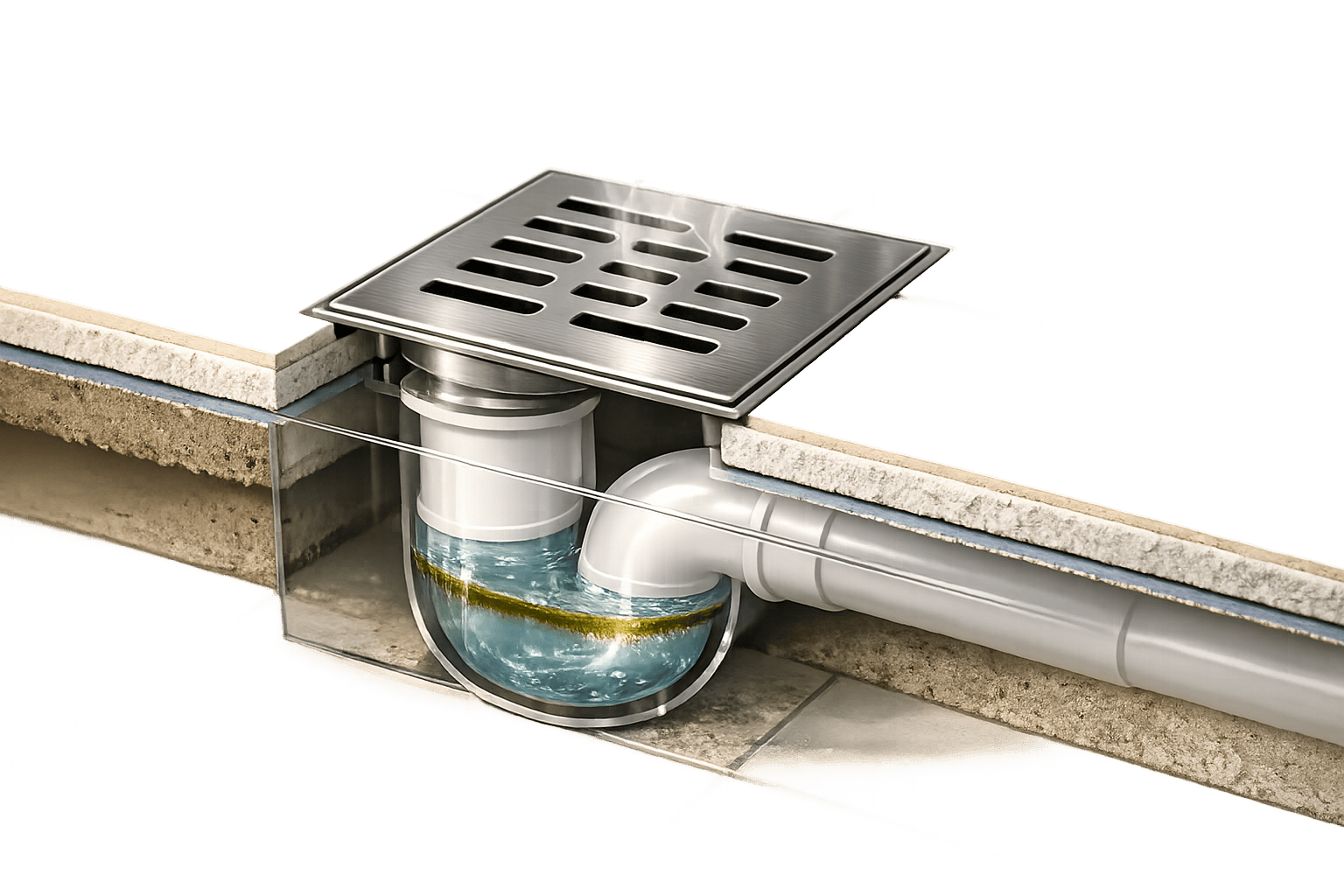
Your shower drain smells bad because of one or more common issues:
- Dry P-trap: If the shower isn’t used often, the water in the P-trap evaporates, letting sewer gases escape.
- Bacterial buildup: Hair, soap scum, and body oils create biofilm inside pipes, which releases foul odors as bacteria break it down.
- Mold growth: High humidity encourages mold to grow around drains, producing musty smells.
- Blocked vents or sewer issues: Clogged plumbing vents or sewer line problems can cause persistent odors, especially after rain.
Quick fixes include:
- Run water to refill a dry P-trap.
- Clean the drain with baking soda and vinegar.
- Use a hair catcher to reduce buildup.
- Flush the drain with hot water regularly.
If smells persist, professional help may be needed to address deeper issues like blocked vents or sewer line damage. Ignoring the problem could lead to health risks or costly repairs.
What Causes Shower Drains to Smell Bad
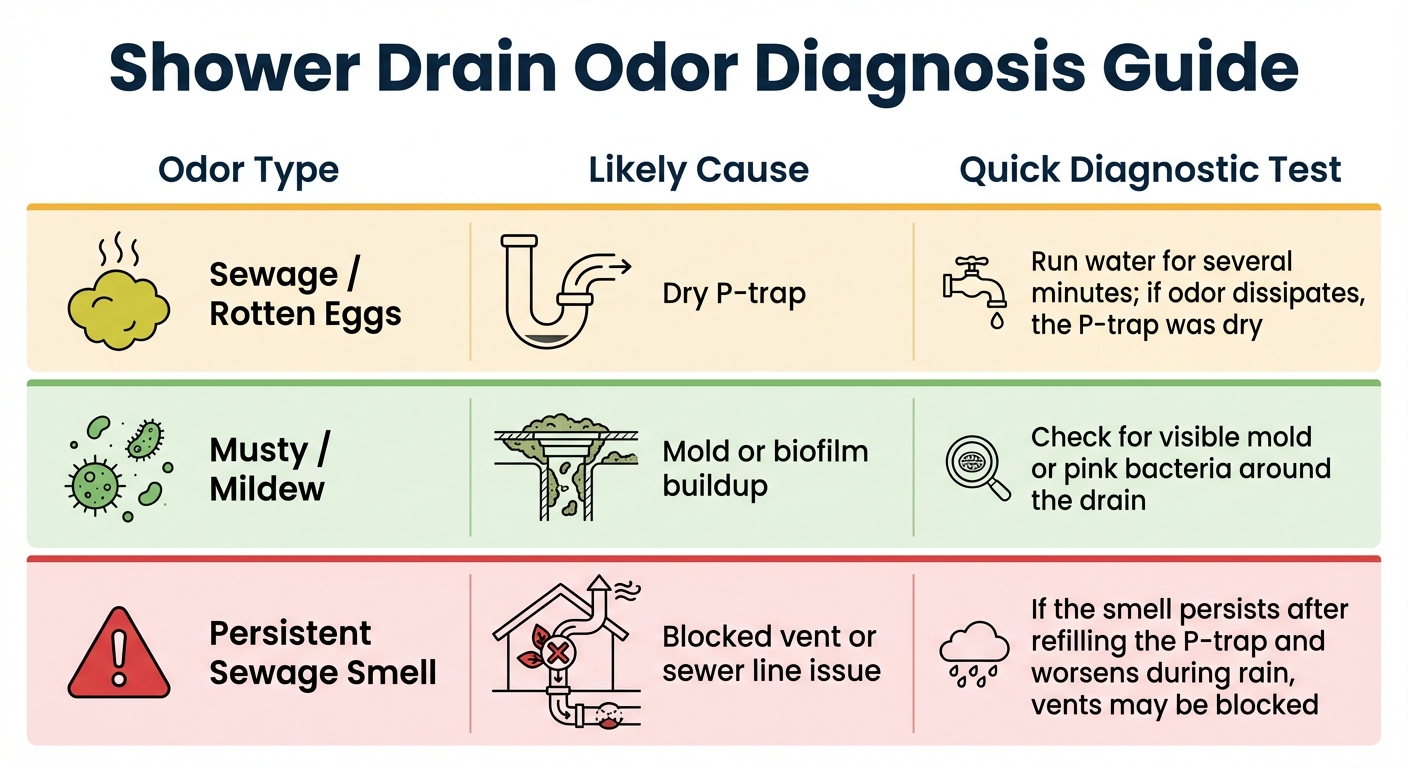
Shower Drain Odor Diagnosis Guide: Identifying Causes by Smell Type
Now that we’ve covered the risks, let’s dive into what might be causing those unpleasant odors in your shower drain. Identifying the root cause is the first step to solving the problem. A variety of factors can lead to smelly drains, and Charleston’s humid climate can make these issues even worse.
Dried-Out P-Trap Allowing Sewer Gas to Escape
The P-trap, that U-shaped pipe under your drain, is designed to hold water and block sewer gases from coming up into your home. However, if the shower isn’t used often – like in guest bathrooms or vacation homes – the water in the P-trap can evaporate. Once the water level drops below the curve of the pipe, the seal breaks, and gases like hydrogen sulfide can seep into your bathroom.
"The P-trap is designed to hold a small amount of water, creating a seal that blocks sewer gases from rising through the drain." – Maplewood Plumbing
To check if this is the issue, run water in the shower for a few minutes. If the smell fades, your P-trap was likely dry. For infrequently used drains, pouring a tablespoon of mineral oil after running water can slow down evaporation.
Soap Scum and Hair Creating Bacterial Buildup
Every time you shower, hair, soap, body oils, and skin cells wash down the drain. Over time, these materials can stick to the inside of your pipes and form a slimy layer called biofilm. Bacteria thrive in this gunk, breaking down the debris and releasing foul-smelling gases. Hair clumps, in particular, create low-oxygen environments where bacteria can produce hydrogen sulfide, causing that classic "rotten egg" odor.
"Biofilm is a glue-like substance formed when bacteria attach to the inside of your drain pipe and multiply. This sticky layer traps soap scum, hair, oils, and other debris, creating a thick coating along the pipe walls." – John’s Sewer and Drain Cleaning
Using a hair catcher and cleaning it weekly can go a long way in preventing buildup. Regular maintenance like this keeps your drains clean and odor-free.
Mold Growth in Charleston’s Humid Climate
Charleston’s consistently high humidity – often above 60% – creates an ideal breeding ground for mold and mildew. This moisture encourages mold to grow around drains, and condensation from warm outdoor air meeting cooler indoor air can make the problem worse. Mold emits small amounts of gas as it grows, leading to a musty smell. You might even notice "pink mold" (actually a bacteria called Serratia marcescens) forming near your drain.
Running your bathroom exhaust fan during and after showers can help reduce moisture and curb mold growth. Keeping humidity in check is key to avoiding these musty odors.
Blocked Plumbing Vents or Sewer Line Problems
Your plumbing system relies on vent pipes that extend through your roof to safely release sewer gases outdoors. When these vents get clogged with leaves, debris, or even animal nests, it can create a vacuum effect that pulls water out of the P-trap, letting sewer gases back into your bathroom. Charleston’s heavy rainfall can also overwhelm municipal sewer systems, forcing gases back through your pipes.
If you notice sewage smells during or after rainstorms, a blocked or cracked vent pipe could be the culprit. Persistent odors like these might require a professional inspection to resolve.
| Odor Type | Likely Cause | Quick Diagnostic Test |
|---|---|---|
| Sewage / Rotten Eggs | Dry P-trap | Run water for several minutes; if odor dissipates, the P-trap was dry |
| Musty / Mildew | Mold or biofilm buildup | Check for visible mold or pink bacteria around the drain |
| Persistent Sewage Smell | Blocked vent or sewer line issue | If the smell persists after refilling the P-trap and worsens during rain, vents may be blocked |
sbb-itb-998eb83
DIY Methods to Fix Smelly Shower Drains
If your shower drain is giving off unpleasant smells, the good news is you can often fix it with simple household items. With supplies costing just $1 to $5, many of these solutions use things you likely already have in your kitchen. Regular cleaning and prompt action are key to keeping odors at bay.
Using Baking Soda and Vinegar to Clean the Drain
Baking soda and vinegar make a powerful duo for tackling drain odors. Baking soda absorbs smells, while vinegar’s acidity helps break down buildup. This method works particularly well for odors caused by mold or bacteria, though it won’t clear out dense hair clogs.
"Vinegar and baking soda are effective at naturally removing odors from stinky drains without harming your plumbing." – Mary Marlowe Leverette, Housekeeping and Fabric Care Expert
Start by removing the drain cover and scrubbing away any visible buildup using a toothbrush and an all-purpose cleaner. Next, pour a pot of hot tap water down the drain to loosen grime – avoid boiling water if you have PVC pipes, as it can damage the material. Then, add 1/2 to 1 cup of baking soda, followed by 1 cup of distilled white vinegar. Cover the drain with a plug or rag to trap the fizzing reaction inside the pipes, and let it sit for 10–15 minutes (or up to an hour for tougher smells). Finish by flushing with at least two cups of very hot water to wash away the loosened debris.
Important: Never mix vinegar or baking soda with chlorine bleach, as the combination produces toxic gas. For households with long-haired individuals or multiple users, cleaning the drain every two weeks prevents buildup from accumulating. Along with chemical cleaning, regular hot water flushes help maintain the P-trap and clear out any lingering residues.
Flushing with Hot Water and Checking the P-Trap
After using baking soda and vinegar, it’s important to ensure your P-trap is functioning properly. The P-trap, a curved section of pipe, holds water to block sewer gases from entering your home. Flushing your drain with hot water dissolves soap scum and oils that bacteria thrive on, while confirming the P-trap’s water seal ensures odors stay out.
Pour about four cups of very hot tap water down the drain to break down greasy buildup. Regular hot water flushes not only clean the drain but also keep the P-trap filled with water, which is crucial for preventing sewer gas odors.
To check your P-trap, shine a flashlight into the drain. You should see standing water at the bottom of the pipe. If it’s dry, pour 2 cups of water into the drain and wait an hour. If the water disappears, the P-trap may be cracked or leaking, requiring professional repair. For rarely used showers, such as those in guest bathrooms, consider pouring 4 ounces of cooking oil into the drain after refilling the P-trap to slow evaporation. Running water in these drains for a minute or two every few weeks also helps keep the P-trap functional and odor-free.
"At least once a month, remove the drain cover and scrub the drain with hot water, an all-purpose cleaner and a toothbrush." – Joe Hammer, Owner, SAK Electric & Plumbing, Inc.
When to Call ALL Plumbing Services for Help

Odors That Won’t Go Away After DIY Attempts
Tried every DIY trick in the book, but that smell still lingers? It might be time to bring in the professionals. Persistent odors often signal deeper issues, like biofilm buildup or sewer line problems, that home remedies simply can’t tackle. Professional drain cleaning typically costs around $220, a solid investment when dealing with stubborn plumbing woes.
"Hiring a pro is the safest, fastest way to solve a smelly shower drain." – Paige Bennett, Contributing Writer, Angi
Other warning signs, like gurgling sounds or an increase in insect activity, may hint at more serious plumbing concerns. If you notice a "rotten egg" or sulfur-like smell that sticks around even after refilling the P-trap, you could be facing a broken vent line or a sewer main issue. These problems demand immediate attention.
"If the smell is from sewer gas, it could indicate a broken pipe or a backed-up sewer line. Long-term exposure to methane can be harmful. Don’t ignore persistent odors." – LimRic Plumbing
It’s also worth investigating whether vent or sewer blockages are contributing to the problem.
Sewer Line or Vent Blockages
ALL Plumbing Services uses advanced video inspection tools to pinpoint hidden cracks, corrosion, or blockages in your plumbing system. This precise method eliminates guesswork and prevents unnecessary damage to your pipes.
For tough clogs, professionals rely on hydro jetting to blast away biofilm, soap scum, and mineral deposits that regular methods can’t reach. If you notice odors intensify during rainy weather in Charleston, it might indicate a blocked or cracked vent pipe on your roof. Cleaning and repairing vents is a job best left to the experts.
Other red flags include water stains on ceilings below bathrooms, soft spots on the floor, or musty smells behind walls. These could point to a leaking drainpipe. In such cases, shut off the water supply to that area immediately and call for an emergency inspection. Ignoring these signs can lead to serious structural damage and potential health risks.
Regular Maintenance to Stop Future Problems
Once the immediate repairs are handled, staying proactive with regular maintenance can help prevent issues from cropping up again. Scheduling annual drain cleaning with ALL Plumbing Services keeps stubborn buildup at bay before it becomes a major headache. This is especially crucial in Charleston’s humid environment, where mold and bacteria thrive.
"Annual drain cleaning clears out buildup before it becomes a problem. It’s an easy way to keep your plumbing in peak condition." – LimRic
Routine professional inspections also complement your DIY efforts. During these checkups, technicians ensure your P-trap and vent stacks are functioning correctly to block sewer gases.
ALL Plumbing Services also offers maintenance plans that include scheduled inspections and early detection of potential issues. These plans are particularly helpful for guest bathrooms or infrequently used showers, where P-traps can dry out and let sewer gases seep in. And for residents in Charleston and Bluffton dealing with persistent "pink mold" (caused by Serratia marcescens bacteria), professional antimicrobial treatments can stop the problem where DIY solutions fall short.
Conclusion
A smelly shower drain often points to underlying problems like dried-out P-traps, bacterial biofilm buildup, or hidden leaks. These issues can lead to more than just unpleasant odors – they may expose you to harmful gases like hydrogen sulfide, bacteria such as Salmonella or E. coli, and even costly structural damage, including rotting wood and soaked insulation.
"Sewage smells should always be investigated as soon as you notice them."
- Timothy Dale, Home Repair Expert, The Spruce
To keep your drains odor-free, try simple measures like regular baking soda and vinegar treatments, running water in unused showers, and using hair catchers. These small efforts can prevent minor problems from escalating into major ones.
However, if odors persist – especially if multiple drains are affected – or you spot water stains or soft spots on floors, it’s time to bring in the professionals. ALL Plumbing Services offers expert drain cleaning and inspections to address these issues before they worsen. In Charleston’s humid climate, where mold and bacteria thrive, annual inspections and maintenance plans are especially important to stay ahead of potential problems.
Don’t wait – reach out to ALL Plumbing Services today for reliable drain cleaning, inspections, and maintenance to ensure your plumbing system operates smoothly all year long.
FAQs
Is a smelly shower drain dangerous?
A foul odor coming from your shower drain isn’t just unpleasant – it can indicate underlying problems like sewer gases or bacterial growth. These smells might point to plumbing issues, such as a damaged vent pipe or a significant buildup of biofilm. Ignoring these signs could lead to bigger complications down the line. Tackling the issue quickly is key to keeping your home safe and healthy.
Why does the drain smell worse after rain?
Heavy rain can sometimes push drainage systems to their limits, leading to wastewater backing up into sewer lines and releasing unpleasant odors into your home. This tends to happen more often if there are underlying issues, such as poor drainage or a dry P-trap. A dry P-trap, in particular, can create an opening for sewer gases to escape. Tackling these problems quickly is key to keeping those unwanted smells at bay.
How do I tell if it’s the P-trap or a vent issue?
A sewer odor in your home is often caused by a dry or clogged P-trap. To check, run water into the drain for about 30 seconds. If the smell disappears, the P-trap was likely dry and needed refilling. However, if the odor sticks around, the issue might be a blocked or damaged vent. This can also cause gurgling sounds or even pull water out of the P-trap. Take a look at the roof vent to see if there’s any debris blocking it, or reach out to a professional for assistance if necessary.