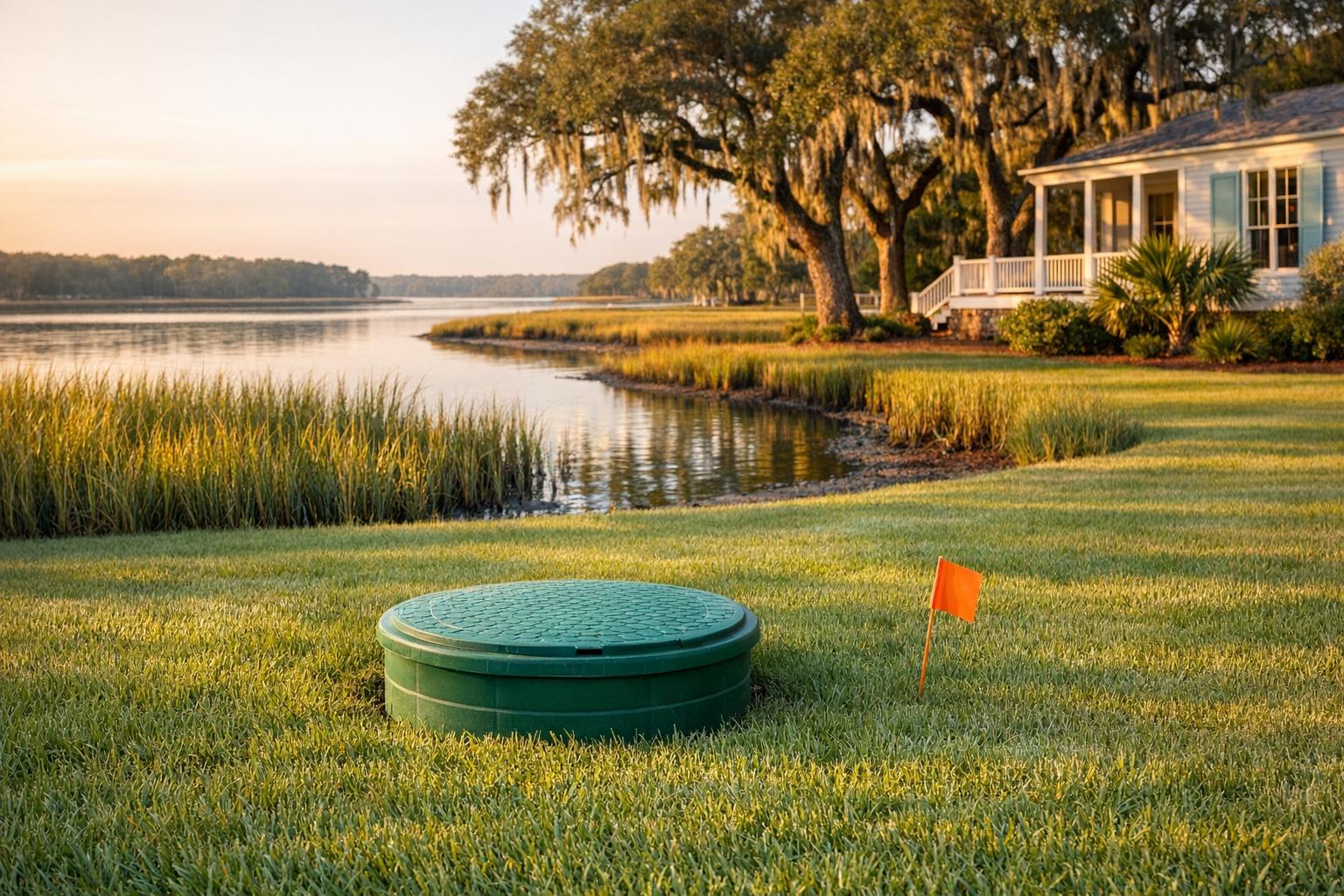
If you own a home in Bluffton with a septic system, regular maintenance isn’t optional – it’s essential to avoid costly repairs, health risks, and environmental damage. Septic systems process all your household wastewater, and neglecting them can lead to backups, contaminated groundwater, and repair bills ranging from $3,000 to $10,000, or even higher in severe cases. Routine pumping, which costs around $250 to $500 every 3–5 years, is far cheaper than a system failure.
Key points to keep in mind:
- How it works: Septic tanks separate solids, fats, and liquids, with treated liquid filtering into the soil.
- Common problems: Backups, bad odors, slow drains, or standing water often signal trouble.
- Environmental impact: Bluffton’s proximity to the May River means failing systems can harm local waterways.
- Maintenance tips: Pump tanks regularly, avoid flushing non-biodegradable items, and limit water usage to prevent overloading the system.
Neglecting septic care can result in fines, expensive repairs, or even legal issues in South Carolina. Licensed professionals can help ensure your system runs smoothly, lasts longer, and complies with regulations. Investing in regular maintenance protects your home, your wallet, and the local ecosystem.
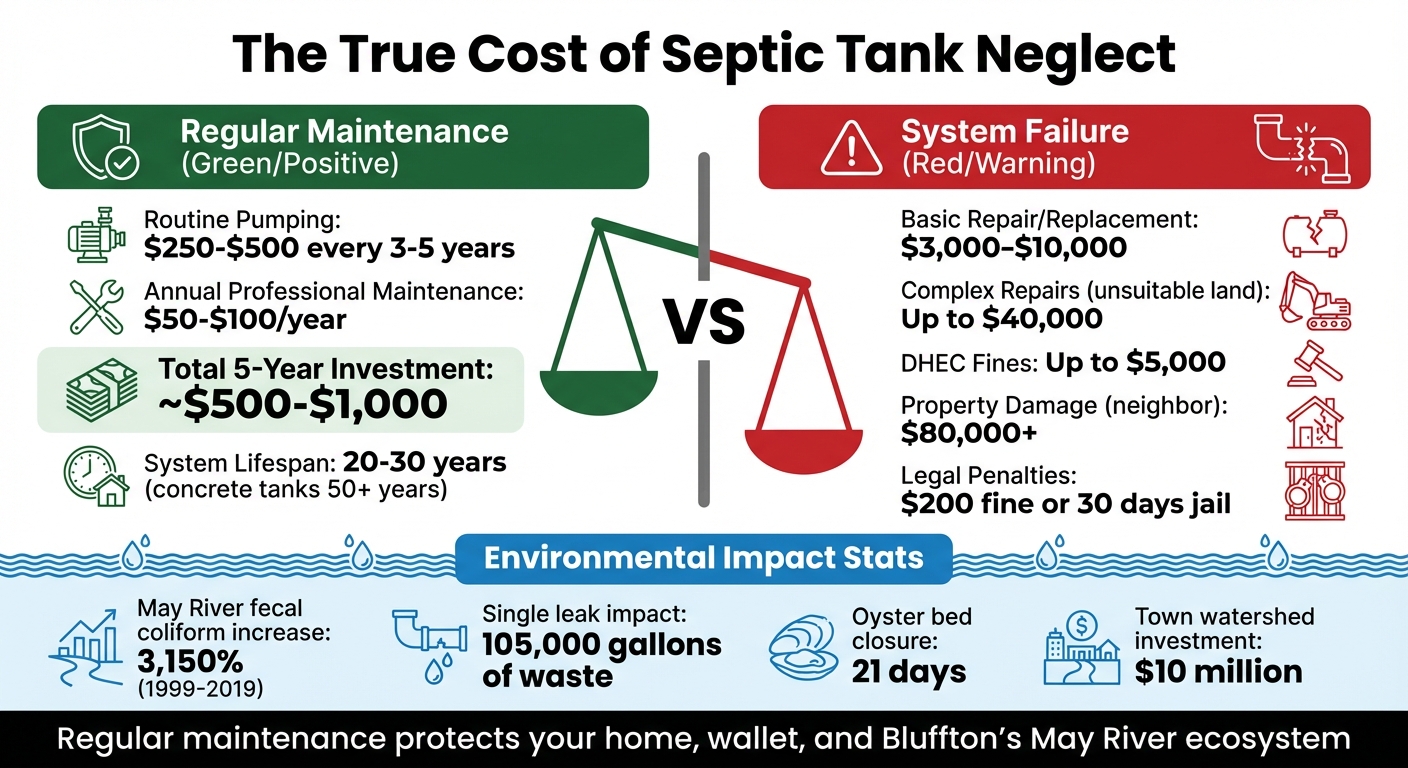
Septic Tank Maintenance Costs vs Failure Costs in Bluffton SC
Common Septic Tank Problems in Bluffton Homes
Backups, Slow Drains, and Bad Odors
When a septic system starts to fail, the signs are hard to miss: sewage backups, slow drains, and unpleasant odors. These issues often arise from avoidable mistakes.
Skipping regular pumping is a major culprit. Over time, solids build up in the tank, clogging the drainfield and causing wastewater to back up into your home or even surface in the yard. Improper waste disposal also plays a role – flushing items like wipes or feminine hygiene products can block the system.
Another common issue is hydraulic overloading. Everyday habits, like running multiple laundry loads or leaving a toilet running, can overwhelm the system. Just an extra 200 gallons of water per day can flood the drainfield, making it harder for the system to treat wastewater. Using a garbage disposal adds to the problem, increasing the amount of solids in the tank by as much as 50%, which means more frequent pumping is needed.
Physical damage to the drainfield adds another layer of trouble. Parking cars or heavy equipment over the area can compact the soil and crush pipes, while tree roots may invade and disrupt the system. Chemical drain cleaners and excessive bleach use are also harmful, as they kill the bacteria needed to break down waste. Older systems, built under outdated standards, may struggle to meet the demands of modern drainage needs.
These problems don’t just inconvenience homeowners – they also pose risks to Bluffton’s environment, especially its fragile ecosystems.
Water Contamination Risks Near the May River
Bluffton’s location near the May River makes septic system failures a serious environmental concern. When a system fails, untreated waste can seep into the river’s tidal coves and headwaters, areas particularly vulnerable due to limited natural water flow.
The statistics are alarming. Between 1999 and 2019, fecal coliform bacteria levels at one monitoring station on the May River skyrocketed by 3,150%. In October 2020, a single septic system leak dumped 105,000 gallons of waste into the river. This incident forced the South Carolina Department of Health and Environmental Control (DHEC) to close oyster beds for 21 days and issue swimming advisories.
"If a septic tank fails, you have human waste flowing into a cove. If we can get people off septic tanks, then that’s eliminating a source of contamination."
- Bryan McElwee, Director of Engineering, Town of Bluffton
Heavy rainstorms make the situation worse. Saturated drainfields can send bacteria-laden water straight into the watershed. Additionally, increased development and stormwater runoff have reduced the river’s salinity, creating conditions where bacteria thrive. Bluffton’s close connection to the May River highlights the importance of regular septic maintenance. To combat these risks, the Town of Bluffton has invested around $10 million in managing the watershed.
Beyond the environmental impact, septic system failures can lead to significant financial strain for homeowners.
The Cost of Septic Tank Failures
Ignoring septic system maintenance can come with a hefty price tag. Repairing or replacing a failed system typically costs between $3,000 and $10,000. In more challenging situations, such as unsuitable land conditions, costs can soar to $40,000.
Consider the case of Isaias Martinez, a Dorchester County homeowner. In April 2024, just two weeks after moving into his $627,000 newly built home, his septic system failed catastrophically. Martinez spent nearly $40,000 on repairs, only to be fined $5,000 by DHEC. The failure caused an additional $80,000 in damage to his neighbors’ property, including their foundation and HVAC system, due to the foul runoff.
South Carolina Regulation 61-56 places the responsibility for repairs squarely on homeowners, and DHEC does not offer financial assistance for individual fixes. For those who can connect to a public sewer, the cost is around $9,000, plus the expense of necessary equipment like grinder pumps.
Regular maintenance is a small investment compared to these potential costs. Pumping your septic tank every three to five years typically costs between $250 and $500 – a fraction of the price of a major failure.
sbb-itb-998eb83
Why Regular Septic Tank Maintenance Matters
How Often to Service Your Septic Tank
Septic tanks generally need pumping every three to five years, with inspections recommended every one to three years. The exact schedule depends on factors like household size, water usage, and whether you use a garbage disposal, which can increase solid waste by as much as 50%. Systems with mechanical parts, such as pumps or electrical switches, often require annual check-ups. Experts advise pumping the tank when solids fill one-third to one-half of its capacity. Specifically, if the bottom of the scum layer is within 6 inches of the outlet tee or the top of the sludge layer is within 12 inches, it’s time for a pump-out.
For Bluffton residents facing financial challenges, the Town of Bluffton offers a Neighborhood Assistance Program, which helps cover the costs of septic maintenance, repairs, or even full replacements. Staying on top of scheduled care not only ensures your system runs efficiently but also extends its lifespan by relying on professional expertise.
Benefits of Professional Maintenance
Professional septic services go beyond just emptying the tank. Licensed contractors use specialized equipment to fully break up and remove hardened solids and sludge – not just the liquid waste. They also inspect key components like baffles, effluent filters, and T-shaped outlets to prevent solids from escaping into the drainfield.
"Regular maintenance fees of $250 to $500 every three to five years is a bargain compared to the cost of repairing or replacing a malfunctioning system, which can cost between $5,000 and $15,000 for a conventional system."
In South Carolina, only licensed professionals are allowed to handle septic repairs and pump-outs. This regulation is in place because septic tanks contain toxic gases and other hazards that require proper training and protective gear. In addition, professionals provide certified inspection reports that are often required by lenders or real estate authorities during property transactions. This level of care not only keeps your system running smoothly but also helps avoid expensive repairs down the line.
Avoiding Long-Term Damage
For homes in Bluffton, regular maintenance prevents solids from clogging the drainfield, which can lead to costly failures. A clogged drainfield may require extensive repairs or even a complete system replacement. Routine inspections can identify small issues, like leaks or mechanical problems, before they grow into major headaches.
A properly maintained septic system can last 20 to 30 years, while concrete tanks may last over 50 years. However, pumps and controls usually need replacement every 10 to 20 years. On average, professional septic maintenance costs $50 to $100 annually, making it a worthwhile investment to protect your system.
Beyond the financial benefits, regular maintenance also helps protect Bluffton’s environment. The May River is particularly vulnerable to contamination, and the area’s challenging soil and water table conditions make proper septic care crucial. Maintaining your system isn’t just about being a responsible homeowner – it’s also about safeguarding the local environment.
Warning Signs Your Septic Tank Needs Service
Signs of Septic System Problems
If you’re noticing multiple slow drains in sinks, tubs, or toilets, it could mean your septic tank is full or the drain field is struggling to function properly. Another red flag is hearing gurgling or bubbling sounds in your plumbing after flushing or running water. These noises often indicate trapped air caused by a full tank or blocked pipes disrupting the system.
One of the most unmistakable signs of trouble is sewage odors. These smells, whether near indoor drains or around the tank and drain field, suggest waste isn’t being sealed or processed correctly. Similarly, if you spot standing water, soggy patches, or unusually lush, spongy grass over the drain field, it could mean wastewater is surfacing where it shouldn’t be.
The most urgent warning sign is sewage backing up into your fixtures. This signals a critical failure in the system and requires immediate professional intervention. For those with well water, additional indicators like elevated nitrate levels, coliform bacteria, or algal blooms in nearby water sources could point to a failing septic system.
Spotting these issues early can save you from costly repairs. At the first sign, it’s crucial to contact a professional.
When to Call a Professional
When any of these warning signs appear, don’t delay – take action immediately. Whether it’s foul odors, slow drains, or pooling water, reaching out to a licensed septic professional right away can help avoid expensive emergency repairs and safeguard your family’s health. In South Carolina, for example, homeowners are legally required to maintain their septic systems. Failing to comply with Regulation 61-56 can result in fines of up to $200 or even 30 days in jail.
If your septic alarm goes off, silence it and minimize water usage immediately. Typically, these alarms provide a 24 to 48-hour window before a full backup occurs. However, if the alarm stays on for more than 10 to 15 hours or if you notice any of the warning signs mentioned earlier, call a professional without delay. Never lean over or attempt to enter a septic tank – the fumes can be extremely dangerous, causing fainting or even explosions.
How ALL Plumbing Services Handles Septic Tank Maintenance
Septic Tank Services in Bluffton
With over 15 years of experience, ALL Plumbing Services has become a trusted name in zip code 29910, offering expertise tailored to Bluffton’s specific soil conditions and local requirements. Their services cover everything from routine septic tank pumping and cleaning to complete system installations. Beyond basic maintenance, they tackle tasks like sludge and scum removal, baffle inspections, and effluent filter cleaning. For more complex issues, such as leaks, blockages, or damaged components, their team specializes in drain field repairs, often using advanced Terralift technology.
Bluffton’s coastal environment presents unique challenges, particularly with rising water tables that can affect perc tests. ALL Plumbing Services adapts their methods to address these conditions. Many homes in the area rely on alternative septic systems equipped with aerators or pumps, which require more frequent annual inspections compared to the typical three-year cycle for conventional systems. The team also prioritizes protecting the May River ecosystem by ensuring untreated wastewater doesn’t seep into the soil or groundwater.
Maintenance Plans for Homeowners
ALL Plumbing Services offers customized maintenance plans to help homeowners stay ahead of potential problems. Their Basic Plan includes regular inspections, early detection of issues, and priority scheduling for minor repairs. For those looking for additional coverage, the Advanced Plan adds annual water heater servicing and discounts on major repairs. These plans also ensure compliance with South Carolina regulations, which may require inspections when renovations or changes in property usage occur.
An essential part of these maintenance plans is effluent filter management. Cleaning or replacing filters every 6 to 12 months prevents solids from clogging the drain field, one of the most common causes of system failure. The plans also include annual drain cleaning, fixture inspections, and leak detection, helping homeowners avoid costly emergencies by addressing issues early.
Why Choose ALL Plumbing Services
ALL Plumbing Services combines hands-on expertise with a focus on fast response times and environmentally conscious solutions. For example, they highlight how a single leaky toilet can waste up to 200 gallons of water daily, putting unnecessary strain on a septic system. During routine visits, their technicians identify such problems and may recommend upgrades like high-efficiency toilets that use 1.6 gallons per flush or less.
Their dedication to quality ensures that every service is performed by professionals who understand Bluffton’s unique coastal challenges. Whether it’s an emergency repair or routine maintenance, their practical solutions help protect your investment and the local environment.
Conclusion
What Bluffton Homeowners Should Remember
Septic system maintenance isn’t just a good idea – it’s required by SC DHEC Regulation 61-56. Ignoring it could lead to fines of up to $200 or even 30 days in jail. For standard systems, inspections should happen every 1 to 3 years, with pumping every 3 to 5 years. Alternative systems, especially those with mechanical parts, need annual checkups. Spending $250–$500 on maintenance now can save you from repair costs ranging from $3,000 to $10,000 down the road.
Be alert to warning signs like slow drains, gurgling sounds, sewage odors, or unusually green grass over the drainfield – all indicators that your system may need immediate attention. Proper waste disposal and avoiding practices that strain the system, like overloading the drainfield, are essential.
"Knowing signs of failure can save you money and prevent harmful pollutants that negatively impact the environment."
– Beatriss H. Calhoun, Water Resources Agent, Clemson Extension
With proper care, a septic system can last 20 to 30 years, preserving your property value and protecting water quality – especially vital for homes near the May River. Keep detailed maintenance records, work only with SC DHEC-licensed professionals, and practice water-saving habits like spacing out laundry loads throughout the week. In Bluffton’s coastal setting, staying on top of maintenance is crucial for safeguarding your home and the surrounding environment.
Schedule Your Service with ALL Plumbing Services
To keep your septic system running smoothly, trust the local experts at ALL Plumbing Services. They provide full septic tank services, including routine pumping, thorough inspections, and drainfield repairs. Their tailored maintenance plans are designed to catch small issues before they turn into costly problems. Contact ALL Plumbing Services today to protect your home, your budget, and the local water quality.
FAQs
What happens if I ignore septic maintenance?
Neglecting regular septic system maintenance can lead to serious problems like sewage backups, costly repairs, pollution, and even health risks. Taking care of your system on a routine basis helps prevent these issues and keeps everything running smoothly.
How do I know my tank is full before a backup?
If you notice slow drains, standing water around your septic tank or drain field, or unpleasant smells, these could be warning signs that your septic tank is getting full. Taking care of this promptly can save you from backups and expensive repairs down the road.
Will heavy rain in Bluffton affect my septic system?
Heavy rainfall in Bluffton can cause the soil around your septic system’s drainfield to become overly saturated. When this happens, the system may struggle to function properly, leading to backups or even environmental issues. Waterlogged soil can prevent the drainfield from effectively processing wastewater. To reduce these risks during heavy rain, it’s important to keep up with regular maintenance and closely monitor your system’s performance.