- Frequent Leaks: Constant repairs point to deteriorating pipes.
- Discolored Water: Rust or sediment indicates pipe corrosion.
- Low Water Pressure: Sediment buildup or corrosion restricts flow.
- Noisy Pipes: Banging or clanging suggests loose fittings or blockages.
- Outdated Materials: Lead, galvanized steel, or polybutylene pipes should be replaced.
- Improved water quality and safety.
- Consistent water pressure and fewer plumbing problems.
- Increased property value with modern plumbing.
- Long-lasting materials like copper or PEX.
Signs Your Home Needs Repiping
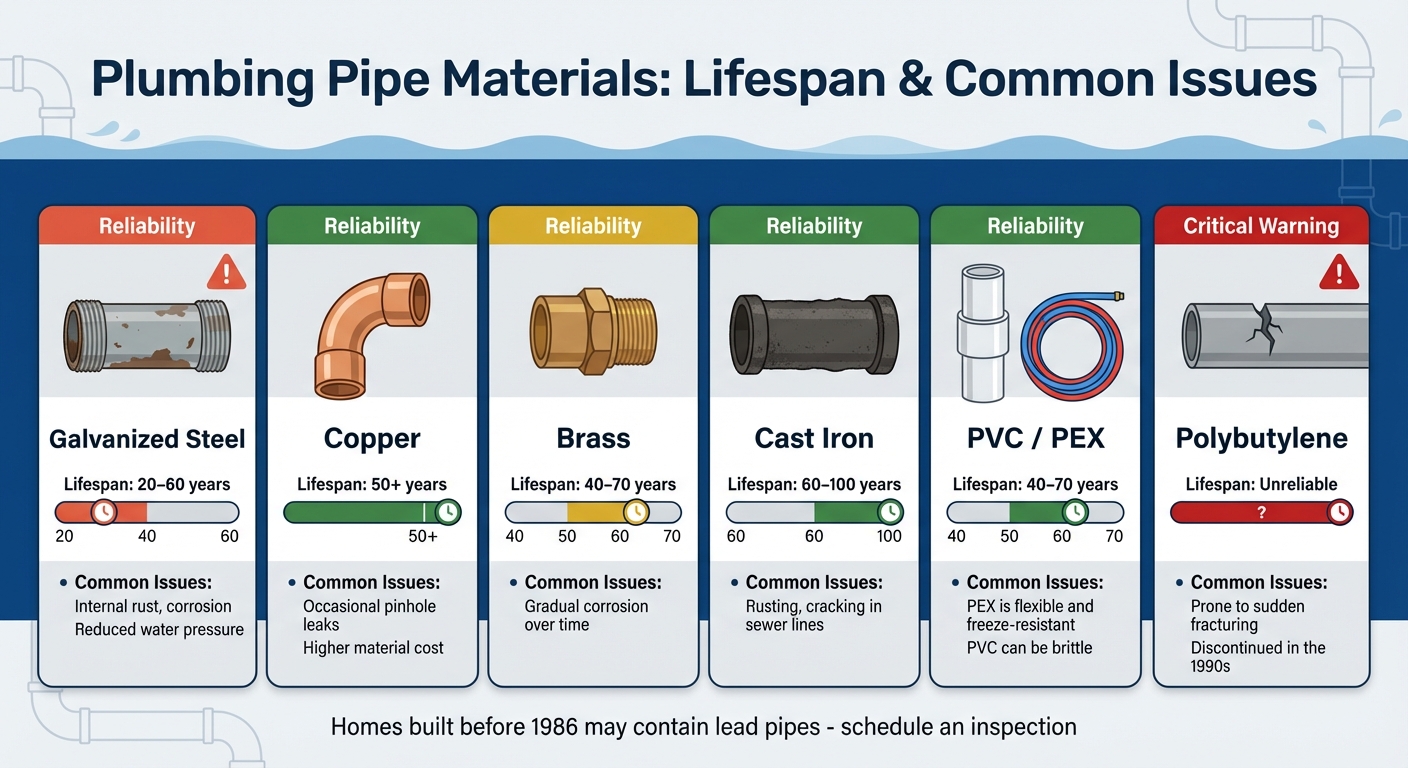
Plumbing Pipe Materials Lifespan and Common Issues Comparison Chart
Frequent Leaks and Water Damage
One leak might just need a simple repair, but repeated leaks are a red flag for deteriorating pipes. Look out for water stains on ceilings, damp spots on walls, warped floors, or even hidden mold growth. If you constantly find yourself fixing leaks, it might be more practical to replace the entire system.“If you’re patching leaks more than fixing them, a whole house repipe may actually be the more cost-effective, long-term solution.” – Neighborhood Plumbing & Drain
Discolored or Bad-Tasting Water
If your water looks brown, red, or yellow, it’s likely rust or sediment from aging galvanized steel pipes. This not only affects the taste but also signals that your plumbing system is breaking down. Ted Bell, a repiping expert, explains:“Brown, red, or yellow water can indicate the presence of rust or sediment in your pipes. This can not only affect the taste and appearance of your water, but it can also lead to further damage and leaks.” – Ted BellA metallic taste or sulfur-like smell (think rotten eggs) could mean your pipes are leaching contaminants or harboring bacteria. If every faucet in your home produces discolored water, the problem is likely in your main supply lines.
Low or Inconsistent Water Pressure
If your water pressure has become weak or unpredictable, sediment buildup or corrosion in the pipes could be to blame. Over time, these blockages restrict water flow. Lee Brooks, Vice President at Bryant Heating, Cooling, Plumbing & Electric, emphasizes:“Once mineral buildup or corrosion has hardened to the point of altering water pressure, the overall plumbing degradation is bad enough that repiping is the most logical solution.” – Lee BrooksYou might also notice hidden leaks or fluctuating water temperatures, both of which indicate compromised pipes.
Noisy Pipes or Frequent Clogs
Unusual sounds like banging, clanging, or rattling – commonly called “water hammer” – can mean your pipes have loose fittings, trapped air, or restricted flow due to mineral buildup. Persistent clogs are another sign of aging pipes, as rough or corroded interiors make it easier for debris to get stuck.Outdated or Aging Pipe Materials
The materials used in your plumbing system can reveal a lot about its condition. Homes built before 1986 might still have lead pipes, which pose serious health risks. Polybutylene pipes, popular from the 1970s to the 1990s, are prone to sudden failures and are no longer used. Galvanized steel pipes, found in homes built before the 1970s, typically last 20 to 50 years before rust and corrosion take their toll. Check any exposed pipes for rust flakes, stains, or swollen joints. Here’s a quick breakdown of pipe materials and their typical lifespans:| Pipe Material | Estimated Lifespan | Common Issues |
|---|---|---|
| Galvanized Steel | 20–60 years | Internal rust, corrosion, reduced water pressure |
| Copper | 50+ years | Occasional pinhole leaks; higher material cost |
| Brass | 40–70 years | Gradual corrosion over time |
| Cast Iron | 60–100 years | Rusting, cracking in sewer lines |
| PVC / PEX | 40–70 years | PEX is flexible and freeze-resistant; PVC can be brittle |
| Polybutylene | Unreliable | Prone to sudden fracturing; discontinued in the 1990s |
Benefits of Repiping Your Home
Repiping your home brings cleaner water, reduced costs, and an overall boost to your property’s appeal. Modern plumbing systems offer better water quality, lower utility bills, and can even increase your home’s resale value. These upgrades not only improve everyday functionality but also enhance the long-term value of your property.Better Water Quality and Safety
Replacing old pipes can significantly improve water quality and safety. Many older plumbing systems contain lead components, which pose serious health risks. As Ted Bell, a home repiping expert, explains:“The first and most important sign is the presence of lead particles in your drinking water… This can lead to serious health problems, making it crucial to replace these pipes as soon as possible.” – Ted BellIn addition to lead concerns, corroded galvanized steel pipes can release rust and sediment, giving water an unpleasant metallic taste or even a sulfur-like odor. Upgrading to modern materials like copper, which lasts 50 to 100 years, or PEX, which lasts 40 to 50 years, not only improves water quality but also reduces the risk of bacterial growth caused by sediment buildup.
Better Plumbing Performance
Repiping doesn’t just improve water quality – it also enhances the overall performance of your plumbing system. Modern pipes eliminate the need for constant repairs and reduce the risk of leaks, ensuring consistent water pressure and fewer clogs. This upgrade can also lead to significant water savings, as hidden leaks are responsible for nearly 1 trillion gallons of wasted water annually in the U.S.. Additionally, new plumbing improves the efficiency of water-using appliances, potentially extending their lifespan and easing the workload on your water heater. By avoiding frequent emergency repairs and extensive damage, homeowners can save money and enjoy a more reliable system.Higher Home Value
Upgrading your plumbing system does more than improve daily convenience – it also makes your home more appealing to potential buyers. A modern plumbing system is a highly desirable feature, as it assures buyers they won’t face immediate repair expenses. As Cooper’s Plumbing & Air highlights:“Prospective buyers look for homes with modern plumbing systems and pay a premium for the benefit.” – Cooper’s Plumbing & AirRepiping also ensures compliance with current building codes, which is often necessary during property sales or major renovations. While the upfront cost of repiping typically ranges from $4,500 to $15,000 depending on your home’s size and complexity, this investment often pays off in increased market value. Homes with durable materials like copper, backed by warranties of up to 50 years, or PEX, with warranties of 25 years, offer buyers long-term reliability and peace of mind.
sbb-itb-998eb83
What Happens During a Repiping Project
Inspection and Assessment
The first step in a repiping project is a thorough evaluation of your plumbing system. Plumbers assess the current setup and pinpoint access points to determine how much of the system needs replacing. During this process, they also help you decide on the best materials for your home, usually either PEX or copper pipes. A professional inspection typically costs between $250 and $1,200. While this might seem like a big expense upfront, it can save you thousands by accurately identifying what parts of your system need attention. This detailed assessment ensures the project is as efficient and non-invasive as possible.Reducing Disruption to Your Home
Modern repiping methods are designed to keep your home life running smoothly. Instead of tearing down large sections of walls, plumbers use small, precise cuts – known as keyhole methods – to access the pipes. This approach minimizes damage to your drywall and helps maintain the structure of your home. Before starting, they take steps to protect your furniture, flooring, and carpets by covering them with protective sheeting. Water service is only turned off during work hours, and it’s restored each evening, so you can stay in your home throughout the process. New pipes are often routed through existing spaces in walls and floors, cutting down on the need for additional openings. As McWilliams Heating, Cooling and Plumbing notes:“Modern repiping techniques are far less disruptive than you might think. Most whole home repipes can be completed in just one or two days, with water service restored each evening so you can stay in your home during the process.” – McWilliams Heating, Cooling and PlumbingThese techniques not only make the process faster but also help ensure your home remains as intact as possible.
Timeline and Cost Factors
Once the prep work is complete, the installation process moves quickly. For most homes, repiping takes just 1 to 3 days, although larger or more complex properties may require extra time. After the new pipes are installed, plumbers test the system for leaks and patch up any openings in the walls, leaving them retextured and repainted to match the original look. A city inspection is usually the final step to confirm the work complies with local building codes. Several factors can influence the timeline and cost of the project. These include the size of your home, the number of plumbing fixtures, how easily the pipes can be accessed, and the materials you choose. Copper pipes are known for their durability but come at a higher price, while PEX pipes are more budget-friendly and quicker to install. On average, labor costs make up about 70% of the total project expense.Conclusion
The warning signs discussed highlight a plumbing system in need of attention. Homes built before the 1970s or those with outdated materials like galvanized steel, polybutylene, or lead pipes face an increased risk of failure. As one expert points out, “Doing a whole house repipe is often more economical than slowly dealing with leaks and repairs in corroded and deteriorating pipes over time”. Repiping not only protects your home but also ensures access to clean and safe water. Modernizing your plumbing system provides reliability while minimizing interruptions to your daily life during the process. If your home is over 40 years old or exhibits these warning signs, scheduling a professional assessment is crucial. ALL Plumbing Services, serving Charleston, SC since 1987, specializes in repiping with a fully insured and experienced team. They’re well-versed in handling the challenges of mineral-rich water and older properties. Plus, they offer free estimates and honest guidance to help you make informed decisions. Taking action now can prevent costly emergencies later. Don’t wait for a burst pipe or extensive water damage – addressing plumbing issues proactively can save you thousands and provide lasting peace of mind.FAQs
What are the risks of keeping old lead or galvanized steel pipes in your home?
Keeping outdated lead or galvanized steel pipes in your home isn’t just an inconvenience – it’s a potential health hazard. Lead pipes, for instance, can contaminate your drinking water with lead, which is toxic to both children and adults. For kids, exposure to lead can result in developmental delays, learning challenges, and behavioral problems. Adults aren’t safe either – it can lead to high blood pressure, kidney issues, and even reproductive complications.
Galvanized steel pipes come with their own set of problems. Over time, they corrode and rust, which can release harmful contaminants into your water. This not only impacts the water’s safety but also its overall quality. If your home still relies on these outdated pipes, replacing them is a crucial step to protect your family’s health and ensure access to clean, safe drinking water.
How can I reduce disruptions to my home during a repiping project?
To keep things running smoothly during a repiping project, start by hiring a licensed plumber who can outline a clear plan. Knowing which walls or ceilings will be opened helps you prepare – move furniture, protect your floors, and secure any valuables to avoid damage.
Talk to your plumber about temporary water solutions so you’re not left without access during the work. Once the new pipes are in place, check that the plan includes fixing drywall and repainting to restore your home’s look. Before the crew wraps up, ensure they clean up thoroughly and test for leaks. That way, you can get back to your daily routine without any lingering issues.
What affects the cost and timeline for repiping a home?
When it comes to repiping your home, several factors can impact both the cost and the time it takes to complete the project. Key considerations include the size of your house, the number of plumbing fixtures, and the type of pipe material you select. For instance, PEX piping is generally more budget-friendly, while copper piping comes with a higher price tag. Another important factor is how accessible your existing pipes are – pipes hidden behind walls or buried under concrete will require more extensive work, which can drive up both labor costs and the overall timeline.
Speaking of labor, it typically makes up about 70% of the total cost. If the installation is particularly complex, expect the project to take longer. To get a clear picture of what to expect, it’s crucial to evaluate your home’s layout and choose materials that align with your specific needs.