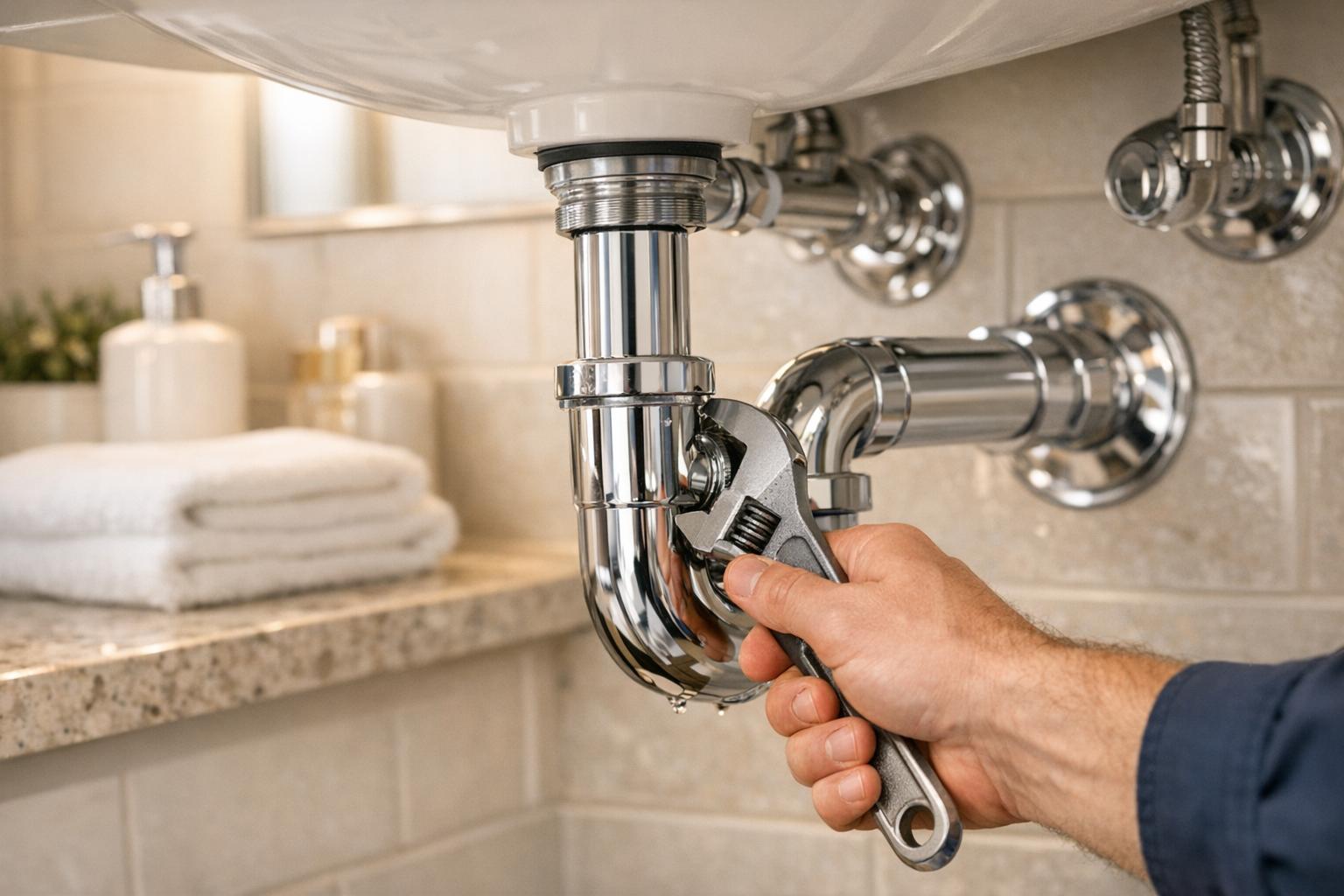
Routine plumbing maintenance saves money and prevents costly emergencies. By addressing small issues early, such as leaks or sediment buildup, you avoid major repairs and water damage. Emergency plumbing is expensive, with hourly rates ranging from $120–$450+, while regular maintenance costs much less, typically $100–$200 for inspections or $175–$475 for drain cleaning.
Key Takeaways:
- Prevent costly emergencies: A $50 leak can lead to $5,000+ in water damage if ignored.
- Lower repair costs: Emergency sewer repairs can cost up to $6,300, but routine cleaning is $175–$475.
- Extend plumbing lifespan: Regular water heater flushing and pipe inspections prevent wear and tear.
- Reduce utility bills: Fixing leaks saves up to 10,000 gallons of water annually per home.
- Affordable maintenance plans: Services like ALL Plumbing offer annual plans starting at $69, including inspections and discounts.
Investing in routine maintenance keeps your plumbing system running efficiently, saves money, and avoids unexpected disruptions.
Frequent Plumbing Emergencies and What Causes Them
Charleston homes face unique challenges due to aging infrastructure and the area’s coastal environment. Knowing the root causes of common plumbing emergencies highlights the importance of staying on top of routine maintenance.
Burst Pipes and Leaks
Burst pipes and leaks are a frequent issue in Charleston, and several factors contribute to this problem. High water pressure – often exceeding 80 PSI – can stress pipes to the point of cracking or bursting. Many older homes, particularly those in historic downtown areas, suffer from internal corrosion, which is worsened by the coastal humidity. During the occasional cold snap, uninsulated pipes in crawl spaces or exterior walls are vulnerable to freezing and bursting as the water inside expands. Additionally, Charleston’s clay-heavy soil can shift over time, putting pressure on underground pipes and creating weak spots. Signs like sagging ceilings, wet patches in the yard, or a sudden drop in water pressure often signal that trouble is brewing.
"Charleston’s coastal weather, older homes, and clay-rich soils present unique challenges that can trigger plumbing emergencies." – ALL Plumbing Services
These factors make regular inspections essential for preventing major issues.
Drain Blockages and Sewer Backups
Drain blockages and sewer backups can escalate quickly without proper maintenance. Over time, debris such as grease, hair, soap scum, and non-degradable wipes can clog drains [5,7]. In Charleston, tree roots are a common culprit, especially in neighborhoods with mature landscaping, as they can invade sewer lines and cause severe blockages. Warning signs include slow-draining sinks, gurgling noises, foul odors, and multiple slow drains throughout the home. Ignoring these problems can be costly; while professional drain cleaning typically costs between $175 and $475, emergency sewer repairs can skyrocket to as much as $6,300.
Water Heater Failures
Water heater issues often stem from sediment buildup. Over time, minerals like calcium and magnesium settle at the bottom of the tank, creating a barrier that forces the heating element to work harder. This can lead to popping noises and eventual failure [14,7]. Another common issue is a neglected sacrificial anode rod, which is designed to corrode to protect the tank. Once depleted, the tank itself becomes vulnerable to corrosion. Warning signs include lukewarm water, strange noises, or puddles around the unit. Without regular flushing and inspections, water heaters are prone to fail prematurely.
Each of these emergencies serves as a reminder of the importance of preventive maintenance to avoid expensive repairs down the road.
Maintenance Tasks That Prevent Plumbing Emergencies
Staying on top of regular maintenance can save you from expensive plumbing emergencies. Taking care of these tasks now means you’ll avoid the hefty repair bills we mentioned earlier.
Regular Leak Detection and Repair
Make it a habit to inspect exposed pipes – like those in basements, crawl spaces, or under sinks – at least once a year. Look for signs of rust, moisture, or mineral deposits that could signal trouble. Pay close attention to appliance connections, such as washing machine hoses. If you spot bulges or cracks, it’s time for a replacement. Standard rubber hoses should be swapped out for braided stainless steel hoses every five years for added durability.
Here’s a simple way to check for toilet leaks: add a few drops of food coloring to the tank. Wait 15–30 minutes without flushing. If the color shows up in the bowl, your flapper valve needs replacing. Even a single dripping faucet can waste over 3,000 gallons of water annually, so fixing leaks promptly is not just good for your home – it’s good for your wallet.
Don’t overlook water pressure, either. Use a gauge to ensure it stays between 40 and 80 PSI. Anything higher can strain your pipes. For issues you can’t see, like hidden corrosion or slow leaks behind walls, a professional plumber with specialized tools can help.
Once leaks are under control, the next step is keeping your drains clear.
Drain Cleaning and Clog Prevention
A simple but effective way to prevent clogs is by installing mesh strainers in sinks and showers to catch debris. Avoid using chemical drain cleaners, as their acidic ingredients can damage your pipes. Instead, go for natural solutions like a mix of baking soda and vinegar or enzyme-based cleaners. As Joseph Wood, Master Plumber and Founder of Boston Standard Company, explains:
"Alternatively, use an enzyme cleaner from your local plumber or hardware store and allow the natural enzymes to do the heavy lifting for you".
Don’t forget about floor drains or rarely used fixtures. Running water through them occasionally keeps P-traps full, which prevents unpleasant sewer gases from entering your home. If your property has mature trees, roots can invade sewer lines. Scheduling professional sewer line cleaning once a year can stop this problem in its tracks. The cost typically ranges from $175 to $475 – much cheaper than the $6,300 you might face for emergency repairs.
Now let’s talk about keeping your water heater in shape.
Water Heater Maintenance
Your water heater needs regular attention to avoid unexpected breakdowns. For traditional storage heaters, flush the tank annually (or every six months if sediment buildup is an issue) to remove deposits that can reduce efficiency. Check the sacrificial anode rod every few years and replace it if it’s heavily corroded – this small step protects the tank lining from rust.
Test the TPR (temperature and pressure relief) valve once a year. Lift the lever; water should discharge briefly and then stop. This test ensures the valve can release excess pressure safely. Also, keep your home’s water pressure between 40 and 85 PSI. Anything above 80 PSI can damage water heater components. For tankless models, hire a professional to clean the heating coils every two years and inspect the burner and water filter annually.
| Maintenance Task | Frequency | Benefit |
|---|---|---|
| Flush Tank | Annually (6 months for storage) | Removes sediment, restores efficiency |
| Test TPR Valve | Annually | Ensures safety/prevents pressure buildup |
| Inspect Anode Rod | Every 1–3 years | Prevents tank wall corrosion |
| Professional Inspection | Annually | Identifies hidden rust and loose joints |
| Tankless Coil Cleaning | Every 2 years | Maintains heating performance |
Finally, there are a few seasonal tasks to keep in mind. Exercise your main and fixture shut-off valves once a year to ensure they don’t seize up when you need them most. Before rainy seasons, test your sump pump by pouring a bucket of water into the pit to confirm the float switch activates properly. During winter, insulate pipes in unheated areas and shut off outdoor spigots. If temperatures drop below 20°F for more than three hours, leave faucets dripping slightly to prevent freezing.
How Preventive Maintenance Saves Money
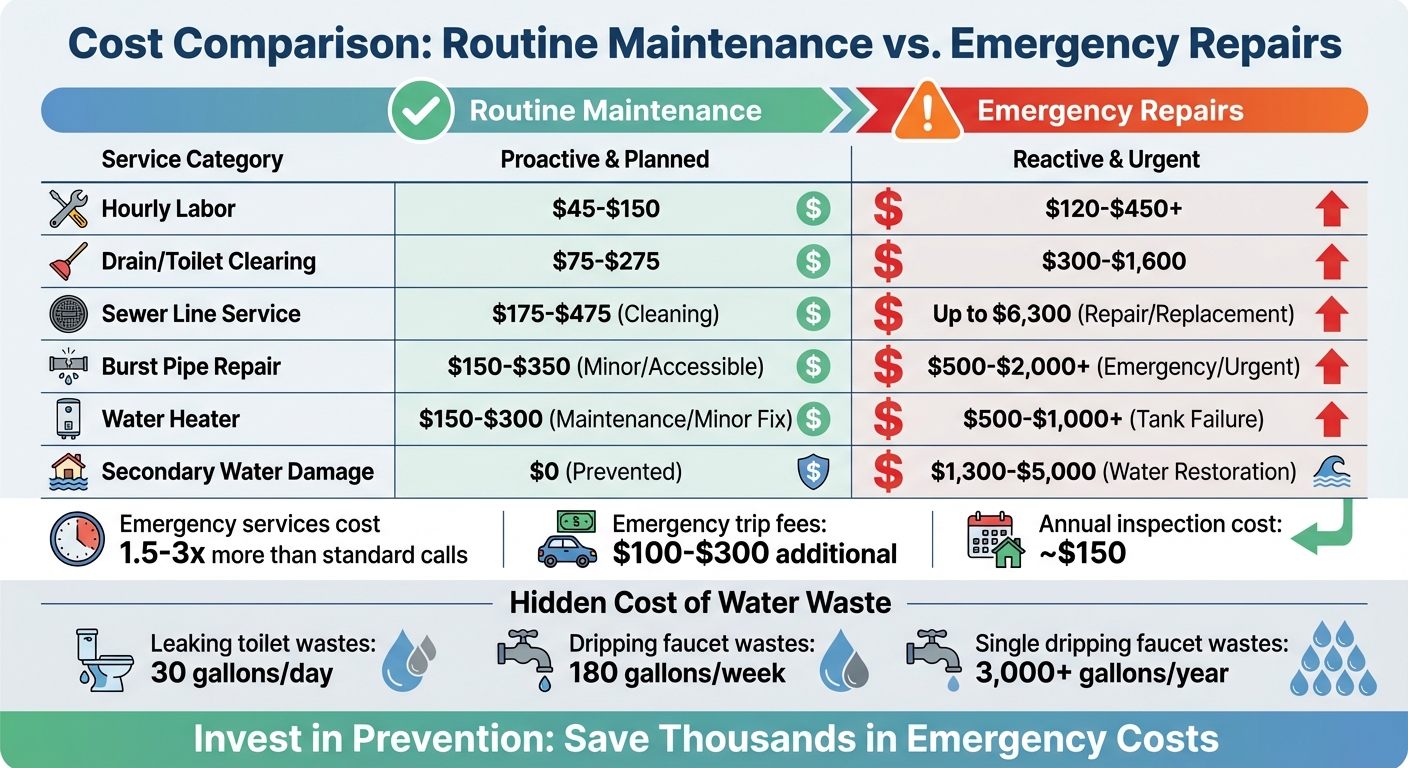
Routine Plumbing Maintenance vs Emergency Repair Costs Comparison
Taking care of routine maintenance is far cheaper than dealing with emergency repairs. By scheduling regular checkups, you can avoid unexpected, expensive fixes and replace them with predictable, lower-cost service appointments. This approach can make a noticeable impact on your monthly and yearly budgets.
Cost Comparison: Maintenance vs. Emergency Repairs
The cost difference between routine maintenance and emergency repairs is striking. Emergency plumbing services often cost 1.5 to 3 times more than standard service calls. On top of that, emergency visits frequently include additional trip fees ranging from $100 to $300.
| Service Category | Routine Maintenance/Standard Repair | Emergency Repair (After Neglect) |
|---|---|---|
| Hourly Labor | $45 – $150 | $120 – $450+ |
| Drain/Toilet Clearing | $75 – $275 | $300 – $1,600 |
| Sewer Line Service | $175 – $475 (Cleaning) | Up to $6,300 (Repair/Replacement) |
| Burst Pipe Repair | $150 – $350 (Minor/Accessible) | $500 – $2,000+ (Emergency/Urgent) |
| Water Heater | $150 – $300 (Maintenance/Minor Fix) | $500 – $1,000+ (Tank Failure) |
| Secondary Damage | $0 (Prevented) | $1,300 – $5,000 (Water Restoration) |
For instance, an annual inspection costing about $150 can prevent these high-cost scenarios entirely.
Hidden leaks are another way neglect can drain your wallet. A leaking toilet, for example, can waste around 30 gallons of water daily, while a dripping faucet can waste up to 180 gallons per week. Over time, these unnoticed leaks can lead to significantly higher water bills.
Beyond the immediate savings, preventive maintenance also ensures your plumbing system lasts longer.
Longer Lifespan for Plumbing Systems
Regular maintenance plays a key role in extending the life of your plumbing system. For example, flushing your water heater annually removes sediment buildup, preventing corrosion and delaying the need for an expensive replacement.
This same principle applies to pipes, fixtures, and appliances. Maintaining water pressure between 45 and 65 PSI reduces strain on plumbing components. Catching early signs of corrosion can save you money by allowing a small section of pipe to be repaired for $150 to $350, instead of replacing a burst line for $500 to $2,000.
Well-maintained systems also run more efficiently, which can lower your monthly utility bills. A sediment-free water heater heats water faster and uses less energy. Similarly, intact pipes ensure water reaches its destination without wasting energy on leaks.
On top of these benefits, keeping a documented history of regular plumbing maintenance can increase your home’s resale value. It signals to potential buyers that the property has been well cared for. In this way, routine maintenance not only cuts repair costs but also protects your long-term investment.
sbb-itb-998eb83
Maintenance Plans with ALL Plumbing Services
ALL Plumbing Services’ Maintenance Plan Options
ALL Plumbing Services offers a Plumbing Protection Plan for just $69 per year, which includes two in-depth plumbing inspections annually. These inspections cover everything from fixtures and pipes to shutoff valves and supply lines. On top of that, members receive an annual water heater flush to clear out sediment, helping to prevent corrosion and extend the water heater’s lifespan. Members also enjoy no dispatch fees, even during after-hours calls, a 10% discount on most services, and access to exclusive seasonal promotions. As the company puts it:
"Protect your home and your wallet with our affordable Plumbing Protection Plan. For only $69 annually, you’ll enjoy priority service, exclusive discounts, and regular maintenance to keep your plumbing in top shape."
This plan is thoughtfully designed to address the specific plumbing needs of Charleston residents.
Maintenance Plans Designed for Charleston Homes
Since 1987, ALL Plumbing Services has been crafting maintenance plans tailored to the unique challenges of Charleston’s Lowcountry region. The area’s humid climate, aging infrastructure, and coastal weather patterns all contribute to specific plumbing concerns. Their inspections take these factors into account, offering strategies to manage summer humidity, which can lead to pipe corrosion and mold. They also address the impact of Charleston’s clay-heavy soils, which can shift and damage underground pipes, and the particular needs of historic downtown homes . The company stays up to date with Charleston’s building codes to ensure all maintenance and repairs comply with local standards. As they explain:
"Charleston’s humid climate can lead to specific plumbing issues like pipe corrosion, mold development, and water heater malfunctions."
By combining local knowledge with advanced tools, ALL Plumbing Services ensures effective solutions for preventing plumbing emergencies.
Modern Technology for Emergency Prevention
ALL Plumbing Services employs advanced technology to detect and prevent plumbing issues before they escalate. Thermal imaging cameras are used to locate hidden moisture in walls and ceilings without causing unnecessary damage. Acoustic listening devices help identify slab leaks under concrete foundations, while video pipe inspection cameras assess underground lines for root damage or aging pipes. These tools are complemented by eco-friendly options like Rinnai tankless water heaters and Flow Tech or Halo water filtration systems, ensuring systems run efficiently and sustainably. The company describes their approach as:
"Think of us as skilled detectives of the plumbing world, equipped with the knowledge and tools to uncover even the most elusive leaks."
Conclusion: Maintenance Reduces Emergency Costs
Why Regular Plumbing Maintenance Matters
Routine plumbing maintenance is more than a good habit – it’s a smart way to avoid costly emergencies and keep your home’s plumbing in top shape. By addressing small issues like leaks, worn-out fixtures, and sediment buildup early, you can prevent them from turning into expensive disasters. For example, emergency plumbing repairs can cost 1.5 to 3 times more than regular maintenance. While emergency call-outs typically range from $300 to $400, proactive sewer cleaning costs between $175 and $475 and can save you from pipe replacements that might run as high as $6,300.
Regular upkeep also extends the life of your plumbing system. Annual water heater flushes help prevent corrosion, and keeping water pressure within the recommended range of 40 to 60 PSI reduces unnecessary strain on your pipes. Even simple steps like testing shutoff valves ensure you can quickly stop water flow in case of an emergency.
On top of that, maintenance can significantly lower your utility bills. For instance, a dripping faucet can waste up to 180 gallons of water per week, and a leaky toilet might lose 30 gallons daily. Fixing these issues during routine checks can lead to noticeable savings over time. These examples highlight why investing in regular maintenance pays off in the long run.
Partner with ALL Plumbing Services
Want to protect your home and avoid unexpected plumbing headaches? ALL Plumbing Services offers tailored maintenance plans specifically designed for Charleston homes. Their services include thorough inspections, annual water heater maintenance, and proactive strategies to extend the life of your plumbing system. Using advanced tools like video pipe inspection, they can identify potential problems before they spiral out of control.
Getting started is easy. Schedule your first inspection with ALL Plumbing Services and take the first step toward safeguarding your home. Visit allplumbingcompany.com or call today to learn more about their customized maintenance plans for Charleston homeowners. Don’t wait for an emergency – protect your home now.
FAQs
How often should I schedule plumbing maintenance to avoid costly repairs?
Scheduling plumbing maintenance once a year is generally a smart move for most homeowners. During an annual inspection, a licensed plumber can identify leaks, corrosion, water pressure issues, and other potential problems. This proactive approach helps avoid costly emergency repairs down the line.
For homes that are older, have large trees nearby, or experience frequent plumbing issues, bi-annual maintenance might be a better fit. These situations often come with added risks, like wear and tear or root intrusion, that need closer attention. Meanwhile, newer homes with modern plumbing systems might get away with inspections every two years, though sticking to an annual schedule offers extra peace of mind.
If you’re in Charleston, SC, ALL Plumbing Services provides customized maintenance plans to fit your home’s unique requirements. Whether you need yearly check-ups or more frequent service, their licensed technicians are ready to help keep your plumbing running smoothly and prevent unexpected problems.
What are the warning signs that my plumbing system needs immediate attention?
Catching plumbing problems early can save you from expensive repairs down the line. Some of the most common warning signs include dripping faucets or constantly running toilets – both of which not only waste water but can also drive up your utility bills. You might also notice water stains, musty smells, or damp spots under sinks, all of which could indicate leaks that, if left unchecked, might cause serious structural damage.
Other things to watch for? A sudden drop in water pressure, discolored or odd-smelling water, and strange noises like banging or hissing. These could signal anything from pipe corrosion to a failing water heater or pressure issues. And if your sinks are draining slowly, you’re dealing with frequent clogs, or you hear gurgling sounds in your pipes, it’s likely there’s a blockage that could lead to backups or even burst pipes.
When you notice any of these red flags, it’s time to act fast. Routine maintenance is a smart way to catch problems early before they escalate. For homeowners in Charleston, SC, ALL Plumbing Services offers preventive maintenance plans and emergency services to keep your plumbing system running smoothly.
How does routine plumbing maintenance help save on utility bills?
Routine plumbing maintenance isn’t just about keeping your system in good shape – it can actually help cut down your utility bills. By catching small issues, like leaks, early on, you can avoid wasting water and the higher costs that come with it. Clearing out clogs ensures your plumbing works smoothly, preventing unnecessary strain on your system. Plus, regular check-ups can fine-tune your water heater and adjust water pressure settings, which means using less energy and water. Over time, these small tweaks can add up to significant savings on both your water and electricity bills.