

If you spot ice on your AC unit, it’s not a good sign – it’s a warning that your system is struggling. Ice buildup can lead to higher energy bills, water damage, and even expensive repairs like compressor failure. Common causes include low refrigerant levels, restricted airflow, or dirty coils. Ignoring the issue can shorten your AC’s lifespan and cost you thousands in replacements.
Key Points:
- Ice on coils or pipes: Indicates airflow or refrigerant issues.
- Damage risks: Strains the compressor, causes water leaks, and increases repair costs.
- High costs: Compressor repairs can range from $100 to $200 for diagnosis, plus $50-$150/hour in labor. Refrigerant leaks may cost $225 to $1,600.
- Preventive steps: Replace filters monthly, clean coils seasonally, and schedule annual inspections.
If you see ice, turn off the cooling, set the fan to "On", and let the ice melt naturally. If the problem persists, call an HVAC professional to inspect for leaks or mechanical issues.
What Causes Ice on Your AC Unit
Ice forming on your AC unit is a clear sign that something’s not working as it should. It usually points to issues with temperature regulation or airflow. Spotting the cause early can save you from more expensive fixes down the road. Here are the main reasons why ice might build up on your AC.
Low Refrigerant Levels
When refrigerant levels drop – often because of leaks – the pressure in the evaporator coil decreases. This lowers the coil’s temperature to below freezing, causing humid air to condense and freeze on the surface. Common signs of a refrigerant leak include hissing sounds, warm air coming from vents, or an oily, yellowish residue near the unit.
Restricted Airflow
Blocked airflow is another big culprit. Clogged filters, closed vents, or obstructed return ducts prevent enough warm air from reaching the evaporator coils. Without sufficient airflow, condensation on the coils turns to ice. Watch for weak airflow or a spike in your energy bills – these are often the first clues.
Dirty Evaporator or Condenser Coils
Over time, dust, pet hair, and grime can coat your coils, acting like insulation and preventing them from absorbing heat properly. This makes your system work harder and less efficiently, which can lead to ice buildup. If you notice dirt on the coils, clean them carefully using a commercial coil cleaner and a soft brush. Avoid abrasive tools to prevent damage to the coils.
Warning Signs of Ice Formation
Spotting ice buildup early can help you avoid costly repairs and soaring energy bills. Here’s what to keep an eye on when inspecting your AC unit.
Visible Ice on Coils or Pipes
If you see frost or ice on your system, it’s a clear sign something’s wrong. Check the copper refrigerant lines that connect your indoor and outdoor units – these can develop a frosty white coating or even chunks of ice when there’s an issue. Ice may also show up on the exterior of your outdoor condenser unit, or on the evaporator coils inside your home, located behind the access panel.
If you notice ice, turn off your AC and set the fan to "On" (not "Auto") to safely speed up the thawing process. Also, check for puddles or moisture around the unit – melting ice often leaves behind telltale water.
But ice isn’t just something you see – it can also make itself known through strange sounds and system behavior.
Unusual Noises or System Behavior
Odd noises often hint at a problem before ice becomes visible. For instance, hissing or bubbling sounds could signal a refrigerant leak, which is a common precursor to ice formation. If ice starts interfering with moving parts, you might hear buzzing, rattling, clicking, or even grinding noises.
Pay close attention to how your AC operates. Short cycling (frequent on-and-off cycling) or running continuously without effective cooling are red flags for ice buildup. Another warning sign? Warm or lukewarm air blowing from your vents while the system is running.
"If you are hearing anything beyond the healthy hum of your air conditioner, there could be an icy problem on your hands." – Liberty Home Guard
These issues often go hand in hand with higher energy usage, putting extra strain on your system.
Higher Energy Bills
Ice on the coils acts like insulation, preventing proper heat absorption. This forces your AC to work harder and run longer to cool your home, which not only delays cooling but also risks damaging the compressor. If you notice rising energy bills and reduced cooling, shut the system down immediately to prevent further damage.
"An air conditioner with ice buildup will struggle to function properly. It can’t cool your home effectively, which means your system will work harder and use more energy. This leads to higher energy bills and less comfort for you and your family." – Albright’s Mechanical Services
What to Do When You Find Ice on Your AC Unit
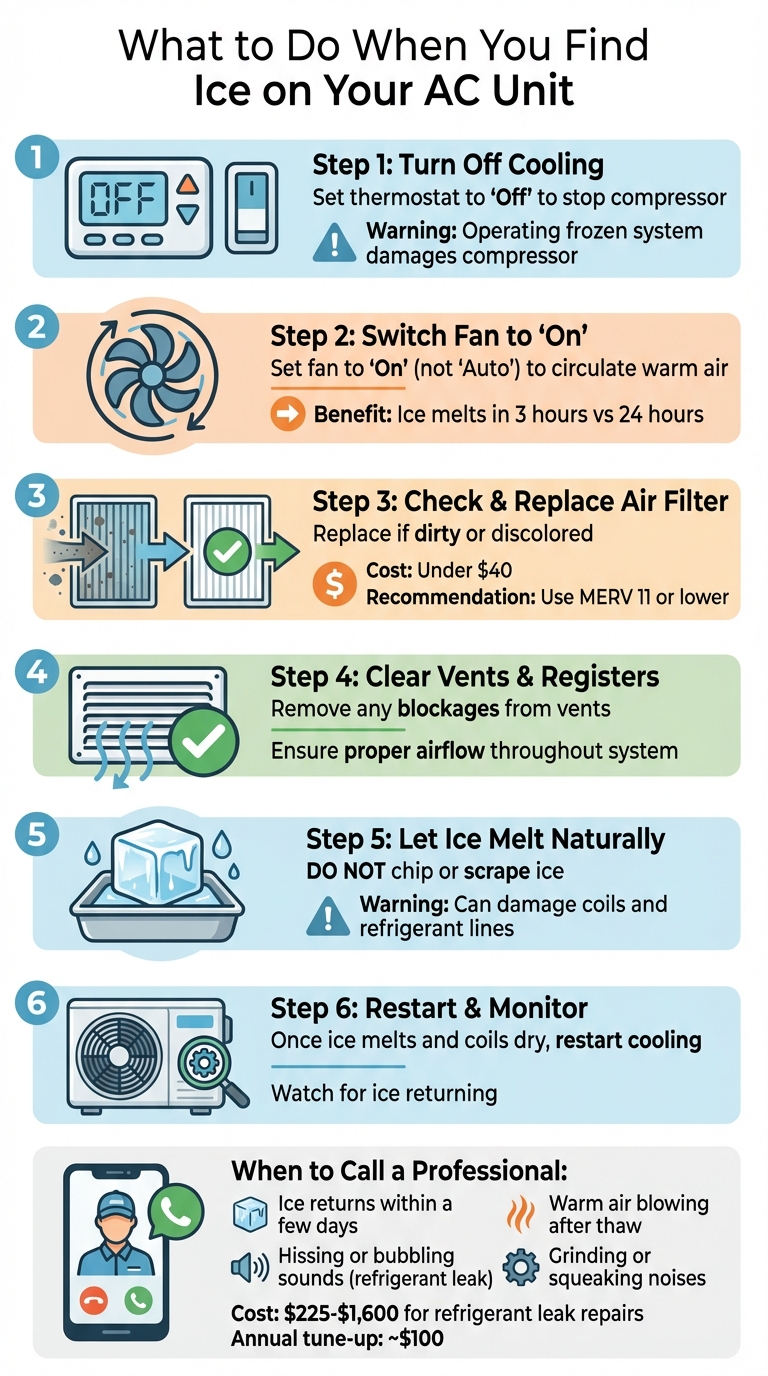
What to Do When Ice Forms on Your AC Unit: Step-by-Step Guide
Spotting ice on your AC unit isn’t something to ignore. Acting promptly can save you from a hefty repair bill down the line.
Basic Troubleshooting Steps
The first thing to do is turn off the cooling. Set your thermostat to "Off" to stop the compressor from running. Operating a frozen system can damage the compressor, so this step is crucial. Once the cooling is off, switch the fan to "On." This helps circulate warm air, speeding up the thawing process. With this approach, the ice could melt in as little as 3 hours instead of taking up to 24 hours.
While waiting for the ice to melt, check your air filter. If it’s dirty or discolored, replace it – most filters cost under $40. Make sure your vents and registers are clear of any blockages, too. For most homes, a filter with a MERV rating of 11 or lower works best to maintain proper airflow.
"If you see ice and haven’t changed your air filter in a really long time, do that right away! Then turn off the system and wait for the ice to melt." – Jason Peavey, PV HVAC
Avoid the temptation to chip or scrape off the ice – this can damage the coils or refrigerant lines. Let it melt naturally. Once the ice is gone and the coils have dried, restart the cooling and observe how the system performs. If the ice builds up again, it’s time to take further action.
When to Call a Professional HVAC Technician
If the ice returns within a few days, even after replacing the filter and clearing obstructions, it could signal a bigger problem. Persistent ice buildup often points to issues like a refrigerant leak or a mechanical failure, both of which require professional attention. Keep an ear out for unusual sounds like hissing or bubbling, as these could indicate a refrigerant leak. Fixing such leaks can cost anywhere from $225 to $1,600, depending on the severity.
"A refrigerant leak is a serious issue that should be addressed by an HVAC technician. The refrigerant used is dangerous to touch and may cause frostbite." – Aspen Aire Heating and Cooling
Other signs that you need a technician include warm air blowing after the system has thawed, grinding or squeaking noises, or a blower fan that isn’t spinning. Scheduling regular annual tune-ups, which typically cost around $100, can help you catch these problems early and avoid costly emergency repairs later.
sbb-itb-998eb83
How to Prevent Ice Buildup on Your AC Unit
Ice buildup on your AC unit can lead to frozen coils and expensive repairs. To keep your system running smoothly during the summer, adopt these habits for proper maintenance and care. Starting with regular upkeep can help you avoid performance issues caused by ice buildup.
Regular Maintenance and Filter Changes
Changing your air filter regularly – every 30 days – is one of the simplest ways to prevent ice from forming on your AC unit. Even a thin layer of dust on the filter can block airflow, leading to freezing. If your filter looks dirty or discolored, it’s time to replace it. Disposable filters are affordable, typically costing less than $40, and swapping them out consistently can lower cooling costs by 5% to 15%.
"Even a thin layer of dust or dirt on an air filter can suffocate your AC and restrict the free flow of warm air through the system." – Nick P. Cellucci, Contributing Writer, Angi
Beyond filter changes, ensure that vents and registers are unobstructed. Keep furniture, curtains, and rugs away from these areas to allow air to circulate freely. Blocked airflow forces your system to work harder, increasing the likelihood of freezing. Additionally, avoid running your AC when outdoor temperatures fall below 60°F to 62°F. Operating the unit in cooler weather can cause freezing since it’s not designed for such conditions.
Schedule Annual AC Inspections
Booking a professional AC tune-up every spring – typically costing around $100 – can help identify and fix issues before they turn into major problems. During these inspections, technicians check refrigerant levels, clean hard-to-reach components, and examine mechanical parts for wear and tear. For systems older than five years, consider scheduling service twice a year for added peace of mind.
"By scheduling a tune-up every spring, you ensure that potential problems are caught and fixed before they become worse." – Lauren Mangano, ECI Comfort
In addition to professional inspections, keeping your system free of debris is critical to its performance.
Keep Coils and Vents Clean
Dirty coils can’t absorb heat efficiently, which can lead to ice buildup and potential damage to your system. To avoid this, clean your outdoor condenser unit each season using a soft brush or compressed air. Make sure there’s at least 2 feet of clearance around the unit by trimming shrubs and removing leaves or grass clippings. For the indoor evaporator coil, use a commercial coil cleaner and rinse gently with water. Always turn off the power at the breaker before cleaning any internal components to ensure safety.
| Maintenance Task | How Often | Why It Matters |
|---|---|---|
| Replace/Clean Air Filters | Monthly | Prevents airflow restriction and coil freezing |
| Clear Debris | Monthly/Seasonally | Prevents overheating and airflow blockages |
| Clean Evaporator/Condenser Coils | Seasonally | Improves heat transfer efficiency |
| Professional Inspection | Annually (Spring) | Identifies leaks and mechanical issues early |
Conclusion: Protect Your AC Unit from Ice Buildup
Key Takeaways
Ice on your AC unit is more than just an annoyance – it’s a clear signal that something is wrong and needs immediate attention. Ignoring it can lead to serious problems, like compressor failure or a spike in energy usage by as much as 15%. Worse yet, it could cause your system to break down entirely during Charleston’s sweltering summer months. If you notice ice, turn off the cooling mode and switch to the fan setting to help thaw the coils. Avoid scraping or chipping at the ice, as this can damage the refrigerant lines. Simple steps, like replacing air filters every three months and keeping a 2-foot clearance around your outdoor unit, can go a long way in preventing ice-related issues. These straightforward measures underline the importance of regular maintenance – something we’re here to help with.
How ALL Plumbing Services Can Help

ALL Plumbing Services proudly serves Charleston and nearby communities, including Bluffton and Palmetto Bluff, with specialized HVAC maintenance plans tailored to homeowners in the area. Our expert technicians are equipped to identify and address the root causes of ice buildup, whether it’s due to refrigerant leaks, restricted airflow, or dirty coils. Ignoring these issues can lead to costly repairs – sometimes running into the hundreds or even thousands of dollars. Routine maintenance, however, can save you from these expenses while protecting your compressor and extending the life of your system. For units over five years old, we recommend scheduling service twice a year to catch potential problems early.
Our services include safe refrigerant handling, thorough cleaning of evaporator and condenser coils, and detailed inspections of ductwork for leaks or blockages. Don’t let a minor ice issue spiral into a full-blown system failure. Reach out to ALL Plumbing Services today to book an inspection and ensure your AC stays reliable and efficient throughout the summer.
FAQs
What should I do if my AC unit has ice on it?
If you spot ice forming on your AC unit, it’s crucial to act quickly to prevent further damage and avoid higher energy bills. The first step? Turn off the thermostat. This stops the compressor and lets the ice begin to melt. Be patient – thawing completely can take several hours. Resist the urge to scrape or chip away the ice; doing so can harm the coils.
Once the ice has melted, check your air filter inside the home. A dirty or clogged filter can restrict airflow, which is often the culprit behind freezing. If it’s in bad shape, replace it. Then, take a look at the outdoor unit. Clear away any debris around the coils and gently clean them if needed. After everything is set, restart your AC system.
Still having trouble? If the unit freezes again or you notice odd sounds, warm air, or a drop in cooling performance, it’s time to call in an HVAC professional. Problems like refrigerant leaks or low refrigerant levels require expert handling. Tackling the issue early can save you from expensive repairs and help your AC work smoothly.
How can I stop my AC unit from freezing up again?
To keep your AC unit from freezing, it’s all about ensuring proper airflow, maintaining refrigerant levels, and using the right temperature settings. Start by replacing or cleaning the air filter every 1–3 months. A dirty filter can block airflow, making your system work harder than it should. Also, make sure all vents and registers are open and unobstructed to allow air to circulate freely throughout your home.
Don’t forget about the outdoor unit! Clean the condenser coils at least once a year by removing debris and gently rinsing them with a hose to boost efficiency. And when it comes to professional care, schedule an annual HVAC inspection. This ensures refrigerant levels are correct, any leaks are addressed, and overall maintenance is up to date.
Keep an eye on your thermostat settings, too. Avoid setting it below 68°F if it’s cooler than 60°F outside – this could overcool the system and lead to freezing. Lastly, make sure there’s at least 2 feet of clearance around your outdoor unit to allow for proper airflow. These simple steps can help your AC stay ice-free and running smoothly during Charleston’s sweltering summers.
When should I call a professional if my AC unit has ice on it?
If the ice on your AC unit doesn’t melt after you’ve turned off the thermostat and checked or replaced the air filter, it’s time to call a professional. Other red flags that need expert attention include low refrigerant levels, noticeable leaks, strange noises, or a unit that stays frozen even after basic troubleshooting. Letting these problems linger can cause more serious damage and lead to expensive repairs, so addressing them quickly is the smart move to keep your system running smoothly.
