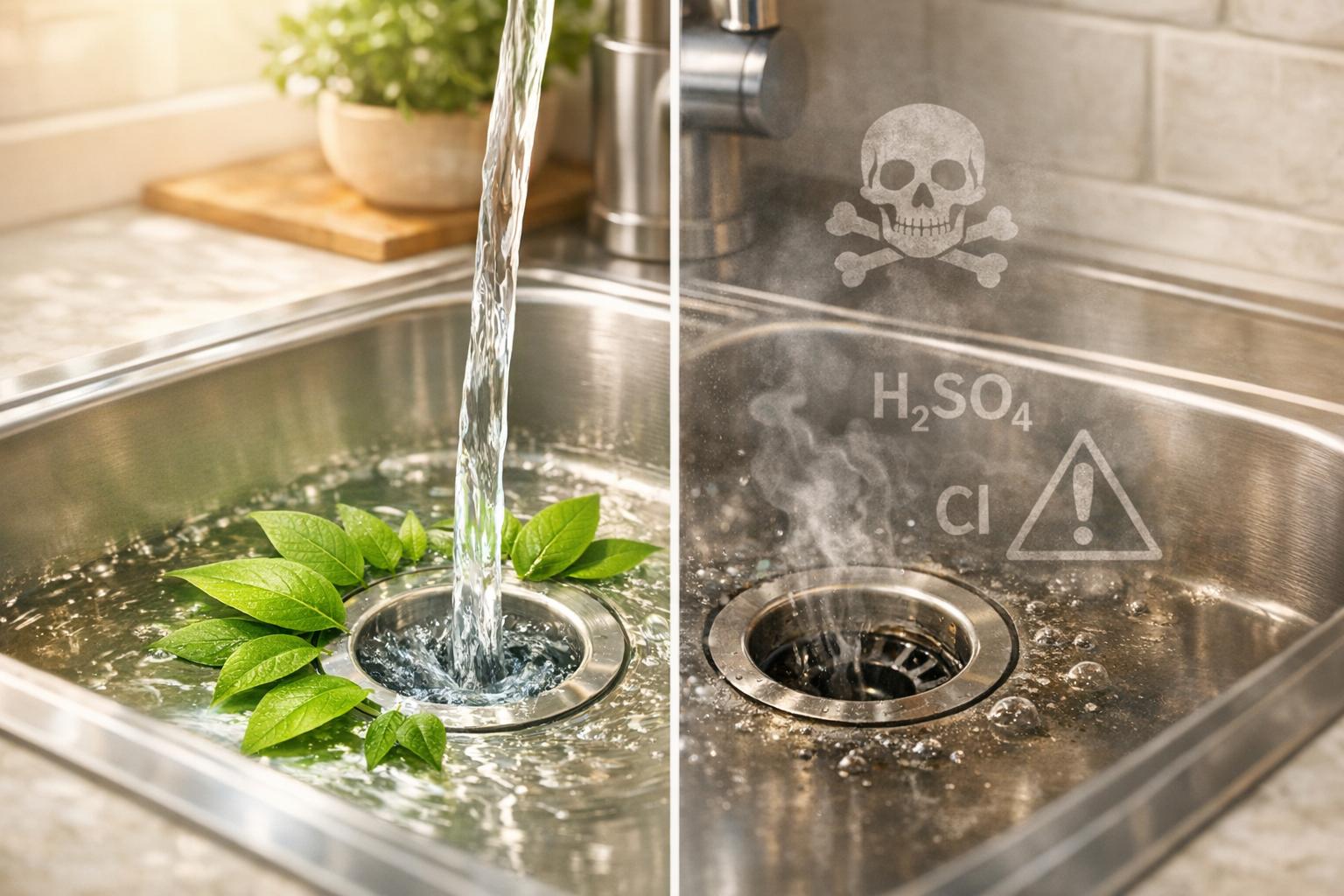
When it comes to clearing clogged drains, you have two main options: chemical cleaners or eco-friendly alternatives. Chemical cleaners act fast, breaking down blockages in minutes, but they can damage pipes, harm health, and pollute water. Eco-friendly solutions, like enzyme-based cleaners or baking soda and vinegar, work slower but are safer for your plumbing, family, and the environment. Here’s a quick breakdown:
- Chemical Cleaners: Quick results (15–30 minutes), but risks include toxic fumes, burns, pipe damage, and environmental harm. Costs range from $5 to $20 per bottle.
- Eco-Friendly Options: Slower (several hours to overnight), but safer for pipes, non-toxic, biodegradable, and better for septic systems. Costs range from $12 to $70.
Quick Comparison:
| Factor | Chemical Cleaners | Eco-Friendly Solutions |
|---|---|---|
| Speed | 15–30 minutes | Several hours to overnight |
| Pipe Safety | Risk of corrosion/heat damage | Safe for all pipe materials |
| Health Risk | High (toxic fumes, burns) | Low (non-toxic, safe) |
| Septic Friendly | No | Yes |
| Environmental Impact | High (pollutes waterways) | Low (biodegradable) |
| Cost | $5–$20 | $12–$70 |
If speed is your priority, chemical cleaners might appeal to you. But for long-term plumbing health and a safer home, eco-friendly methods are the better choice. Regular maintenance, like using strainers and natural cleaners, can prevent clogs and reduce the need for harsh chemicals.
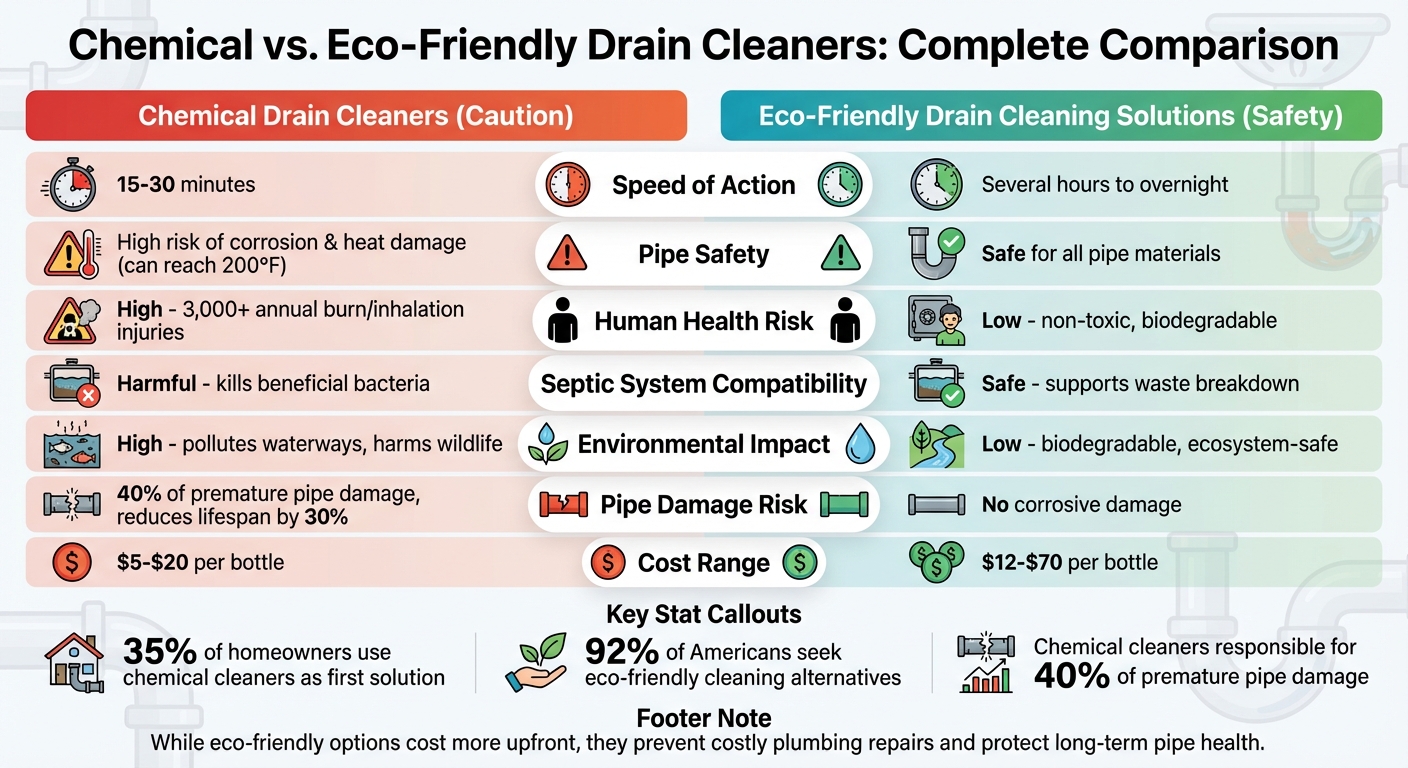
Chemical vs Eco-Friendly Drain Cleaners Comparison Chart
How Chemical Drain Cleaners Work
Chemical drain cleaners use powerful substances to break down clogs in a short amount of time. These products generally fall into three categories: caustic cleaners, oxidizing cleaners, and acidic cleaners. Each type relies on a specific chemical reaction to tackle blockages.
- Caustic cleaners: These contain sodium hydroxide or potassium hydroxide. They work by donating electrons to the clog, turning grease into a water-soluble soap.
- Oxidizing cleaners: Using compounds like sodium hypochlorite or peroxides, these cleaners break down organic materials such as hair and food particles by oxidizing their molecular bonds. This reaction also releases heat and gas, which help dislodge the clog.
- Acidic cleaners: Formulated with sulfuric or hydrochloric acid, these cleaners attract electrons to dissolve tough materials like mineral deposits. Due to their strength, they are typically reserved for professional use.
Most chemical cleaners are denser than water, allowing them to sink through standing water in sinks or tubs and target the clog directly. The reactions they trigger can generate heat – sometimes reaching up to 200°F – which melts grease but can also damage PVC pipes or corrode metal plumbing. These products, priced between $5 and $20, promise to clear a drain in under 30 minutes by producing heat and reactive by-products. It’s no wonder that about 35% of homeowners turn to chemical cleaners as their first solution. However, while they can be quick and effective, they come with serious risks.
Risks of Chemical Drain Cleaners
The same chemical reactions that make these cleaners effective can also pose dangers to your plumbing, health, and the environment. For starters, the heat and corrosive by-products can weaken pipes, reducing their lifespan. If a cleaner sits too long in the pipes without resolving the clog, it can warp or crack PVC and corrode metal over time.
"Since chemical drain cleaners create heat, they’ve been known to melt through these cheap replacement drain pipes if the chemical sits inside too long."
– Paul Abrams, Spokesperson, Roto-Rooter
Health risks are another major concern. According to the American Association of Poison Control Centers, over 3,000 cases of chemical burns and inhalation injuries from drain cleaners are reported annually. Toxic fumes can irritate the lungs and throat, while splashes can cause severe skin and eye burns. Mixing different cleaners or combining them with household chemicals like ammonia can produce dangerous gases, such as chlorine or chloramine. These risks highlight the importance of handling these products with extreme care.
Environmental damage is yet another downside. Many of these chemicals bypass water treatment facilities and end up in local waterways, contaminating groundwater and harming aquatic ecosystems. For homes with septic systems, chemical cleaners can kill the bacteria needed to break down waste, potentially leading to system failure. Residual chemicals left in pipes may also react dangerously during future cleaning attempts.
"Chemicals can attack carpets, flooring, or other finished surfaces, so be careful not to spill."
– Dave Frame, President-elect, Plumbing-Heating-Cooling Contractors National Association (PHCC)
If you decide to use chemical drain cleaners, take precautions. Wear rubber gloves, safety glasses, and long sleeves to protect yourself. Ensure proper ventilation by opening windows or using fans, and check your pipe materials beforehand – avoid using these cleaners on flexible plastic "accordion-style" pipes, as the heat can melt them. Ultimately, weigh the immediate convenience against the potential long-term damage to your plumbing, health, and the environment.
How Eco-Friendly Drain Cleaners Work
Eco-friendly drain cleaners work differently from traditional chemical-based options. Instead of using harsh acids or caustic substances, they rely on natural processes like biological digestion to clear clogs. These solutions generally fall into three main types: enzyme-based cleaners, bacterial cleaners, and the classic combination of baking soda and vinegar.
Enzyme-based cleaners focus on dissolving fats, oils, and grease, while bacterial cleaners produce enzymes that break down organic materials like hair, food particles, and soap scum. For ongoing maintenance, bio-based drain sticks are a convenient option. These dissolvable sticks sit in the drain trap, gradually releasing enzymes to prevent buildup over time. To maximize their effectiveness, it’s best to use them during periods of low water usage, allowing the enzymes to work uninterrupted.
A baking soda and vinegar mix offers another natural solution. When combined, baking soda (sodium bicarbonate) and vinegar (acetic acid) create carbon dioxide gas, which helps dislodge debris from pipe walls. The mild abrasiveness of baking soda scrubs away residue, while vinegar works to dissolve mineral deposits, calcium, and soap scum. Unlike chemical cleaners that produce intense heat, this mixture is gentle and safe for materials like PVC, metal, and rubber seals.
"Enzymatic drain cleaners are significantly safer for septic systems compared to harsh chemical alternatives, as they digest organic matter gently without disrupting beneficial bacterial populations."
– EPA‘s Detox Your Domicile toolkit
By using these natural methods, you can maintain a safer, eco-conscious approach to keeping your drains clear without putting your plumbing at risk.
Benefits of Eco-Friendly Solutions
Eco-friendly drain cleaners bring several advantages over chemical alternatives. For starters, they’re safe for all types of pipes since they don’t produce corrosive heat or leave behind harmful residues. This helps protect and extend the life of your plumbing system.
Health risks are also minimized. Unlike chemical cleaners that can release toxic fumes or cause severe burns, eco-friendly options are much gentler. Basic precautions like wearing gloves and avoiding direct eye contact are usually all you need when handling these products. They’re especially helpful for homes with septic systems, as they support and replenish the beneficial bacteria needed for effective wastewater breakdown. In fact, enzymatic cleaners are often used to restore septic system health after damage from harsh chemical treatments.
The environmental benefits are another big plus. These biodegradable cleaners break down naturally, avoiding contamination of groundwater and protecting aquatic ecosystems. A 2022 survey found that 92% of Americans planning their spring cleaning were looking for ways to reduce their environmental impact. While enzyme-based cleaners typically cost between $12 and $70 – more than the $5 to $20 range for chemical options – their long-term benefits, from fewer plumbing repairs to reduced environmental harm, make them a smart investment.
Safety and Effectiveness Comparison
When deciding between chemical and eco-friendly drain cleaners, it often comes down to weighing speed against safety. Chemical cleaners are known for their quick results, usually clearing clogs in just 15 to 30 minutes. However, this speed comes with significant risks. These cleaners can generate heat up to 200°F, which may warp PVC pipes or even melt thinner plastic if left in contact too long. Frequent use can reduce pipe lifespan by as much as 30% and is responsible for 40% of premature pipe damage.
The dangers extend beyond plumbing. Chemical drain cleaners are linked to over 3,000 cases of burns and inhalation injuries each year. They release toxic fumes that can irritate the respiratory system, and accidental contact with skin or eyes may lead to severe burns. Mixing different chemical cleaners – or combining them with common DIY solutions like vinegar – can be particularly hazardous, sometimes producing lethal gases such as chlorine.
On the other hand, eco-friendly cleaners are much safer but take longer to work. These solutions often require several hours or even overnight to clear clogs. While slower, they are non-corrosive and safe for all types of pipes. They also pose minimal health risks, as they don’t release toxic fumes or cause burns, making them safer to use around children and pets. For septic systems, enzymatic cleaners offer an added benefit: they support beneficial bacteria essential for breaking down waste, unlike chemical cleaners, which can disrupt these microorganisms. The choice between safety and speed has a lasting impact on plumbing health.
Comparison Table: Chemical vs. Eco-Friendly Cleaners
Here’s a breakdown of the key differences:
| Factor | Chemical Drain Cleaners | Eco-Friendly Solutions |
|---|---|---|
| Speed of Action | Fast (15–30 minutes) | Slow (several hours to overnight) |
| Pipe Safety | High risk of corrosion and heat damage | Safe for all pipe materials |
| Human Health Risk | High (burns, toxic fumes, poisoning) | Low (non-toxic, biodegradable) |
| Septic Compatibility | Harmful (kills beneficial bacteria) | Safe (supports waste breakdown) |
| Environmental Impact | High (pollutes waterways and wildlife) | Low (biodegradable and safer for ecosystems) |
| Residue | Leaves corrosive buildup | Leaves little to no residue |
| Price Range | $5 to $20 per bottle | $12 to $70 per bottle |
Environmental and Cost Differences
Environmental Impact of Each Method
Chemical cleaners often rely on harsh substances like sodium hydroxide and sulfuric acid, which can disrupt water pH levels, harm aquatic ecosystems, and release volatile organic compounds (VOCs) that contribute to urban air pollution. On the other hand, eco-friendly options use plant-based enzymes and bacteria to break down organic waste completely. These alternatives leave no toxic residue, safeguarding waterways and maintaining the balance of septic system bacteria. The environmental consequences of chemical cleaners often translate into hidden financial costs.
Cost Considerations
Cost is another factor where sustainable options stand out. Chemical cleaners are typically priced between $5 and $20 per bottle, while enzymatic cleaners range from $12 to $70. Although chemical cleaners may seem cheaper upfront, the savings are short-lived. Frequent use of harsh chemicals can lead to costly plumbing repairs, negating any initial savings. As State Chemical points out:
"eco-friendly drain cleaners are still cheaper than reactive plumbing repairs".
sbb-itb-998eb83
DIY Eco-Friendly Drain Cleaning Methods
Common DIY Methods
If you’re looking for simple, low-impact ways to clear clogged drains, these DIY techniques can help you tackle the problem while staying environmentally conscious. One of the most popular methods is the baking soda and vinegar approach. Start by pouring ½ cup of baking soda into the drain, followed by ½ to 1 cup of vinegar. The fizzing reaction creates carbon dioxide bubbles that work to loosen debris. Cover the drain with a plug or cloth to contain the reaction for 15–20 minutes, then flush with a kettle of boiling water.
For more stubborn clogs, try combining ½ cup of salt with ½ cup of baking soda. Pour the mixture into the drain and let it sit overnight before flushing it out. The salt acts as a mild abrasive, helping to scrub away buildup inside the pipes.
Boiling water alone can also be effective, especially when paired with a small amount of degreasing dish soap to break down grease, soap scum, and organic matter.
If these methods don’t do the trick, manual tools like plungers and drain snakes can provide extra help. For plungers, ensure there’s about an inch of standing water to create a proper seal, then pump forcefully for 30 seconds. Cup plungers work well for sinks and tubs, while flange plungers, with their rubber flap design, are better suited for toilets.
For deeper clogs, a drain snake (or auger) can reach further into the pipes. Insert the cable until you feel resistance, then rotate it to break apart the blockage. As Charles White, Vice President of Regulatory Affairs at PHCC, notes:
"A plunger may work if the blockage is in or near the trap… Snakes are better at cleaning residual sludge from pipes."
Enzymatic cleaners are another eco-friendly option, though they’re best for maintenance rather than immediate clog removal. These cleaners use live bacteria to digest organic buildup like hair and food particles. Apply them at night to give the bacteria time to establish colonies. However, if none of these methods solve the problem, it’s time to consider professional assistance.
When to Call a Professional
While DIY solutions are great for minor clogs and routine upkeep, there are times when professional help is essential. If multiple drains in your home start backing up at once, it could indicate a blockage in the main line. Other warning signs include persistent sewage odors, strange gurgling or bubbling sounds from the pipes, and water backing up into other fixtures when you use a sink or flush a toilet. Even unusually green or lush patches in your yard might point to a sewer line leak.
If repeated DIY efforts fail or your plumbing system is older and more fragile, calling a professional is a smart move. Companies like ALL Plumbing Services in Charleston, SC, offer eco-conscious drain cleaning options that protect both your pipes and the environment. With professional drain cleaning averaging around $220, investing in expert care can save you from costlier repairs later – especially since recurring clogs might signal more serious issues in your main drain system.
Long-Term Maintenance for Healthy Drains
Eco-Friendly Maintenance Tips
Keeping your drains in good shape starts with simple, consistent habits. Use drain strainers or hair catchers to block debris from entering your pipes. Avoid pouring grease or oils down the drain – collect them in a container or wipe greasy pans with paper towels before washing. Even small amounts of grease can build up over time and clog your pipes.
For weekly maintenance, flush your drains with boiling water and a bit of dish soap to break down minor grease buildup. Once a month, try a natural cleaning method: pour 1 cup of baking soda followed by 1 cup of vinegar down the drain. Let the mixture fizz for 15–30 minutes before rinsing with hot water. This combination effectively dissolves organic residue without damaging your pipes. You can also use enzyme-based treatments to tackle soap scum and hair, preventing sludge from forming.
These eco-friendly practices not only keep your plumbing in great condition but also align with sustainable living. If clogs persist despite regular care, it’s a good idea to call in a professional to ensure your drains stay in top shape.
| Maintenance Frequency | Recommended Eco-Friendly Action | Target Buildup |
|---|---|---|
| Daily | Use drain strainers, wipe grease from pans | Hair, food scraps, grease |
| Weekly | Flush with hot water and dish soap; enzyme treatment | Soap scum, light oils |
| Monthly | Baking soda and vinegar treatment | Mineral deposits, organic sludge |
| Yearly | Professional inspection or hydro-jetting | Tree roots, heavy scale, deep clogs |
Professional Eco-Friendly Services
When regular upkeep isn’t enough to prevent serious blockages, professional services can offer more advanced solutions. For example, ALL Plumbing Services in Charleston, SC, suggests scheduling an annual plumbing inspection. These inspections help detect potential problems early, recommend necessary repairs, and ensure your system meets local codes.
In Charleston, where high groundwater levels and historic infrastructure pose unique challenges, regular inspections are especially important. ALL Plumbing Services offers tailored maintenance plans that include routine checks and early problem detection. They also provide eco-friendly options like HydroScrub® Jetting, which uses water pressure up to 3,500 psi to clean pipe walls thoroughly – no chemicals required. These services not only protect your plumbing system but also minimize environmental impact, making them a smart choice for homeowners.
Conclusion
Your decision between these solutions shapes not only your immediate convenience but also the long-term health of your plumbing. As we’ve discussed, there’s a clear trade-off between speed and safety. Chemical cleaners act quickly – often breaking through clogs in minutes – but they come with serious downsides. These include risks of chemical burns, toxic fumes, and pipe corrosion. In fact, repeated use of chemical cleaners is linked to up to 40% of premature pipe damage.
On the other hand, enzyme-based cleaners take their time, often requiring several hours or overnight to work. However, they offer a safer alternative. They are non-toxic, biodegradable, and safe for households with children and pets. Plus, they don’t harm your plumbing or the environment, making them a more sustainable choice.
"Enzyme drain cleaners lessen the environmental impact. They also won’t harm your pipes like chemical cleaners do." – U.S. News & World Report
These advantages make eco-friendly methods an appealing option, especially when combined with professional maintenance. For stubborn clogs, professional services provide advanced, eco-conscious solutions. For example, hydro jetting uses high-pressure water to thoroughly clean pipes without relying on chemicals. Companies like ALL Plumbing Services in Charleston, SC, offer these services along with regular maintenance plans designed to prevent clogs before they occur. By embracing eco-friendly practices – whether through DIY efforts or professional help – you can protect your plumbing and contribute to a more sustainable future.
FAQs
What health risks are associated with using chemical drain cleaners?
Chemical drain cleaners come with serious health hazards. If they touch your skin, eyes, or mucous membranes, they can cause painful burns. The fumes they emit are also highly corrosive, potentially irritating your respiratory system. This could lead to coughing, trouble breathing, or even lasting lung damage.
Swallowing these cleaners by accident can result in poisoning, often requiring urgent medical care. To avoid these risks, you might want to explore eco-friendly drain cleaning options. These alternatives can clear your drains effectively without putting your health – or the environment – at risk.
What are enzyme-based drain cleaners, and how do they work?
Enzyme-based drain cleaners rely on natural bacteria and enzymes to tackle clogs caused by organic waste like hair, food debris, and grease. These microorganisms essentially "digest" the clog, breaking it down into a liquid or gas that easily washes away through your pipes.
Unlike chemical-based alternatives, enzyme cleaners are non-toxic, biodegradable, and gentle, making them a safer choice for your plumbing and the planet. While they work more slowly, they’re perfect for routine maintenance and keeping clogs from forming in the first place.
Why are eco-friendly drain cleaners a better choice for septic systems?
Eco-friendly drain cleaners offer a safer alternative for septic systems by relying on natural enzymes or bacteria to tackle clogs. These ingredients work to break down blockages without disrupting the beneficial microbes in your septic tank – microbes that are crucial for processing waste and keeping the system balanced.
In contrast, chemical-based cleaners can harm these essential bacteria and even risk damaging your septic system over time. Opting for eco-friendly solutions not only safeguards your plumbing but also helps minimize the environmental toll by steering clear of harsh chemicals.