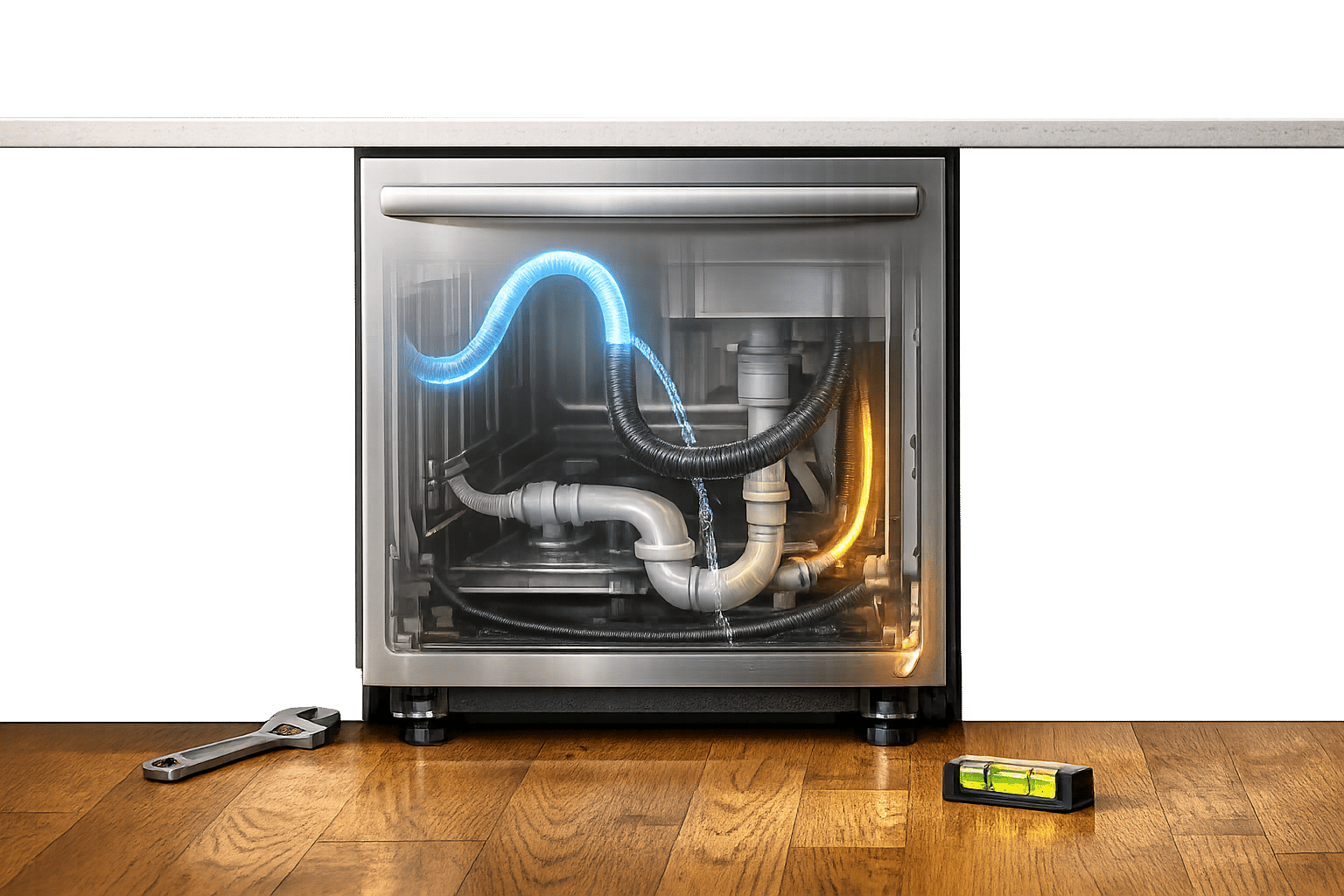
Dishwasher plumbing problems can disrupt your routine and damage your home. The most frequent issues include:
- Drainage Problems: Caused by clogged hoses, blocked garbage disposals, or sink drains. Symptoms include standing water, odors, and backups.
- Leaks: Often due to worn door gaskets, loose water supply lines, or unlevel dishwashers. Ignoring leaks can lead to costly water damage.
- Connection Issues: Contaminated sink water may flow back into the dishwasher if connections aren’t secure.
Quick Fixes: Clear clogs with baking soda and vinegar, tighten loose fittings, or replace damaged gaskets. For recurring issues, call a plumber.
Key Tip: Regular maintenance like cleaning filters and running vinegar rinse cycles helps prevent these problems. Addressing minor issues early can save money and protect your appliance.
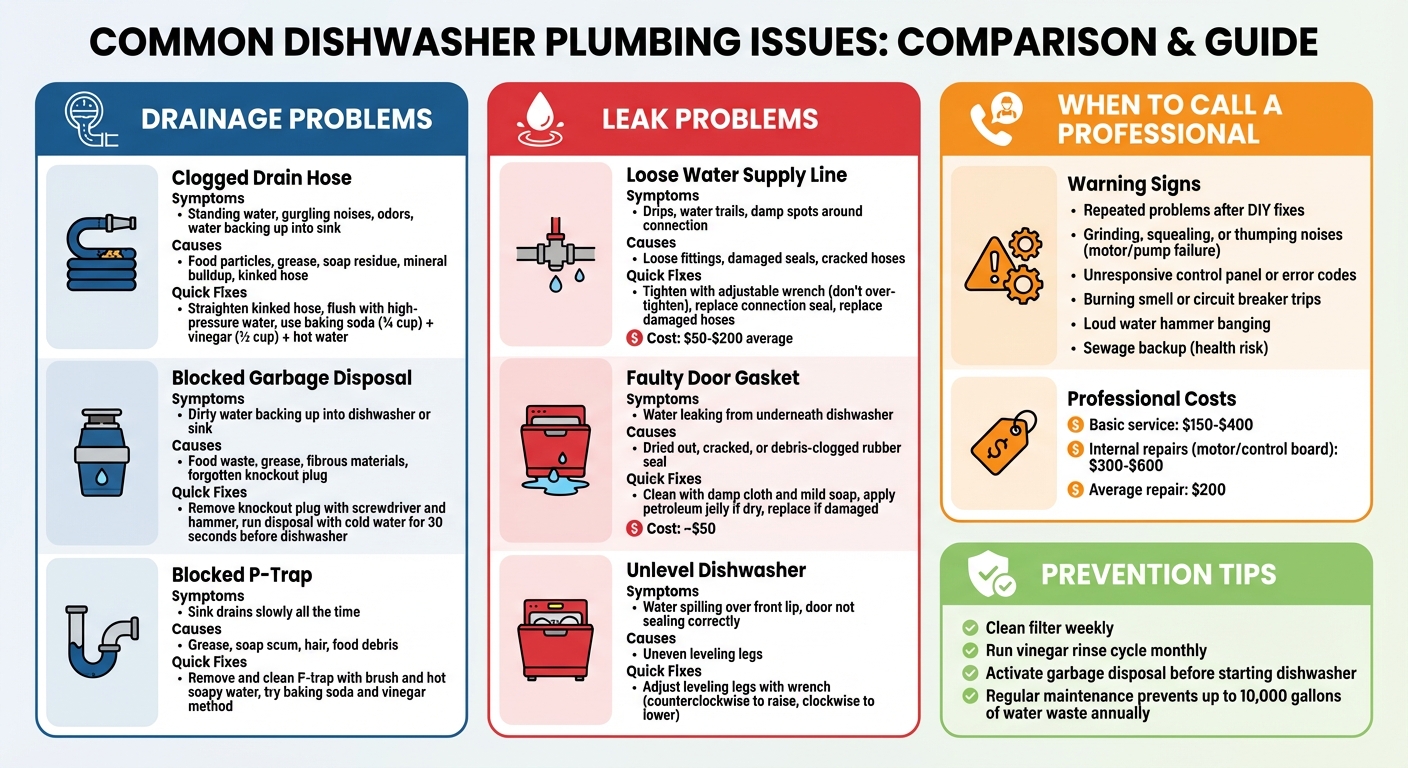
Common Dishwasher Problems: Causes, Symptoms, and Quick Fixes
Dishwasher Drainage Problems
If water isn’t draining from your dishwasher, there’s a good chance you’re dealing with a drainage issue. These problems are usually caused by blockages in key areas like the drain hose, garbage disposal, or sink drain. Let’s break down the most common culprits and how to tackle them.
Clogged Drain Hose
Finding standing water in your dishwasher after a cycle? That’s a telltale sign of a clogged drain hose. Other symptoms include gurgling noises, unpleasant odors, or water backing up into the sink.
"If your dishwasher isn’t draining properly, the issue may be a dishwasher drain hose clogged with food particles or grease." – Palo Alto Plumbing
Food bits, grease, soap residue, and even mineral buildup from hard water are frequent causes of clogs. Additionally, physical issues like kinks or a crushed hose under the sink can restrict water flow. Before inspecting, make sure to unplug the dishwasher, turn off the circuit breaker, and shut off the water supply. Many times, simply straightening a twisted or crimped hose can solve the problem.
For tougher clogs, disconnect the hose and flush it with high-pressure water using a garden hose. You can also use a straightened wire hanger to push through blockages. For a natural cleaning solution, pour ¼ cup baking soda followed by ½ cup vinegar into the hose, then flush with hot water.
Blocked Garbage Disposal Connection
Dishwashers typically drain through a hose connected to the garbage disposal. If the disposal is clogged with food waste, grease, or fibrous materials, it can block the flow of water, causing dirty water to back up into the dishwasher or sink.
Sometimes, the issue is a forgotten knockout plug in the garbage disposal inlet. To fix this, disconnect the drain hose and use a screwdriver and hammer to remove the plug. For routine clogs, run the disposal with plenty of cold water for about 30 seconds before starting the dishwasher to clear the drainage path. Always be cautious – never reach into the disposal with your hands. Instead, use a flashlight and long-handled tongs or rotate jammed blades using an Allen wrench in the hexagonal hole.
Blocked Sink Drain or P-Trap
If your sink drains slowly all the time – not just when the dishwasher runs – it could be a clogged P-trap. This U-shaped pipe is designed to hold water and block sewer gases but can easily trap grease, soap scum, hair, and food debris.
"A dishwasher backing up into the sink might look like a dishwasher issue, but it’s almost always a drainage or installation problem." – Stephen Jordan, Owner, SMJ Plumbing
To clear the P-trap, place a bucket underneath, loosen the slip nuts with a pipe wrench, and remove the pipe. Clean it thoroughly with a brush and hot, soapy water. For minor clogs, you can also try the baking soda and vinegar method mentioned earlier. If the problem persists, the blockage may be deeper in your sewer line, and it’s time to call a plumber in Charleston, SC for help.
sbb-itb-998eb83
Fixing Dishwasher Leaks
Noticing a puddle in your kitchen? That’s often a sign your dishwasher is leaking. Addressing leaks quickly can save you from costly water damage. While there are several possible causes, many leaks are relatively simple to fix. On average, repairs cost about $200, though minor fixes like replacing a gasket might only set you back $50, while more involved repairs, like fixing a pump, can climb to $600. Before you dive into any repairs, always disconnect the power and shut off the water supply. Then, check these common sources of leaks and their solutions.
Loose or Damaged Water Supply Line
The water supply line connects your dishwasher to your home’s plumbing, typically at the inlet valve located behind the bottom front panel. Leaks here are common, especially at the connection point. To inspect:
- Remove the lower toe kick panel by unscrewing or turning the fasteners.
- Look for drips, water trails, or damp spots around the connection.
If the fitting is loose, carefully tighten it with an adjustable wrench. Be cautious not to over-tighten, as this can damage the seals. If tightening doesn’t stop the leak, place a towel under the connection, disconnect the supply line, and replace the connection seal. For hoses with visible cracks or holes, replacement is the only solution. After completing the repair, run a short cycle to confirm the connection is leak-free. If the issue persists, the door gasket might be the culprit.
Faulty Door Gasket
"A damaged door gasket is the most common reason you’ll see a dishwasher leaking from underneath, as the rubber seal dries out or cracks over time." – Dan Simms, Contributing Writer, Angi
The door gasket is the rubber seal that lines the dishwasher door, preventing water from escaping. Over time, it can dry out, crack, or get clogged with food debris, leading to leaks. Start by cleaning it with a damp cloth and mild soap to remove any debris or glass fragments. If the gasket is dry but otherwise intact, applying a thin layer of petroleum jelly can help restore its flexibility.
If the gasket is damaged, it will need to be replaced. Remove the old gasket from its channel, cleaning the area thoroughly to remove any residue or adhesive. To make installing the new gasket easier, gently warm it using a hairdryer on low heat. Begin inserting the new gasket at the top center, pressing it into the channel as you work your way down the sides. Avoid stretching the material. Once installed, close the door and leave it shut for a few hours to allow the seal to set properly.
Unlevel Dishwasher
If your dishwasher isn’t level, water can spill over the front lip of the tub or prevent the door from sealing correctly. To check, place a bubble level along the top front edge of the unit. If it wobbles or isn’t even, the dishwasher needs adjustment.
To fix, adjust the leveling legs. Use a wrench or hex head socket, turning the legs counterclockwise to raise the unit or clockwise to lower it. Once the dishwasher is level in both directions, run a test cycle to confirm the leak has been resolved.
When to Call a Professional Plumber
While some plumbing issues can be tackled with basic DIY fixes, others demand the expertise of a licensed plumber. Knowing when to call in a professional can save you time, money, and potentially prevent serious damage.
Repeated Problems
If a drainage issue or leak keeps coming back after you’ve already attempted a fix, it could signal a more serious problem. Recurring backups often point to blockages in the main sewer line or shared drainage pathways. For instance, if your dishwasher is backing up, test the nearby faucet drain to see if the issue extends beyond the appliance. Professional plumbing services for these kinds of problems typically cost between $150 and $400, depending on the complexity.
Internal Component Damage
Not all plumbing issues are external. Noises like grinding, squealing, or thumping from your dishwasher could mean motor or pump failure. If the control panel is unresponsive or displays error codes, it’s likely an electrical issue within the machine itself. These are signs that the problem lies within the appliance and requires expert attention. Internal repairs, such as replacing a motor or control board, can range from $300 to $600. If you notice a burning smell or if the circuit breaker trips repeatedly, shut off the power immediately and contact a professional.
Complex Repairs and Diagnostics
Professional plumbers have access to specialized tools to find deep-seated blockages or hidden pipe issues. For example, companies like ALL Plumbing Services in Charleston, SC, and Bluffton, SC, use advanced leak detection systems to quickly locate hidden leaks or drainage issues. This not only minimizes potential water damage to cabinets and floors but also ensures compliance with local plumbing codes, such as installing air gaps to prevent contaminated water from backing into your dishwasher.
"Acting early helps avoid bigger repairs, water damage, or even health concerns from standing wastewater in kitchen sinks." – Stephen Jordan, Owner, SMJ Plumbing
Be on the lookout for warning signs like loud banging noises when the dishwasher fills – this "water hammer" effect can damage your household pipes if ignored. Similarly, if dirty water or sewage backs up into the dishwasher, it’s a serious health risk and a clear indicator of a major blockage in the main sewer line. These situations require immediate professional attention to prevent further damage. When simple fixes don’t work, expert diagnostics are essential to solving the problem.
Conclusion
Dishwasher plumbing problems are a common headache for many households. These issues usually fall into two main categories: drainage issues and leaks. Drainage problems often stem from clogged filters, blocked hoses, or garbage disposal obstructions. On the other hand, leaks are usually caused by worn-out door gaskets, loose supply lines, or an unlevel appliance. Knowing when to tackle a repair yourself and when to call a professional can save time and money.
Preventive maintenance is key to avoiding costly repairs and water damage. Incorporate simple habits into your routine, like cleaning the filter weekly, running a vinegar rinse cycle monthly, and activating the garbage disposal before starting the dishwasher. These small efforts can help prevent the average household from wasting up to 10,000 gallons of water annually due to plumbing leaks.
"With regular maintenance and quick troubleshooting, many of these problems can be resolved before they escalate into costly repairs." – Mark Jardine, Author, HomeAlliance
Sometimes, DIY fixes aren’t enough. If you’re facing recurring issues, sewage backups, loud water hammer noises, or error codes on the control panel, it’s time to call in a professional. For those in Charleston, SC, and Bluffton, SC, ALL Plumbing Services provides advanced leak detection and comprehensive diagnostics to address complex dishwasher plumbing problems while adhering to local plumbing codes. Whether it’s routine cleaning or timely professional intervention, taking action early protects your appliance, prevents water damage, and helps you avoid repair costs ranging from $150 to $600.
FAQs
Why does my dishwasher smell bad even after cleaning?
Lingering smells in your dishwasher after a cleaning cycle usually come from trapped food particles, grease buildup, or the growth of mold and bacteria in spots like the filter, spray arms, or drainage system. Over time, these areas can collect debris, leading to unpleasant odors. To keep your dishwasher smelling fresh, it’s important to clean these components regularly.
How can I tell if my dishwasher leak is from the door gasket or the supply line?
To figure out if the door gasket is causing the leak, check it closely for any tears, cracks, or signs of damage. If you suspect the supply line, examine the area underneath the dishwasher or near the inlet valve for water pooling. Pinpointing the source of the leak will guide you in deciding the right repair steps.
What warning signs mean I should call a plumber right away?
If you encounter any of these issues, it’s time to call a plumber:
- Standing water in your dishwasher or pooling on the kitchen floor after a cycle. This often points to drainage problems.
- Water backing up into your kitchen sink while the dishwasher is running, which could mean a clogged shared drain.
- Unusual gurgling noises or slow draining, both of which might indicate a clog in the sewer or drain line.
- Repeated problems with the dishwasher failing to drain or fill properly, which likely need a professional fix.