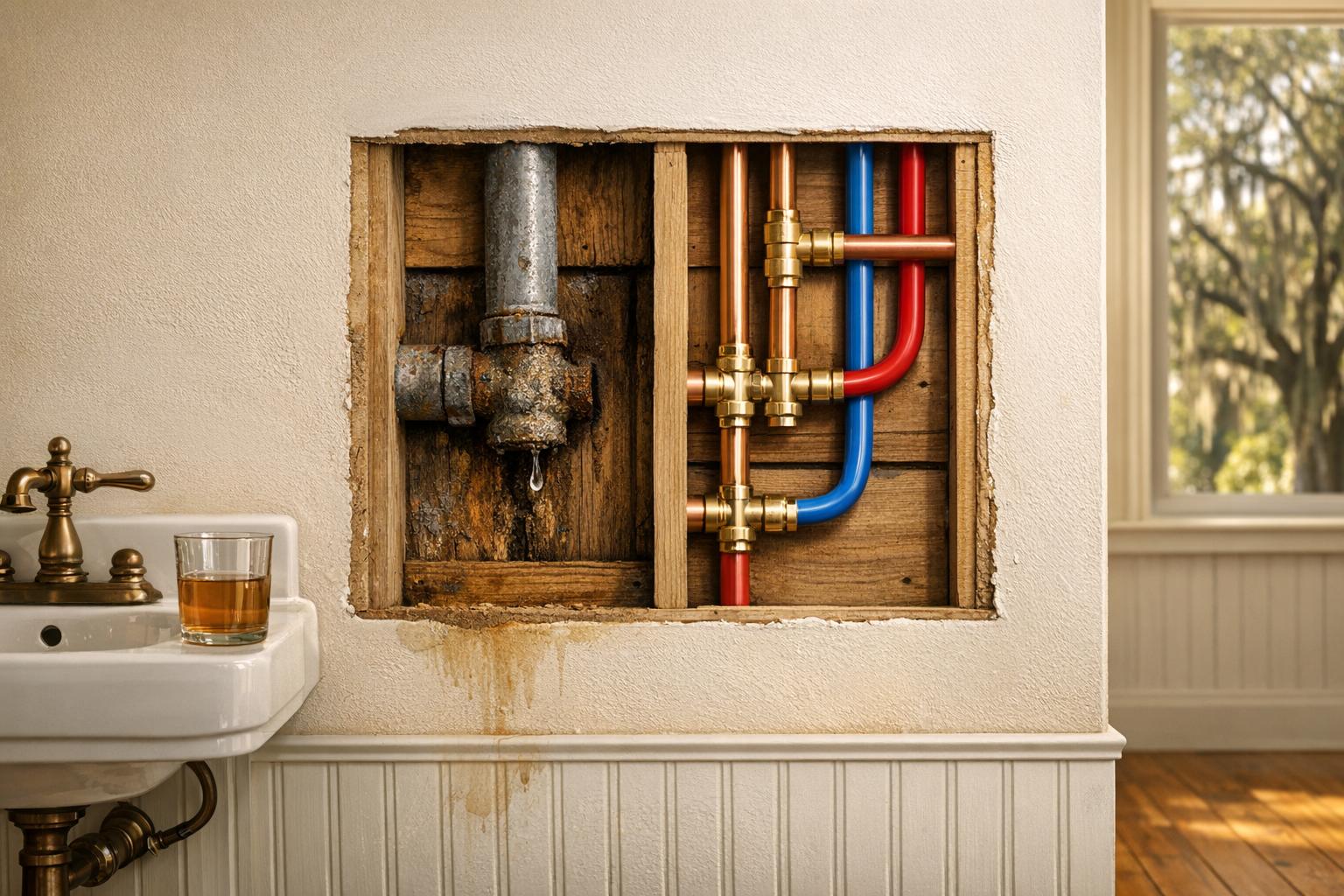
If you live in a historic home in Moncks Corner, SC, outdated plumbing could cause significant issues like low water pressure, discolored water, or frequent leaks. Galvanized and polybutylene pipes, commonly found in older homes, are prone to corrosion and sudden failures. Replacing these aging systems with modern materials like PEX, copper, or PVC can improve water quality, pressure, and reliability while preventing costly water damage.
Key Signs You Need a Full Repipe:
- Low water pressure: Often caused by internal pipe clogs or corrosion.
- Discolored water: Rust or sediment in old pipes can tint your water brown, orange, or yellow.
- Frequent leaks: Persistent pipe leaks signal widespread deterioration.
- Visible corrosion: Check exposed pipes for rust, stains, or scaling.
- Old materials: Homes with galvanized or polybutylene pipes are especially at risk.
Repiping costs in Moncks Corner range from $1,500 to $22,000, depending on home size, materials, and labor. Modern options like PEX are flexible and cost-effective, making them ideal for preserving historic homes without extensive structural damage. If you notice these issues, consider scheduling a professional inspection to assess your plumbing system and avoid more significant problems down the line.
Signs Your Historic Home Needs a Complete Repipe
Spotting plumbing issues early can save you from water damage and hefty repair bills. Here’s what to look for in your historic Moncks Corner home.
Low Water Pressure from Aging Pipes
Does your shower barely flow, or do your faucets take forever to fill a sink? These issues often point to pipe problems. Galvanized steel pipes, common in older homes, are prone to rust and mineral deposits that clog the interior, reducing water flow. The zinc coating on these pipes wears away over time, leaving the metal exposed to corrosion.
"As pipes corrode, mineral buildup and debris can accumulate inside them, restricting the flow of water." – Mark Jardine, Author, HomeAlliance
Polybutylene pipes, another outdated material, can also deteriorate from reactions with water oxidants, leading to internal cracks and flaking. If cleaning your showerheads or faucet aerators doesn’t fix the pressure, chances are the blockage is deeper in the pipes – a clear sign a full repipe might be necessary.
Another red flag? Water discoloration, which often goes hand in hand with corroded pipes.
Discolored or Contaminated Water
If your tap water has a brown, orange, or yellow tint, it’s likely due to rust inside your pipes. This is especially noticeable after water has been sitting in the pipes overnight, like when you first turn on the faucet in the morning. Galvanized pipes are notorious for shedding rust flakes into the water supply. In some cases, green or yellow water may indicate more severe corrosion in the supply lines. This kind of discoloration is a warning that your plumbing is breaking down and could fail entirely – an issue that’s often accelerated in Moncks Corner’s older, humid neighborhoods.
Frequent Leaks and Visible Pipe Corrosion
Recurring leaks are another strong indicator of a failing plumbing system. If you’re constantly calling for repairs, it’s likely due to widespread pipe deterioration. Check exposed pipes in your basement or under sinks for signs of trouble. White, green, or red stains on the metal often point to corrosion. You might also notice water stains on walls or ceilings, mold growth, or persistent mildew odors – these can all signal hidden leaks.
Keep an eye on your water meter, too. If it’s running even when no fixtures are in use, you may have undetected leaks.
"If your pipes are prone to leaking, no matter how many repairs you make, it could be due to widespread corrosion or damage." – Mark Jardine, Author, Home Alliance
In Moncks Corner, shifting ground can add to the strain on aging pipes, causing cracks that lead to drainage problems or mysterious damp spots. When low water pressure, discolored water, and frequent leaks all show up at once, it’s a strong indication that a full repipe may soon be unavoidable.
sbb-itb-998eb83
Common Plumbing Problems in Moncks Corner Historic Homes
Historic homes in Moncks Corner often come with plumbing systems that reflect the building practices of their time. Unfortunately, these older systems can bring a host of challenges due to outdated materials. Understanding the common issues with galvanized and polybutylene pipes can help homeowners make informed decisions about whether a full repipe is necessary.
Why Galvanized Pipes Need Replacement
Galvanized steel pipes were widely used during Moncks Corner’s growth in the 1930s and 1940s, particularly around the time of the Santee Cooper energy project. While corrosion is a well-known issue with these pipes, other problems tend to surface as they age. For instance, rust stains near shutoff valves or exposed threads are telltale signs of deterioration. You might also notice white, crusty deposits – these are hard-water scale buildups that can speed up wear and tear.
Another clue that your galvanized pipes are failing is unusual noises, such as banging or gurgling sounds, which often indicate internal damage. If your plumbing system has been partially updated, be cautious of connections between copper and galvanized pipes. Without proper dielectric fittings, these connections can lead to galvanic corrosion, causing rapid damage at the joints.
Problems with Polybutylene Pipes
Homes in Moncks Corner built or repiped between the 1970s and 1990s often feature polybutylene piping. Unlike galvanized pipes, which typically degrade over time, polybutylene pipes are infamous for sudden and severe failures.
"Polybutylene piping is known for major failures in their fittings and deterioration from the inside out." – Blanton & Sons
These pipes are particularly prone to cracking at the fittings, which can lead to significant water damage without warning. Beyond the immediate risk of flooding, having polybutylene pipes can also affect your finances. Many insurance companies now charge higher premiums – or even deny coverage entirely – for homes with these pipes still in use. Replacing them is not just a plumbing concern but also a smart financial move.
How to Check Your Historic Home’s Plumbing System
Older homes, like those in Moncks Corner, often come with aging plumbing systems that might hide problems beneath the surface. Performing a quick DIY inspection can help you determine if a professional evaluation is necessary. Here’s how to get started.
Inspecting Pipes for Corrosion or Damage
Start by looking at any exposed pipes in areas like your basement, crawlspace, or under sinks. Keep an eye out for discoloration – white, green, or reddish hues can signal corrosion. For galvanized steel pipes, rust or clogs are common warning signs, while polybutylene pipes may show cracking or flaking.
Don’t forget to check the connections at fixtures for visible wear or damage. To spot hidden leaks, try this: turn off all water-using appliances and faucets, then check your water meter. If the meter keeps moving, you might have a concealed leak. Another clue? Fill a clear glass with tap water – discoloration could indicate pipe corrosion.
Testing Water Pressure and Flow
After inspecting for visible damage, test how well your water flows. Turn on faucets in various rooms and check for weak or inconsistent streams. If only one fixture has low pressure, the issue might be a localized clog. But if multiple fixtures are affected, the problem could stem from corroded pipes or even the main water line.
Pay attention to unusual sounds while water is running. Gurgling or slow drainage might mean sediment has built up in "pipe bellies", where waste collects. And if you catch a rotten egg smell without finding a visible leak, it could signal a cracked plumbing vent or a damaged drain line.
When a Full Home Repipe Is Necessary
After pinpointing localized plumbing issues, it’s vital to determine if the entire system is at risk.
Signs That Point to a Complete Repipe
Sometimes, fixing individual leaks just isn’t enough. There are clear signs that your home may need a full repipe. For houses over 40 years old – especially those built before the 1980s – a complete replacement is often necessary. Plumbing materials used during that time were not made to last forever.
Frequent leaks, rather than occasional ones, are a major warning sign. If you’re dealing with repeated pipe bursts, it’s likely a sign of widespread deterioration that patchwork repairs won’t fix. Similarly, persistent water quality issues, such as discoloration or strange tastes, often point to internal corrosion affecting the entire system.
"Rather than patching leaks one by one, a full repipe gives your home a fresh, modern plumbing system that delivers better water quality, stronger pressure, and fewer surprises." – On Call Plumbing
Low water pressure throughout your home is another indicator. If cleaning fixtures doesn’t solve the issue, it could mean your pipes are clogged with internal scaling or mineral deposits. At this point, partial fixes won’t restore proper flow. Additionally, visible corrosion on exposed pipes often reflects similar damage in hidden areas.
It’s also essential to evaluate the main water line if these problems are present.
When to Replace Main Water Lines
As part of a full repipe, it’s crucial to assess the main water line, especially when dealing with broader system issues. This is particularly relevant if you notice slab leaks or significant pressure drops where water enters your home. Outdated materials like galvanized steel or polybutylene in the main line are common culprits for ongoing problems. A sudden spike in your water bill could also hint at hidden leaks in underground pipes. Factors like ground shifting, soil movement, or freeze-thaw cycles can weaken buried lines, making spring inspections critical – especially in areas like Moncks Corner, where winter damage often becomes noticeable.
A full repipe is an opportunity to upgrade your entire plumbing system, from the street connection to every faucet in your home. Modern techniques, like trenchless solutions, allow you to replace the main line with minimal disruption to your yard.
Repiping Costs in Moncks Corner, SC
Repiping Cost Breakdown for Historic Homes in Moncks Corner SC
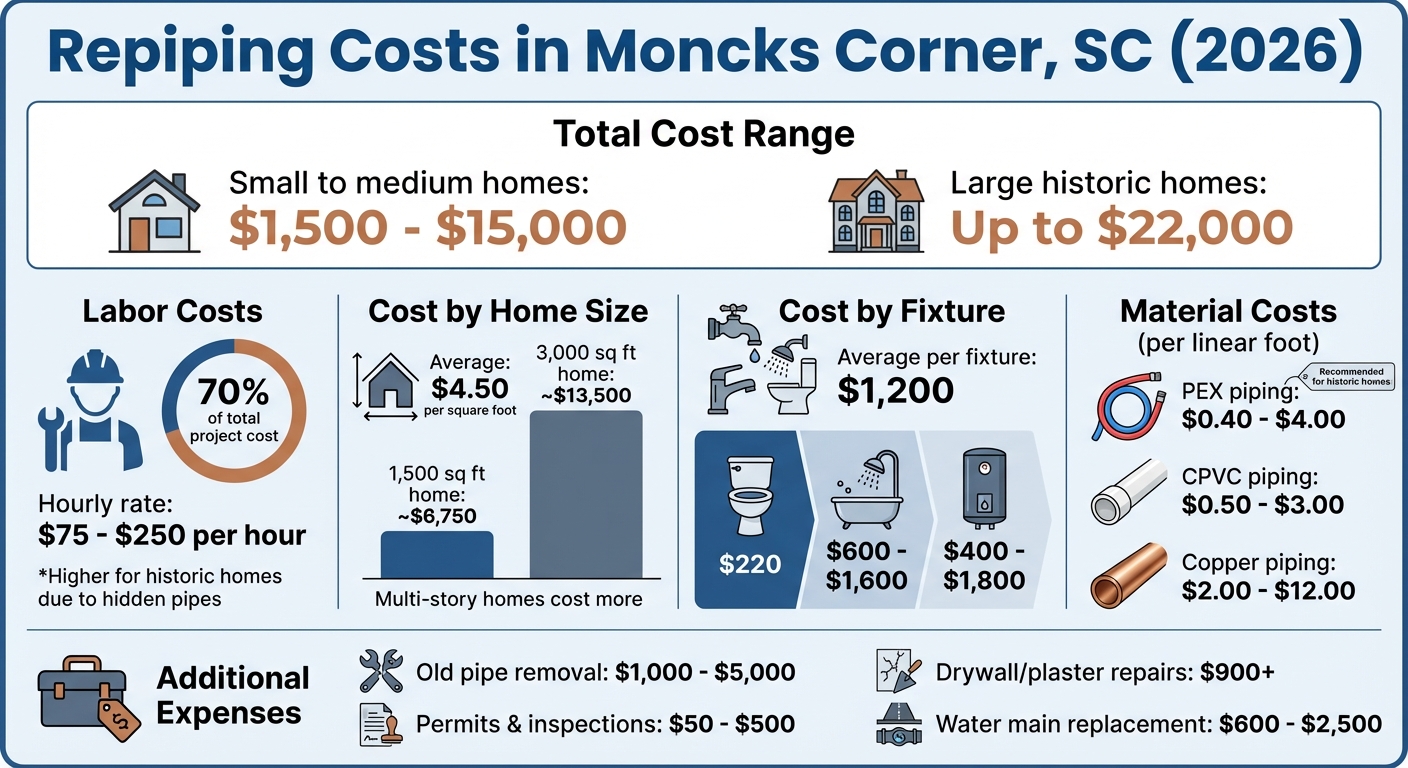
Repiping a home in Moncks Corner, SC, in 2026 can cost anywhere from $1,500 to $15,000, with larger historic homes potentially reaching up to $22,000. The wide range in costs depends on several key factors specific to your property. Let’s break down what influences these expenses.
What Affects Repiping Costs
Several aspects drive the cost of repiping, including labor, the size and layout of your home, the number of fixtures, materials, and other additional expenses.
Labor Costs
Labor is typically the biggest expense, accounting for about 70% of the total cost. Plumbers in the area charge between $75 and $250 per hour. Historic homes often require more labor because pipes may be hidden in crawl spaces, behind plaster, or even embedded in concrete.
Home Size and Layout
The square footage of your home directly influences the cost. On average, repiping costs around $4.50 per square foot. For instance, a 1,500-square-foot historic home might cost about $6,750, while a 3,000-square-foot home could run up to $13,500. Homes with multiple stories are more expensive due to the additional materials and labor needed to access fixtures on different levels.
Number of Fixtures
The more fixtures in your home, the higher the cost. Repiping averages about $1,200 per fixture. For example, repiping a toilet typically costs around $220, while a shower or bathtub ranges from $600 to $1,600. Water heaters can add between $400 and $1,800 to the total.
Material Choices
The type of piping material you select can significantly impact your budget.
- PEX piping: $0.40 to $4.00 per linear foot
- CPVC piping: $0.50 to $3.00 per linear foot
- Copper piping: $2.00 to $12.00 per linear foot
For historic homes, PEX is often preferred because its flexibility allows it to be snaked through tight spaces, reducing the need to cut into plaster or woodwork.
Additional Expenses
Other costs to consider include:
- Removing old pipes: Disposing of galvanized steel or lead pipes can add $1,000 to $5,000.
- Permits and inspections: Local regulations in Moncks Corner may require permits, costing $50 to $500.
- Drywall or plaster repairs: Repairing walls after repiping can cost $900 or more for larger projects.
- Water main replacement: If needed, this can add $600 to $2,500 to your total.
Understanding these factors can help you better plan for a full home repiping project in Moncks Corner, SC.
Conclusion
This guide highlights how crucial timely repiping is for maintaining the integrity of historic homes in Moncks Corner. Keep an eye out for common warning signs like frequent leaks, visible corrosion, discolored water, and low water pressure. Addressing these promptly can help you avoid expensive water damage and potential health risks. Older pipe materials like galvanized and polybutylene are particularly prone to corrosion and failure, making them a priority for replacement.
"Ignoring the signs of failing plumbing pipes and putting off the inevitable repipe could set you up for an even bigger problem down the road." – All Pro Plumbing
Start with a video pipe inspection from a trusted local professional to get a clear picture of your plumbing system’s condition. This step will help you decide whether targeted repairs are enough or if a full repipe is the better option.
A thorough evaluation does more than identify immediate issues – it helps protect your investment for the long term. Taking proactive steps like repiping can preserve your home’s structure, enhance water quality, and prevent emergency fixes, which often cost 1.5–3 times more than planned repairs.
If these signs sound familiar, schedule a pipe inspection in Moncks Corner and get a comprehensive assessment today.
FAQs
Can I repipe a historic home without major wall damage?
Yes, it’s possible to repipe a historic home without causing significant damage to the walls. Thanks to modern plumbing techniques, non-invasive methods can often be used to replace old pipes, such as galvanized or polybutylene ones. Experienced plumbers carefully inspect the property to choose the least disruptive approach, allowing for effective pipe replacement while maintaining the integrity of the home’s structure and minimizing any inconvenience.
How do I tell if I have galvanized or polybutylene pipes?
To figure out whether your pipes are galvanized or polybutylene, start with a quick visual check. Galvanized pipes are made of steel and have a dull gray or metallic look, often with visible rust or corrosion. On the other hand, polybutylene pipes are flexible plastic, usually gray or blue, and were commonly installed in homes during the 1970s and 1980s. Look for exposed pipes under sinks, in basements, or crawl spaces. If you’re unsure, it’s a good idea to have a professional inspect them for confirmation.
Do I need to replace the main water line during a full repipe?
During a full repipe, it’s usually a good idea to replace the main water line if it shows signs of age, corrosion, or damage. Since the main water line is key to your plumbing system, problems like leaks or corrosion can lead to low water pressure or even affect water quality. Swapping it out can help ensure your plumbing works smoothly and minimize risks – especially in older homes with outdated materials like galvanized steel or polybutylene pipes.