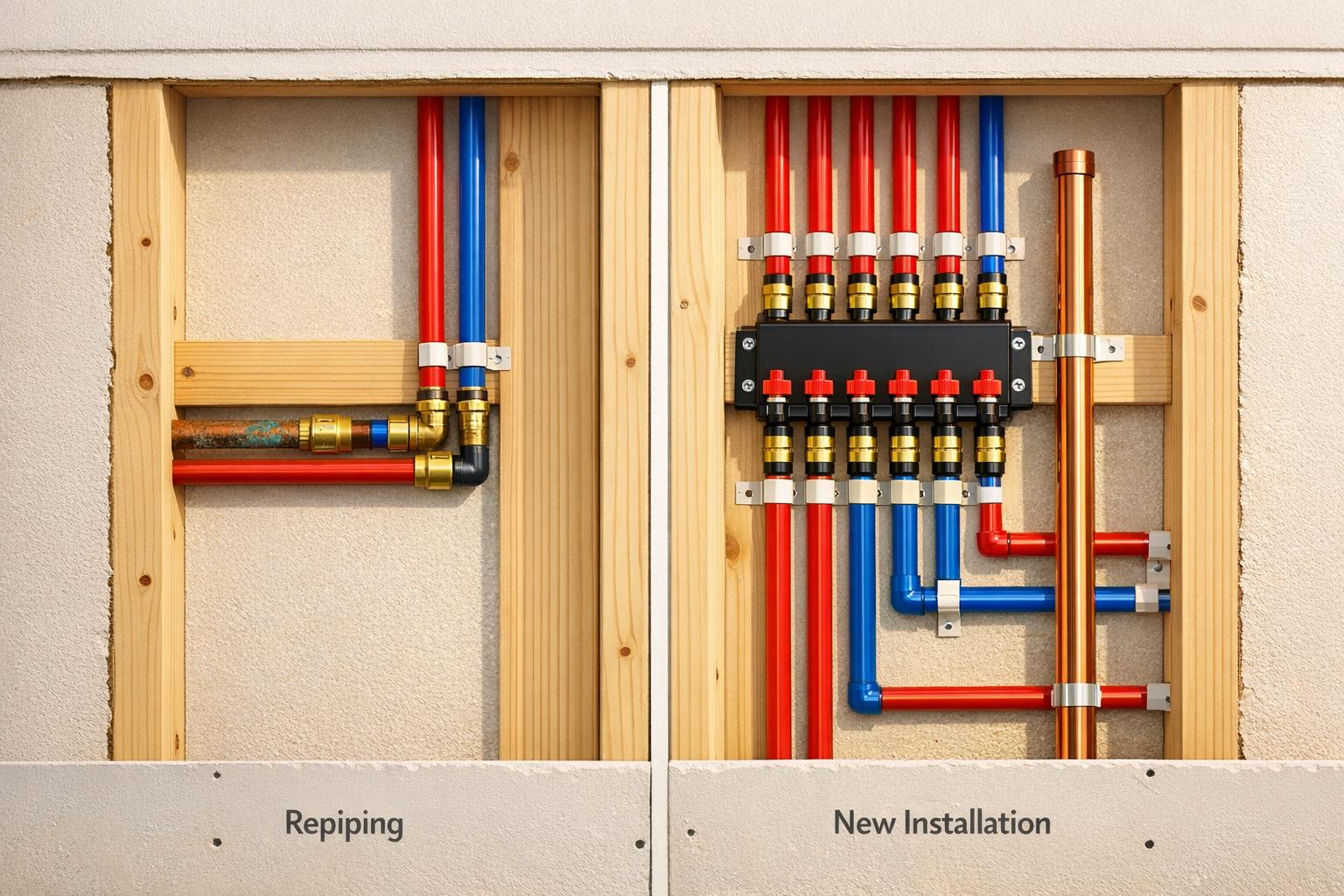
If your Bluffton home is dealing with plumbing issues, you’re likely weighing two main options: repiping or new pipe installation. Here’s a quick breakdown:
- Repiping replaces all water supply pipes in your home, ideal for older homes with aging or corroded pipes. It solves widespread problems like leaks, low water pressure, or discolored water.
- New Pipe Installation is for new construction, home additions, or remodels. It involves setting up plumbing where none existed, often during open-wall construction.
Key Points to Consider:
- Home Age: Homes built before 1970 often have outdated pipes needing full replacement.
- Cost: Repiping costs range from $1,500 to $15,000, while new installations cost $4.50 to $5.25 per square foot.
- Materials: PEX is affordable and flexible, while copper offers durability but is pricier.
- Timeline: Repiping takes 2–7 days; new installations are faster if done during construction.
Quick Comparison:
| Feature | Repiping | New Pipe Installation |
|---|---|---|
| Purpose | Replace old pipes entirely | Install plumbing in new areas |
| Cost | $1,500–$15,000 | $4.50–$5.25/sq. ft. |
| Best For | Older homes with failing systems | New builds or home additions |
| Materials | PEX, Copper | PEX, Copper |
| Duration | 2–7 days (longer for large homes) | 20–48 hours during construction |
Takeaway: Choose repiping for aging systems with frequent issues. Opt for new installation during construction or remodeling. Both options enhance your home’s plumbing reliability and value.
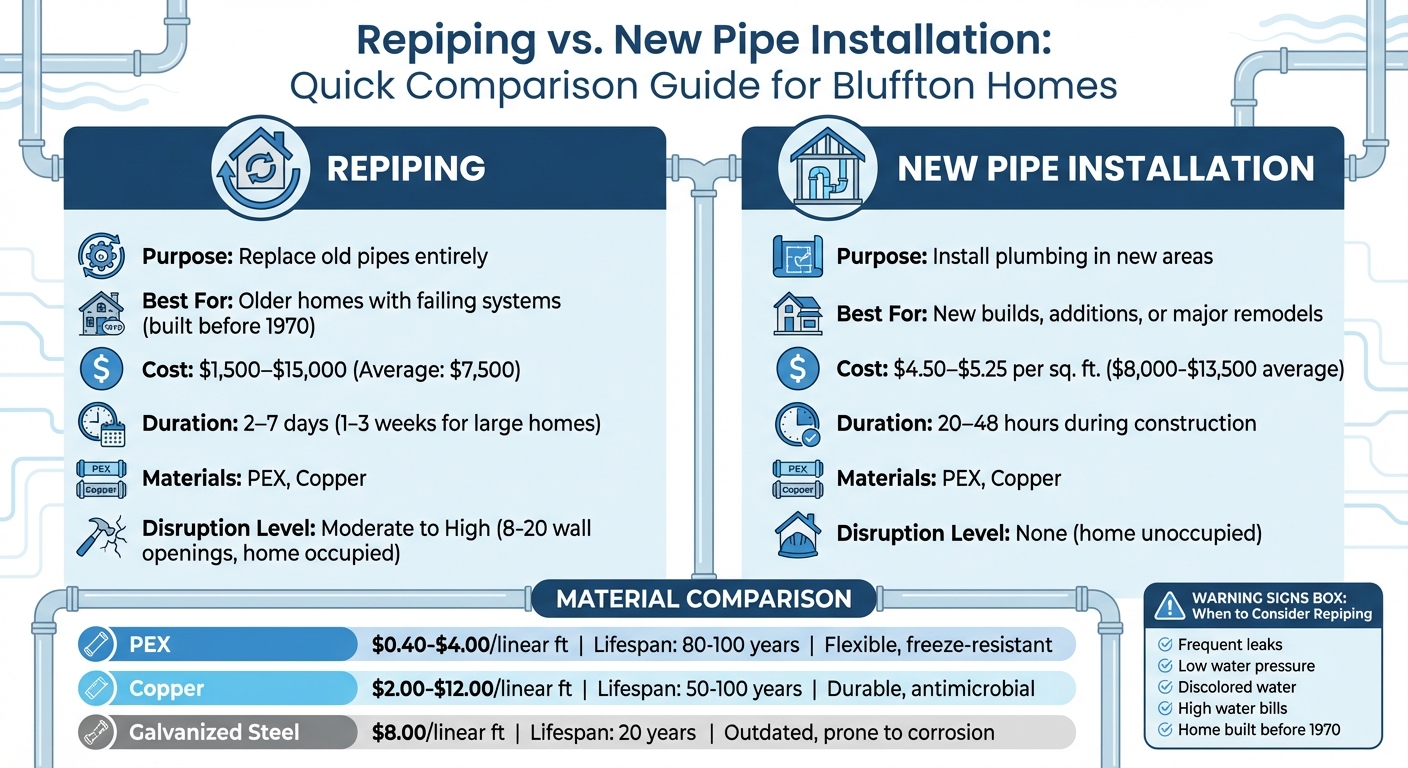
Repiping vs New Pipe Installation Comparison Chart for Bluffton Homes
What is Repiping?
How Repiping Works
Repiping involves replacing outdated pipes in your home’s water supply system with modern materials like PEX or copper. Professional plumbers take care to protect your home by covering floors and furniture, then carefully create access points in walls and ceilings to reach the old piping. The new pipes are routed through existing spaces wherever possible to reduce disruption. Once installed, the system is pressure-tested to ensure there are no leaks and that water flows properly. Afterward, any openings in the walls are patched, retextured, and painted to match the original look of your home.
In Bluffton, repiping is especially effective for addressing issues like corrosion in aging galvanized steel pipes and ensuring plumbing systems meet current local codes. Recognizing the warning signs of failing pipes can help you determine when repiping is necessary.
Warning Signs Your Home Needs Repiping
Certain red flags can indicate that your home’s plumbing system is failing. These include:
- Frequent leaks in various areas of the home
- Slab leaks, which might show up as warm spots on the floor or the sound of running water with no visible source
- Low water pressure across multiple fixtures, often caused by mineral deposits or rust buildup
- Discolored water, such as red, brown, or yellow, which signals internal pipe corrosion
- Unexplained spikes in water bills, suggesting hidden leaks
If you notice one or more of these issues, especially in an older home, it may be time to consider repiping.
Why Repiping Benefits Older Homes
Homes built before 1970 – or those over 50 years old – are prime candidates for repiping. Galvanized steel pipes, commonly used in that era, tend to fail after 20 to 50 years due to rust buildup. Even copper pipes, which are more durable, can develop pinhole leaks over time. Repiping eliminates the need for constant repairs, reduces the risk of water damage, and improves water flow. It also removes sediment buildup that can cause unpleasant tastes or odors in your water.
In Bluffton’s real estate market, a newly repiped home is a strong selling point. Buyers are reassured that the plumbing is safe, efficient, and up to modern standards.
“A newly repiped home is a major selling point, especially in older properties where outdated plumbing is a concern. It reassures buyers that the system is safe, efficient, and compliant with modern codes.” – R.S. Andrews
sbb-itb-998eb83
What is New Pipe Installation?
New Pipe Installation Explained
Unlike repiping, which replaces an existing system, new pipe installation involves setting up a completely fresh plumbing network where none existed before. This is common in new home construction, where plumbers install rough-in plumbing before the walls are closed. The process includes routing pipes through open framing, connecting them to the main water supply, and pressure-testing the system to ensure everything works properly. Doing this during construction or major renovations is a more cost-effective option.
“Pipe fitting is typically used in new construction or remodeling. It’s about creating efficient pathways for water and drainage.” – Steve Huff Plumbing
In Bluffton, the cost of rough-in plumbing for new construction typically ranges from $4.50 to $5.25 per square foot, with whole-home projects averaging between $8,000 and $13,500. One of the key advantages here is that plumbers work with the building’s open framework, avoiding the need to cut into finished walls or ceilings – a major difference compared to the challenges and costs of repiping.
When to Choose New Pipe Installation
New pipe installation is the go-to option when you’re upgrading or expanding your plumbing system. Consider it in situations like:
- Adding new spaces: Installing plumbing for a bathroom, kitchen, or laundry room in areas without existing water lines.
- Home additions: Extending your plumbing to serve new fixtures in newly added rooms.
- Major remodels: Overhauling spaces where layouts are being changed or fixtures are relocated.
- System expansions: Adding features like outdoor kitchens, high-flow water features, or tankless water heaters that require new supply lines.
On average, connecting individual fixtures costs between $450 and $1,800 per fixture, depending on the complexity and distance from existing plumbing. For Bluffton homeowners, planning new pipe installation during renovations – while walls are already open – can significantly cut labor costs.
Repiping vs. New Pipe Installation: Key Differences
Cost Breakdown
When comparing repiping and new pipe installation costs for homes in Bluffton, several factors come into play. Repiping projects typically range from $1,500 to $15,000, with the national average landing around $7,500. The cost depends on variables like home size, pipe accessibility, and the number of fixtures, which averages $1,200 per fixture. Labor makes up about 70% of the total expense.
On the other hand, new pipe installations – usually done during construction – are priced based on square footage. In Bluffton, this cost generally falls between $4.50 and $5.25 per square foot.
Accessibility plays a huge role in determining costs. Pipes buried under concrete slabs or hidden behind finished walls are far more expensive to replace than those in crawlspaces or basements. Permits for either type of project can add $50 to $500 to the total cost.
| Home Size (Sq. Ft.) | Average Repiping Cost |
|---|---|
| 1,200 | $5,400 |
| 1,500 | $6,750 |
| 2,300 | $10,350 |
| 3,000 | $13,500 |
The choice of materials also significantly impacts both costs and installation methods.
Pipe Materials: PEX, Copper, and Galvanized Steel
Material selection can make or break a project, both in terms of cost and practicality. PEX (cross-linked polyethylene) is a popular choice for repiping in Bluffton because of its flexibility, which allows plumbers to route it through finished walls with minimal drywall damage. At $0.40 to $4.00 per linear foot, PEX is cost-effective and resists corrosion, scaling, and chlorine. It also has the unique ability to expand when water freezes, reducing the risk of burst pipes during cold weather.
Copper pipes are often preferred for new installations where walls are still open. They cost between $2.00 and $12.00 per linear foot and are known for their durability, lasting 50 to 100 years. Copper is naturally antimicrobial and performs well outdoors, unlike PEX, which is vulnerable to UV damage. However, copper can be 58% to 68% more expensive than PEX, and its susceptibility to acidic water makes water quality testing important before installation.
Meanwhile, galvanized steel pipes, common in older Bluffton homes, are rarely used in modern projects. These pipes, costing about $8.00 per linear foot, tend to rust and corrode, requiring replacement every 20 years. In comparison, PEX and copper offer much longer lifespans, with PEX lasting 80 to 100 years and copper 50 to 100 years.
Project Duration and Home Disruption
The timeline and level of disruption differ greatly between repiping and new pipe installation. Repiping a home typically takes 2 to 7 days, though larger or multi-story homes may extend the project to 1 to 3 weeks. Plumbers work in sections, often restoring water access each evening. However, expect 8 to 20 holes in walls and ceilings for pipe access, with an additional 1 to 2 days needed for drywall patching and painting.
“Usually the water will be turned back on each evening and the homeowners will be able to stay in the house during the re-plumbing.”
– CostHelper
New pipe installation, on the other hand, is typically done during construction or major renovations. Since the home is usually unoccupied, it causes minimal disruption. The work is completed within 20 to 48 labor hours, with no need for additional restoration because the pipes are installed while walls are still open.
| Project Type | Typical Duration | Disruption Level |
|---|---|---|
| Single Pipe Repair | 2–3 Hours | Low; isolated to one area |
| Small Home Repipe | 1–3 Days | Moderate; water off during day, home occupied |
| Large/Multi-story Repipe | 1–3 Weeks | High; multiple wall openings, home occupied |
| New Construction Install | 20–48 Hours | None; home unoccupied during work |
For repiping projects, it’s wise to protect furniture and flooring with drop cloths to minimize dust from wall cuts. Additionally, confirm whether your contractor includes drywall patching and painting in their quote or if you’ll need to hire someone separately.
Choosing the Right Option for Your Bluffton Home
What to Consider: Home Age, Plumbing Problems, and Budget
If your home was built before 1970, there’s a good chance it has outdated galvanized steel or cast iron pipes. These materials often need replacing, as they’re prone to corrosion and leaks. Plumbers generally recommend repiping when your plumbing system is nearing the end of its expected lifespan. For instance, copper pipes, which typically last about 50 years, should be replaced if they’re around 45 years old.
Frequent plumbing issues can also signal it’s time for a larger overhaul. A single leak might only require a quick repair, but recurring problems like multiple leaks, discolored water, or consistently low water pressure usually point to widespread pipe deterioration. In such cases, a full repipe may save you more money in the long run compared to ongoing repairs. Additionally, homes with lead or polybutylene pipes should have them replaced immediately due to health concerns and their tendency to fail.
While repiping can be a significant investment – ranging from $5,000 to $20,000 for an entire house – it eliminates the risk of constant emergency repairs. Many homeowners find it practical to coordinate repiping with remodeling projects, protecting new finishes and avoiding future disruptions.
“If your home was built before the 1970s or hasn’t been remodeled, it’s likely that your plumbing is outdated and needs to be replaced.”
– Ted Bell, Home Repiping Expert
If your home was built between the 1970s and 1990s, check for a “PB” stamp on your pipes. This indicates polybutylene piping, which is prone to failure and often needs replacing for insurance purposes. Roy Barnes, Co-owner and Service Manager at Service Force Plumbing, emphasizes:
“Polybutylene piping will fail; it’s just a matter of ‘when,’ not ‘if,’ and it should be replaced in all cases.”
Modern and Eco-Friendly Plumbing Options
Once you’ve assessed the condition of your plumbing, it’s time to explore modern materials that balance performance and efficiency. PEX piping has become a popular choice, thanks to its flexibility, resistance to corrosion, and ability to expand during freezing conditions – an important feature during Bluffton’s occasional cold spells. PEX is also more affordable and quicker to install than copper.
Copper, on the other hand, remains a premium option for its durability and recyclability. With a lifespan of 50 to 80 years, it’s a reliable choice for long-term value. However, if your home uses well water, test its acidity first, as acidic water can degrade copper pipes over time.
If you’re already opening walls for repiping, consider upgrading to low-flow fixtures or a tankless water heater, which typically costs between $1,200 and $3,500. Tankless systems are not only energy-efficient but also tend to last longer than traditional models, helping to lower utility bills and reduce environmental impact.
How ALL Plumbing Services Can Help

After evaluating your home’s age, plumbing issues, and potential upgrades, it’s time to bring in the experts. ALL Plumbing Services specializes in repiping and new pipe installation throughout Bluffton. Their team conducts thorough assessments to recommend the best solutions for your specific situation, whether it involves replacing aging galvanized pipes, renovating your home, or expanding with an addition.
Using modern materials like PEX and copper, they ensure your upgraded system complies with Bluffton’s local codes. Their services cover everything from complete repiping for older homes to targeted installations for remodels or additions. They also offer eco-friendly upgrades, including tankless water heaters and smart leak detection systems. Along with routine maintenance plans, their 24/7 emergency services provide peace of mind for any plumbing situation.
Spring is an excellent time to tackle plumbing projects in the Lowcountry. It’s a chance to address any freeze-related damage from winter while avoiding water shut-offs during the intense summer heat. Reach out to ALL Plumbing Services today to schedule a detailed assessment.
Conclusion
Key Takeaways
Bluffton’s plumbing needs come with their own set of challenges, so choosing the right approach is essential. If you’re facing widespread issues like corrosion, recurring leaks, or discolored water, repiping is the way to go – it involves replacing your entire plumbing system. On the other hand, new pipe installation is ideal for new construction or home additions where no old pipes are in place.
Homes in Bluffton built before 1970 often feature galvanized steel or polybutylene pipes, which typically last 20 to 50 years. If this sounds like your home, it’s likely time for an upgrade. PEX piping stands up well to Bluffton’s humid conditions and occasional cold snaps, while copper offers unmatched durability, lasting up to 80 years. Since labor makes up about 70% of repiping costs, aligning the project with planned renovations can save you from redoing finishes later. Understanding these options ensures you make the best decision for your plumbing needs.
Why Choose ALL Plumbing Services?
When it comes to professional plumbing solutions in Bluffton, ALL Plumbing Services has been a trusted name since 1987. Their experienced team evaluates your water quality, pipe condition, and home age to recommend the most practical and cost-effective solution that complies with local codes.
Whether you’re tackling rusty water in an older home or outfitting a new addition, ALL Plumbing Services delivers comprehensive solutions using materials like PEX and copper. They offer fixed-price quotes, manage necessary permits, and even coordinate wall repairs to keep disruptions to a minimum. Reach out today to schedule an assessment and protect your home from expensive water damage.
FAQs
Do I need a full repipe or just a few pipe repairs?
If your home is dealing with extensive plumbing problems like outdated or unsafe pipes, recurring leaks, low water pressure, or discolored water, it might be time to consider a full repipe. On the other hand, if the issues are limited to a specific area, repairing a few pipes could be enough. Take a close look at your plumbing system’s overall condition to figure out the most practical solution that fits both your needs and your budget.
Which pipe material is best for my home: PEX or copper?
When it comes to plumbing materials, PEX and copper each bring their own advantages to the table.
Copper is known for its durability, natural resistance to bacteria, and impressive lifespan of over 50 years. However, it comes with a higher price tag and requires more effort to install, making it a less budget-friendly option for some homeowners.
On the other hand, PEX offers flexibility, affordability, and easier installation, which can save time and labor costs. That said, its lifespan is shorter – typically between 25 and 50 years – and it’s more susceptible to damage from UV exposure and rodents.
The right choice ultimately depends on factors like your budget, the conditions of your home, and how long you need the system to last. For the best results, it’s wise to consult a professional who can assess your specific situation and guide you toward the most suitable option.
Will I have to leave my house during a repiping project?
Repiping a home can bring some inconveniences, including noise, dust, and temporary water shutoffs. In many cases, homeowners may need to leave during the more disruptive phases, like when walls or floors are being opened up. The extent of these disruptions largely depends on the size of your home and the complexity of your plumbing system.
It’s crucial to talk with your plumber about the project’s scope and timeline to better prepare for what’s ahead. Some less disruptive options, like using flexible PEX piping, can help minimize the impact. These methods may even allow for partial water service during certain parts of the process.