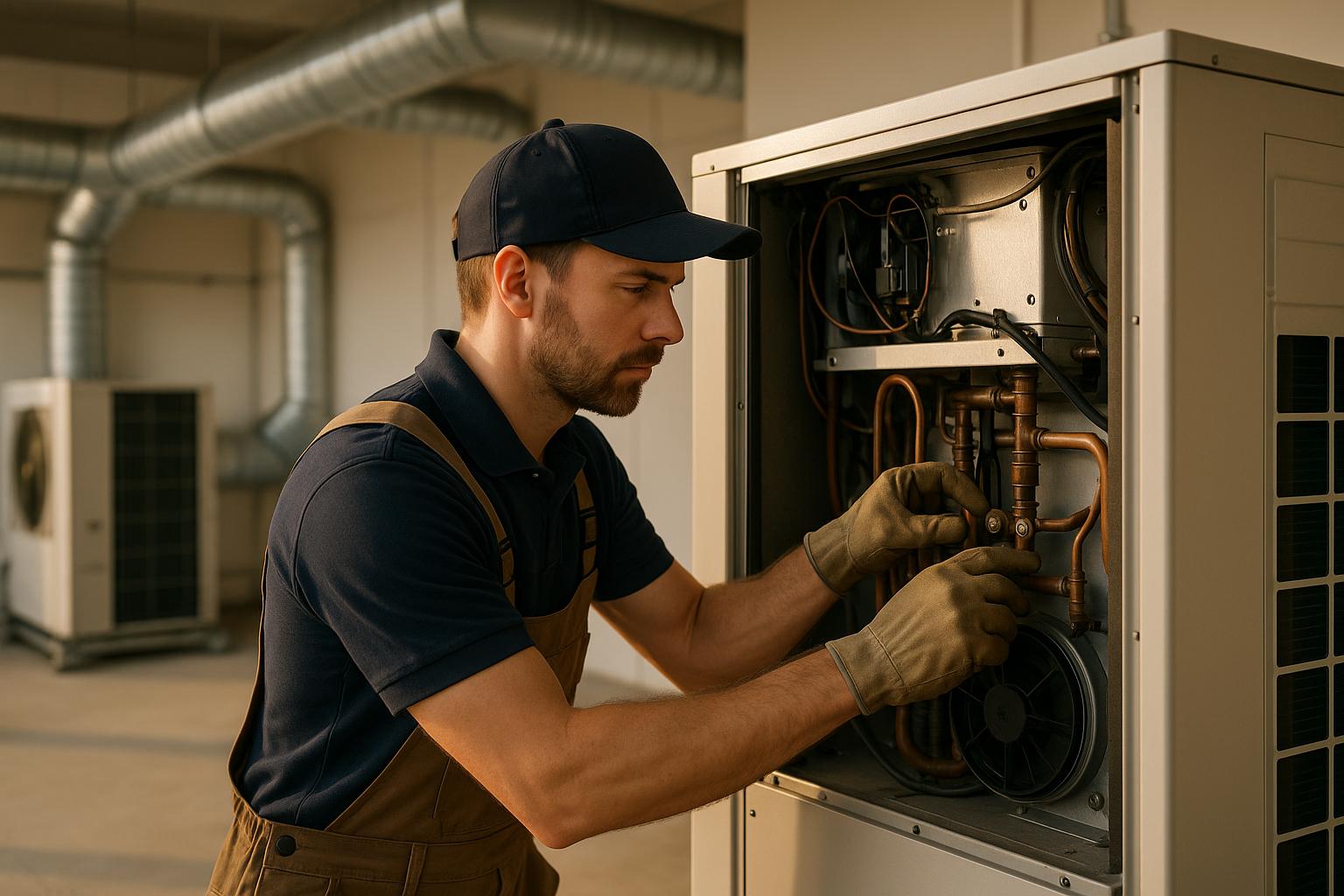
Commercial HVAC systems need regular maintenance to ensure efficiency, reduce costs, and prevent breakdowns. Here’s the ideal service schedule:
- Biannual Servicing: For standard systems in offices, retail spaces, or warehouses, schedule maintenance in spring and fall to prepare for seasonal demands.
- Quarterly Servicing: High-use facilities like hospitals, data centers, or restaurants require more frequent check-ups due to constant operation and heavier strain.
- Monthly Filter Checks: Inspect and replace air filters every month to maintain airflow and energy efficiency, especially in environments with high dust or contaminants.
Factors like system type, daily usage, climate, and equipment age also influence maintenance needs. Addressing small issues early can extend the equipment’s lifespan and reduce energy bills by 15–25%. Regular care ensures consistent performance and avoids costly repairs.
How Often to Service Commercial HVAC Systems
Getting the timing right for HVAC maintenance can mean the difference between smooth operations and costly emergency repairs. The ideal schedule depends on your facility’s specific needs, but proven guidelines can help you stay on track. Below, we’ll break down how often to service your commercial HVAC system based on usage and environment.
Standard Maintenance Schedule
For most commercial HVAC systems, biannual servicing – in spring and fall – is recommended. These seasons are ideal because they prepare your system for the heavy demands of summer cooling and winter heating.
During these visits, technicians handle critical tasks like inspecting coils, checking refrigerant levels, testing electrical connections, calibrating thermostats, and examining moving parts for wear and tear. This twice-a-year schedule works well for standard office buildings, retail spaces, and warehouses with typical operating hours.
The timing is no accident. These maintenance sessions align with your system’s transition between heating and cooling modes, addressing potential issues before they lead to mid-season breakdowns.
High-Use Facilities
Facilities with intensive HVAC demands – such as hospitals, data centers, medical centers, laboratories, commercial kitchens, and busy retail stores – require quarterly maintenance.
Take restaurants as an example: their HVAC systems work overtime to manage kitchen heat while maintaining a comfortable dining environment. The constant temperature fluctuations and airborne grease put extra strain on components. Similarly, data centers rely on HVAC systems to maintain precise, around-the-clock temperatures to protect sensitive equipment.
In these high-use environments, filters, coils, and ductwork wear out much faster. Parts that might last six months in an office setting could need replacement every three months in a commercial kitchen.
Monthly Filter Inspections
While professional servicing happens seasonally or quarterly, air filters need monthly attention. Waiting for routine maintenance visits to address filters can lead to restricted airflow, forcing your system to work harder and consume more energy.
In high-use facilities, filters may need replacement every month – or even more frequently. For example, restaurants and medical facilities can clog filters much faster than a small office, and industrial settings with high levels of dust or particles may require weekly checks.
Regular filter inspections can also serve as an early warning system for larger issues. If filters are clogging unusually fast, it could point to problems with your building’s air sealing or the HVAC system itself. Keeping a log of filter changes helps identify patterns and fine-tune your maintenance schedule.
The cost of replacing filters monthly is minimal compared to the benefits. Clean filters improve indoor air quality, reduce energy consumption, and help maintain consistent temperatures throughout your facility, all while extending the life of your HVAC system.
What Affects HVAC Maintenance Frequency
How often your commercial HVAC system needs professional care depends on several factors. By understanding these, you can design a maintenance schedule that fits your facility’s needs and avoids unexpected issues.
System Type and Daily Usage
The type of HVAC system you have plays a big role in determining its maintenance needs. For example, rooftop units are exposed to weather, UV rays, and temperature changes, which can wear down components faster. On the other hand, systems located indoors or in sheltered areas might need less frequent attention – unless they’re used heavily.
Heat pumps are another story. Since they work year-round to heat and cool, they put extra strain on parts like compressors, reversing valves, and refrigerant lines. This continuous operation often means more frequent servicing compared to seasonal systems.
Daily usage also matters. A system that runs only during business hours will experience less wear and tear than one that operates non-stop, like those in hospitals or data centers. Systems under constant strain will naturally require more regular maintenance.
Local Climate and Air Quality
External conditions can significantly influence how often your HVAC system needs servicing. Factors like high humidity, coastal salt, extreme temperatures, and pollution can speed up wear and tear, sometimes requiring additional cleanings – especially during events like wildfire season.
For instance, high humidity forces HVAC systems to work harder to remove moisture, which can strain compressors and lead to faster coil corrosion. In coastal areas, salt in the air accelerates the corrosion of metal parts and electrical components.
Extreme temperatures push systems to their limits, making them work harder to maintain comfortable indoor conditions. Meanwhile, air pollutants like pollen, vehicle exhaust, and industrial emissions can clog filters and contaminate coils more quickly, necessitating frequent cleanings.
Equipment Age and Service History
The age of your HVAC system also plays a big role. Newer systems often need less frequent maintenance – typically an annual check-up during their first few years. But once a system is over 10 years old, it may require servicing every six months due to aging components and a higher risk of failures.
Keeping a thorough service history becomes even more important as your equipment ages. Detailed records help technicians identify recurring issues and catch potential problems early. With consistent care, you can extend the lifespan of your HVAC system from the typical 10–12 years to 15–20 years, or even up to 30 years in some cases. Plus, regular maintenance can cut energy use by 15–25% compared to systems that are neglected.
If your system is still under warranty, regular professional maintenance is often required to keep the warranty valid. A complete service history serves as proof of compliance, which can save you from out-of-pocket repair costs if something goes wrong. Without these records, warranty claims might be denied.
For systems with patchy maintenance histories, an initial in-depth assessment is usually needed to address deferred issues. Keeping detailed records of every service visit – dates, performed tasks, replaced parts, and technician notes – helps optimize future maintenance and ensures your HVAC system runs smoothly. By considering all these factors – system type, usage, environment, and age – you can create a maintenance plan tailored to your specific needs.
Seasonal HVAC Maintenance Tasks
Seasonal maintenance is the key to avoiding expensive repairs and keeping your HVAC system running smoothly year-round. By adjusting your maintenance routine to match the season, you can address specific challenges as they arise and ensure your system operates efficiently.
Spring and Summer Tasks
Spring is the perfect time to get your HVAC system ready for summer’s cooling demands. Start with the basics: inspect and replace air filters. Clean filters are essential for proper airflow and good air quality. Dirty filters can reduce your system’s energy efficiency by 5% to 15%.
Next, focus on the condenser and evaporator coils. When these coils are dirty, your system has to work harder to transfer heat, which increases energy use and puts extra strain on the equipment. Clear away any dirt or debris, and if the buildup is significant, call a professional for a deep clean.
Refrigerant levels are another critical factor. Low levels not only reduce cooling efficiency but also lead to higher energy bills and can damage the compressor. Have a technician inspect and recharge the system if needed.
Don’t forget to clear debris from around outdoor condensers. Leaves, branches, or other obstructions can block airflow, making your system less efficient. A quick cleanup can make a big difference.
Finally, take a moment to calibrate your thermostat. Adjust the settings for warmer weather and ensure the temperature readings are accurate. A properly calibrated thermostat helps maintain comfort while avoiding unnecessary energy waste.
As the weather cools, it’s time to shift your attention from cooling to heating tasks.
Fall and Winter Tasks
Fall is the ideal time to prepare your heating system for the colder months ahead. Start by replacing heating equipment filters every 1–3 months, or at least at the beginning and end of the heating season.
Thoroughly inspect burners, heat exchangers, and ignition systems for wear or damage. This step is especially critical to prevent dangerous carbon monoxide leaks.
Have a technician perform gas pressure and combustion tests to ensure the system is running safely and efficiently.
To keep your equipment in top shape, lubricate motors and bearings. This reduces friction and helps extend the life of your system, particularly during the colder months. Additionally, take time to inspect and tighten electrical connections. Cold weather can cause these connections to loosen, which may lead to system failures.
Lastly, check and replace any worn belts or pulleys before the heating season kicks into high gear.
Seasonal Task Summary
A well-organized maintenance schedule ensures that no critical tasks are overlooked. Here’s a quick reference guide to keep your system running smoothly throughout the year:
| Season | Key Tasks | Primary Benefits |
|---|---|---|
| Spring/Summer | Filter replacement, coil cleaning, refrigerant checks, debris removal, thermostat calibration | Improved cooling efficiency, lower energy costs, fewer summer breakdowns |
| Fall/Winter | Burner inspection, heat exchanger checks, gas testing, lubrication, electrical connection checks | Safe heating operation, longer equipment life, reduced risk of winter failures |
Skipping routine maintenance can lead to repair costs that are 30% higher than average. Plus, neglecting regular care can cause your HVAC system to lose up to 5% of its efficiency every year. By staying on top of seasonal tasks, you can protect your system’s performance and extend its lifespan.
sbb-itb-998eb83
Warning Signs Your HVAC Needs Service
Commercial HVAC systems often give off early warning signs before a complete breakdown. Recognizing these signals can help you address issues before they turn into costly problems.
Common Problem Indicators
- Weak or no airflow: If the air coming from your vents feels faint or stops entirely, your system might be struggling. This could be due to dirty ducts, failing motors, or compressor issues.
- Strange or loud noises: Unusual sounds like banging, clanking, or buzzing often signal trouble. These noises might indicate loose parts, a failing motor, or debris inside the system. Remember, a well-functioning HVAC system should run quietly.
- Unusual odors: Pay attention to smells. A musty odor could mean mold in your ductwork, while a burning smell – similar to melting plastic or wires – might point to electrical issues. If you notice gas odors or suspect carbon monoxide, treat it as an emergency and call a professional immediately.
- Inconsistent temperatures: When your system struggles to deliver cool air in the summer or heat in the winter, it could be due to low refrigerant levels, compressor failure, or a more significant system issue.
- Short cycling: If your HVAC system frequently turns on and off in quick bursts, it’s likely under strain. This could stem from a malfunctioning thermostat, dirty coils, low refrigerant, or an improperly sized unit. Short cycling not only reduces efficiency but also increases wear and tear.
- Rising energy costs: A sudden spike in your energy bills might mean your system is working harder than it should to maintain comfortable temperatures. This could signal the need for maintenance or repairs.
Why Quick Response Matters
Addressing these issues promptly can save your system from further damage. Acting quickly minimizes strain on individual components and protects the overall system from larger failures. For safety concerns like gas odors, burning smells, or carbon monoxide, immediate action is essential to ensure occupant safety. Regular monitoring and swift responses are key to keeping your HVAC system running efficiently and avoiding unexpected disruptions. A proactive maintenance plan can make all the difference.
Benefits of Regular HVAC Maintenance
Keeping up with regular HVAC maintenance does more than just prevent unexpected breakdowns – it ensures your system runs efficiently, which can lead to noticeable savings on operating costs.
Lower Energy Bills and Operating Costs
A well-maintained HVAC system works more efficiently, consuming less energy to heat or cool your space. This translates to lower utility bills.
When maintenance is neglected, systems often waste energy. Dirty filters and coils restrict airflow and reduce heat transfer, forcing the system to work harder. Refrigerant leaks lead to longer compressor cycles, and worn-out parts increase friction, all of which result in higher energy consumption.
Routine maintenance tackles these problems early. Cleaning, calibrating, and optimizing components ensures your HVAC system performs at peak efficiency. This not only saves energy but also keeps your space comfortable without overburdening the system.
Smart thermostats are another game-changer for cutting costs. These devices adjust temperatures based on your schedule, reducing energy use during off-hours. Whether you’re at work or asleep, your HVAC system won’t be wasting energy unnecessarily.
Additionally, regular inspections catch small issues before they snowball into expensive repairs or system failures. Fixing minor problems early is far more affordable than dealing with major breakdowns later on.
And here’s the bonus: routine maintenance doesn’t just save money – it also helps your HVAC system last longer.
Longer Equipment Life
Beyond energy savings, regular upkeep reduces wear and tear on your system, extending its lifespan. Clean coils and fins improve heat exchange, which means compressors and motors don’t have to work as hard. Similarly, cleaning ducts ensures proper airflow, reducing the strain on fans and blowers.
Conclusion: Make Maintenance a Priority
Keeping up with regular HVAC maintenance isn’t just a good idea – it can save you money, prevent unexpected breakdowns, and help your equipment last longer.
Key Takeaways
Here’s a quick recap to help you make maintenance a top priority:
- Stick to the right service schedule. For most commercial HVAC systems, professional servicing twice a year is recommended. If your facility sees heavy use, aim for quarterly check-ups. This proactive approach catches problems early and keeps repair costs down.
- Consider your environment. If your system operates in dusty, coastal, or polluted areas, it will need more frequent filter replacements and coil cleanings. Older systems or those with a history of repairs also require extra attention to keep them running smoothly.
- Pay attention to warning signs. Strange noises, uneven temperatures, higher energy bills, or worsening air quality are all red flags. Tackling these issues early can prevent them from turning into costly repairs.
How ALL Plumbing Services Can Assist
At ALL Plumbing Services, we understand the importance of keeping your HVAC system in top shape. That’s why we offer tailored maintenance plans for Charleston-area commercial properties. These plans include regular inspections, early detection of potential issues, and priority scheduling for repairs. Our goal is to help you stay within budget while ensuring your facility operates efficiently.
Don’t wait for a problem to arise. Contact ALL Plumbing Services today to discuss a maintenance plan that ensures your HVAC system delivers reliable performance for the long haul.
FAQs
What tasks should be included in a commercial HVAC maintenance visit twice a year?
During a biannual commercial HVAC maintenance visit, several key tasks are essential to keep the system running smoothly and reliably. These tasks include:
- Air filter inspection and replacement: Ensures proper airflow and maintains indoor air quality.
- Cleaning evaporator and condenser coils: Helps the system operate more efficiently, reducing energy consumption.
- Checking refrigerant levels: Ensures the system cools effectively, refilling if needed.
- Inspecting and clearing drain lines and pans: Prevents clogs and potential water damage.
- Examining electrical connections: Ensures safety and proper functionality.
- Lubricating moving parts: Minimizes wear and tear, extending component life.
- Verifying thermostat settings: Keeps temperature control accurate and consistent.
- Inspecting the heat exchanger and burner assembly: Ensures safe and efficient heating performance.
By addressing these maintenance tasks regularly, you can improve energy efficiency, reduce the chances of unexpected system failures, and extend the life of your HVAC system. Routine servicing is a smart way to avoid expensive repairs and maintain a comfortable environment for your business throughout the year.
How can I tell if my facility needs HVAC servicing every three months instead of twice a year?
Determining if your facility requires HVAC servicing every three months instead of the usual twice a year comes down to a few key factors: how much the system is used, the surrounding environment, and the age and condition of your equipment. For places with heavy HVAC usage, extreme weather, or critical operations – like hospitals or data centers – quarterly maintenance can be a smart move to maintain reliability and performance.
Some signs that your system might need more frequent attention include increasing energy costs, recurring equipment problems, or noticeable dips in performance. Scheduling quarterly check-ups can help you avoid expensive repairs, extend the life of your system, and ensure everything operates without a hitch.
What happens if you skip regular maintenance for your commercial HVAC system?
Neglecting routine maintenance for your commercial HVAC system can quickly become a costly mistake. An inefficient system demands more energy to function, which directly translates to higher energy bills. Beyond the financial hit, skipping maintenance increases the likelihood of unexpected breakdowns, potentially halting business operations and leading to expensive repairs or even full system replacements.
There’s also a significant safety aspect to consider. Overlooking upkeep can result in electrical failures or even dangerous carbon monoxide leaks, putting the health and safety of everyone in the building at risk. On top of that, poor maintenance often leads to low indoor air quality and inconsistent temperature control, which can make the workplace uncomfortable, reduce employee productivity, and hurt overall business performance.
Staying on top of regular HVAC maintenance not only prevents these problems but also helps extend the life of your equipment. Plus, it ensures a safe, comfortable environment for everyone who walks through your doors.