

Avoid costly plumbing disasters in your Bluffton home by staying ahead of common issues. Here’s how:
- Inspect for leaks and corrosion: Regularly check exposed pipes, connections, and appliances for rust, moisture, or mineral buildup.
- Maintain safe water pressure: Keep pressure between 40–60 PSI to prevent strain on pipes and appliances.
- Prevent clogged drains: Use drain screens, avoid pouring grease down sinks, and clean pipes with enzyme-based solutions.
- Prepare for seasonal changes: Insulate pipes in winter, and monitor for soil shifts or root damage in summer.
- Schedule professional maintenance: Regular inspections and services help catch problems early and save money long-term.
Simple actions like these can protect your plumbing system, reduce repair costs, and prevent emergencies. For added peace of mind, consider a maintenance plan with ALL Plumbing Services to keep everything running smoothly year-round.
Inspect for Leaks and Corrosion Regularly
Taking a little time each month to check for leaks can save you thousands of dollars in repairs down the line. For example, a simple $50 fix today could prevent $5,000 in water damage later on. While some issues are easy to spot, others require professional tools and expertise.
Check Pipes and Fixtures Visually
Start by examining exposed pipes in areas like basements, crawl spaces, and under sinks. Look for signs of rust, moisture, or pooling water near fixtures. Pay close attention to pipe connections and seals on your water heater – green or white crusty deposits are a red flag for mineral buildup, which can speed up corrosion .
Here’s a quick test for hidden leaks: turn off all your faucets and check your water meter. If the dial is still moving, you might have a concealed leak. For leaks behind walls or under floors, a moisture meter can detect elevated humidity levels before visible damage occurs.
Don’t forget to inspect appliance hoses, like those on washing machines and dishwashers, every six months. These hoses typically last 12–13 years but should be checked for cracks, holes, or kinks. Also, keep an ear out for unusual sounds – gurgling, hissing, or constant running noises could indicate brewing problems .
Professional Leak Detection from ALL Plumbing Services
Some leaks hide in places you can’t easily access. That’s where ALL Plumbing Services comes in. They use advanced tools like thermal imaging cameras to detect temperature changes behind walls, acoustic sensors to pick up the sound of escaping water, and video pipe inspection equipment to check for cracks or root intrusion inside pipes. These methods are highly effective, with about 90% accuracy in pinpointing leaks. This reduces the need for invasive, exploratory work.
If your water bill suddenly spikes or you notice damp spots with no clear source, professional leak detection can quickly identify the issue. Stopping leaks early means avoiding costly repairs and further damage. Learn more about their services here.
Keep Water Pressure at Safe Levels
Water pressure that’s too high or too low can wreak havoc on your plumbing system. When the pressure climbs above 80 PSI, it puts unnecessary strain on pipes, damages washing machine hoses, and shortens the lifespan of appliances like water heaters and dishwashers. You might even hear loud banging or knocking sounds – known as "water hammer" – when turning faucets on or off. On the flip side, pressure below 40 PSI can lead to poor fixture performance and might even signal a hidden leak.
"Maintaining proper water pressure in your home is as important as your body’s blood pressure. If the pressure is too high or too low, there is cause for concern." – My Georgia Plumber
For most homes in Bluffton, the sweet spot is between 40 and 60 PSI. This range not only protects your plumbing but also ensures your appliances work efficiently.
Test and Adjust Your Water Pressure
Testing your water pressure is quick, easy, and affordable. A basic pressure gauge costs under $15 and can give you answers in just five minutes. To test, find an outdoor hose spigot or the cold water line for your washing machine. Make sure no water is running anywhere in the house during the test.
Attach the gauge to the faucet, open the valve, and check the PSI reading. If the pressure is above 80 PSI, you’ll need to adjust the pressure-reducing valve (PRV) or call a professional. To lower the pressure, locate the PRV – usually near where the main water line enters your home – loosen the lock nut, and turn the adjustment screw counter-clockwise. Turn it one full rotation at a time and retest until the pressure is within the safe range.
Schedule Annual Pressure Checks
Even if you’ve adjusted your water pressure, regular checks are essential. Over time, pressure regulators can wear out, and fluctuations in municipal water supply can affect your home’s pressure. Most pressure-reducing valves last between 10 and 20 years. Routine maintenance, like the kind offered by ALL Plumbing Services, includes water pressure testing to spot issues before they turn into costly repairs.
Signs that you might need a professional inspection include faucets that spurt water, toilets that won’t stop running, or pressure that stays outside the safe range despite adjustments. Don’t wait for small issues to become major problems.
For more details on maintenance plans, visit ALL Plumbing Services’ Bluffton service page.
Maintain Drains and Prevent Clogs
Clogged drains happen when debris, grease, and other materials build up in your pipes. In Bluffton, this issue can be more challenging due to specific local factors. For instance, historic homes in Old Town often have outdated galvanized steel pipes, while newer slab-foundation homes in areas like Palmetto Bluff require advanced methods to detect leaks and clogs. Just like regular leak checks help you avoid major problems, keeping your drains clear is key to preventing plumbing disasters.
The causes of clogs depend on the location. In the kitchen, grease and oils solidify as they cool, trapping food particles. In bathrooms, hair combines with soap scum to create stubborn blockages. Toilets are another common trouble spot – flushing items like wipes (even "flushable" ones), feminine hygiene products, or cotton balls can lead to sewer line backups since they don’t break down like toilet paper.
Using your drains properly is crucial. Treating sinks and toilets like trash cans for grease, oil, or non-flushable items can lead to slow drainage, backups, and expensive repairs. The good news? Preventive care – like using drain screens, enzyme cleaners, and scheduling professional maintenance – can help keep your plumbing in top shape.
Use Enzyme Cleaners and Drain Screens
Drain screens are a simple yet effective solution. Install them in bathroom sinks, showers, and tubs to catch hair and debris before they enter your pipes. In the kitchen, never pour grease or oil down the sink. Instead, collect it in a disposable container and throw it in the trash.
For monthly maintenance, use enzyme-based cleaners to break down organic buildup in your pipes without causing damage. Want a DIY option? Try this: pour 1 cup of baking soda followed by a mix of vinegar and water down the drain. Cover it for 5–10 minutes, then flush with boiling water. Weekly hot water flushes are another easy way to dissolve soap scum and loosen oils from pipe walls. Steer clear of harsh chemical drain cleaners, as they can corrode your pipes and lead to costly repairs.
When to Get Professional Drain Cleaning
Even with regular maintenance, some situations call for professional help. If you notice multiple slow drains at the same time, it could mean there’s a blockage in your main sewer line. Other red flags include recurring clogs, strange gurgling noises, or persistent bad odors – these often point to deeper issues that require expert tools. Professionals use techniques like hydro-jetting and sewer camera inspections to tackle tough blockages caused by tree roots, mineral deposits, or other stubborn obstructions.
Need professional help? Visit the Bluffton service page to schedule an inspection before a small problem turns into a big emergency.
sbb-itb-998eb83
Prepare Your Plumbing for Seasonal Changes
While Bluffton typically enjoys mild winters, temperatures can occasionally drop to 20°F or lower, which puts your pipes at risk of freezing and bursting. Summers, on the other hand, bring heat and humidity that can lead to soil shifting and tree roots invading underground pipes. Taking proactive steps ahead of these seasonal changes can save you from expensive repairs. As Joe Mantua, General Manager at Beaufort-Jasper Water & Sewer Authority, advises, "Implementing these tasks ahead of time can save the stress and cost of dealing with potential damaged pipes". Here’s how to protect your plumbing year-round.
Winter: Insulate Pipes to Prevent Freezing
Start preparing your plumbing for winter in the fall. Focus on insulating exposed pipes in unheated areas like crawl spaces, attics, garages, and exterior walls. Use foam or fiberglass sleeves and ensure there are no gaps at the joints. For areas at higher risk of freezing, consider using UL-listed heat tape to provide active warmth during cold spells.
Don’t forget your outdoor plumbing. Disconnect garden hoses, drain outdoor faucets, and cover hose bibbs with insulated covers. Additionally, seal any drafts around windows and doors using caulk or weather stripping to keep the cold air out. When freezing temperatures hit, open the cabinet doors under sinks to allow warm air to circulate and let faucets drip slightly to relieve pressure in the pipes.
Once winter precautions are in place, shift your focus to summer maintenance to protect underground plumbing.
Summer: Watch for Soil Shifts and Root Damage
Bluffton’s sandy soil, combined with high summer heat, can cause the ground to shift, potentially damaging pipes. Tree roots can also grow toward drain lines in search of moisture. To prevent problems, plant trees away from lateral lines and routinely inspect your property for signs of trouble. Look for wet spots, unusually lush patches of grass, or small sinkholes, as these could indicate hidden leaks or shifting soil.
Keep an eye on your HVAC condensate drains to ensure they remain clear, and monitor your water bill for unexpected spikes, which might signal a leak caused by soil movement or root intrusion. If you notice slow drains or unpleasant odors, it’s a good idea to schedule a video pipe inspection. This can help identify the exact location of root intrusions or underground pipe damage.
ALL Plumbing Services Maintenance Plans
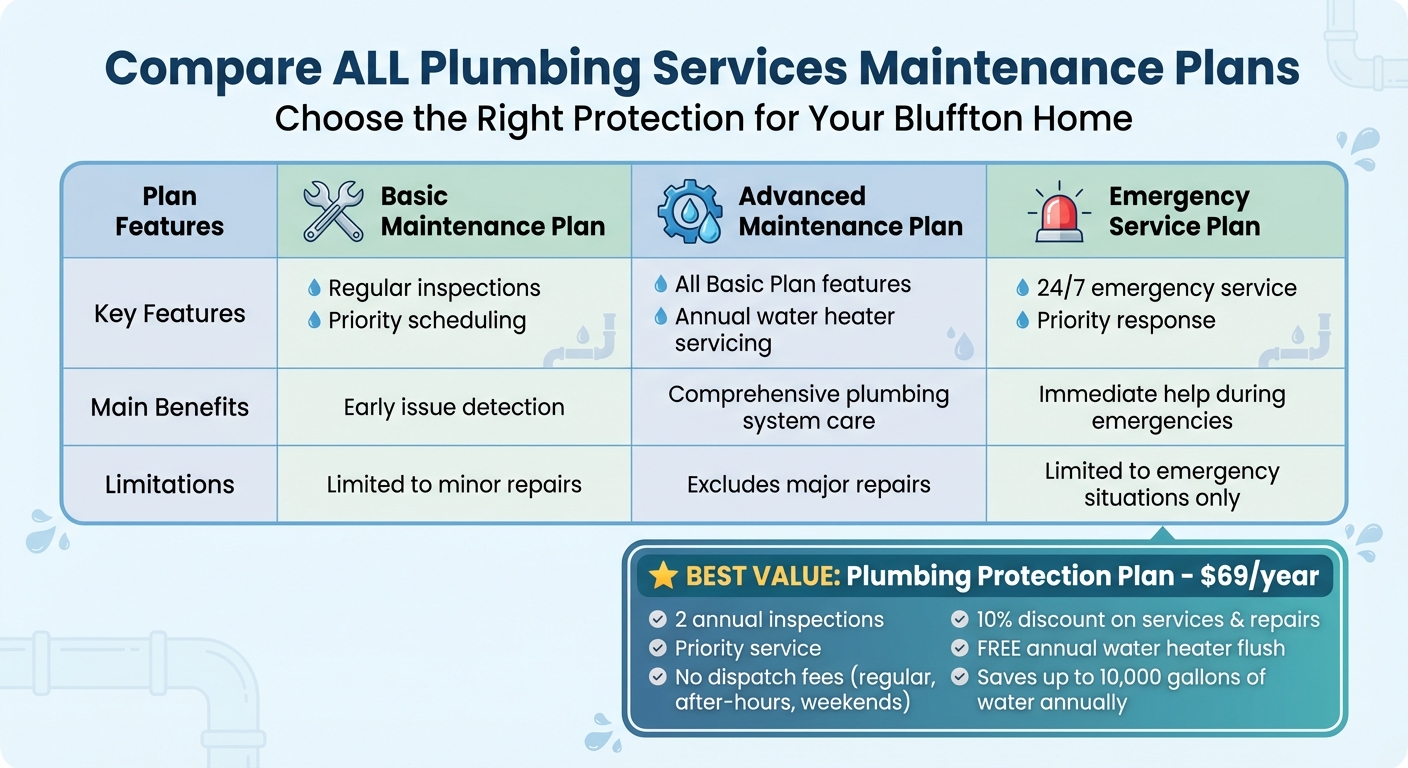
Plumbing Maintenance Plans Comparison for Bluffton Homeowners
Keeping your plumbing system in top shape starts with regular professional check-ups. That’s where ALL Plumbing Services steps in with their Plumbing Protection Plan – a yearly subscription for just $69. This plan is designed to catch small problems before they turn into expensive repairs. Twice a year, a skilled technician will thoroughly inspect your pipes, fixtures, and appliances, checking for any signs of corrosion, leaks, or other potential issues. These inspections work hand-in-hand with the proactive measures mentioned earlier to keep your plumbing system running smoothly.
Subscribers to the plan receive added perks like priority service, ensuring faster response times when you need help. Dispatch fees? Forget about them – whether it’s a regular call, after-hours emergency, or weekend issue. Plus, members get a 10% discount on most services, repairs, and replacements. One standout benefit is the complimentary annual water heater flush, which prevents sediment buildup and extends the life of your unit. These preventative steps not only save you money but also conserve water – addressing issues that could otherwise waste up to 10,000 gallons annually.
Compare Maintenance Plan Options
ALL Plumbing Services offers a variety of maintenance plans tailored to meet different needs, from routine upkeep to emergency support. Here’s a quick breakdown to help Bluffton homeowners decide which plan suits their plumbing requirements best:
| Plan Name | Features | Benefits | Limitations |
|---|---|---|---|
| Basic Maintenance Plan | Regular inspections, Priority scheduling | Early issue detection | Limited to minor repairs |
| Advanced Maintenance Plan | Includes Basic Plan features, Annual water heater servicing | Comprehensive care for your plumbing system | Excludes major repairs |
| Emergency Service Plan | 24/7 emergency service, Priority response | Immediate help during emergencies | Limited to emergency situations |
For detailed pricing on the Basic, Advanced, and Emergency Service Plans, reach out directly to ALL Plumbing Services. The Plumbing Protection Plan, priced at $69 annually, combines the best features of these plans – offering scheduled inspections, discounts on services, and priority emergency response – all in one convenient package.
How Maintenance Plans Save Money
Investing in routine maintenance can save you from unexpected and costly plumbing disasters. Regular inspections, often using advanced tools like cameras and moisture meters, help uncover hidden problems before they spiral out of control. Add to that the perks of priority service, waived dispatch fees, and a 10% discount on repairs, and you’re looking at significant savings over time. For Bluffton homeowners, this proactive approach not only protects your plumbing system but also shields your wallet from hefty repair bills. Ready to get started? Check out more details about ALL Plumbing Services maintenance plans.
Conclusion
Avoid plumbing emergencies by taking charge of potential issues before they escalate. Simple steps like performing regular visual checks on pipes and fixtures, maintaining water pressure between 40–60 PSI, and using drain screens can go a long way. Preparing your plumbing system for seasonal changes also helps keep everything running smoothly. Routine maintenance doesn’t just prevent headaches – it can extend the life of your plumbing and save you money over time.
Catching problems early means avoiding costly repairs later. Combine these proactive habits with professional support for the best results. Scheduled inspections by experts can help you steer clear of unexpected and expensive plumbing surprises. This highlights the importance of consistent upkeep and maintenance and professional assistance.
For even more peace of mind, consider the maintenance plans offered by ALL Plumbing Services. These plans include regular inspections, priority service, and exclusive perks to catch issues before they become emergencies. It’s a smart way to ensure your plumbing system stays in top shape.
Want to safeguard your Bluffton home? Schedule an inspection or explore maintenance plans with ALL Plumbing Services today. Protect your pipes – and your wallet – with expert care.
FAQs
How can I check if my home’s water pressure is too high or too low?
To measure your water pressure, you’ll need a water pressure gauge, which you can pick up at most hardware stores for less than $20. Simply attach the gauge to an outdoor faucet or hose bib near your water meter, turn the faucet all the way on, and note the pressure reading in pounds per square inch (psi).
For most homes, the sweet spot is between 40–80 psi. If your pressure reads above 80 psi, you might run into problems like pipe leaks, dripping faucets, or even loud banging noises in your plumbing (often called water hammer). On the flip side, if it’s under 40 psi, you could deal with weak water flow, slow-filling appliances, or noticeable drops in pressure when multiple fixtures are in use.
If the pressure is too high, you might need to install or adjust a pressure-reducing valve (PRV). For low pressure, check for possible culprits like clogged pipes, partially closed valves, or a malfunctioning PRV. Not sure what’s causing the issue? A professional plumber can step in to pinpoint and fix the problem.
How can I tell if there’s a hidden plumbing leak in my home?
Hidden plumbing leaks can wreak havoc over time, so spotting them early can save you a lot of trouble – and money. These sneaky leaks often hide in places like behind walls, under floors, or even out in the yard, making them tricky to detect. Here are a few telltale signs to keep an eye on:
- Skyrocketing water bills: A sudden spike in your water bill, without any change in your water usage, might mean there’s a leak lurking somewhere.
- Active water meter: Turn off all faucets and water-using appliances, then check your water meter. If it’s still ticking, you could have a leak.
- Visible damage around your home: Stains on walls or ceilings, bubbling paint, warped floors, or sagging drywall are all red flags that water might be escaping where it shouldn’t.
- Unpleasant musty smells: That persistent damp or moldy odor in certain areas often points to moisture trapped behind the scenes.
If any of these signs pop up, it’s smart to call in a professional plumber. Catching and fixing the problem early can save you from much bigger headaches – and repair bills – down the road.
Why is professional plumbing maintenance essential for your Bluffton home?
Professional plumbing maintenance plays a key role in keeping small problems from escalating into expensive disasters. Licensed plumbers have the expertise to spot hidden issues – like leaks, corrosion, or uneven water pressure – that often go unnoticed by homeowners. Tackling these problems early can save you thousands in repair costs and help you avoid skyrocketing utility bills.
Regular maintenance also ensures your plumbing system complies with safety standards and local regulations, reducing risks such as mold growth or water contamination. Beyond safety, routine check-ups help maintain steady water pressure, extend the lifespan of your pipes and appliances, and could even lower your home insurance premiums by demonstrating proactive care. By investing in professional plumbing maintenance, you’re safeguarding your home’s comfort, safety, and long-term value.
