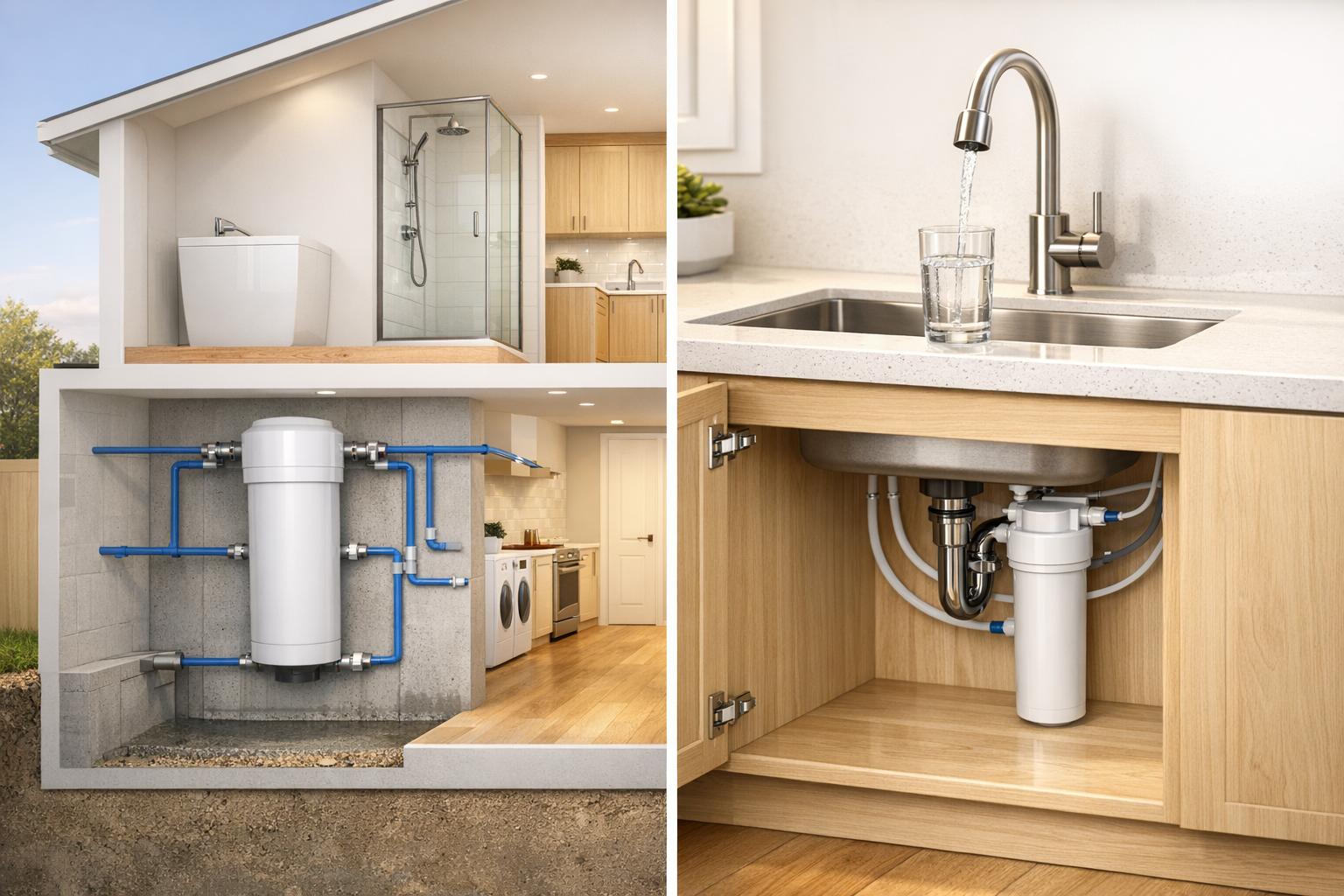
When it comes to improving your home’s water quality, you have two main options: whole-house filtration systems and point-of-use filters. Here’s the key difference:
- Whole-house systems filter water as it enters your home, ensuring every faucet, shower, and appliance gets treated water. They’re ideal for long-term homeowners, especially those with well water, as they protect plumbing and reduce scale buildup.
- Point-of-use filters treat water at specific fixtures like your kitchen sink or shower. They’re more affordable upfront, easy to install, and great for renters or those focused on drinking and cooking water.
Quick Overview:
- Whole-house systems: $800–$3,000 upfront, 6–12 months maintenance, professional installation.
- Point-of-use filters: $40–$300 per unit, 2–6 months maintenance, DIY-friendly.
Your decision depends on your water source, living situation, and budget. Whole-house systems offer comprehensive protection, while point-of-use filters provide targeted solutions for specific needs.
How Whole-House Filters Work
A whole-house filtration system treats all the water entering your home at the main entry point, located just after the water meter or pressure tank. By filtering water at this stage, the system ensures that every drop – whether it’s used for drinking, bathing, laundry, or even flushing toilets – passes through the filtration material.
These systems are designed with specialized filter materials that target contaminants like sediment, chlorine, and minerals that cause hard water. Filters certified under NSF/ANSI 42 improve water taste and odor, while those with NSF/ANSI 53 certification focus on removing harmful substances such as lead. Let’s take a closer look at how these systems are installed and the benefits they offer.
Installation and Coverage
Since the system integrates directly into your main water line, proper installation is critical. Installing a whole-house filter typically requires professional plumbing expertise. According to one manufacturer:
A section of your main water pipe must be removed and replaced with the filtration unit.
Professional plumbers handle this integration, and some advanced systems may also require electricity, meaning an electrician might be needed as well.
You’ll need to allocate space near your main water entry point, as these systems are often bulkier. To maintain optimal water flow throughout your home, it’s essential to choose a filter with inlet and outlet diameters that match your main water line – usually ¾‑inch or 1‑inch. This prevents the need for adapters that could restrict flow. When installed correctly, these systems ensure minimal water pressure loss while delivering filtered water to all faucets, showers, and appliances at the same time.
Main Benefits
Whole-house filtration systems provide consistent water quality across your entire home. Every fixture – whether it’s your kitchen faucet, bathroom shower, or washing machine – benefits from the same level of filtration. This means your skin and hair are protected from chlorine exposure during showers, and your appliances, like water heaters and washing machines, are shielded from mineral buildup that can cause damage over time. Additionally, these systems help reduce pipe corrosion and prevent scale accumulation.
Maintenance is relatively simple compared to managing multiple point-of-use filters. Whole-house systems typically last 7–10 years and require only annual maintenance, whereas point-of-use filters often need replacement every 3–12 months. For homes that rely on well water, these systems are especially critical. Unlike municipal water, well water doesn’t go through treatment and may contain harmful substances like bacteria, pesticides, iron, sulfur, and nitrates that can affect your entire plumbing system.
This broad protection sets whole-house systems apart from the more localized approach of point-of-use filters, which we’ll explore further in the next section.
sbb-itb-998eb83
How Point-of-Use Filters Work
Point-of-use (POU) filters are designed to treat water at specific locations in your home, such as kitchen faucets, sinks, showers, or even refrigerators. Instead of purifying all the water that enters your home, these filters focus on delivering clean, safe water exactly where you need it – whether for drinking, cooking, or washing fruits and vegetables.
These systems employ different technologies to target specific contaminants. For instance, activated carbon filters work through adsorption, effectively trapping chlorine and removing bad tastes and odors. On the other hand, reverse osmosis (RO) systems use a semi-permeable membrane with a pore size of just 0.0001 microns. This allows them to remove up to 99.9% of contaminants, including bacteria, viruses, and heavy metals. Some advanced systems, like the Clearly Filtered 3-Stage Under-Sink system, have been independently tested to eliminate up to 99.99% of over 232 contaminants. Now, let’s take a closer look at how these filters are installed and what areas they cover.
Installation and Coverage
Most POU filters are designed with ease of installation in mind, making them perfect for DIY enthusiasts. For example, under-sink models generally require just a wrench and a few basic tools, while countertop and faucet-mounted filters often attach directly to your tap – making them especially convenient for renters or those in temporary housing. However, it’s important to note that these systems filter water only at the specific fixture where they’re installed. For instance, an under-sink RO system installed in your kitchen will purify water from that faucet alone, leaving other fixtures like bathroom taps or showers unfiltered.
Main Benefits
POU filters are an affordable way to access highly purified water without a hefty upfront investment. They’re especially practical for smaller households or those focused on drinking and cooking water. Here’s why they stand out:
- Cost-effective: Start with a single unit, like a kitchen sink filter, without needing professional installation.
- Efficient filtration: Under-sink RO systems can remove up to 99.9% of contaminants, ensuring safe drinking water.
- Specialized options: Shower filters are available to reduce chlorine exposure, which can help with dry skin and hair.
Another advantage is the ease of maintenance. Cartridge replacements are typically required every 3 to 12 months, depending on usage. Regular replacement is crucial, though, as filters can become a breeding ground for microorganisms once chlorine is removed.
Main Differences Between Whole-House and Point-of-Use Filters
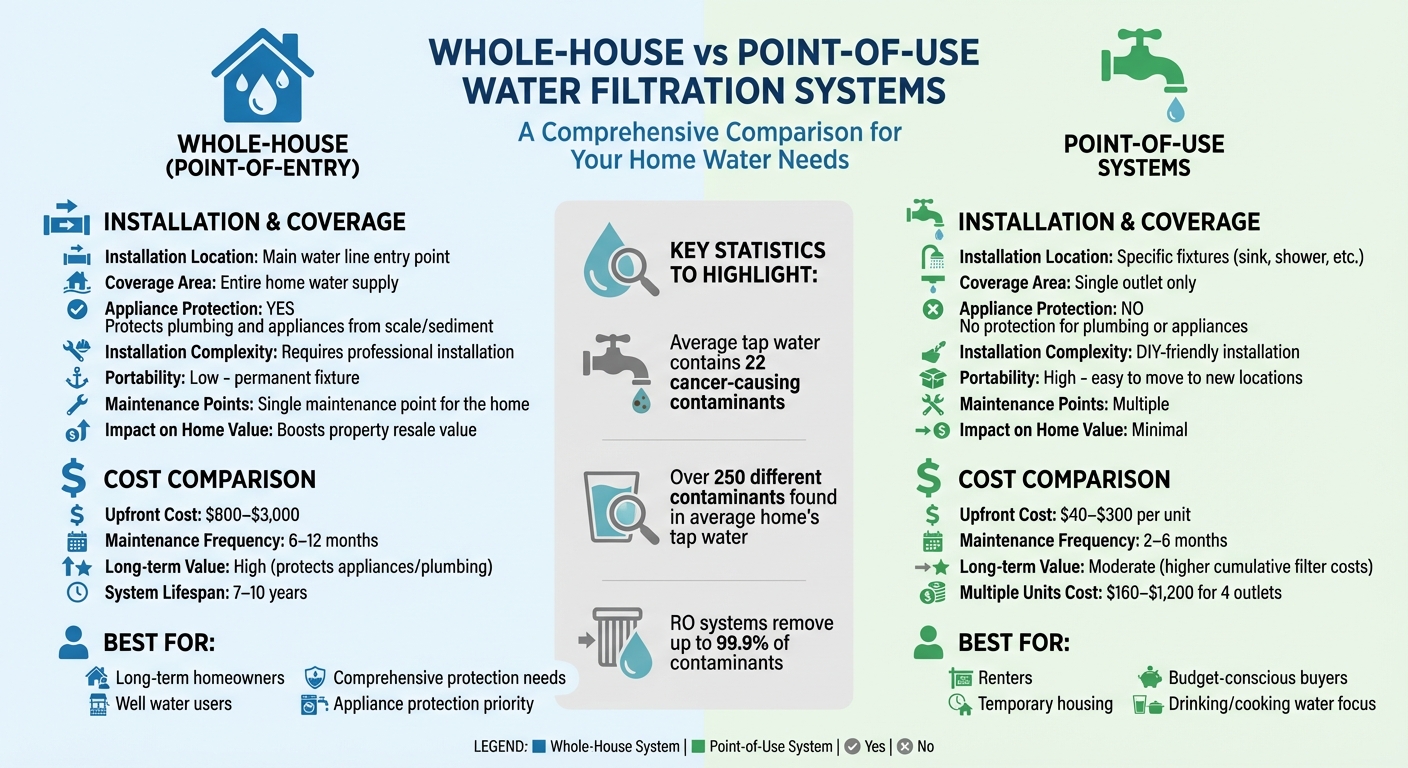
Whole-House vs Point-of-Use Water Filters Comparison Chart
Building on the system mechanics explained earlier, here’s a clear breakdown of the differences you should know. Choosing between whole-house and point-of-use filters depends on coverage area, installation needs, and budget. Each system has its own perks, tailored to different household demands and water quality concerns. Let’s dive into the key distinctions to help you decide.
Filtration Coverage
Whole-house systems treat all the water that flows into your home, while point-of-use (POU) filters focus on specific fixtures. With a whole-house system, every drop of water – from your shower to your washing machine – is filtered, ensuring clean water for all your appliances and plumbing. On the other hand, POU systems are designed for single outlets, like a kitchen sink or a showerhead.
| Feature | Whole-House (POE) | Point-of-Use (POU) |
|---|---|---|
| Installation Location | Main water line entry point | Specific fixtures (sink, shower, etc.) |
| Coverage Area | Entire home water supply | Single outlet only |
| Appliance Protection | Protects plumbing and appliances from scale/sediment | No protection for plumbing or appliances |
Here’s a startling fact: tap water in the U.S. contains an average of 22 cancer-causing contaminants, and over 250 different contaminants have been found in the average home’s tap water. While a whole-house system tackles these issues throughout your home, a POU filter focuses on individual locations, like your kitchen sink.
Installation Requirements
The complexity of installation is another important difference. Point-of-use filters are incredibly easy to set up, often requiring no more than basic tools or a quick attachment to your faucet. Models like countertop or faucet-mounted filters can be installed in minutes, making them perfect for renters or those in temporary housing.
Whole-house systems, however, are more involved. They need to be integrated into your home’s main water line, which usually requires professional installation. But there’s an upside: you’ll have just one system to maintain for your entire home, rather than managing multiple filters.
| Feature | Point-of-Use (POU) | Point-of-Entry (POE) |
|---|---|---|
| Installation Complexity | DIY-friendly installation | Requires professional installation |
| Portability | High; easy to move to new locations | Low; permanent fixture |
| Maintenance Points | Multiple | Single maintenance point for the home |
| Impact on Home Value | Minimal | Boosts property resale value |
While the installation process varies, your budget will likely play a big role in your decision.
Cost Comparison
Cost is often a deciding factor. Point-of-use filters are more affordable upfront, with prices ranging from $40 to $300 per unit. However, if you need filtered water at multiple fixtures, the expenses can add up fast. Equipping four outlets, for example, could cost between $160 and $1,200.
Whole-house systems, while pricier upfront, typically range from $800 to $3,000. They offer better long-term value, with filters that need replacing only every 6–12 months compared to the 2–6 month replacement cycle for POU filters. Plus, whole-house systems can increase your home’s resale value and help protect costly appliances by preventing scale and sediment buildup.
| System Type | Upfront Cost | Maintenance Frequency | Long-term Value |
|---|---|---|---|
| Whole-House | $800–$3,000 | 6–12 months | High (protects appliances/plumbing) |
| Point-of-Use | $40–$300 per unit | 2–6 months | Moderate (higher cumulative filter costs) |
For households using well water, a whole-house system is especially beneficial. It tackles large-scale issues like iron, sulfur, and manganese before they can damage your plumbing. Meanwhile, renters or those frequently on the move will appreciate the portability of point-of-use solutions that can be taken to their next home.
Choosing the Right Water Filtration System
What to Consider
When deciding on a water filtration system, the first step is to evaluate your water source. If you rely on well water, a whole-house system is often necessary to tackle issues like iron, sulfur, manganese, and bacteria before they affect your plumbing. On the other hand, if you’re using municipal water, point-of-use filters can help address specific concerns like chlorine and other contaminants.
Your living situation is another important factor. Renters or those in temporary housing might find portable options – such as pitchers, countertop units, or under-sink filters – more practical. For homeowners planning to stay long-term, whole-house systems can not only protect your appliances but also potentially boost your property’s resale value.
To make an informed choice, start with a water quality test or consult the EWG Tap Water Database to identify contaminants in your local water supply. If your main concern is improving the taste of your drinking water, an under-sink filter may be sufficient. However, if you’re looking to prevent scale buildup in appliances or reduce skin irritation during showers, a whole-house system might be the better option.
Keep in mind that point-of-use filters typically require more frequent replacements compared to whole-house systems. Consider these maintenance needs, along with installation complexity and costs, when making your decision. Some homeowners even combine a whole-house system with a reverse osmosis unit at the kitchen sink for enhanced water purity.
After assessing your water needs and property type, consulting a professional can make the installation process smoother and ensure you choose the right system.
Getting Professional Help
Installing a whole-house filtration system often involves cutting into the main water line and may require electrical work, so it’s best to leave this to the experts. ALL Plumbing Services offers professional water filtration solutions in Charleston, SC, and Bluffton, SC. Their team can evaluate your water quality concerns, recommend tailored solutions for both whole-house and point-of-use systems, and handle the entire installation process. Whether you’re dealing with well water challenges or improving municipal water quality, professional guidance ensures your system is correctly sized and perfectly suited to your household’s needs.
Conclusion
When deciding between whole-house systems and point-of-use filters, it’s all about matching your choice to your specific water concerns and lifestyle. Whole-house systems provide broad protection for your entire home, lasting 7–10 years with minimal upkeep. On the other hand, point-of-use filters focus on specific areas, offering a budget-friendly solution with the trade-off of more frequent cartridge replacements. Renters or those with temporary living arrangements might lean toward point-of-use options, while homeowners looking for long-term solutions may find whole-house systems more appealing. For some, combining both approaches can strike the perfect balance between safety and taste.
Your decision should consider your water source, living situation, and budget, as well as whether you aim to protect your plumbing system or simply improve drinking water. A professional water quality test can help pinpoint the contaminants in your supply, providing a clear direction for your filtration needs.
For residents in Charleston, SC, and Bluffton, SC, ALL Plumbing Services offers expert support for both system types. Their team can evaluate your water quality, recommend the best solution for your home, and handle the installation process to ensure everything is properly sized and integrated. Whether you need maintenance for a whole-house system or advice on choosing the right point-of-use filter, their expertise ensures your household enjoys clean, safe water tailored to your needs. Reach out to ALL Plumbing Services for professional guidance and installation in Charleston, SC, and Bluffton, SC.
FAQs
Do I need a water test before choosing a filter?
Testing your water is a smart step to uncover any contaminants and confirm that your filtration system is addressing your specific water quality concerns. By conducting a water test, you can select the most suitable filter – whether it’s a whole-house system or a point-of-use option – to meet your needs effectively.
Can I combine a whole-house filter with under-sink reverse osmosis?
Yes, you can use both systems together. A whole-house filter works to improve the quality of all water entering your home, benefiting your taps, showers, and appliances. Meanwhile, an under-sink reverse osmosis (RO) system delivers advanced purification specifically for drinking water. By combining these systems, you get the best of both worlds – clean water throughout your home and highly purified water at your kitchen sink, which is especially useful for removing contaminants like arsenic or lead from drinking water.
Will a whole-house system reduce my water pressure?
A whole-house water filtration system is generally built to filter your home’s water without affecting water pressure. That said, issues like clogged filters or choosing a system that’s too small for your household’s water usage can lead to a drop in pressure. To keep things running smoothly, make sure to perform regular maintenance and pick a system that matches your home’s water demand.