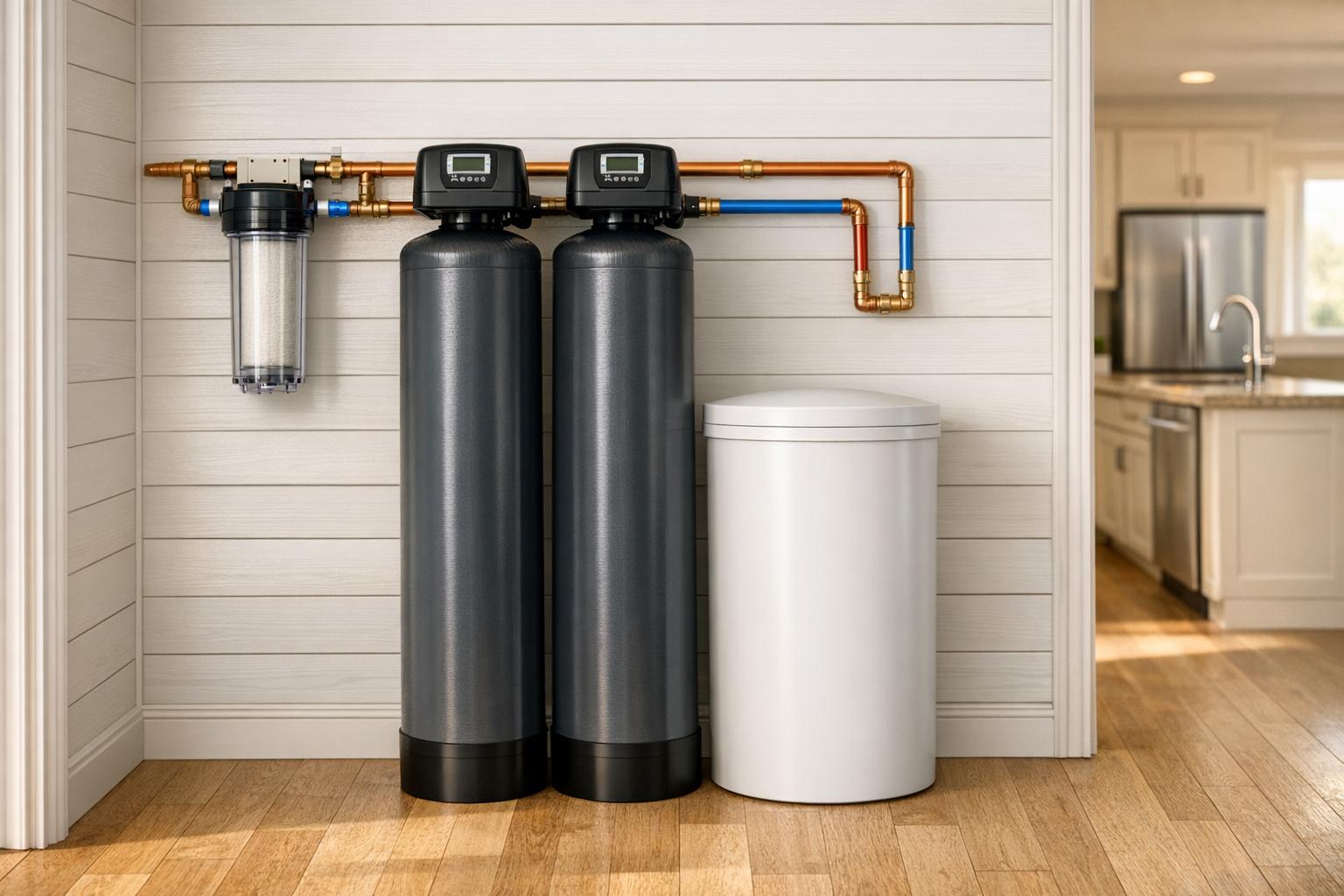
Bluffton homeowners face consistent water quality challenges with their local water supply. Common issues include chlorine taste, hard water buildup, iron stains, and unpleasant odors. A whole-home water filtration system resolves these problems by cleaning all incoming water, improving taste, protecting plumbing, and extending appliance life. Here’s what you need to know:
- City Water Problems: Chlorine, sediment, and hardness minerals cause unpleasant taste, scale buildup, and reduced appliance efficiency.
- Well Water Issues: Iron, hydrogen sulfide, tannins, and bacteria lead to stains, odors, and potential health risks.
- Filtration Benefits: Cleaner water at every tap, longer-lasting appliances, and reduced maintenance costs.
Key Solutions:
- Carbon Filters: Remove chlorine and improve taste.
- Water Softeners: Prevent hard water damage.
- Iron/Sulfur Filters: Eliminate stains and odors in well water.
- UV Systems: Neutralize bacteria and other microorganisms in water.
Start with a water test to identify specific contaminants and choose the right system for your home.
Water Quality Issues Specific to Bluffton
City Water: Chlorine, Minerals, and Sediment
Bluffton gets its municipal water from the Beaufort-Jasper Water & Sewer Authority (BJWSA), which sources water from the Floridan Aquifer. This aquifer naturally contains high levels of calcium and magnesium, making the water hard. Hard water leaves behind white, crusty deposits on faucets, spots on glassware, and a filmy residue in showers.
To ensure safety, the treatment process includes adding chlorine or chloramines, but these disinfectants can leave Bluffton’s tap water with a strong bleach-like taste and smell. Additionally, aging pipes in the distribution system can introduce sediment, rust, and trace minerals into the water before it even reaches your home. These factors can contribute to additional water quality concerns in the area.
Well Water: Sediment, Iron, and Contaminants
For residents in Pritchardville, Okatie, and rural Beaufort County, water quality concerns can include iron, hydrogen sulfide, tannins, and fine sediment. These elements can lead to stained fixtures, unpleasant odors, discoloration, and increased wear on appliances.
Bacterial contamination can pose a serious water quality concern. Without regular testing and appropriate treatments like UV sterilization, water may harbor bacteria that carbon filters alone cannot remove.
“Local water experts know the region’s water inside and out. They understand the real issues, like Hilton Head’s saltwater intrusion, Bluffton’s nitrate spikes, and Beaufort’s iron stains.” – Culligan of the Low Country
How Poor Water Quality Affects Your Home
The effects of untreated water go beyond just taste and smell. Here’s how different water sources can impact your home:
| Water Source | Common Contaminants | Primary Impact |
|---|---|---|
| Municipal (City) | Chlorine, chloramines, hardness minerals, sediment | Chemical taste/odor, scale buildup on fixtures, reduced appliance efficiency |
| Well Water | Iron, hydrogen sulfide, tannins, bacteria, sand/silt | Stained fixtures, rotten egg smell, tea-colored water, faster appliance wear |
Hard water creates long-term damage by building up inside pipes, which restricts water flow and lowers pressure. The same mineral deposits coat heating elements in water heaters and clog spray nozzles in dishwashers, forcing these appliances to work harder and fail sooner. In water heaters, sediment can settle at the bottom of the tank, insulating the heating element and driving up energy use. For tankless water heaters, scale buildup can block the heat exchanger entirely.
On a day-to-day level, poor water quality can lead to dry, irritated skin, dull hair, and stubborn spots on fixtures – small issues that quickly become frustrating when they’re constant. These are exactly the kinds of problems whole-home water filtration systems are designed to solve, as detailed in the next section.
sbb-itb-998eb83
What Whole-Home Water Filtration Does for Bluffton Homes
Better-Tasting, Cleaner Water at Every Tap
In Bluffton, many households face challenges like hard water and various contaminants. A whole-home water filtration system addresses these issues by purifying all incoming water, ensuring that every faucet and appliance delivers fresh, clean water. For homes using city water, this means eliminating that chlorine aftertaste. For well water users, it removes odors and metallic flavors. Advanced nanofiltration technology can reduce up to 95% of impurities, including lead, sodium, iron, sulfur, and organic compounds. The result? Water that’s not only safer to drink but also tastes better. Plus, filtered water helps protect your plumbing system from unnecessary wear and tear.
Prolonged Appliance Life
Hard water can wreak havoc on your home’s plumbing and appliances. Mineral buildup in pipes and on heating elements reduces water flow, lowers pressure, and puts extra strain on appliances like water heaters and dishwashers. A filtration system prevents this buildup, helping your appliances run more efficiently and last longer. It also eliminates issues like rust stains and discoloration caused by iron and tannins on sinks, tubs, and even laundry.
Healthier Skin, Hair, and Cleaner Fixtures
Chlorine and hard water minerals can strip your skin and hair of their natural oils, leaving them feeling dry and looking dull. Filtered water makes a noticeable difference by improving how your skin feels and enhancing lathering. It also reduces soap scum buildup, as hard water minerals often interfere with soap’s effectiveness. With softened, filtered water, you’ll enjoy better lather, cleaner rinses, and less residue on shower doors and fixtures. These changes not only improve your daily routine but also reduce cleaning time and costs over the long run.
Substantial Long-Term Savings
While the initial cost of installing a whole-home filtration system typically ranges from $500 to $3,500, the long-term savings make it a smart investment. You’ll spend less on bottled water, reduce wear and tear on appliances, and cut down on cleaning supplies. Over time, the combination of cleaner water, healthier skin and hair, extended appliance life, and lower household expenses makes such a system a practical choice for Bluffton homeowners.
Filtration, Purification, and Softening: What’s the Difference?
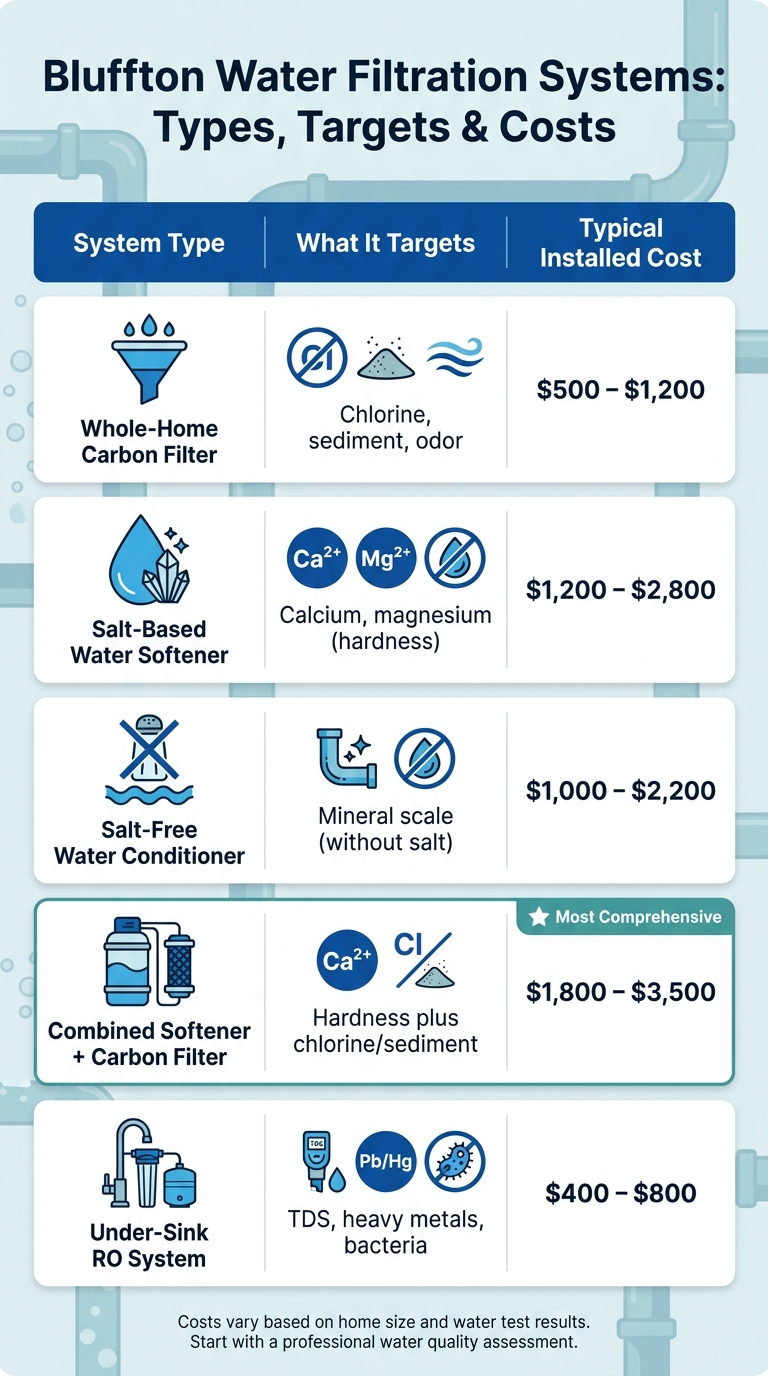
Bluffton Water Filtration Systems: Types, Targets & Costs
Bluffton’s water issues – ranging from hard minerals to iron and hydrogen sulfide – require tailored solutions. These three processes each serve a unique purpose. Understanding which one (or combination) fits your needs can save money and ensure your water treatment system addresses your home’s specific challenges.
What Water Filtration Does
Filtration is the backbone of any water treatment system. It removes particles and chemicals like sediment, chlorine, and other impurities that can affect the taste and smell of your water. Installing a whole-home carbon filter, typically priced between $500 and $1,200, is a great starting point for most Bluffton homes connected to city water.
When Water Purification Is Needed
Purification goes a step further by targeting dissolved solids, heavy metals, and biological contaminants that standard filters might miss. Technologies such as Reverse Osmosis (RO) and nanofiltration excel in this area. For instance, nanofiltration can eliminate up to 95% of contaminants, including lead, iron, sodium, and sulfur. Adding an under-sink RO system, which costs around $400–$800, is a practical way to improve the quality of your drinking and cooking water.
How Water Softening Prevents Hard Water Damage
Water softening focuses on removing calcium and magnesium, the minerals responsible for hard water and scale buildup in pipes and appliances. A salt-based softener, which typically costs $1,200–$2,800 to install, exchanges these hardness minerals for sodium ions. For those concerned about sodium, salt-free electronic anti-scale systems, like Flow Tech, condition water without requiring salt refills. While softening doesn’t filter or purify water, it plays a critical role in preventing damage caused by hard water.
Using Multiple Systems Together
For homes in Bluffton dealing with a mix of contaminants, combining different treatments often provides the best results. For example, well water in areas like Pritchardville may contain iron, hydrogen sulfide, sediment, and hardness minerals. A layered solution could include a sediment pre-filter, an iron or sulfur filter, and a softener or anti-scale system. A combined softener and carbon filter system costs between $1,800 and $3,500. To ensure high-purity water for drinking and cooking, an under-sink RO unit can be added, treating only the water used at the kitchen tap. The ideal setup depends entirely on the specific contaminants in your water, which is why a professional water test is always the first step.
| Treatment Method | What It Targets | Typical Cost (Installed) |
|---|---|---|
| Whole-home carbon filter | Chlorine, sediment, odor | $500 – $1,200 |
| Salt-based water softener | Calcium, magnesium (hardness) | $1,200 – $2,800 |
| Salt-free water conditioner | Mineral scale (without salt) | $1,000 – $2,200 |
| Combined softener + carbon | Hardness plus chlorine/sediment | $1,800 – $3,500 |
| Under-sink RO system | TDS, heavy metals, bacteria | $400 – $800 |
Water Filtration System Options for Bluffton Homes
Now that we’ve covered the differences between filtration, purification, and softening, let’s dive into the options available to tackle Bluffton’s specific water challenges.
Common Types of Whole-Home Filtration Systems
Here are some of the top whole-home systems that can address Bluffton’s water issues:
- Whole-home carbon filters: These systems are great for city water, removing chlorine, sediment, and odors right at the point of entry. This protects every tap in your home.
- Sediment pre-filters: Often used as the first stage in a multi-system setup, these filters catch dirt and particles before water reaches other equipment.
- Iron and sulfur filters: Tailored for well water, these filters handle the staining and “rotten egg” smell often found in areas like Pritchardville and Okatie.
- UV sterilization systems: Using ultraviolet light, these systems neutralize bacteria and other biological contaminants, making them a smart choice for private well users.
- Under-sink reverse osmosis (RO) systems: Designed to deliver high-purity drinking water, these systems filter out heavy metals, pesticides, and microorganisms, typically at a single tap, like the kitchen sink.
For well water systems, a layered approach is often best. Combining a sediment pre-filter, iron/sulfur filter, and UV sterilization can effectively address multiple issues.
The Flow-Tech Option
If hard water and mineral buildup are your main concerns, the Flow-Tech Max could be the solution. This electronic anti-scale system conditions water without the need for salt, chemicals, or ongoing maintenance.
The Flow-Tech Max is easy to install and requires no refills. Pair it with the Flow-Tech CX Carbon Filter to tackle both mineral scale and chemical contaminants.
Picking the Right System for Your Home
Choosing the right system depends on your water source and its specific contaminants. Bluffton’s water supply often requires solutions for hardness, chlorine taste, and other common water impurities.
- City water users: A carbon filter combined with a Flow-Tech Max or a salt-free conditioner is ideal for addressing chlorine, sediment, and hard water minerals.
- Well water users: A multi-stage system tailored to the results of a water test is typically the best approach.
Look for systems with NSF or WQA certification to ensure they meet performance standards. This is especially important given recent concerns about PFAS in local water supplies. A professional water quality assessment is the best place to start before making any purchase. Tailor your choice to address Bluffton’s specific water challenges, such as hard water in city supplies and the diverse contaminants often found in well water.
ALL Plumbing Services: Water Filtration Help in Bluffton
ALL Plumbing Services offers personalized water filtration solutions tailored to the specific needs of Bluffton homeowners.
Water Testing and Assessment
City water and well water often require different treatment strategies. That’s why ALL Plumbing Services starts with a free water quality consultation to evaluate what’s in your water before recommending a system.
“We start with a free water quality consultation to assess your situation before recommending any system – so you’re not paying for treatment you don’t need.” – ALL Plumbing
This water test identifies potential issues like chlorine, iron, sulfur, or minerals that cause hardness. These results help in designing a system that suits your home’s specific requirements.
Custom System Design and Installation
Once the water test results are in, ALL Plumbing creates a custom solution. For homes using city water, this often includes a whole-home carbon filter paired with a Flow-Tech Max anti-scale system. For well water users, a more layered approach is common, incorporating a sediment pre-filter, iron/sulfur filter, and UV sterilization to address multiple concerns.
ALL Plumbing also installs Halo Water Filtration systems. These systems are salt-free, require no electricity, and provide effective protection against chlorine and scale buildup, making them a low-maintenance choice.
“Bluffton has hard water in many areas, and a Halo system protects your pipes, skin, and appliances without harsh chemicals or salt.” – ALL Plumbing
Maintenance and Long-Term Support
Proper maintenance is key to ensuring your water filtration system continues to perform effectively. Filters and media need periodic replacements, and the frequency depends on your system type and water quality. ALL Plumbing offers structured maintenance plans to keep everything running smoothly.
Here’s a quick breakdown of common maintenance tasks:
| Maintenance Task | Frequency | System Type |
|---|---|---|
| Cartridge Check/Replacement | Every 12 months | Halo / Carbon Filters |
| Salt Replenishment | Every 4–8 weeks | Ion Exchange Softeners |
| Resin Bed Inspection | Annually | Salt-based Softeners |
| Media Replacement | Every 3–5 years | Salt-free Conditioners |
ALL Plumbing also provides 24/7 emergency support and can service systems even if they weren’t originally installed by them. If your water quality changes or your household usage increases, they can retest your water and adjust your system accordingly. With regular professional maintenance, water softeners can last 10 to 15 years, offering long-term reliability and peace of mind.
Conclusion: Why Bluffton Homes Need Whole-Home Water Filtration
Bluffton’s water supply comes with its fair share of challenges. Issues like chlorine, hardness minerals, sediment, iron, and hydrogen sulfide can harm plumbing, damage appliances, and lower overall water quality.
A whole-home water filtration system tackles these problems right at the source. This means cleaner water flows through every tap, pipe, and appliance in your home. The benefits? Less scale buildup on water heaters and dishwashers, fewer rust stains on fixtures, and better-tasting, odor-free water.
Take the Flow-Tech Max, for example. It helps extend the life of appliances and reduces repair costs. As highlighted, “Access to clean, safe water is a fundamental necessity.” A combined softener and carbon filter system, which typically costs between $1,800 and $3,500 (installed), can save you money in the long run by cutting down on frequent maintenance and repairs.
The key to finding the best solution for your home lies in understanding your water. Start with a water quality test to determine the right system for your needs and enjoy the benefits of better water in your Bluffton home.
FAQs
Do I need a water test before choosing a system?
Testing your water is essential to pinpoint specific water quality problems, such as chlorine, sediment, hardness, or issues unique to well water. By identifying these concerns, you can select the most effective solution, whether it’s a whole-home filter, a water softener, or a reverse osmosis system. A professional water test ensures the system is customized to your household’s needs, safeguarding your plumbing and appliances while delivering clean, dependable water.
What’s the best setup for Bluffton city water vs. well water?
For homes in Bluffton relying on city water, a whole-home system equipped with a sediment pre-filter, carbon pre-filter, and an ion exchange water softener works best. To take it a step further, installing a reverse osmosis system at the kitchen tap provides high-quality drinking water.
If you use well water, the treatment approach may differ depending on the specific contaminants in your area. Begin with a professional in-home water test to assess your water quality and choose the most suitable system for your household.
Do I need filtration, softening, or purification?
Deciding how to treat your water depends on what you need. Filtration focuses on removing things like sediment, chlorine, and unpleasant odors. Softening tackles hard water issues by removing minerals like calcium and magnesium, which can cause scale buildup in your pipes and appliances. Purification, often done with reverse osmosis, goes a step further, targeting fine impurities such as lead and bacteria.
In many Bluffton homes, combining filtration for cleaner, better-tasting water with softening to handle hardness is a practical way to protect both your household and plumbing system.