

Most drain clogs in Bluffton homes come from a short list of problems: grease, food scraps, hair, soap film, wipes, lint, tree roots, and hard-water scale. If one drain is slow, the clog is often close by. If several fixtures back up at once, the problem may be in the main line.
Here’s the short version:
- Kitchen drains clog from grease, coffee grounds, fibrous foods, and disposal waste
- Bathroom drains clog from hair, soap residue, and product buildup
- Toilets clog from wipes and other items that should not be flushed
- Laundry drains clog from lint and detergent film
- Main sewer lines clog from roots, pipe sag, mineral scale, and old pipe wear
A few signs tell you the clog is getting worse: slow drains, gurgling sounds, bad odors, standing water, and backups in more than one fixture. In many cases, you can cut down the risk by using drain strainers, keeping grease out of the sink, and flushing only toilet paper.
What to do depends on the cause. A small clog may need snaking. Heavy buildup on pipe walls may need hydro jetting. If the pipe is cracked, shifted, or worn out, cleaning alone will not fix it.
| Area | Common Cause | Common Sign | Usual Fix |
|---|---|---|---|
| Kitchen | Grease, food waste | Slow sink, sour smell | Snaking or jetting |
| Bathroom | Hair, soap film | Standing water, slow drain | Drain cleaning |
| Toilet | Wipes, paper buildup | Poor flush, overflow | Drain cleaning |
| Laundry | Lint, detergent film | Slow standpipe drain | Cleaning or jetting |
| Main line | Roots, scale, pipe sag | Multi-fixture backup | Camera check, jetting, or repair |
If you want to know why these clogs happen so often in Bluffton, and when a backup points to pipe damage instead of simple buildup, this guide lays it out in plain terms.
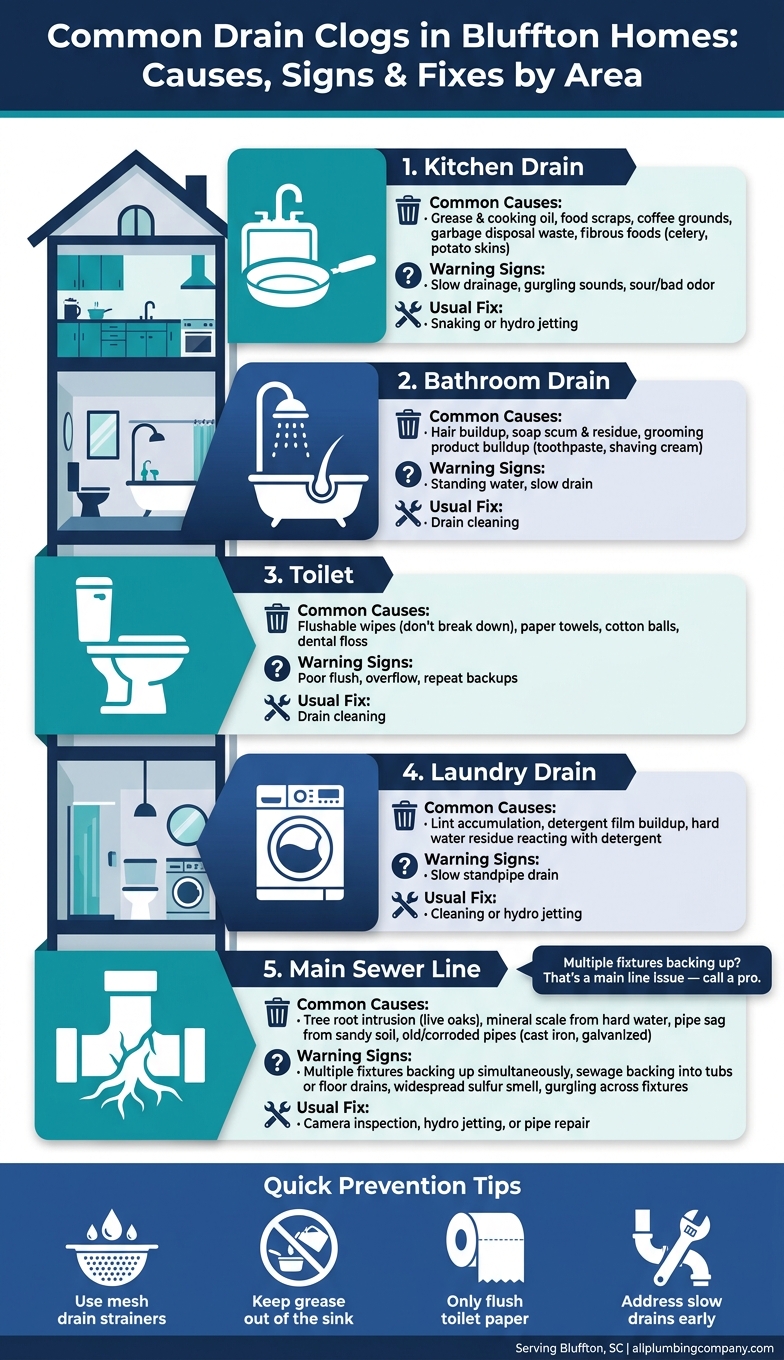
Common Drain Clogs in Bluffton Homes: Causes, Signs & Fixes by Area
The Most Common Causes of Drain Clogs in Bluffton
In Bluffton, the clogs plumbers see most often come from grease, wipes, hair, soap scum, roots, and mineral scale. Hard water leaves deposits behind over time, and older trees make root intrusion more likely. The exact problem often depends on where the drain line is: kitchen, bathroom, or laundry.
Grease, Food Waste, and Wipes That Do Not Break Down
Cooking grease may look harmless when it goes down the drain as a hot liquid. But once it moves into cooler underground pipes, it sticks to the pipe walls and starts narrowing the line. Add food scraps to the mix, and the problem gets worse. Bits of food can settle in low spots like p-traps and pipe bellies, especially when a line has lost its proper slope. At that point, water starts draining much more slowly.
Wipes cause trouble too. Even when they’re labeled flushable, they don’t break down like toilet paper. In Bluffton’s flat Lowcountry terrain, those wipes can snag on damaged pipe sections or tree roots and build into a blockage.
Hair, Soap Residue, Tree Roots, and Mineral Scale
In bathrooms, hair and soap scum are usually to blame. Hard water in Bluffton turns soap into a sticky film that clings to pipe walls. Think of it like a mesh lining the inside of the pipe. Hair moves through, catches on that film, and then holds onto even more debris. That’s how a small snag turns into a stubborn clog.
Tree roots are another common cause. They can move through soil, slip into pipes through cracks or loose joints, and then grow into a tangled mass inside the line. Once that happens, they trap grease, paper, and other debris.
At the same time, hard water leaves mineral scale that roughens pipe walls. That rough surface makes it easier for buildup to stick and grow.
Here’s where those clogs usually start in the home.
sbb-itb-998eb83
Where Clogs Start: Kitchen, Bathroom, and Laundry Drains
Kitchen Drains: Grease, Garbage Disposals, and Line Buildup
Kitchen sinks clog fast because grease cools, sticks to the pipe, and hardens over time. Then the problem gets worse. Garbage disposals can push more debris into the line, especially fibrous foods like celery, starchy scraps like potato skins, and coffee grounds. Those materials often settle in the p-trap or in low spots inside the pipe.
In Bluffton, sandy soil can cause pipes to sag. That creates a dip where water and solids collect. Once that happens, clogs can keep coming back even if the drain looks clean at the surface.
Common warning signs include slow drainage, gurgling, and bad odors. A sour smell often means food is stuck in the line.
A clog near the trap is usually easier to clear than one farther down the pipe. If the same issue keeps coming back, professional drain cleaning or hydro jetting may be needed. And if the disposal is part of the trouble, it may need repair or inspection.
Bathrooms clog for a different reason. Their smaller drains collect hair and soap residue in a hurry.
Bathroom Drains and Toilets: Hair, Soap Scum, and Wipes
Bathroom drains usually clog when hair and soap residue build up inside the line. That mix sticks to pipe walls and piles up fast. Toothpaste, shaving cream, and other grooming products add another layer over time.
Toilets deal with a different kind of blockage. Wipes labeled "flushable" do not break down like toilet paper. In Bluffton’s flat terrain, sewer lines have less slope, so wipes can catch on small flaws in the pipe and turn into a blockage fast.
These clogs often show up as:
- Standing water
- Slow drainage
- Repeat overflows
- Flushing problems
If water backs up into the tub when you flush the toilet, or one drain gurgles while another fixture is running, stop using water and call a professional. That mix of symptoms often points to a main line blockage, and a plunger won’t fix that.
Laundry lines tend to clog more slowly, which is why a backup there can point to a deeper issue.
Laundry and Main Lines: Lint, Detergent Buildup, Roots, and Hard Water
When more than one fixture backs up, the problem is often deeper than the drain opening itself. Laundry drains clog little by little as lint and detergent film collect in the pipe. Bluffton’s hard water reacts with detergent much like it does with soap, forming a sticky residue that grabs lint and slows drainage over time.
Once backups start showing up in several fixtures at the same time, you’re likely dealing with a main line issue. In Bluffton, mature live oaks send roots toward moisture and nutrients. Those roots can slip into pipes through hairline cracks, then grow into a tangled mass that catches lint, grease, and paper.
Here’s the difference between a fixture drain clog and a main line clog:
| Feature | Fixture Drain Clog | Main Line Clog |
|---|---|---|
| Scope | Affects only one sink, tub, or toilet | Affects multiple fixtures at the same time |
| Primary Cause | Localized hair, grease, or food buildup | Tree roots, soil shifting, or pipe sag |
| Key Symptom | Slow drainage in a specific room | Sewage backing up into tubs or floor drains |
| Sound / Smell | Gurgling or odor near one drain | Gurgling across fixtures; widespread sulfur smell |
How to Prevent Clogs and Avoid Pipe Damage
Once you know what tends to clog drains in Bluffton homes, a few simple habits can go a long way toward stopping trouble before it starts.
DIY Steps to Help Prevent Clogged Drains
Most clogs can be avoided with steady day-to-day habits.
In the kitchen, scrape food off plates and into the trash before rinsing. If you cook with grease, pour it into a disposable container and throw it away when it cools. Fats, oils, and grease should never go down the drain.
In bathrooms, use mesh strainers in tubs and showers to catch hair before it slips into the pipe. Then clean the strainer after each use. It takes a minute, but it can save you a major headache later.
Toilets are even simpler. Only flush pee, poop, and toilet paper. Paper towels, cotton balls, dental floss, and wipes labeled flushable should all go in the trash.
A slow drain is also worth dealing with early. Run hot water for a short time after using the sink to help move soap residue through the line. A partial blockage is much easier to clear than a full backup.
Why Chemical Drain Cleaners Can Damage Your Pipes
Liquid drain cleaner can seem like the fast answer. In many cases, though, it just hides the problem for a bit and can make things worse.
These cleaners may harm older pipes, and they often don’t clear the entire clog. In Bluffton, hard water scale and tree-root intrusion can add to repeat drain issues. That means the clog may come back even after you pour in a chemical cleaner.
Mechanical cleaning, such as snaking or hydro jetting, clears the blockage without leaving corrosive residue behind. If buildup keeps coming back, mechanical cleaning is usually the better option.
Professional drain cleaning can clear the line more fully and help cut down on repeat clogs.
If a drain still moves slowly after these steps, it may need drain cleaning, hydro jetting, or repair.
When to Call a Pro: Drain Cleaning, Hydro Jetting, or Drain Repair
When basic prevention stops working, the next move comes down to where the problem is and what’s causing it. If a drain backs up again soon after you clear it, that usually points to trouble deeper in the line, not just a simple clog near the opening.
A few signs tend to show up before the problem gets worse:
- Gurgling sounds
- Sewer odors
- Standing water
- More than one fixture backing up at the same time
Drain Cleaning vs. Hydro Jetting: Which One Does Your Drain Need
The right fix depends on whether you’re dealing with buildup in one spot or a problem farther down the line.
| Service | Best Use Case | Expected Outcome |
|---|---|---|
| Drain Cleaning (Snaking) | Localized clogs in a single fixture – hair, soap scum, small objects | Clears the specific blockage and restores flow to that drain |
| Hydro Jetting | Heavy grease buildup, mineral scale, sludge, or tree roots in main lines | Cleans pipe walls with high-pressure water, helping restore flow through the line |
Snaking usually breaks through a clog so water can move again. That works well when the blockage is in one drain and stuck in one area. But when grease, scale, or sludge is stuck along the pipe walls, snaking may only open a path through the mess instead of clearing it out.
That’s where hydro jetting comes in. It uses high-pressure water to wash the inside of the pipe, which makes it a better fit for heavy grease, mineral scale, sludge, or root buildup in a main line. After a camera inspection shows the pipe is still in good shape, hydro jetting is often the better cleaning option for recurring main-line clogs caused by scale or roots. In Bluffton, hard water and tree-heavy lots make those problems more common, so a basic cleaning may not hold up for long.
When a Recurring Clog Needs Repair, Not Just Cleaning
Sometimes the issue isn’t buildup at all. Root intrusion, collapsed sections, shifted joints, and corroded pipe walls can all slow or block flow even after the line has been cleared. If the same drain keeps backing up after cleaning, the pipe may be damaged or narrowed.
Older Bluffton homes with cast iron or galvanized pipes are more likely to have this kind of wear. A video camera inspection is the only reliable way to tell whether you’re dealing with a blockage or pipe damage.
If the inspection shows a structural problem, drain repair or installation is the right next step. And if the backup is connected to a garbage disposal pushing debris into the line, garbage disposal repair may need to be part of the fix.
Conclusion: Key Causes to Know and Your Next Step
Most drain clogs in Bluffton come from grease, food waste, hair, soap scum, wipes, lint, roots, and hard-water scale. A few simple habits go a long way: use strainers, throw grease away the right way, and keep wipes out of the toilet.
Use drain cleaning for localized clogs, hydro jetting for heavy buildup, and repair when the pipe itself is damaged.
FAQs
How do I know if the clog is in one drain or the main line?
Check how many fixtures are acting up. If the clog is limited to one sink, tub, or shower, the blockage is usually in that drain.
If several drains are moving slowly, multiple fixtures gurgle, or water backs up in one fixture when you use another, the issue is more likely in the main line.
Can hard water make drain clogs worse in Bluffton homes?
Yes. Hard water in Bluffton can make drain clogs worse because calcium and magnesium leave mineral scale inside your pipes.
Over time, that scale turns the inside of the pipe rough instead of smooth. And once that happens, it’s a lot easier for hair, soap scum, and other debris to get stuck and build up.
Hard water also reacts with bar soap and creates thick, sticky soap scum. That residue clings to pipe walls, narrows the drain path, and adds to repeat clogs.
When should I choose snaking, hydro jetting, or drain repair?
It comes down to what’s causing the blockage and the shape the pipe is in.
Snaking usually works best for localized clogs or stubborn backups that keep coming back. It breaks through or pulls out the blockage, which makes it a solid first step in many cases.
Hydro jetting uses high-pressure water to cut through heavy grease, sludge, tree roots, and mineral buildup when snaking doesn’t do enough. Think of it as a deeper clean for the inside of the pipe, not just a way to punch a hole through the clog.
Drain repair comes into play when a video inspection shows pipe cracks, corrosion, or tree root damage that cleaning alone can’t fix.
