

The short answer: in 2026, I’d narrow kitchen faucet finishes to matte black, brushed nickel, polished chrome, stainless steel, and brushed gold or champagne bronze. If I want the safest low-upkeep pick, I’d look at brushed nickel or spot-resistant stainless first. If I live near the coast, I’d give extra weight to PVD-coated finishes because salt air and humidity can wear finishes down fast.
Here’s the main takeaway in plain terms:
- Matte black is the top look in new U.S. remodels.
- Brushed nickel is the easiest all-around match for most kitchens.
- Polished chrome looks bright and clean but shows spots fast.
- Stainless steel is simple to match with appliances and easy to live with.
- Brushed gold and champagne bronze add warmth, but I’d stick with PVD to help avoid wear over time.
I’d make the choice based on three things:
- Upkeep – how much spotting and wiping I can live with
- Style match – cabinets, hardware, counters, lights, and appliances
- Climate – in humid coastal areas, finish durability matters more
Quick Comparison
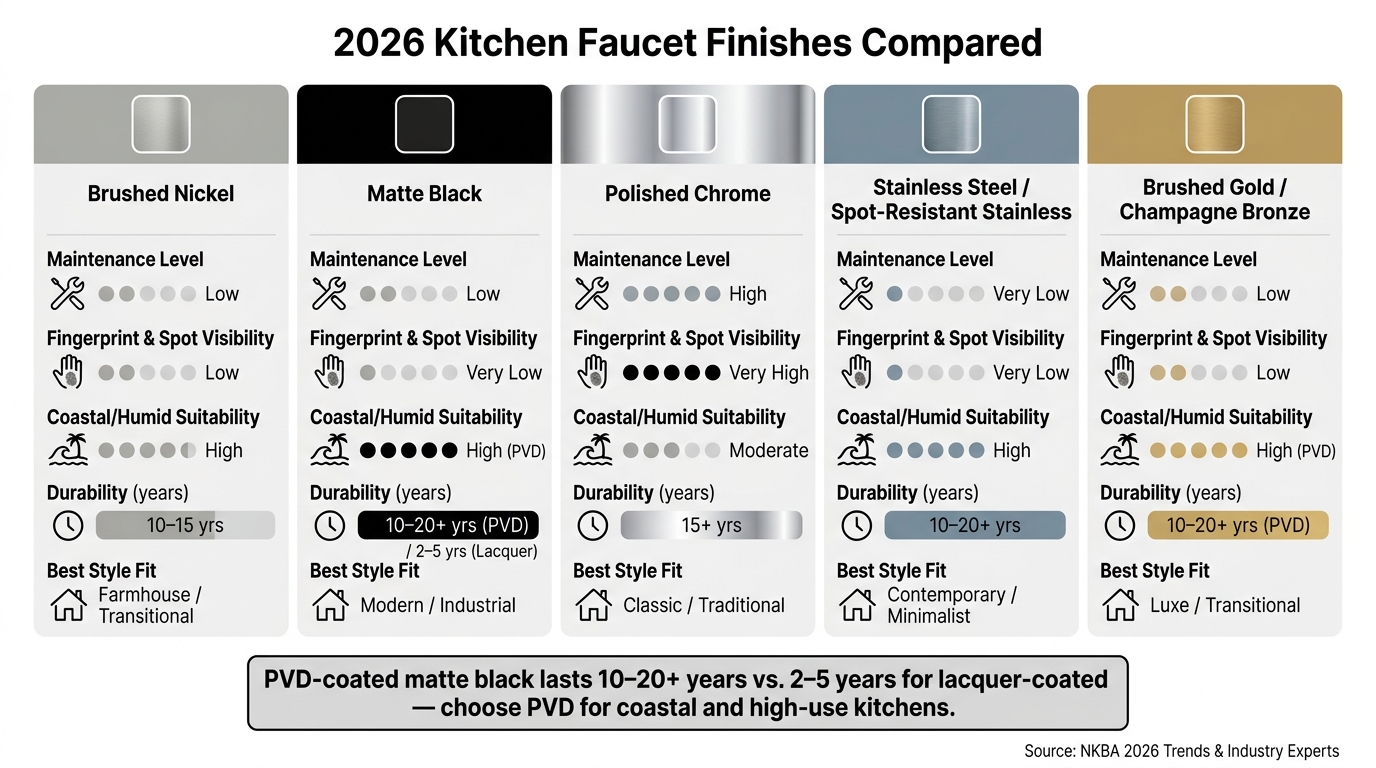
2026 Kitchen Faucet Finishes: Full Comparison Guide
| Finish | Best For | Upkeep | Shows Spots/Fingerprints | Best Style Fit |
|---|---|---|---|---|
| Brushed Nickel | Safe all-around choice | Low | Low | Farmhouse, transitional, classic, Scandinavian |
| Matte Black | Bold contrast | Low | Very low | Modern, industrial, modern farmhouse |
| Polished Chrome | Bright, clean look | High | Very high | Classic, white kitchens, cool-toned spaces |
| Stainless Steel | Busy family kitchens | Very low | Very low | Contemporary, Scandinavian, appliance-matched kitchens |
| Brushed Gold / Champagne Bronze | Warm metal look | Low | Low | Transitional, luxe, warm-toned kitchens |
One stat stands out: PVD-coated matte black can last 10–20+ years, while some lacquer-coated black finishes may wear out in about 2–5 years. That gap matters if I use the faucet all day, every day.
If I’m unsure, I’d start with the cabinet hardware, keep one main metal across the room, and use the faucet finish to support that look instead of fighting it.
sbb-itb-998eb83
What’s Driving Kitchen Faucet Finish Trends in 2026
Homeowners use the kitchen faucet more than almost any other kitchen fixture – often dozens of times a day – so the finish you pick tends to stick around for years. This isn’t just a style call. It’s a daily-use decision.
Style may get someone to buy a faucet, but upkeep often decides whether they still like it six months later. As Amon, Kitchen and Bathroom Design Expert, puts it:
"Kitchen faucet finish decisions get made on aesthetics and reversed on maintenance."
That helps explain why brushed and matte finishes are doing so well in busy kitchens. They do a better job of hiding fingerprints and water spots than polished surfaces. And for most people, that matters a lot when the faucet gets touched all day long.
The other big shift in 2026 is coordination. Homeowners and designers aren’t picking a faucet finish in isolation anymore. They’re building a metal palette across the kitchen that includes cabinet hardware, light fixtures, and appliance accents. A common approach is to use one main finish across most metal surfaces, then bring in a smaller accent finish for contrast.
Those two forces – easier upkeep and better coordination – are shaping the five finishes showing up most in 2026.
Durability also plays a big part. PVD is still the standard here because it bonds the finish at a molecular level, which helps with scratch and corrosion resistance. When you’re comparing options, don’t stop at the color name. Check the product specs for terms like "PVD" or "Spot Resist".
1. Brushed Nickel
Brushed nickel has a satin, low-sheen texture and a cool, neutral tone. It feels softer than polished chrome, which is part of its appeal. The satin surface also tones down reflections and does a good job of hiding fingerprints and water spots.
This is the most flexible finish choice of the bunch. It works in almost any style direction, which is why it fits so well in transitional, farmhouse, traditional, and Scandinavian kitchens. If the rest of the kitchen is still taking shape, brushed nickel gives you a safe starting point without boxing you in.
That same flexibility makes it a solid base finish in mixed-metal kitchens. In Charleston and Bluffton, a PVD-coated option is the better pick because it holds up better in humid, salt-air conditions.
For cleaning, keep it simple: warm water, mild soap, and a soft cloth. Skip bleach, ammonia, and acidic cleaners.
| Feature | Brushed Nickel |
|---|---|
| Maintenance | Low – weekly wipe is enough |
| Water Spot Visibility | Low |
| Fingerprint Visibility | Low |
| Coastal Performance | Strong, especially with PVD coating |
| Style Compatibility | Universal – traditional to modern |
That neutral range makes brushed nickel the easiest starting point when you compare it with bolder finishes. If brushed nickel is the quiet choice, matte black is the sharpest contrast.
2. Matte Black
Brushed nickel tends to blend into the background. Matte black does the opposite. It cuts glare and gives the faucet a sharp, high-contrast look without feeling flashy.
In 2026, matte black is the top kitchen faucet finish in new U.S. remodels, and NKBA reports more use of matte black and gunmetal surfaces. It brings contrast to modern, transitional, and coastal kitchens without taking over the space. You’ll see it work especially well in contemporary, industrial, modern farmhouse, and Scandinavian kitchens, especially with white cabinets or light wood.
Care is pretty simple: use a damp microfiber cloth and mild dish soap. Skip abrasive pads and acidic cleaners, since they can wear down the coating.
In Charleston and Bluffton, PVD-coated matte black is the better pick. It holds up better against scratches and corrosion in humid, salt-air kitchens.
| Feature | Matte Black (PVD) | Matte Black (Lacquer) |
|---|---|---|
| Durability | 10–20+ years | 2–5 years |
| Maintenance | Low – weekly wipe | Higher |
| Coastal Performance | Excellent | Poor |
If matte black feels too stark, polished chrome is the classic alternative.
3. Polished Chrome
Polished chrome is the brightest of the five finishes. It has a mirror-like look that fits clean, classic kitchens and works especially well in low-light spaces. Because it reflects light so well, it can help a small or darker kitchen feel a bit more open.
"Chrome and stainless steel remain relevant, particularly in clean, modern kitchens where brightness and simplicity are key." – Jacob Nitz, Studio and Creative Director for LIXL Global Design, Americas
This finish tends to look best in cool-toned kitchens. Think white or gray cabinets, subway tile, marble or white quartz countertops, and stainless steel appliances.
There is a catch: chrome needs more day-to-day care than brushed finishes. It shows water spots and fingerprints fast, so it helps to wipe it dry after use. If hard water leaves mineral buildup behind, a 1:1 mix of water and vinegar can clean it off without harming the finish.
In Charleston and Bluffton, quality chrome plating also holds up well in humid coastal conditions.
| Feature | Polished Chrome Performance |
|---|---|
| Visual Style | Mirror-reflective, bright, cool-toned |
| Maintenance Level | High – wipe dry after each use |
| Water & Fingerprint Visibility | Very high |
| Durability | 15+ years with quality electroplating |
| Coastal Suitability | High – often rated around 500 hours in ASTM B117 testing |
| Best Pairings | White or gray cabinets, marble, stainless steel |
Chrome makes sense if you want a bright finish with a classic look and don’t mind regular wiping. If you want a similar bright appearance with less daily cleanup, stainless steel is the next finish to compare.
4. Stainless Steel and Spot-Resistant Stainless
If chrome feels a little too shiny, stainless steel is a cooler and easier-to-live-with option. It has a cool-neutral tone, a brushed sheen, and less glare than chrome. That makes it a natural fit for contemporary, transitional, and Scandinavian kitchens. It also pairs well with stainless steel appliances, so matching the rest of the kitchen is usually simple.
Spot-resistant stainless goes a step further. It adds a top coat that helps repel fingerprints and water marks, which is a big help in a busy kitchen where the faucet gets touched all day.
Durability is a big part of why this finish keeps showing up in so many homes. PVD finishes are more resistant to scratches and corrosion than standard plating, and the finish bonds to the faucet. PVD can add about $50 to $200 to the cost of a faucet, and it can help extend the finish life to 10–20+ years.
For cleaning, stick with a soft cloth, warm water, and mild dish soap. Wipe with the grain, and skip bleach, ammonia, CLR, steel wool, and abrasive pads.
| Feature | Spot-Resistant Stainless | Standard Brushed Stainless |
|---|---|---|
| Maintenance | Very low – repels spots | Low – hides spots |
| Visual Look | Brushed, soft sheen | Industrial, matte-metallic |
| Durability | 10–20+ years | 10–15 years |
| Best For | High-use family kitchens | Universal, timeless design |
In coastal kitchens like those in Charleston and Bluffton, stainless and PVD-coated finishes help resist tarnish and corrosion in humid coastal kitchens.
5. Brushed Gold and Champagne Bronze
If cool metals now feel a bit too predictable, brushed gold and champagne bronze bring the warmer look many kitchens are moving toward in 2026.
Brushed gold is the bolder pick. Champagne bronze is softer and more toned down. Both add warmth, but the level of shine changes the feel of the room.
Champagne bronze sits between brushed gold and oil-rubbed bronze. It has warmth, but less gleam. If your kitchen has cream cabinetry and natural wood, champagne bronze tends to work with those warmer materials more easily than a brighter gold.
For cleaning, keep it simple: use a soft cloth, warm water, and mild dish soap. Skip abrasive cleaners.
When you’re shopping, choose PVD. Non-PVD gold finishes can shift in color over time. In humid coastal kitchens, PVD-coated warm metals are the safer long-term pick.
Use the chart below to find the warmer finish that fits your cabinets and hardware.
| Feature | Brushed Gold | Champagne Bronze |
|---|---|---|
| Color Tone | Warm, emphatically gold | Muted gold with bronze undertones |
| Best Matches | White shaker, navy, sage green | Cream, off-white, natural wood |
| Coastal Suitability | High with PVD | High with PVD |
Quick Comparison of All 5 Finishes
After the finish-by-finish breakdown, this side-by-side view makes the differences easy to see. The main things to watch are upkeep, how much each finish shows marks, and how well it holds up in humid spaces.
Here’s the fastest way to compare all five at a glance.
| Finish | Visual Tone | Ideal Kitchen Styles | Maintenance | Fingerprint & Spot Visibility | Coastal/Humid Suitability |
|---|---|---|---|---|---|
| Brushed Nickel | Satin, cool-neutral | Transitional, Traditional, Farmhouse | Low | Low | High |
| Matte Black | Non-reflective, bold | Contemporary, Industrial, Modern Farmhouse | Low | Very Low | High with PVD |
| Polished Chrome | Mirror-reflective, bright | Classic, Traditional, Bright Modern | High | Very High | Moderate |
| Stainless Steel / Spot-Resistant Stainless | Neutral, functional | Professional, Minimalist, Family Kitchens | Very Low | Very Low | High |
| Brushed Gold / Champagne Bronze | Warm, soft metallic | Luxe, Transitional, Contemporary Glam | Low | Low | High with PVD |
Choose PVD for matte black and warm metals.
Next, match the finish to your cabinets, counters, and overall kitchen style.
How to Match a Faucet Finish to Your Kitchen Style
If the comparison table already narrowed things down, style and metal temperature can help you make the final call.
Start with your cabinet hardware. Then line up the faucet and light fixtures with that choice. When one finish leads across the faucet, pulls, range hood accents, and lighting, the kitchen feels planned instead of pieced together.
Next, sort finishes into warm and cool metal families. Warm metals usually look best with other warm metals. Cool metals tend to work best with cool ones. Matte black is the go-between if you want to mix both without making the room feel off.
Here’s how the five trending finishes fit common kitchen styles:
| Kitchen Style | Best Finish Match | Best Pairing |
|---|---|---|
| Modern Farmhouse | Matte Black, Brushed Nickel | White shaker cabinets + granite or butcher block |
| Transitional | Brushed Gold, Champagne Bronze | Navy, white, or forest-green shaker + marble or quartzite |
| Contemporary / Industrial | Matte Black, Spot-Resist Stainless | Dark wood or gray MDF + concrete or stainless steel |
| Classic / Traditional | Polished Chrome | White or gray cabinets + marble or subway tile |
If your cabinets and counters are still up in the air, brushed nickel is often the safest bet. It works with almost any kitchen style.
For mixed-metal kitchens, a good rule is 70–80% dominant finish and 20–30% accent finish. That balance helps the space feel pulled together. Two-tone faucets are showing up more often for the same reason: they connect warm and cool metals in one piece.
For Charleston and Bluffton kitchens, humidity and salt air become the next filter.
Finish Choices for Charleston and Bluffton Kitchens
Living near the coast changes the rules. Kitchens in Charleston and Bluffton deal with high humidity and salt air, and those conditions can wear down a faucet finish much sooner than many homeowners expect. A budget lacquer-coated matte black faucet, for example, can start flaking or peeling within 2–5 years.
For coastal homes, PVD coating gives you better scratch and corrosion resistance than standard electroplating. If you’re shopping for a finish, one simple benchmark helps: look for a finish rated above 200 hours on the ASTM B117 salt spray test. In coastal kitchens, durability should narrow the field before style does.
Brushed nickel and spot-resistant stainless steel are the most practical day-to-day picks for Lowcountry kitchens. They tend to hide mess better, need less fuss, and make life easier in a damp, salty climate. That puts brushed nickel and stainless at the top of the list for homeowners who want low upkeep.
If you want a warmer look, PVD brushed gold and champagne bronze can work well in Charleston’s historic homes and Bluffton’s modern coastal interiors. Just make sure the coating is PVD, not lacquer. Otherwise, salt air can lead to a greenish discoloration over time.
ALL Plumbing Services helps homeowners in Charleston, SC, and Bluffton, SC choose and install kitchen fixtures that fit local conditions and existing plumbing setups. From here, the best finish comes down to balancing durability, upkeep, and kitchen style.
Final Takeaway
Pick the finish that fits your style, the amount of upkeep you can live with, and your climate. In Charleston and Bluffton kitchens, humidity and salt air put more pressure on finishes, so durability matters more.
Start with your cabinet hardware. Match the faucet to those pulls first, because they set the main metal tone in the room. Then get honest about upkeep. A lot of the time, maintenance is what determines whether a finish still looks good after daily use.
For busy households, brushed nickel and spot-resist stainless are usually the easiest to live with. Matte black and brushed gold can also work well, especially with PVD coatings, which hold up better than lacquer in day-to-day use. In coastal homes, PVD-coated finishes are the safest long-term pick.
If you like polished chrome, go in with your eyes open. It can turn into a high-upkeep option fast if you’re not wiping it down often. If you want a warmer finish, narrow your options and test them at home. Look at gold and bronze samples under your kitchen’s actual lighting before you buy, since light temperature can make those tones look warmer or harsher.
Daily use will expose a bad finish choice in a hurry. Pick one that works with your routine, not just what looks good under showroom lights. Go with the finish that looks right, cleans without much fuss, and stands up in your kitchen.
FAQs
Which faucet finish is easiest to keep clean?
Spot-resist stainless is often seen as the easiest faucet finish to keep clean in a busy kitchen because it helps repel fingerprints and water spots.
Brushed nickel and brushed stainless are also popular low-maintenance picks. Their textured surfaces help hide fingerprints and small scratches.
Is PVD worth it for a kitchen faucet?
Yes. PVD (Physical Vapor Deposition) is often worth the extra cost because it bonds metal at the molecular level. That creates a finish that stands up better to scratches and corrosion than electroplating or lacquer.
You might pay an added $50 to $200 upfront. But for daily use, PVD is widely seen as a top pick for long-term wear, with finish integrity that can last 10 to 20+ years.
How do I match a faucet finish to my kitchen hardware?
Match your faucet finish to cabinet pulls, light fixtures, and range hood accents for a pulled-together look. If you want more contrast, mixing finishes on purpose can add depth and make the space feel less flat.
For example, a brushed brass faucet with matte black hardware is a popular 2026 trend. If possible, prioritize PVD coatings for long-term finish integrity. For remodel guidance, you can consult ALL Plumbing Services.
