Is your AC struggling to keep up in Bluffton’s heat and humidity? Here’s how to know if it’s time for a replacement:
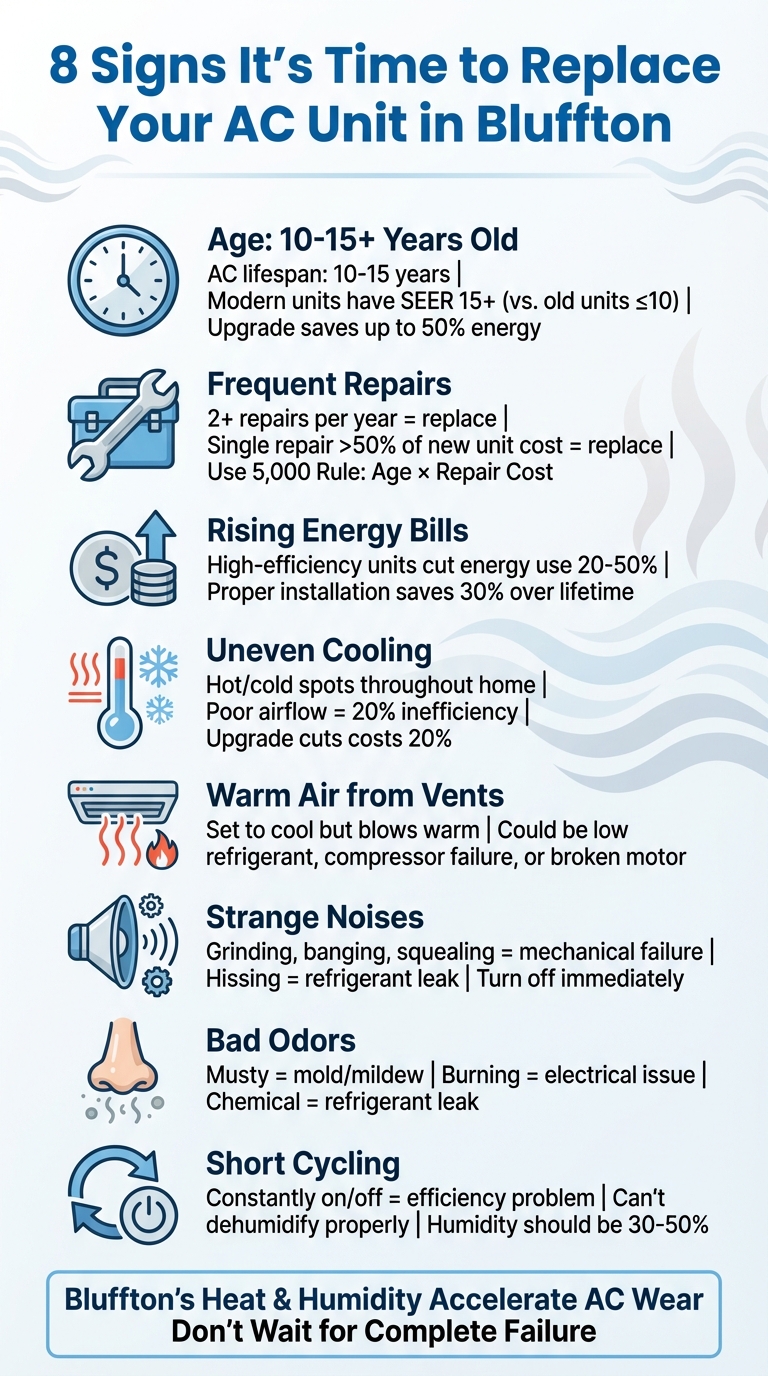
- Age of the Unit: If your AC is 10–15 years old, it’s likely nearing the end of its lifespan, especially in Bluffton’s demanding climate. Older systems are less efficient and may cost more to repair.
- Frequent Repairs: Needing two or more repairs a year or spending more than 50% of a new unit’s cost on fixes signals it’s time for a new system.
- Rising Energy Bills: Older, inefficient units or those with outdated SEER ratings (below 15) can drive up cooling costs.
- Uneven Cooling: Struggling to maintain consistent temperatures or humidity levels across your home? This is a red flag.
- Warm Air or Weak Airflow: If your AC blows warm air or airflow is weak, key components may be failing.
- Strange Noises or Odors: Grinding, banging, or musty smells often indicate serious mechanical or moisture issues.
- Short Cycling: Constantly turning on and off wastes energy and stresses the system.
In Bluffton, high humidity and heat accelerate wear and tear on AC units. Upgrading to a modern, energy-efficient system can cut cooling costs by up to 50%, improve comfort, and avoid costly breakdowns during peak summer months. Don’t wait for a complete failure – evaluate your system now to stay cool and save money.
8 Signs It’s Time to Replace Your AC Unit in Bluffton
1. Your AC Is 10-15 Years Old or Older
Age of the AC Unit
Air conditioning systems generally last around 10 to 15 years, especially in areas like Bluffton. While some units may stretch to 20 years, their performance tends to decline significantly after the 15-year mark. The heat and humidity of Bluffton can accelerate this aging process, as older systems struggle to manage both cooling and dehumidifying your home effectively.
Even if your aging AC is still operational, it’s wise to consider replacing it sooner rather than later. Waiting for a complete breakdown – especially during Bluffton’s sweltering summers – could leave you without cooling when you need it most.
Energy Efficiency and Cost
Older air conditioners usually have a SEER (Seasonal Energy Efficiency Ratio) rating of 10 or lower. In contrast, modern units in the South are required to have a minimum SEER rating of 15. Upgrading to a newer system can reduce energy consumption by as much as 50%.
A helpful guideline for deciding between repairing or replacing your AC is the "5,000 Rule." Multiply the age of your unit by the estimated cost of repairs. If the result exceeds $5,000, replacing the unit is often the smarter financial choice. For example, repairing a 12-year-old unit at a cost of $500 would total $6,000, suggesting replacement is the better option.
"Although age alone does not signal an automatic need for a new air conditioner, it should play a factor in your decision. If you notice your current unit is not performing as well and you require more repairs on a system that’s reaching the end of a typical life span, it’s probably a good time to make the investment." – On Time Air
This loss of efficiency becomes even more evident in Bluffton’s challenging climate.
Performance in Bluffton’s Humid Climate
Bluffton’s high humidity places extra stress on air conditioners, requiring them to work harder to cool and dehumidify your home. As units age, their ability to keep indoor humidity below 50% diminishes, leaving your living space feeling uncomfortably sticky – even when the air feels cool.
Additionally, older systems that rely on R-22 refrigerant are now more expensive to repair due to the refrigerant’s ban in 2020. Modern air conditioners use environmentally friendly refrigerants that are easier to source and maintain.
As your system ages, its efficiency and reliability decline, leading to more frequent breakdowns and higher repair costs.
sbb-itb-998eb83
2. Frequent Breakdowns and Repairs
Frequency of Repairs
If you find yourself calling for AC repairs every few months, it’s a sign your system is nearing the end of its lifespan. A handy guideline to keep in mind is The Two-Repair Rule: if your air conditioner needs professional repairs two or more times in a single year, it’s likely time to consider a replacement. As Tom Moor from HVAC.com puts it:
"If your air conditioner is older and needs to be repaired two or more times a year, then it’s time to invest in a new unit."
Repeated repairs often fail to address the root cause – wear and tear on the internal components – which means the cycle of breakdowns is likely to continue. On top of that, frequent service calls usually come with another downside: higher energy bills.
Energy Efficiency and Cost
Frequent breakdowns don’t just drain your patience; they also drain your wallet. When parts fail repeatedly, your AC has to work harder to maintain your desired temperature, consuming more electricity in the process . To decide whether to repair or replace, consider The 50% Rule: if a single repair costs more than 50% of the price of a new system, replacement is the smarter financial choice. For example, if a repair costs over $3,000, it’s typically more cost-effective to invest in a new unit. Carolina Comfort Air sums it up perfectly:
"Spending on frequent repairs is inefficient and strains your budget."
Here’s a quick breakdown to help you decide:
| Decision Factor | Repair | Replace |
|---|---|---|
| Frequency | Occasional (once every few years) | 2+ times per year |
| Repair Cost | Less than 50% of new unit cost | More than 50% of new unit cost |
| "5,000 Rule" | Age × Repair Cost < $5,000 | Age × Repair Cost > $5,000 |
Frequent breakdowns and rising costs are clear indicators that replacement is the better option, especially in a place like Bluffton with its demanding climate.
Performance in Bluffton’s Humid Climate
Bluffton’s humid climate puts extra stress on aging air conditioners. When your AC struggles with recurring issues, it often loses its ability to effectively remove moisture from the air, leaving your home feeling muggy even when the system is running constantly. Problems like refrigerant leaks, frozen evaporator coils, and failing compressors become more common – and more expensive – because the system has to work harder year-round.
If your unit still uses R-22 refrigerant, the situation can get even pricier. Since R-22 has been phased out, repairing leaks or recharging the system comes with significantly higher costs and only provides a short-term fix . Keeping a close eye on your repair history is key – persistent issues are a strong signal that replacing your AC will save you money and headaches in the long run.
3. Higher Energy Bills
Rising Costs and AC Efficiency
Noticing a steady increase in your utility bills even though your cooling habits haven’t changed? That’s a red flag your AC might be losing its efficiency. When an air conditioner struggles to keep your home comfortable, it works harder and uses more energy, which directly impacts your monthly bills. According to the U.S. Department of Energy:
"High-efficiency air conditioners can reduce energy usage by 20 to 50 percent per year."
Switching to a high-efficiency AC model could slash your energy consumption by as much as 50%. Plus, ensuring proper installation of a new HVAC system can save you up to 30% in energy costs over its lifetime. On top of that, issues like leaky ductwork or clogged filters can cause up to 20% of energy inefficiencies in your HVAC system. These problems are even more pronounced in areas with challenging weather conditions, like Bluffton.
Bluffton’s Humidity and AC Performance
Bluffton’s humid climate makes energy inefficiencies even worse. If your AC struggles to remove moisture from the air, it has to run longer, which not only drives up energy costs but also wears out the system faster. Ideally, indoor humidity levels should stay between 30% and 50%. If your home still feels sticky and uncomfortable despite the AC running constantly, it’s a strong signal that your unit is overworking itself. In places like Bluffton, where humidity levels can be relentless, this decline in efficiency happens faster, making it all the more important to consider replacing your system before energy bills spiral further.
4. Uneven Cooling Throughout Your Home
Performance in Bluffton’s Humid Climate
Uneven cooling is a common sign that your AC might be on its last legs, especially in Bluffton’s humid climate. If walking from one room to another feels like entering entirely different weather zones, your system could be struggling. Bluffton’s humidity makes the problem even worse because your AC has to tackle two jobs at once – removing moisture and cooling the air. When it can’t keep up, you might notice some rooms feel damp and uncomfortable, even if the thermostat says everything is fine. As Davis Climate Control explains:
"If your home feels muggy, the system may not be operating correctly."
This issue is often most noticeable in rooms farthest from the AC unit. Blair’s Air Conditioning highlights:
"Weak airflow means that certain rooms (mainly the rooms furthest away from your AC) are much warmer than other areas of your home."
Age of the AC Unit
Older AC systems, particularly those over 10–15 years old, often struggle to maintain consistent temperatures throughout the house .
Energy Efficiency and Cost
Uneven cooling isn’t just a comfort issue – it can also drain your wallet. When your AC has to work harder to cool certain areas, it runs longer cycles, leading to higher energy bills. Poor airflow alone can cause up to 20% inefficiency in HVAC systems. Upgrading to a modern, energy-efficient unit can cut cooling costs by as much as 20%. These inefficiencies not only make your home less comfortable but also suggest it might be time to consider replacing your system, especially given the demands of Bluffton’s climate.
5. Warm Air Coming from Vents
After uneven cooling, another clear warning sign of an issue with your AC is warm air blowing from the vents.
Challenges in Bluffton’s Humid Climate
If your air conditioner is set to cool but only produces warm air, something is definitely wrong. In Bluffton’s humid environment, this problem feels even worse. High humidity levels make the heat feel more intense, and your AC is supposed to do double duty – cooling the air and reducing moisture. When it can’t handle either task, your home becomes uncomfortable fast. As Davis Climate Control explains:
"If you set your thermostat to a lower temperature but warm air is coming out of the vents, that’s a red flag. It could be a minor issue like low refrigerant or a clogged filter, but it might also indicate compressor failure or a broken motor."
The Role of an Aging AC Unit
Air conditioners nearing the 10–15 year mark often struggle to cool effectively. Over time, key components like the compressor and evaporator coils wear out, reducing the system’s ability to function properly.
Repair Costs vs. Replacement
Warm air from your vents can be a sign of serious mechanical problems – low refrigerant, a failing compressor, or a malfunctioning blower motor. If repairs start adding up to more than half the cost of a new unit, replacing the system is usually the smarter choice. This is especially true for older units that experience frequent breakdowns, as ongoing repairs can quickly become a financial burden.
Energy Use and Rising Costs
When your AC blows warm air, it works harder to try to cool your home, leading to higher energy bills without delivering any relief. Switching to a newer, high-efficiency model can cut your cooling costs by 20% to 30%. In Bluffton’s humid climate, warm air from the vents is more than just inefficient – it often signals that your system is on its last legs. Addressing the issue promptly ensures your home stays comfortable, even during the sweltering summer months.
6. Strange or Loud Noises
Your AC should hum along quietly in the background, barely noticeable. So, when it starts making grinding, banging, or high-pitched squealing noises, that’s often a red flag. These sounds can signal that critical mechanical parts are wearing out or failing. Ignoring them could lead to recurring issues and, eventually, expensive repairs.
Age of the AC Unit
If your AC unit is nearing the 10–15-year mark, strange noises might become more frequent. Components like the compressor, fan motor, and bearings naturally wear down over time, and this wear often manifests as rattling or other unsettling sounds. These noises could be your unit’s way of telling you that mechanical failure is on the horizon.
Frequency of Repairs
Unusual noises can also reveal how hard your AC is working to keep up. For example, grinding or squealing might point to worn motor bearings or fan belts, while banging or clanking could mean internal parts are loose or broken. Hissing or screaming sounds are even more serious – they may indicate a refrigerant leak or dangerously high pressure in the compressor. If you find yourself calling for repairs every few months, take a step back and consider the bigger picture. When repair bills start creeping up to half the cost of a new unit, it’s usually smarter to invest in a replacement.
Performance in Bluffton’s Humid Climate
Bluffton’s hot, sticky summers put your AC under constant strain. Running nearly nonstop in such conditions speeds up wear and tear, making issues like corrosion and premature failure more likely. This can lead to buzzing, clicking, or rattling sounds as the system struggles to function. If you hear persistent clicking, screeching, or grinding, it’s best to turn the unit off immediately to prevent further damage – or worse, a safety hazard. Along with the other signs we’ve covered, these noises are a clear signal that it might be time to replace your AC.
7. Bad Odors from Your AC
Strange smells coming from your AC aren’t just unpleasant – they’re often a red flag that something’s wrong with your system. Alongside performance issues and odd noises, odors can signal that your air conditioner might be on its last legs.
In Bluffton, where the high humidity speeds up wear and tear on AC units, these smells can appear sooner rather than later. A musty odor, for instance, often means water is pooling in the drain pan or lines, creating a breeding ground for mold and mildew. Burning smells could point to overheating electrical components, while chemical or exhaust-like odors might indicate a refrigerant or fluid leak. As Alexis Carthan from This Old House notes:
"A musty smell in your air conditioner (AC) is more than just unpleasant – it’s a warning sign of potential problems like mold growth, dirty filters, or clogged drain lines".
Age of the AC Unit
If your AC is 10 to 15 years old and starts emitting persistent odors, it could be a sign that its internal parts are simply too worn out to function properly. Older units often struggle to dehumidify effectively, which can lead to mold growth and those lingering musty smells. When your AC can’t maintain indoor humidity levels between 30% and 50%, these odors can become a constant issue.
Challenges in Bluffton’s Humid Climate
Bluffton’s long, humid summers create the perfect conditions for mold and bacteria to thrive inside your AC system. If your unit can’t handle the excess moisture, it’s only a matter of time before mold starts growing in the ductwork or drain pans. And if your AC still uses R-22 refrigerant, a chemical leak could make replacing the unit a more practical choice than continuing with repairs.
| Odor Type | Likely Cause | Action |
|---|---|---|
| Musty / Mildew | Mold in ducts or drain pan | Clean drain lines and inspect ducts |
| Burning | Overheating electrical parts | Shut off power and call a technician |
| Chemical / Exhaust | Refrigerant or fluid leak | Replace if using R-22 refrigerant |
| Rotten Eggs | Dead pest or gas leak | Turn off the unit and call a professional |
Bluffton’s high humidity makes these odor issues more common, so regular maintenance is essential.
Changing filters regularly and scheduling professional coil cleanings can help prevent these problems. However, if an older system constantly struggles with Bluffton’s challenging humidity and odors persist, it might be time to consider replacing the unit.
8. AC Turns On and Off Repeatedly
If your air conditioner keeps starting and stopping without completing full cooling cycles, it’s likely experiencing short cycling. This issue often stems from problems like an oversized unit, a malfunctioning thermostat, or blocked airflow caused by clogged filters. Not only does this strain the system mechanically, but it also drives up energy costs.
Energy Efficiency and Cost
Short cycling wastes energy because air conditioners consume the most electricity during startup. When your system repeatedly powers on and off, it uses a lot of energy without providing consistent cooling. As Davis Climate Control explains:
"When your AC turns on and off repeatedly, it indicates a serious efficiency problem that puts extra strain on the unit".
This inefficiency can quickly translate to higher electricity bills, making it an expensive problem to ignore.
Performance in Bluffton’s Humid Climate
Short cycling also reduces your AC’s ability to manage humidity – a key concern in Bluffton’s muggy climate. For effective dehumidification, the system needs to run long enough to extract moisture from the air, ideally keeping indoor humidity levels between 30% and 50%. When the unit shuts off prematurely, it leaves your home feeling damp and uncomfortable. Worse, this excess moisture can lead to mold growth in your ductwork and living spaces, creating additional health and maintenance concerns.
Frequency of Repairs
If you’re frequently calling for repairs, it might be time to consider replacing your AC. Tom Moor from HVAC.com advises:
"If your air conditioner is older and needs to be repaired two or more times a year, then consider putting your hard-earned money into buying a new air conditioner".
As a rule of thumb, if a single repair exceeds $3,000 or if cumulative repair costs start to add up significantly, replacement becomes the smarter investment. In Bluffton’s demanding climate, these recurring issues can escalate quickly, making timely replacement a practical solution.
How Bluffton’s Climate Affects Your AC
Bluffton’s hot, humid summers put a heavy load on air conditioning systems. When temperatures climb and humidity spikes, your AC has to work overtime to cool and dehumidify your home. High humidity can make the air feel even warmer, leading many to lower their thermostats further. This, in turn, forces the system to run longer cycles, which adds more wear and tear – especially compared to systems in drier climates.
Beyond the heat, coastal conditions bring their own set of challenges. Salt-laden air, debris from nearby vegetation, and other airborne contaminants can corrode outdoor condenser components, including coils and mechanical parts. Poor airflow caused by blocked ducts or debris is a common issue and contributes to about 20% of HVAC inefficiencies.
The combination of Bluffton’s climate factors often means a shorter lifespan for AC units compared to those in cooler regions. Over time, the relentless heat and humidity can cause noticeable drops in performance and higher energy bills. As Beaufort Air Conditioning emphasizes:
"Preventive maintenance is key to extending the lifespan of your HVAC system and avoiding frequent repairs".
To combat these challenges, regular maintenance is essential. Schedule professional tune-ups annually – ideally in early spring. Replace air filters every 1–3 months, and keep the outdoor condenser free of leaves, branches, and salt buildup. These steps can extend your system’s lifespan by up to 40% and cut repair costs by as much as 30%. Additionally, monitor indoor humidity levels, keeping them between 30% and 50%. If your AC struggles to maintain this range, it might be time to consider a replacement.
Benefits of Replacing Your AC on Time
Swapping out your AC system before it completely breaks down can lead to immediate savings. Modern units can reduce energy consumption by up to 50% and lower cooling costs by 20% or more, making a noticeable difference in your monthly bills. Plus, if your current system uses outdated R-22 refrigerant – which is no longer in production – you’ll avoid the rising costs of repairs tied to older technology.
Beyond the financial perks, a new AC system ensures consistent comfort. Advanced models with variable speed technology maintain even temperatures throughout your home, eliminating hot spots and keeping humidity levels in the ideal range of 30% to 50%.
Improved air quality is another major benefit. Newer systems come equipped with advanced filtration and ventilation features that effectively capture dander, dirt, and dust particles. They also control moisture levels and prevent buildup in drain pans, reducing the risk of mold and mildew – common culprits behind asthma and allergy flare-ups.
Upgrading your AC can even increase your home’s resale value. According to TemperaturePro:
"Investing in a high-efficiency cooling system can elevate your property’s market value. Homes with updated HVAC systems are more attractive to prospective buyers".
On top of all this, you might qualify for financial incentives like state rebates, utility discounts, or federal tax credits when you opt for a high-efficiency model. Many Bluffton providers also offer flexible financing plans, including low-interest or zero-down options, to make the initial investment more manageable.
Conclusion
If your AC is showing signs like frequent repairs, uneven cooling, rising energy bills, warm air from vents, strange noises, poor humidity control, or if it’s between 10–15 years old, it might be time to consider a replacement.
Bluffton’s intense heat and humidity can push older systems to their limits, increasing the risk of uncomfortable and costly breakdowns. Keeping an eye on your unit’s performance is essential to avoid being caught off guard.
Pay attention to repair costs – if a single fix runs over $3,000 or your system still relies on outdated R-22 refrigerant, replacing your AC is likely the smarter choice. A professional evaluation can help you decide the next steps. Upgrading your AC before it fails not only prevents emergency expenses but also ensures reliable cooling, lower energy bills, and better indoor air quality – key to staying comfortable during Bluffton’s challenging summers.
FAQs
How do I know when it’s time to replace my AC unit?
If your air conditioner is 10 to 15 years old, requires constant repairs, or is driving up your energy bills, it might be time for an upgrade. Units that rely on outdated R-22 refrigerant are another red flag since this refrigerant is no longer legally approved or environmentally friendly.
On top of that, if your AC struggles to cool your home evenly or falls short in handling Bluffton’s hot and humid weather, switching to a newer, more efficient model could help you save on energy costs while keeping your home consistently comfortable.
What are the cost-saving benefits of upgrading an old AC unit?
Upgrading to a new air conditioning unit can make a noticeable difference in your energy expenses. Modern high-efficiency systems are designed to use up to 50% less energy compared to older models, which could translate to savings of hundreds of dollars annually. Plus, by replacing an aging system, you can sidestep the frequent repair costs that tend to pile up over time.
Beyond the financial benefits, a new AC unit can boost your home’s overall value. Improved energy efficiency and dependable performance mean you’ll enjoy a more comfortable living space while reaping long-term savings.
How does Bluffton’s climate impact the lifespan of an AC unit?
Bluffton’s hot and sticky climate puts a heavy strain on air conditioning systems, often cutting their lifespan shorter than in cooler areas. With long, steamy summers, AC units have to work overtime to keep indoor temperatures comfortable – usually around 72–78°F. This near-constant operation wears down key components like compressors and coils much faster.
In Bluffton, most AC units last about 10 to 20 years, but hitting the upper range takes consistent maintenance. Simple tasks like cleaning the coils, checking refrigerant levels, and ensuring good airflow can help your system fight off the effects of heat and humidity. Skip these steps, though, and you’ll likely face more breakdowns, higher energy bills, and a shorter lifespan for your unit.