Eco-friendly plumbing upgrades are more than just a way to save water – they’re a practical solution for improving your home, cutting utility costs, and protecting James Island’s fragile waterways. With local challenges like aging septic systems and rising sea levels, these solutions can help reduce pollution while ensuring long-term savings for homeowners. Here’s what you need to know:
- Save Water and Money: Low-flow fixtures and dual-flush toilets can save up to 13,000 gallons of water annually, cutting water bills by about $140 per year.
- Boost Energy Efficiency: Tankless water heaters and solar-powered systems can reduce energy use by up to 50%, lowering utility costs.
- Protect Local Ecosystems: Greywater systems and modern piping materials help reduce waste and prevent leaks, preserving James Island’s coastal environment.
- Address Local Issues: Programs like septic-to-sewer conversions and smart leak detectors are key to tackling water quality problems in the area.
Switching to eco-friendly plumbing is a smart way to lower costs, improve your home’s efficiency, and contribute to a cleaner, healthier James Island.
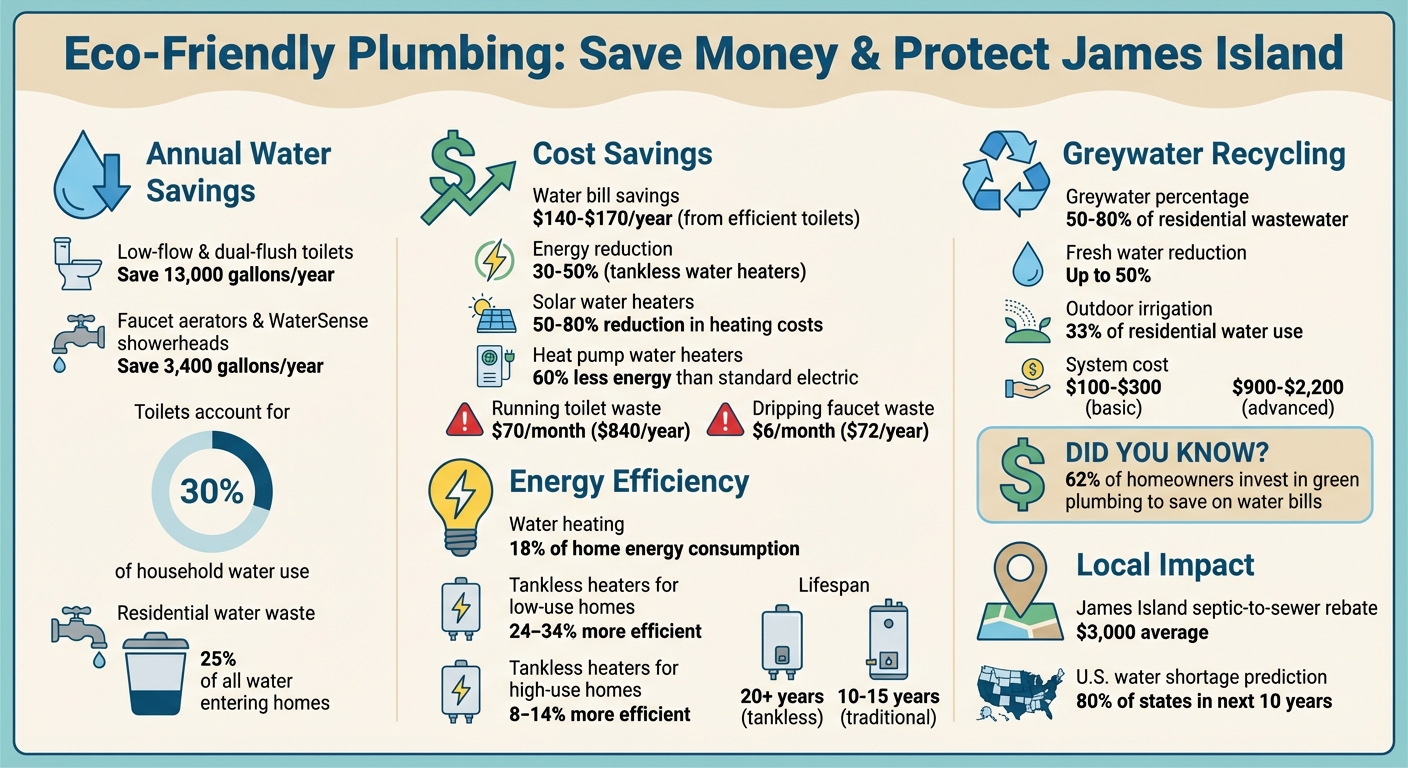
Eco-Friendly Plumbing Cost Savings and Water Conservation Statistics for James Island Homes
Key Benefits of Eco-Friendly Plumbing Solutions
Water Conservation and Lower Utility Bills
Switching to water-efficient fixtures not only saves water but also puts money back in homeowners’ pockets. For example, low-flow and dual-flush toilets can save up to 13,000 gallons of water per year, translating to about $140 in annual savings on utility bills. Similarly, installing faucet aerators and WaterSense-labeled showerheads can help a household save over 3,400 gallons annually.
"Saving on water bills influences 62% of homeowners’ decisions to invest in green plumbing." – Mr. Rooter Plumbing
Given that toilets alone account for about 30% of household water use, these upgrades offer tangible reductions in water bills while promoting more sustainable water usage, which also benefits the local economy.
Energy Efficiency with Modern Technology
Eco-friendly plumbing solutions go beyond water conservation – they also improve energy efficiency. Since water heating makes up roughly 18% of a typical home’s energy consumption, targeting this area can yield significant savings. For instance, tankless water heaters heat water on demand, cutting energy use by 30% to 50% compared to traditional models that maintain a hot water tank. Heat pump water heaters are another smart choice, using 60% less energy than standard electric water heaters by drawing heat from the air.
In sunny areas like James Island, solar-powered water heaters can reduce water heating costs by 50% to 80%. Additionally, insulating hot water pipes is a simple yet effective way to retain heat, cutting down on energy loss and reducing the wait time for hot water.
Reducing Your Impact on the Local Environment
Eco-friendly plumbing not only saves resources but also helps protect James Island’s delicate coastal ecosystem. Cutting water usage eases the strain on local reservoirs and aquifers, which is especially critical as 80% of U.S. state water managers predict shortages in the next 10 years. Using modern PEX piping, which resists corrosion in salty environments, also reduces the risk of leaks that could harm groundwater or nearby marshlands.
Smart leak detection systems further enhance environmental protection. These systems send real-time alerts to your phone when unusual water usage occurs, preventing the waste of thousands of gallons of water from undetected leaks. Considering that 25% of all water entering residential buildings is wasted due to inefficient fixtures or poor management, proactive monitoring can make a big difference for both your home and the surrounding environment.
sbb-itb-998eb83
Popular Eco-Friendly Plumbing Solutions for James Island Homes
Low-Flow Fixtures and Dual-Flush Toilets
Switching to WaterSense certified fixtures is a quick way to cut back on water usage without sacrificing performance. These fixtures are verified to use at least 20% less water than federal standards, thanks to features like aerators in low-flow faucets. These aerators mix air into the water stream, reducing flow to 1.5 gallons per minute (gpm) compared to the typical 1.8 gpm.
Dual-flush toilets offer another smart upgrade, giving you the choice between a low-water flush for liquids and a full flush for solids. Considering that toilets account for nearly 30% of indoor water use, replacing an older model that uses up to 6 gallons per flush (gpf) with a WaterSense toilet at 1.28 gpf or less can save a family nearly 13,000 gallons of water annually and over $170 a year on water bills. Unlike early low-flow models from the 1990s, which often struggled with performance, today’s designs handle waste more effectively while using much less water. These upgrades don’t just benefit your wallet – they also help ease the strain on James Island’s water systems and protect local ecosystems.
Before you buy, check with Charleston-area utilities for potential rebates or vouchers to help offset costs. And if your toilet was made before 1994, it’s likely inefficient and a great candidate for replacement.
Modern water heating solutions can also make a big difference in efficiency.
Tankless Water Heaters
Tankless water heaters are a smarter way to heat water, as they only activate when you turn on a faucet. For households using 41 gallons or less of hot water daily, these systems can be 24% to 34% more energy efficient than traditional storage tanks. Even higher-use homes, consuming around 86 gallons per day, can still achieve 8% to 14% energy savings. This not only cuts energy bills but also helps preserve the coastal environment.
Another advantage is their durability – tankless units typically last over 20 years, compared to the 10 to 15 years you might get from a conventional tank. This longer lifespan reduces replacement costs and minimizes the risk of leaks that could cause water damage. When choosing a tankless system, calculate your home’s peak water demand in gallons per minute (e.g., a shower needs about 2.5 GPM, while a dishwasher uses 1.3 GPM) to ensure it can handle your needs. Look for ENERGY STAR certified models with an intermittent ignition device, which avoids wasting gas by eliminating the need for a standing pilot light.
For eco-conscious homeowners, outdoor water solutions also offer exciting possibilities.
Greywater Recycling Systems
Greywater systems reuse gently used water from sources like bathroom sinks, showers, and washing machines – excluding toilets and kitchen sinks – and repurpose it for things like landscape irrigation or toilet flushing. Since 50% to 80% of residential wastewater is greywater, recycling it can cut household fresh water usage by as much as 50%. This is especially helpful on James Island, where outdoor irrigation makes up nearly one-third of all residential water use.
"Greywater contains small amounts of nutrients that benefit plants, providing a natural irrigation solution that keeps your lawn and garden healthy without relying on chemically treated tap water." – Charlotte Plumbing
One popular option is the laundry-to-landscape system, which redirects washing machine water directly outdoors without requiring major plumbing changes. Basic setups cost between $100 and $300, while more advanced systems with professional installation range from $900 to $2,200, depending on complexity. Before installing, consult a licensed plumber to ensure compliance with South Carolina regulations, and include a 3-way diverter valve so you can switch back to the sewer system when using harsh detergents. To minimize health risks, use subsurface drip lines and avoid irrigating root vegetables with untreated greywater.
These systems not only lead to long-term savings but also contribute to preserving James Island’s natural resources for future generations.
Addressing Local Plumbing Challenges with Eco-Friendly Solutions
Reducing Water Waste from Leaks
Did you know a single running toilet can waste about 200 gallons of water daily? That’s over 6,000 gallons a month, potentially adding around $70 to your water bill. Even something as seemingly minor as a fast-dripping faucet can waste 11 gallons per day, costing you an extra $6 per month.
"Smart water monitoring devices… track your daily water usage, detect leaks, and send alerts directly to your phone when unusual activity is detected." – Hardy Plumbing
Smart leak detectors are a game-changer. These devices provide round-the-clock monitoring, alert you to unusual water activity, and can even shut off your water automatically to prevent major damage. Beyond technology, replacing fixtures older than five years is a practical step to avoid leaks caused by worn-out seals or valves. For James Island residents, upgrading outdated pipes with modern materials not only reduces the risk of leaks but also cuts down on repair costs. Professional tools can also pinpoint hidden leaks in tricky spots, like behind walls or underground.
While fixing leaks addresses immediate issues, upgrading your plumbing system ensures better long-term performance and sustainability.
Upgrading Outdated Plumbing Systems
Older plumbing systems often require significant upgrades to remain efficient and eco-friendly. Replacing corroded pipes with flexible PEX materials and installing pressure-reducing valves can protect your system from damage caused by high municipal water pressure, significantly lowering the chance of leaks.
These upgrades do more than just reduce water waste – they contribute to a cleaner environment. For example, James Island residents still using septic systems may face challenges with waste management. Switching to municipal sewer lines is a critical step in reducing environmental contamination. To support this, the Town of James Island offers reimbursements – averaging $3,000 – to eligible residents for upfront sewer connection costs in designated areas like Clark’s Point. This initiative is especially vital, as James Island Creek has been labeled an "impaired waterway", making it a priority to address waste from failing septic systems.
Conclusion: Making the Switch to Eco-Friendly Plumbing
Steps to Get Started with Eco-Friendly Plumbing
Ready to make your home more eco-conscious? Start with a professional, whole-home plumbing inspection. This will help uncover hidden leaks, outdated fixtures, and areas where water or energy might be going to waste. Think of it as your roadmap to identifying the most impactful upgrades.
Begin with affordable, easy fixes. Swapping out standard showerheads for low-flow versions and adding faucet aerators can slash water use by up to 50% – without sacrificing water pressure. Dripping faucets or running toilets might seem minor, but fixing them right away can save a surprising amount of water. For larger changes, like installing tankless water heaters or setting up a greywater recycling system, consult professionals like ALL Plumbing Services. They can recommend options tailored to your home and budget.
"By making small changes to some of the most fundamental parts of our homes, such as pipes, fixtures, and appliances, we can all do our part to make a positive impact on the environment." – All Plumbing Inc.
When upgrading fixtures, look for WaterSense-certified products. Adding insulation to your hot water pipes is another simple way to cut energy loss, and don’t forget to schedule regular maintenance, like flushing your water heater annually, to keep everything running smoothly. These steps not only save resources but also set the stage for a greener, more efficient home in James Island.
Building a Better Future in James Island
Eco-friendly plumbing upgrades are more than just home improvements – they’re an investment in James Island’s future. By reducing water and energy use, you’re helping protect the local environment while easing the strain on municipal systems. Plus, these upgrades can increase your property’s value over time.
The financial perks are hard to ignore. For example, dual-flush toilets can save nearly 13,000 gallons of water annually and trim water bills by about $140 a year. Tankless water heaters are another smart choice, cutting energy consumption by 30% to 50%. Over time, these systems often pay for themselves through lower utility costs and may even qualify for rebates or tax incentives. Whether you’re tackling small repairs or planning major upgrades, eco-friendly plumbing is a win for your home and the James Island community.
FAQs
Which eco-friendly plumbing upgrade pays off fastest?
Installing water-saving fixtures, such as low-flow toilets and showerheads, is an easy and effective way to cut down on water usage. These upgrades not only help conserve water but also lower your monthly bills, offering a fast way to recoup your investment.
Are greywater systems legal in James Island?
Greywater systems are permitted in James Island, South Carolina, but they must comply with local regulations. This includes obtaining approval from a licensed engineer and meeting specific design and installation standards. For example, greywater can only be used for subsurface reuse and irrigation. Always check local guidelines to make sure your system meets all necessary requirements.
What rebates are available for green plumbing upgrades?
If you’re considering upgrading to eco-friendly plumbing fixtures, you might be eligible for rebates through local or federal programs. For instance, James City County offers rebates of up to $75 for washing machines and $50 for dishwashers as part of their rebate initiative. On a federal level, the EPA’s WaterSense program provides rebates for products like WaterSense-labeled toilets and showerheads. Keep in mind, though, that rebate amounts and eligibility requirements depend on where you live.