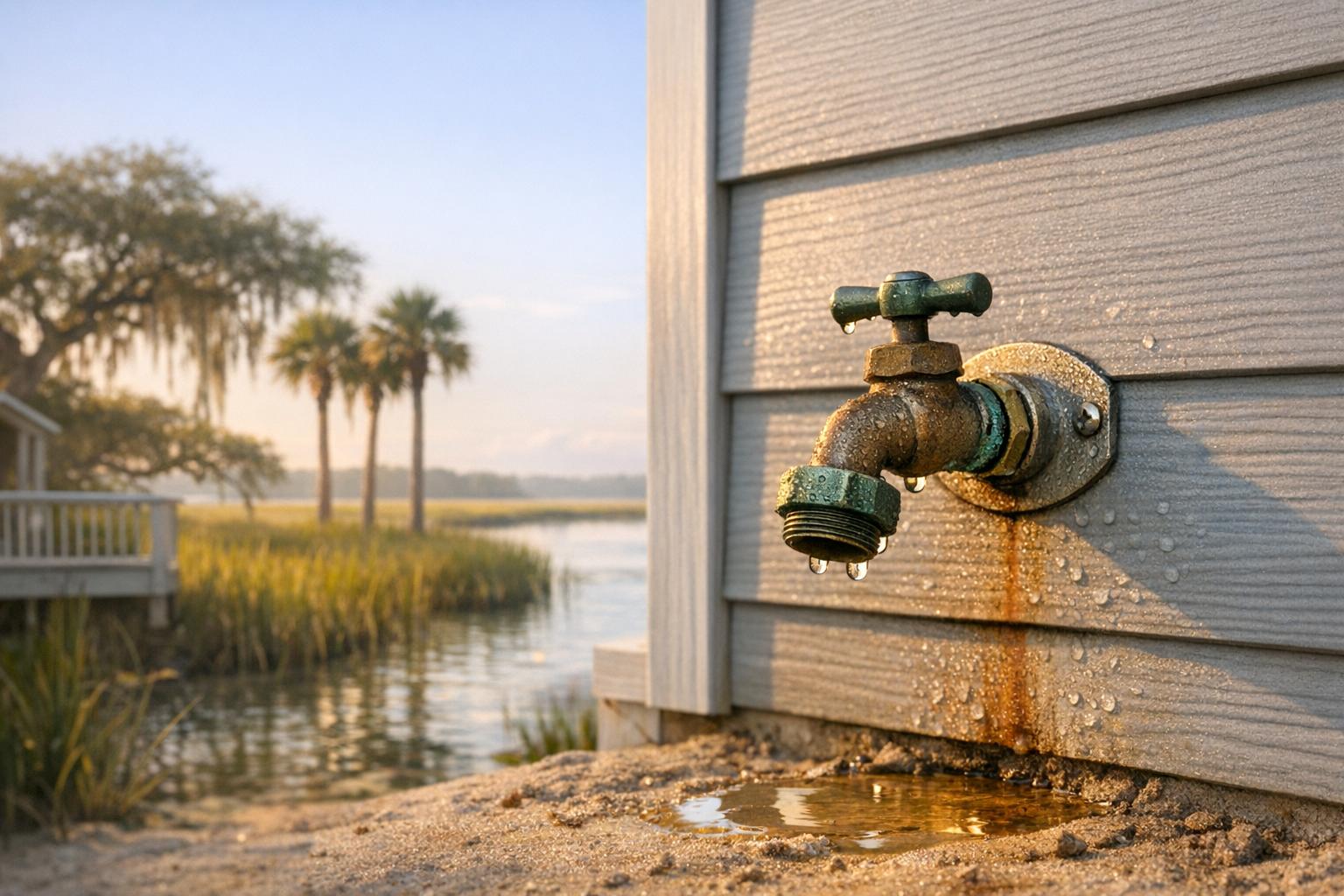
Living near Bluffton’s May River offers stunning views, but the coastal environment creates unique plumbing challenges. Salt air, high humidity, tidal changes, and elevated water tables can corrode pipes, cause drainage issues, and accelerate wear on plumbing systems. Homes built before 2000 are especially vulnerable due to aging materials like galvanized steel and copper.
Key issues include:
- Salt air corrosion: Damages outdoor and older metal pipes faster.
- High water tables: Lead to drainage problems and foundation pressure.
- Humidity: Causes pipe condensation, leaks, and mold growth.
- Aging pipes: Galvanized steel and copper deteriorate quicker in coastal conditions.
Solutions include upgrading to PEX or PVC pipes, installing sump pumps with battery backups, and regular maintenance like pipe insulation and backflow testing. Proactive care helps prevent costly repairs and keeps Bluffton waterfront homes in good condition.
Salt Air and May River Proximity: Why Pipes Corrode Faster
Pipe Materials for Bluffton Coastal Homes: Lifespan & Corrosion Resistance
Homes near the May River face faster pipe corrosion due to the salty coastal environment. Salt particles carried by the breeze settle on metal surfaces, and when combined with the region’s high humidity, they speed up rust and deterioration. This is a more aggressive process compared to what happens in inland areas, impacting both indoor and outdoor plumbing.
How Salt Air Damages Bluffton Plumbing Systems
Salt air is particularly harmful because it carries chlorides, which are tough on metal. When these particles settle on materials like iron, galvanized steel, or even copper, they strip away the protective oxide layer that normally prevents rust. Without this layer, the metal deteriorates much more quickly.
"The salt air speeds up corrosion in older copper or galvanized plumbing systems, especially in exterior lines." – ALL Plumbing
Outdoor plumbing components – like hose bibs, pipes in crawl spaces, and exterior faucets – are especially vulnerable. These are often the first areas to show signs of rust, pitting, or even complete failure.
Understanding how salt air interacts with plumbing helps homeowners make smarter choices about prevention and maintenance.
Materials and Methods to Resist Corrosion
One of the best ways to fight corrosion is by selecting materials that are resistant to it. PEX and PVC pipes are excellent options for coastal homes because they don’t react to chlorides. For outdoor fixtures like spigots or beach showers, using marine-grade materials or rust-resistant coatings can provide long-lasting protection in salty conditions.
For older metal pipes that are hard to replace, epoxy pipe lining is a practical solution. This involves applying a protective coating to the inside of the pipes, creating a barrier against moisture and salt. It’s a cost-effective way to extend the life of existing plumbing without a full replacement. Another simple yet effective tip is rinsing outdoor fixtures with a garden hose every few weeks to remove salt buildup.
When to Replace Corroded Pipes
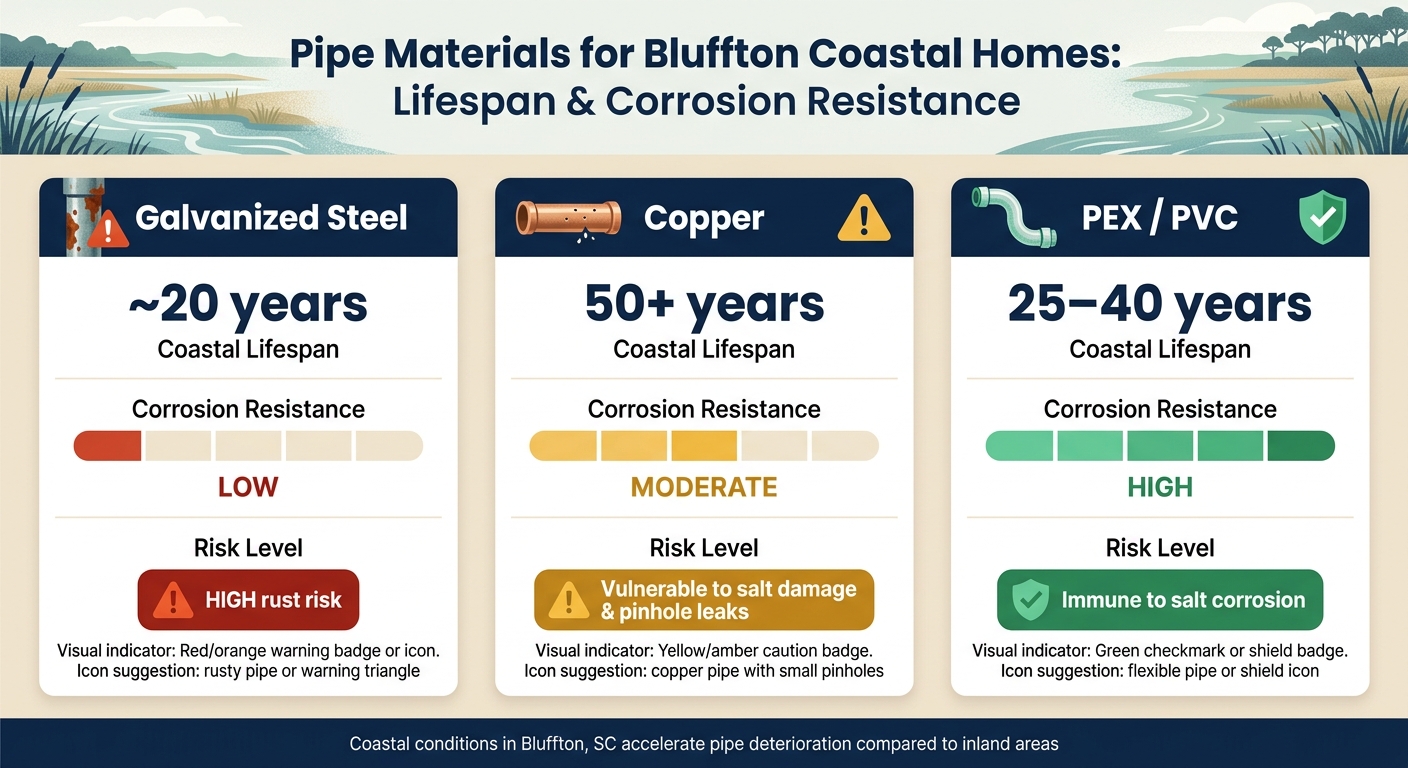
The faster corrosion rates in Bluffton mean homeowners need to act quickly to avoid bigger problems. Galvanized steel pipes in these conditions often need replacing after about 20 years, much sooner than in inland areas. Copper pipes last longer – sometimes over 50 years – but they can still develop pinhole leaks due to the salty air.
| Pipe Material | Estimated Coastal Lifespan | Corrosion Resistance |
|---|---|---|
| Galvanized Steel | ~20 years | Low – high rust risk |
| Copper | 50+ years | Moderate – vulnerable to salt damage |
| PEX / PVC | 25–40 years | High – immune to salt corrosion |
If leaks start appearing in multiple areas of the home, it’s a sign that the entire plumbing system is failing, not just isolated sections. Other warning signs include discolored water, reduced water pressure, musty odors, or visible rust and pitting. At this point, replacing the entire system is often more cost-effective than continuing to patch individual leaks.
sbb-itb-998eb83
High Water Table and Drainage Problems in Bluffton Waterfront Homes
Bluffton waterfront homes face a unique challenge: a naturally high water table. Near the May River and marshes, groundwater often sits just a few feet below the surface. When heavy rains or tidal changes occur, the water table can rise quickly, saturating the soil and pushing moisture toward foundations. This creates drainage issues that demand targeted solutions to protect both the structure and interior spaces.
Hydrostatic Pressure and Drainage Failures
Saturated soil generates hydrostatic pressure, which presses against foundation walls, footings, and slabs. This pressure can lead to cracks, efflorescence (white, chalky deposits), and persistent dampness in crawl spaces.
The signs of drainage failure aren’t always obvious. Look out for standing water or mud in the crawl space days after a storm, warped hardwood floors, musty odors coming from HVAC vents, or rust on metal supports under the home. These red flags often indicate that the drainage system is struggling to keep up. Addressing problems early can save homeowners from costly structural repairs down the line.
"High water table issues: Flooding and poor drainage can back up sewer lines and overwhelm sump pumps." – ALL Plumbing
Spotting these issues early enables homeowners to take action, often starting with sump pump solutions.
How Sump Pumps Protect Low-Lying Homes
Sump pumps are a practical solution for homes where groundwater threatens crawl spaces or basements. The system works by installing a basin at the lowest point under the house, connected to perimeter French drains. As water collects in the basin, the pump activates and removes the water from the foundation area. This reduces hydrostatic pressure and keeps the space dry.
In Bluffton’s waterfront homes, pump size is critical. Homes near the river or marshes often require a 1/2 HP pump (or larger) to handle heavy rain and tidal surges. For storm-prone areas, a battery backup is essential since power outages often coincide with severe weather.
"Power outages can render your sump pump ineffective. Consider battery backups to keep your pump operational during such events." – ALL Plumbing
Monthly testing is essential to ensure the pump functions correctly. Pouring water into the basin verifies that the pump activates, discharges water, and shuts off properly. Additionally, professional inspections – especially before storm season – help check components, clear discharge lines, and ensure the float switch is working. ALL Plumbing’s sump pump repair and service team understands the specific needs of homes in Bluffton’s coastal areas.
Drainage System Upgrades That Work
While sump pumps address interior water, managing exterior water is just as important. For Bluffton waterfront homes, upgrading drainage systems can significantly reduce water accumulation. Here are some effective strategies:
- Grading: Ensure the soil slopes at least 6 inches downward over the first 10 feet from the foundation. Proper grading prevents surface water from pooling around the home during rain.
- Gutters and Downspouts: Extend downspouts 6–10 feet away from the house and keep them clear of debris. This helps direct roof runoff away from saturated areas.
- French Drains or Catch Basins: These systems collect water in low spots before it pools near the foundation. When combined with proper grading and well-maintained gutters, they help reduce surface water intrusion and the hydrostatic pressure that can damage foundations.
Humidity and Condensation: Plumbing Problems in the Lowcountry
In the Lowcountry, humidity adds another layer of complexity to plumbing maintenance. While salt air corrosion and high water tables already pose significant challenges, the area’s humid climate can wreak havoc on plumbing systems in its own way. Let’s dive into how humidity impacts plumbing, ways to prevent condensation, and methods to detect potential issues.
What Humidity Does to Plumbing Systems
Summers in the Lowcountry are notoriously humid, and this moisture-filled air can create big problems for plumbing. When humid air meets the cold surfaces of water pipes in crawl spaces or wall cavities, condensation forms. Over time, this persistent moisture weakens the pipes, leading to pinhole leaks, drips, and even complete failures.
"The Lowcountry climate means pipes in crawl spaces and wall cavities are constantly exposed to humidity, accelerating corrosion and mold risk around any slow leak." – ALL Plumbing
But that’s not all. The damp conditions caused by condensation also create the perfect environment for mold and mildew. Early warning signs of trouble might include musty smells, warped floors, or bubbling paint – clear indicators that excessive moisture is affecting your home’s plumbing.
How to Prevent Condensation Damage
The good news? You can take steps to protect your plumbing from condensation damage. Start by insulating your pipes. Wrapping cold-water pipes with waterproof foam insulation helps create a barrier that prevents humid air from coming into direct contact with the pipe surface.
Another effective measure is installing a vapor barrier in crawl spaces, which limits moisture buildup. Improving ventilation in crawl spaces and utility areas is also key. If humidity levels persist, consider installing a whole-home dehumidifier to safeguard both your plumbing and indoor air quality.
Leak Detection in Humid Conditions
One of the trickiest parts of managing plumbing in a humid environment is distinguishing between condensation and actual leaks. Both can leave moisture on pipes and nearby surfaces, making it hard to identify the real culprit.
To address this, plumbers often rely on advanced tools like thermal imaging and acoustic devices to locate moisture sources. For example, ALL Plumbing’s leak detection and repair service uses these non-invasive methods to determine whether you’re dealing with a slab or wall leak – or just condensation. Scheduling an annual inspection is a smart way to stay ahead of moisture-related plumbing issues in this humid region.
Aging Galvanized Pipes: Signs It Is Time to Repipe
Bluffton waterfront homes built between the 1970s and 1990s often still rely on their original galvanized pipes. Decades of exposure to salt air and humidity have taken a toll, and as we’ve discussed, coastal conditions speed up deterioration. For homeowners, repiping isn’t just a maintenance task – it’s a critical step in preserving the home’s plumbing system.
How to Spot Galvanized Pipe Problems
Certain issues can signal that your galvanized pipes are nearing the end of their lifespan. These include:
- Low water pressure: Scaling and mineral deposits inside the pipes restrict water flow, leaving you with weak pressure.
- Discolored water: Rusty, brown, or yellow-tinted water is a strong indicator that the pipe’s galvanized coating has corroded.
- Recurring leaks: Frequent leaks suggest the pipes are breaking down internally.
- Noisy pipes: Unusual sounds can point to structural problems.
- Unexplained water bill spikes: Higher bills without increased usage could mean hidden leaks.
"Rusty, brown, or yellow water from faucets can mean corrosion inside pipes, which affects water quality and plumbing efficiency." – ALL Plumbing
In Bluffton, the coastal environment accelerates these problems. Salt air and humidity cause galvanized pipes to deteriorate faster than they would in inland homes.
Why Repiping Improves Long-Term Performance
Upgrading to modern materials is a game-changer, especially in coastal areas. Here’s a breakdown of the most common choices:
- PEX (cross-linked polyethylene): Flexible, resistant to mineral buildup, and more affordable to install than copper.
- Copper: Known for its durability and excellent resistance to corrosion, making it a long-term solution.
- CPVC: A cost-effective option with solid performance for both hot and cold water lines.
Each of these materials outperforms aging galvanized steel, especially in the Lowcountry’s challenging conditions. Repiping not only restores water pressure and clarity but also eliminates the risk of hidden leaks. Companies like ALL Plumbing can help you decide which material works best for your home’s layout and budget. Their piping and repiping service provides tailored assessments to ensure the right fit.
Repiping Costs vs. Ongoing Repair Costs
While patching up leaks might seem like a quick fix, it’s often a temporary solution. Recurring leaks can lead to costly emergency repairs, water damage, and even mold remediation. On the other hand, a whole-house repipe tackles the problem at its core, offering decades of reliable performance. Plus, updated plumbing can even boost your home’s value if you decide to sell.
"Proactive attention lowers your risk of costly emergencies and helps… property owners protect their homes." – ALL Plumbing
Most repiping projects, including those managed by ALL Plumbing Services, start with a free estimate. This allows homeowners to weigh the upfront cost of repiping against the expenses of repeated repairs. For many Bluffton waterfront homes, repiping sooner rather than later often proves to be the smarter financial choice.
Backflow and Water Quality Risks Near Tidal Areas
Homes along Bluffton’s waterfront face a real risk of backflow due to their proximity to the May River. Sudden shifts in water pressure – often caused by storms or flooding – can reverse the flow in your pipes, allowing contaminants to enter your clean water supply. This issue is particularly common in Bluffton, where many properties are at or near sea level, making backflow a persistent concern during hurricane season. Addressing this pressure imbalance is critical to maintaining safe water.
Why Tidal Areas Are Prone to Backflow
Backflow happens when rapid changes in water pressure disrupt the normal flow direction. During tidal flooding or heavy rainfall, overwhelmed drainage systems can cause this reversal, introducing organic waste, harmful microorganisms, or even toxic chemicals into your drinking water. Properties near tidal waterways, such as those along the May River and nearby islands, face elevated risks due to their low elevation and high water tables.
How Backflow Prevention Devices Help
One of the best ways to protect your water supply is by installing a backflow prevention device. Options like pressure vacuum breakers and RPZ assemblies are designed to maintain one-way water flow and manage sudden pressure changes. Bluffton regulations also require annual testing of these devices to ensure they’re functioning properly. Neglecting this test could result in device failure, contamination of neighboring water supplies, and steep fines. Spring is an ideal time for testing, as water systems are fully operational after winter, and the process typically takes less than an hour. These preventive steps also make post-event water quality testing more effective.
Checking Water Quality After Backflow Events
After flooding or a tidal surge, don’t assume clear water is safe to drink. Always arrange for a professional water quality test to confirm your supply hasn’t been compromised. Watch for warning signs like rust-colored water, strange odors, or visible sediment, as these can indicate contamination.
For added security, consider installing a whole-home filtration system to protect against contaminants after pressure changes. If you own a vacation or secondary home in Bluffton, make sure your property manager has a plan for professional water testing after major storms. Additionally, smart tools like remote monitoring systems and automatic shut-off valves can alert you to unusual water flow, helping prevent minor backflow incidents from turning into serious problems.
Preventive Maintenance for Bluffton Waterfront Homes
Coastal homes face unique challenges due to factors like corrosion, drainage issues, and high humidity. Staying on top of maintenance is crucial to protect your property and avoid costly repairs.
Why Coastal Homes Need a Different Maintenance Schedule
Unlike inland properties, waterfront homes in Bluffton endure harsh conditions such as salt-laden air, high humidity, and tidal influences. These elements speed up the wear and tear on metal pipes, valves, and outdoor fixtures. Problems that might take years to surface in other locations can appear much sooner here, making regular, seasonally adjusted inspections essential.
"Annual checkups help prevent small leaks, detect corrosion early, and improve system efficiency – especially in older or flood-prone homes." – ALL Plumbing
Seasonal and vacation homes along the May River are particularly vulnerable. If a property sits empty for months, issues like slow leaks or corroding joints can escalate unnoticed, leading to expensive repairs. To mitigate these risks, pre-season and post-season inspections are highly recommended for homes that aren’t occupied year-round.
Key Plumbing Maintenance Tasks for Bluffton Homes
Waterfront homes require specific upkeep to combat the effects of the coastal environment. Essential tasks include:
- Corrosion checks: Examine exposed metal pipes, valves, and outdoor fixtures for signs of rust, pitting, or discoloration caused by salt air.
- Sump pump testing: Test sump pumps regularly, especially before storm season.
- Drain cleaning: Remove sand, sediment, and organic debris from drains. Professional hydro-jetting is often the most effective method.
- Camera inspections: Use cameras to inspect sewer lines, especially in areas with mature trees like live oaks, to spot root intrusion.
- Backflow preventer testing: Conduct yearly tests to ensure backflow preventers are functioning properly, protecting water quality during tidal flooding or storms.
- Monitoring water bills: Watch for unexplained increases in water bills, which could signal hidden leaks or irrigation system issues.
Additionally, rinsing outdoor fixtures regularly helps minimize salt buildup and prolongs the life of exposed hardware.
How ALL Plumbing Services Helps Bluffton Homeowners
ALL Plumbing Services is well-versed in addressing the specific needs of Bluffton’s coastal properties. Their expertise ensures homeowners receive thorough and effective support.
"We recommend a full inspection at least once per year – more frequently if your home is vacant for long stretches. Salt, moisture, and sand can degrade plumbing faster in coastal settings." – ALL Plumbing
The company offers a range of services, including routine inspections, advanced leak detection using acoustic and thermal imaging, and maintenance plans tailored to waterfront homes. Whether you need a sump pump check before storm season, an evaluation for repiping in an older property, or a complete plumbing inspection, ALL Plumbing Services provides reliable, expert solutions designed for coastal living.
Conclusion: Keeping Your Bluffton Waterfront Home’s Plumbing in Good Shape
Living in Bluffton’s coastal environment brings unique plumbing challenges that inland homes rarely face. These conditions make it crucial to address your waterfront home’s plumbing needs with targeted solutions.
Fortunately, most of these issues can be tackled with preventive care. Simple steps like upgrading to corrosion-resistant materials such as PEX, ensuring sump pumps are ready before storm season, and scheduling annual inspections can significantly protect your property. As ALL Plumbing puts it:
"Salt air, coastal humidity, and the wear that comes with heavy seasonal rental use puts pressure on plumbing systems in ways that don’t show up on the mainland."
For homes with aging or compromised pipes, repiping with modern materials not only restores water pressure but also prevents hidden leaks. This is especially beneficial for older homes or properties used seasonally, where unnoticed plumbing issues can escalate quickly.
ALL Plumbing Services has been assisting Lowcountry homeowners since 1987, bringing extensive expertise in managing the unique demands of coastal properties. Whether you’re looking for leak detection, sump pump maintenance, or a complete repiping evaluation, proactive care always beats reactive fixes. In Bluffton’s coastal setting, tailored maintenance isn’t just helpful – it’s essential for keeping your plumbing system reliable and efficient. Taking these steps now ensures your waterfront home stays prepared for the challenges of this demanding environment.
FAQs
How can I tell if moisture is from condensation or a real leak?
To figure out if you’re dealing with condensation or a leak, start by turning off all faucets and checking your water meter. If the meter is still moving, you’ve got a leak.
Condensation happens when cold pipes meet warm, humid air. It often shows up as water droplets on the pipe’s surface and can usually be avoided by adding insulation.
Leaks, on the other hand, tend to cause bigger issues like musty smells, higher water bills, mold growth, or even warped floors and walls. For areas you can’t easily see, try using a moisture meter. If you’re still unsure, a professional can help with tools like thermal imaging or acoustic testing to pinpoint the problem.
What sump pump size and backup do I need for a low-lying waterfront home?
Choosing the right sump pump for a low-lying waterfront home in Bluffton is no small task. Homes in this area often face challenges like a high water table and tricky drainage conditions, so it’s important to get a professional evaluation to assess your specific needs. If the pump isn’t sized correctly, you could end up dealing with frequent cycling or even pump failure – neither of which you want to experience during heavy rains.
One key feature to consider is a battery backup system. This ensures your sump pump keeps working during power outages, which are common during storms. Additionally, having a backup discharge line is a smart move – it can prevent flooding if the primary line becomes clogged. A professional inspection will help you set up the most reliable system tailored to your home’s unique requirements.
When should I replace galvanized or copper pipes in a coastal home?
If your home was built before 1970 or is over 50 years old, it might be time to think about replacing your pipes. Galvanized steel pipes, commonly used in older homes, tend to fail within 20 to 50 years. In areas like Bluffton, where the coastal environment brings salt air and high humidity, corrosion happens even faster. This can lead to rust, leaks, and sediment buildup in your plumbing.
Pay attention to warning signs like low water pressure, discolored water, or frequent leaks. If you notice these, it’s a good idea to schedule a professional inspection. Repiping not only helps you avoid expensive repairs but also ensures your home meets current building codes.