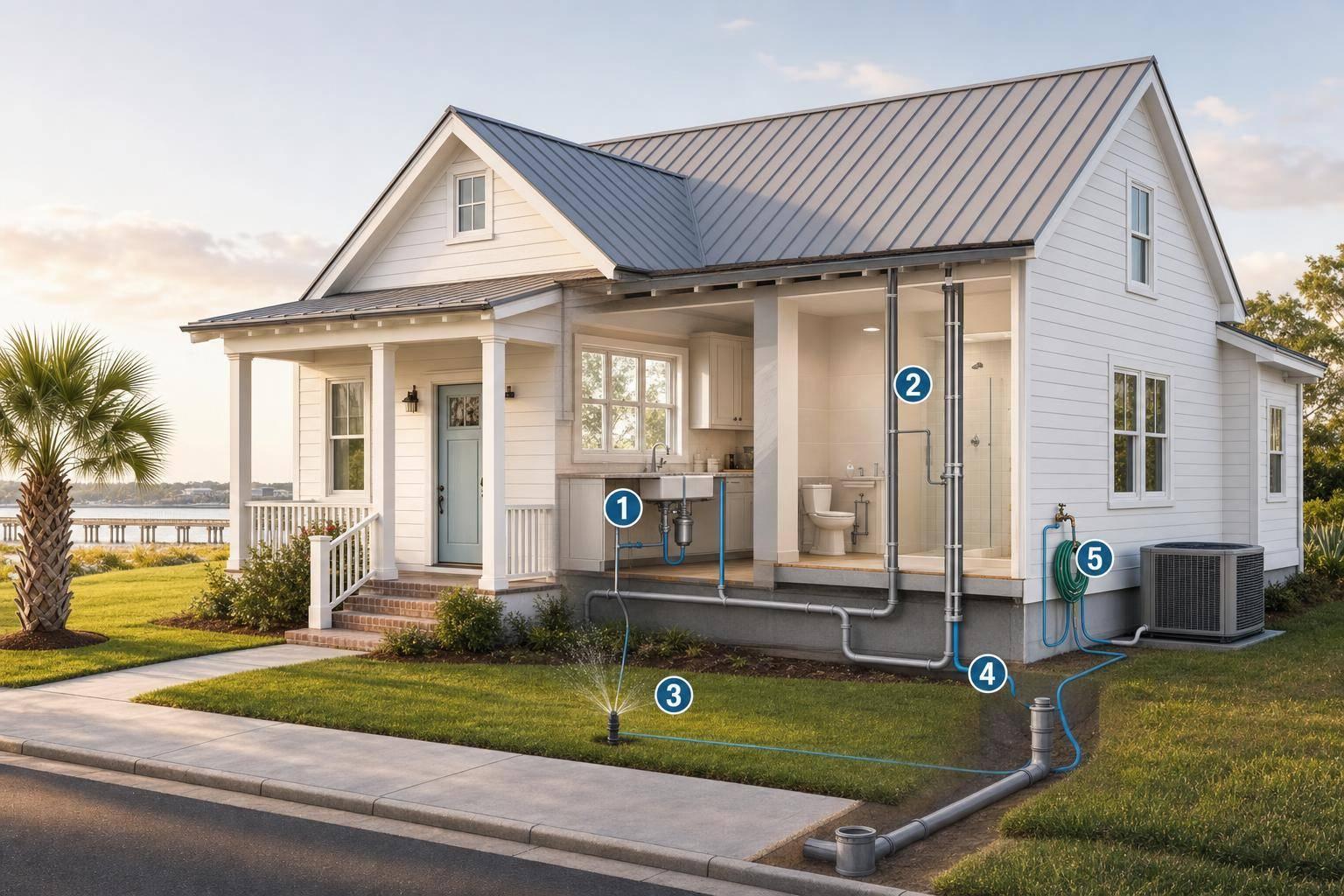
Summer is when small plumbing problems turn into big repair bills. In Charleston, heat, humidity, storms, and heavier water use can lead to clogged drains, garbage disposal jams, sprinkler leaks, sewer backups, and outdoor faucet or AC drain trouble.
If I wanted the short version, it would be this:
- Watch drains first: slow sinks, gurgling toilets, and bad smells can point to buildup or a main line problem.
- Keep grease and food scraps out of the kitchen drain: summer cooking puts more strain on disposals.
- Check irrigation and outdoor fixtures: wet spots, drips, and a moving water meter can signal a hidden leak.
- Take sewer warning signs seriously: if several drains slow down at once, it may be more than a simple clog.
- Test for hidden leaks early: summer water use can climb by 30% to 50%, and even a small drip can waste a lot of water.
A few simple steps can help cut the risk:
- Use mesh drain screens
- Run cold water with the disposal
- Never pour grease down the sink
- Inspect hose bibs and sprinkler heads
- Clear condensate lines
- Keep water pressure around 40 to 60 psi
- Schedule an inspection before late-summer storms
Here’s a quick side-by-side look at the five main issues:
| Issue | Common Sign | What You Can Do |
|---|---|---|
| Clogged drains | Slow draining, odors, gurgling | Use strainers and flush buildup |
| Garbage disposal jams | Humming, sink backup, sour smell | Keep grease and fibrous scraps out |
| Sprinkler leaks | Soggy lawn, higher bill | Check heads, lines, and meter |
| Sewer backups | Many drains slow at once | Get the main line checked |
| Hose bib/AC drain issues | Drips, musty smell, water stains | Inspect fixtures and clear drain lines |
The main point: if I catch these issues early, I have a much better shot at avoiding water damage, sewer messes, and high utility bills. The rest of the article explains what to look for and what to do next.
Why Summer Plumbing Problems Are More Common in Charleston Homes
Charleston’s coastal air, high humidity, and older plumbing systems put extra strain on exposed pipes and outdoor fixtures during summer. Salty air wears down outdoor faucets, hose bibs, and other metal parts faster. If a home still has older copper or galvanized steel pipes, the risk is even higher.
Summer life adds more stress inside the house too. Sand, sunscreen, backyard cookouts, and extra laundry all put more pressure on drains and garbage disposals.
Outdoor plumbing gets hit as well. Lawns need more water in the heat, and irrigation systems running at full capacity can put strain on pipes and connections. Tree roots grow more aggressively in warm weather too. They chase moisture and can slip into sewer lines through small cracks.
Heavy summer rain creates another layer of trouble. It adds pressure to underground pipes, which can lead to blockages and pipe cracks. Once all of that starts piling up, clogged drains are often the first issue homeowners notice.
1. Clogged Drains
Bathroom and kitchen drains can clog fast during a Charleston summer. When the house is busy, hair, soap scum, grease, and food waste pile up in a hurry. The good news is that most summer clogs can be avoided with a few simple habits.
Charleston’s humidity doesn’t help. Debris stuck in a drain can break down faster and start to smell. If you notice a rotten-egg odor, that often means the clog is holding waste and bacteria.
Some signs point to more than a minor clog. Gurgling toilets, several slow drains, or water backing up into lower fixtures during heavy rain usually mean you’re dealing with a main line issue, not just one blocked drain.
Prevention is pretty simple:
- Put mesh drain strainers in showers and sinks to catch hair and debris.
- Never pour grease down the drain. Let it cool, then throw it in the trash.
- Skip “flushable” wipes. They don’t break down well and can catch on pipe flaws or tree roots.
- Run hot water through drains on a regular basis to help move small buildup.
It’s time to call a plumber if clogs keep coming back after you clear them, if you spot wet patches or sewage smells in the yard, or if several drains are slowing down at once. When the same clog shows up again and again, a camera inspection can spot tree-root intrusion or a damaged line. And if there’s heavy buildup, hydro jetting can clear grease and scale that a standard snake may leave behind.
If the trouble starts at the kitchen sink, the garbage disposal is usually the next thing to check.
2. Garbage Disposal and Kitchen Drain Jams
When the kitchen sink starts backing up, the garbage disposal is usually the first thing to check. In Charleston, summer often means more cooking, more dishes, and more strain on the disposal and kitchen drain. And food waste is a big cause of Charleston drain clogs.
Seafood grease can harden fast inside pipes. On top of that, many Charleston homes have long horizontal drain lines under raised homes, which gives scraps more room to settle and build up instead of washing all the way through. Some foods are worse than others. Fibrous vegetables like celery and corn husks can wrap around disposal blades. Starchy foods like potato peels and rice soak up water, swell, and then sit in the pipe.
A few signs usually show up before a full jam:
- The disposal hums or rattles but doesn’t grind
- The sink drains slowly
- A sour smell sticks around
A little prevention goes a long way. Run cold water while the disposal is on and for a few seconds after. Scrape food into the trash before rinsing dishes. And never pour seafood grease down the sink.
If the disposal is jammed, humming, or backing up again and again, it’s time to call a plumber for drain cleaning.
Kitchen clogs happen all the time, but outdoor plumbing can take a beating in summer too.
3. Sprinkler System Leaks and Irrigation Problems
Charleston sprinkler systems take a beating in summer. Long run times, heat, and constant sun wear out fittings, seals, and underground lines. Once that starts, the first hints are often pretty simple: wet spots in the yard, a higher water bill, or a meter that keeps moving.
South Carolina sun is hard on outdoor plumbing. Plastic fittings and rubber parts can turn brittle over time. Pipes also expand in the daytime heat and contract when temperatures cool off at night. That back-and-forth movement can loosen joints and weaken connections. On top of that, Charleston’s live oaks and palmettos grow more aggressively in spring and summer as they look for moisture, and irrigation lines can end up right in their path.
Some signs are easy to shrug off at first. A soggy patch of lawn that stays wet even when the system is off can point to an underground leak. A sudden jump in your summer water bill is another warning sign.
A simple first step is to check your water meter, avoid using any water for two hours, and then compare the readings. If you still can’t find the source, leak detection can locate underground leaks without tearing up the yard. ALL Plumbing Services offers leak detection and repair for Charleston homeowners.
If the issue isn’t in the sprinkler lines, heavy rain can trigger the next problem in the sewer line.
4. Sewer Line Backups After Heavy Summer Rain
If your outdoor plumbing looks fine, the next place to check is the main sewer line. In Charleston, heavy summer rain can overload older sewer systems and force wastewater back into the house. That risk is higher in pre-1980 homes, where clay and cast-iron sewer lines are still common. Those older lines are more likely to crack or let tree roots work their way inside. Add saturated soil and shifting ground to the mix, and even a partly clogged line can start acting up fast.
One of the biggest clues is when several drains slow down at the same time. If sinks, tubs, and toilets are all draining poorly, the issue usually points to the main line. Other warning signs are hard to miss:
- Gurgling sounds from the toilet
- Water rising in the bathtub after you flush
- Sewage smells near drains
- Soggy areas in the yard that stay wet after the rain ends
Those signs matter because a main line backup rarely stays small for long. What starts as a slow drain can turn into wastewater coming up through the home’s lowest drains.
A few basic steps can help lower the risk. Keep the cleanout capped, and make sure yard drainage stays open so water doesn’t collect near the foundation. If your home is in a flood-prone part of Charleston, like West Ashley, James Island, or downtown Charleston, it’s smart to schedule a sewer camera inspection once a year before hurricane season ramps up. And if backups keep happening, drain cleaning, leak detection, and routine maintenance can help keep the line clear.
If the sewer line isn’t the issue, the next trouble spot is often outdoor faucets and condensate drains.
sbb-itb-998eb83
5. Outdoor Faucet, Hose Bib, and AC Condensate Drain Issues
Check outdoor faucets, hose bibs, and AC condensate drains too. In Charleston, summer heat and humidity put a lot of strain on all three. And that same summer wear shows up fast in AC condensate lines.
Hose bibs tend to wear out faster in summer because people use them more. Washing cars, filling pools, and running garden hoses all add strain to fixtures that may already have minor winter damage. Charleston’s salt air also speeds up corrosion on older metal fittings, especially galvanized steel. It’s smart to test outdoor fixtures before peak summer use so you can catch drips and loose connections early. Insulating exposed pipes with fiberglass sleeves can also help limit heat strain and UV damage.
Watch for a few common warning signs:
- Slow drips
- Low water pressure
- Damp spots on exterior walls
Even a small drip can waste hundreds of gallons of water and slowly damage the area around your foundation.
AC drains cause trouble for a different reason, but the signs are easy to miss. Charleston’s humidity makes AC units produce heavy condensation. If the condensate drain line gets even partly blocked by algae or debris, water can back up into the unit and lead to indoor water damage. Musty smells coming from vents and stains on ceilings are usually the clearest clues. Keeping the line free of clogs helps stop those backups.
Hidden leaks in crawl spaces or inside walls often need leak detection from a plumber. ALL Plumbing Services offers leak detection and repair for hidden leaks in Charleston homes. That’s especially useful for homes with crawl spaces, where a slow leak can stay hidden for months.
Summer Plumbing Prevention Checklist for Charleston Homeowners
Use this quick checklist to help head off the five summer trouble spots above: drains, disposals, sprinkler lines, sewer backups, and outdoor fixtures.
Drains and kitchen habits are the easiest place to begin. Put mesh strainers in every shower and sink drain to catch hair and debris. Flush drains weekly with hot water, and use baking soda and vinegar once a month. Run cold water when using the disposal, and scrape food into the trash. Never pour grease down the drain.
After each beach trip, rinse off sand at an outdoor hose or shower station before coming inside. It’s a small step, but it can save your drains from a lot of wear.
Outdoor plumbing needs a quick check each month too. Look at hose bibs for drips or corrosion, especially on older fittings. Check sprinkler heads for broken parts or clogged nozzles, which can point to an underground leak. Clear yard drains and gutters monthly, and test the sump pump before hurricane season. Check the condensate line and change the HVAC filter every month.
Check water pressure with the seasons. Keep it between 40 and 60 psi. If it goes above 80 psi, it puts extra strain on fixtures and can increase the chance of leaks.
Summer Plumbing Problems at a Glance
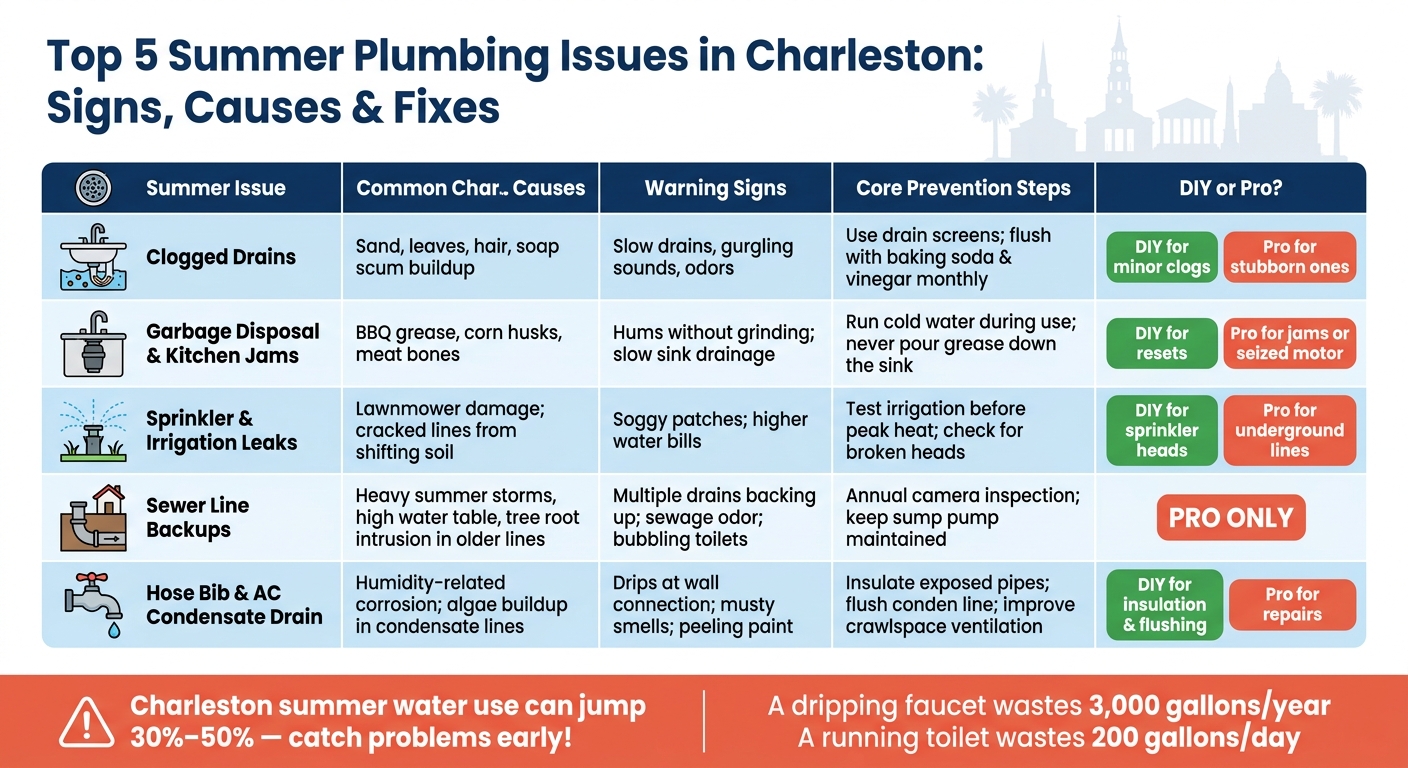
Top 5 Summer Plumbing Issues in Charleston: Signs, Causes & Fixes
Use this quick summary to figure out what calls for a simple fix and what’s better left to a plumber.
| Summer Issue | Common Charleston Causes | Warning Signs | Core Prevention Steps | DIY or Pro |
|---|---|---|---|---|
| Clogged Drains | Sand, leaves, hair, and soap scum buildup | Slow drains, gurgling, odors | Use drain screens; flush with baking soda and vinegar monthly | DIY for minor clogs; Pro for stubborn ones |
| Garbage Disposal & Kitchen Jams | BBQ grease, corn husks, and meat bones | Hums without grinding; slow sink drainage | Run cold water during use; never pour grease down the sink | DIY for resets; Pro for jams or a seized motor |
| Sprinkler & Irrigation Leaks | Lawnmower damage; cracked lines from shifting soil | Soggy patches; higher water bills | Test irrigation cycles before peak heat; check for broken sprinkler heads | DIY for sprinkler heads; Pro for underground lines |
| Sewer Line Backups | Heavy summer storms, high water table, and tree root intrusion in older lines | Multiple drains backing up; sewage odor; bubbling toilets | Annual camera inspection; keep the sump pump maintained | Pro only |
| Hose Bib & AC Condensate Drain | Humidity-related corrosion; algae buildup in condensate lines | Drips at the wall connection; musty smells; peeling or bubbling paint | Insulate exposed pipes; flush the condensate line; improve crawlspace ventilation | DIY for insulation and flushing; Pro for repairs |
The big thing to watch for is where the problem is happening. A slow kitchen drain or a disposal that needs a reset may be a simple home fix. But hidden leaks, sewer trouble, or damage below ground usually mean it’s time for leak detection and routine service.
Even small plumbing problems can hit your wallet fast. A dripping faucet can waste 3,000 gallons a year, and a running toilet can waste 200 gallons a day. In Charleston, that kind of water loss can push bills up in a hurry.
When Routine Maintenance and Leak Detection Are Worth It
Book a plumbing inspection in late spring or early summer, before the worst heat and humidity roll in. At that point, small problems like a worn hose bib washer or a slow drain are usually easier to deal with. It’s also the right time to look for hidden leaks.
In the Charleston area, household water use can jump by 30% to 50% during the summer months. That extra strain can bring weak spots to the surface after a quiet winter. One easy way to check for hidden leaks is with a meter test: read your water meter, don’t use any water for two hours, and then read it again. If the number changes, there’s a leak somewhere in the system. When that test shows hidden water loss, the next move is a sewer and supply-line inspection.
Sewer line inspections matter most before storm season, especially in older homes or homes in flood-prone areas. A camera inspection can spot tree root intrusion or cracked lines before a summer storm turns a small issue into a full backup. Homes built in the early 1980s to early 1990s may also have gray polybutylene pipes, and those should be checked early.
Smart leak detection gives you an early heads-up on problems behind walls or near appliances. Flood sensors placed by water heaters and washing machines can alert you to a leak before it leads to mold or structural damage in Charleston’s humid climate. ALL Plumbing Services offers smart leak detection systems, routine maintenance plans, tankless water heater descaling, and emergency plumbing support.
Use this simple checklist to make summer plumbing care easier:
- Schedule an inspection in late spring or early summer
- Run a two-hour water meter leak test
- Book a sewer and supply-line inspection if the meter reading changes
- Check sewer lines before storm season, especially in older or flood-prone homes
- Inspect gray polybutylene pipes in homes built in the early 1980s to early 1990s
- Place flood sensors near water heaters and washing machines
Conclusion
Charleston summer plumbing problems don’t come out of nowhere. This time of year tends to expose weak spots fast.
That’s why small repairs are usually far less expensive than dealing with water damage later. A loose connection, slow drain, or minor leak might not seem like a big deal at first. But summer heat, heavier water use, and late-season storms can turn a small issue into a messy one in a hurry.
Use the checklist above to spot minor problems before they spread. A quick inspection now, before late-summer storms roll in, is the easiest way to avoid mid-summer disruptions. If you haven’t scheduled one yet, book a plumbing inspection now. ALL Plumbing Services offers routine maintenance plans and emergency support for Charleston and Bluffton homeowners.
FAQs
How do I know if it’s a main sewer line problem?
Signs of a main sewer line problem often show up in more than one place at once. If your sinks, tubs, and toilets are all draining slowly at the same time, that’s a big clue.
Other warning signs include gurgling drains or toilets, sewage odors inside or outside the home, and water or waste backing up into lower-level fixtures. When you see symptoms like these, the problem usually points to the main line, not just one clogged fixture.
What summer plumbing issues can I prevent myself?
You can avoid a lot of summer plumbing trouble with a little basic upkeep.
Check outdoor faucets and hoses for leaks, rust, and loose fittings. These parts take a beating in the heat, so it’s smart to give them a quick look before a small drip turns into a bigger mess.
Keep your water pressure between 40 and 60 psi. If it gets too high, it can put extra stress on your pipes, faucets, and appliances.
It also helps to clean out gutters, downspouts, and outdoor drains. Summer storms can dump a lot of water fast, and clogged drainage can lead to backups where you least want them.
Inside the house, use drain strainers and keep grease and food scraps out of the kitchen sink. And if you want to catch hidden leaks early, check your water meter now and then. It’s a simple habit that can save you from a nasty surprise on your water bill.
When should I schedule a plumbing inspection?
The best time to schedule a plumbing inspection is early to mid-spring, usually March through April. That gives you a chance to spot problems before summer heat and heavier water use put more stress on your plumbing system.
For most homes, one inspection per year is enough. If your home’s plumbing is more than 50 years old, it’s smart to book an inspection every six months so you can catch corrosion and hidden leaks early.