

A small hidden leak can waste hundreds of gallons a day and lead to mold in as little as 24 to 48 hours. In Bluffton, that risk is higher because of humid air, slab foundations, sandy soil, and a high water table.
If I had to sum up the article in a few lines, it would be this: find leaks early, pinpoint the exact spot, fix only what needs repair, and lower the odds of mold, floor damage, and slab or soil problems. For homes, rentals, and businesses, that can mean avoiding bills that jump by hundreds of dollars per month and repairs that can climb into the tens of thousands of dollars.
Here’s the plain-English version:
- Why Bluffton leaks get bad fast: humidity, marsh-area groundwater, and under-slab plumbing
- What hidden leaks can do: higher water bills, mold, damaged drywall and flooring, and movement under a slab
- Signs to watch for: meter movement, weak pressure, musty smells, warm floors, stains, warped wood, and soft walls
- How plumbers find them: acoustic tools, thermal imaging, tracer gas, moisture checks, and pressure testing
- How leaks are fixed: spot repair, rerouting, section repair, or epoxy lining, based on access and pipe condition
- How to lower future risk: smart shutoff devices, alerts, and routine plumbing checks
Bottom line: if you notice a bill spike, a musty odor, or a warm spot on the floor, it makes sense to act fast instead of waiting for visible damage.
How Hidden Leaks Lead to Costly Water Damage
A burst pipe is hard to miss. A hidden leak is the opposite. That’s what makes it so risky.
A slow drip behind drywall or under a concrete slab can keep going for weeks, sometimes months, before you see anything at all. And by that point, water may already be inside framing, insulation, and flooring.
Where Hidden Leaks Commonly Occur in Bluffton Properties
In Bluffton properties, hidden leaks often show up in places you can’t easily check, such as:
- Under-slab supply lines
- Wall and ceiling cavities
- Appliance or fixture supply connections
Leaks in walls, ceilings, and appliance lines can also move from the source before they become visible. So the stain or soft spot you notice may not be where the leak started.
What an Ongoing Leak Can Cost
Once a leak stays hidden, the problem moves past water waste and into repair costs. Even a small pinhole leak in a pressurized supply line can waste hundreds of gallons of water per day. That can add hundreds of dollars to a monthly BJWSA bill.
The damage doesn’t stop there. Moisture trapped in wall cavities and under floors creates the right conditions for mold growth, and Bluffton’s humidity can make that happen faster. Water soaking the soil beneath a slab can also cause settlement or foundation cracking, with stabilization costs reaching tens of thousands of dollars.
By the time the damage shows up, interior materials are often past the point of a simple fix. Drywall, hardwood flooring, and baseboards may need full replacement.
Insurance can add another layer of trouble. Many homeowner policies exclude slow-leak damage that could have been found earlier. In a lot of cases, the first clues aren’t dramatic at all. They tend to show up in your water bill, water pressure, musty odors, or changes in the floor.
sbb-itb-998eb83
Warning Signs That Point to a Hidden Leak
Hidden leaks usually don’t announce themselves with a dramatic burst pipe. They show up in small ways first: a higher water bill, a musty smell, warm floors, or weak water pressure. Catching those clues early can help limit damage. When you spot them, the next move is to find the source with non-invasive leak detection.
Utility and Pressure Changes You Should Not Ignore
A sudden jump in your water bill is one of the clearest early signs of a pressurized supply line leak. If the bill climbs for no clear reason, check the water meter to verify it. Turn off every fixture and appliance, wait 1 hour, and look at the meter again. If it’s still moving, water is escaping somewhere in the system.
Low or uneven water pressure at sinks and showers is another sign that deserves attention. If the drop happens across the whole house, that often points to a break in the main supply line. And if you hear water running behind walls or under floors when everything is off, especially late at night when the house is quiet, that’s a red flag.
Many Bluffton homes are built on slab-on-grade foundations, which means hot water lines often run under the concrete. If part of a tile or hardwood floor feels warm for no clear reason, that can point to a slab leak on a hot water line.
Odors and Building Changes That Suggest Moisture Inside Walls or Floors
A musty smell near baseboards, inside closets, or under bathroom or kitchen sinks usually means moisture has been sitting where it shouldn’t.
Look closely at walls, ceilings, and floors for visible changes. Bubbling paint, spreading stains, warped hardwood, loose tile, and soft drywall or cabinet bottoms all point to hidden moisture that has stuck around for a while. These signs often appear near bathrooms, laundry rooms, kitchens, and utility spaces. But water doesn’t always stay put, so the damage you can see may not sit right next to the leak itself.
These signs mean it’s time for precise leak detection, not guesswork. From there, professional leak detection can locate the source before repair work starts.
How Professional Leak Detection and Repair Work
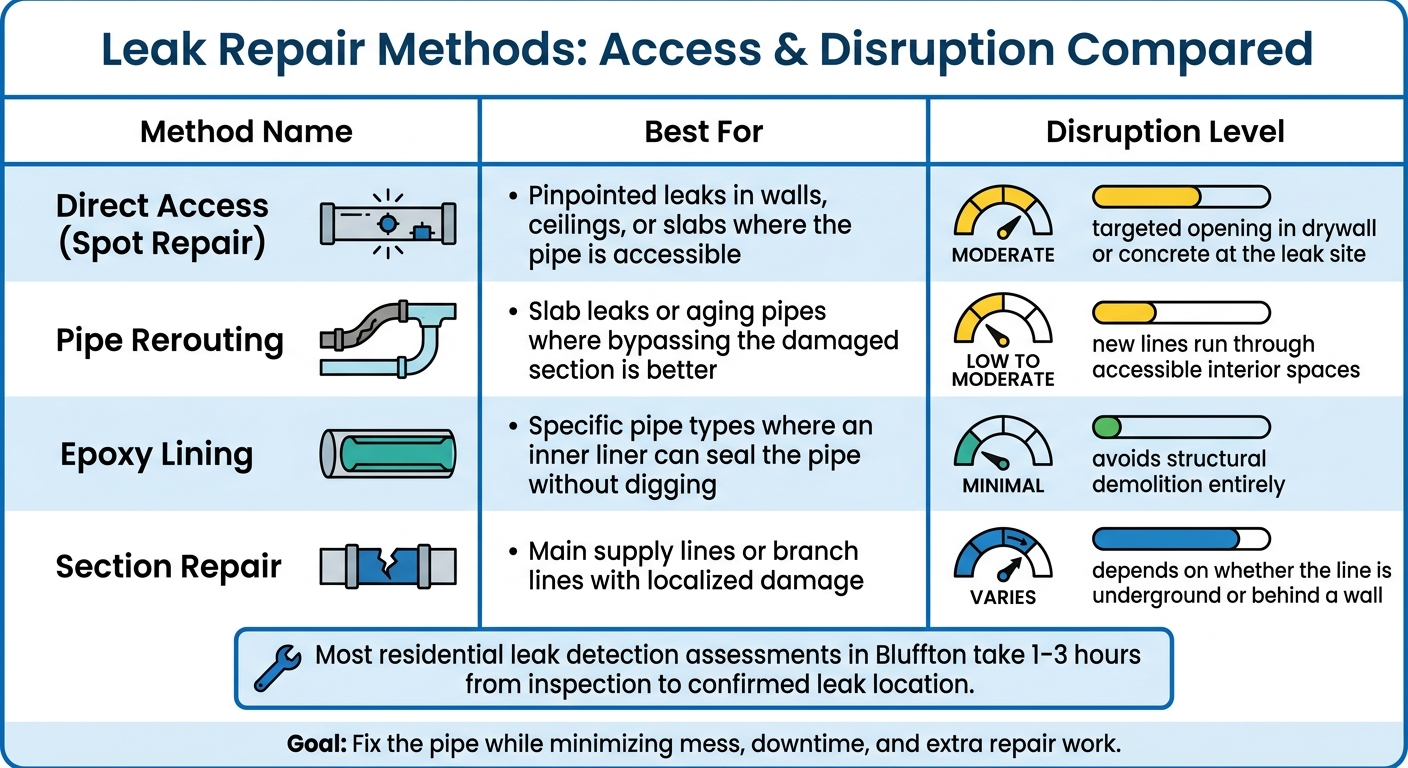
Leak Detection Repair Methods: Access vs. Disruption Compared
Once warning signs show up, the next step is simple: find the leak without tearing the place apart. That’s the whole point of professional leak detection. A plumber matches the tool to the leak type and location, then pinpoints the source before opening a wall or cutting into concrete.
Non-Invasive Tools Used to Find Leaks
Different leaks call for different tools. And the good news is that many of today’s methods avoid demolition at the start.
Acoustic listening devices pick up the sound of pressurized water escaping through concrete, soil, or finished walls. In many cases, they can narrow the source to within inches. Thermal imaging cameras look for temperature changes caused by moisture, which makes them useful for hot water slab leaks. Instead of breaking open the floor, a plumber may spot the problem as a warm area on the surface. Tracer gas testing uses hydrogen tracer gas or non-toxic smoke to find the exact exit point of a leak in supply or sewer lines. Moisture meters show how far water has moved through building materials and help trace that path back to the source.
What to Expect From Inspection to Repair in Bluffton
A leak detection and repair visit usually follows a clear step-by-step process. First, the plumber reviews the symptoms, like a high water bill, damp spots, or water where it shouldn’t be. Then they check the meter to see whether an active leak is present. After that, they inspect any fixtures, valves, and exposed piping they can reach. From there, they use tools like acoustic sensors, thermal imaging, and pressure tests to isolate the leak.
Most residential assessments in Bluffton take about one to three hours. That’s often enough time to move from suspicion to a confirmed leak location.
Once the leak is found, the repair method depends on access, pipe condition, and how much disruption the fix will cause. If water is spreading or the leak is causing active damage, that’s when an emergency plumber is the right call, especially for slab leaks.
Repair Methods Compared by Access and Disruption Level
The repair approach depends on where the leak sits and how much of the line is damaged.
| Repair Method | Best For | Disruption |
|---|---|---|
| Direct Access (Spot Repair) | Pinpointed leaks in walls, ceilings, or slabs where the pipe is accessible | Moderate – requires a targeted opening in drywall or concrete at the leak site |
| Pipe Rerouting | Slab leaks or aging pipes where it is better to bypass the damaged section | Low to Moderate – runs new lines through accessible interior spaces |
| Epoxy Lining | Specific pipe types where an inner liner that seals the pipe can be created without digging | Minimal – avoids structural demolition |
| Section Repair | Main supply lines or branch lines with localized damage | Varies – depends on whether the line is underground or behind a wall |
Some fixes are straightforward. Others take a bit more planning. A small leak behind a wall may only need a tight, targeted opening. A slab leak, on the other hand, may be better handled by rerouting the line instead of opening the floor. That tradeoff matters because the goal isn’t just to fix the pipe. It’s to fix it in a way that limits mess, downtime, and extra repair work.
After the repair, monitoring and shutoff systems can help catch the next leak sooner.
Whole-Home Protection and Leak Prevention
After a leak is found and fixed, the next step is making sure it doesn’t happen again.
Smart Shutoff Systems and Monitoring for Occupied, Seasonal, and Rental Properties
Smart shutoff systems can cut down damage when a home sits empty. As a plumber in Bluffton, SC, we see how seasonal homes and vacation rentals may go unoccupied long enough for a small leak to turn into a big mess before anyone sees it. These systems track water flow and can automatically shut off the supply when they detect unusual use, which helps limit damage when no one is around to spot a leak.
They can also send mobile alerts, so owners and property managers know right away if something changes. That’s a big deal for homes that aren’t checked every day.
Monitoring is helpful, but it works best alongside routine inspections. Alerts can tell you when something is wrong. Inspections can catch wear and weak points before they turn into a leak.
Maintenance Plans That Help Prevent Water Damage in Lowcountry Homes
Routine maintenance helps stop small plumbing issues from turning into expensive repairs. For Bluffton homes, that often means:
- Pressure checks
- Shutoff valve testing
- Exposed pipe inspections
- Sump pump evaluations
Insurance is another reason to stay on top of maintenance. Many homeowner policies do not cover "slow leaks" or "long-term seepage." Regular maintenance and documented professional inspections can help show that the damage was sudden and accidental if you ever need to file a claim. Those records can also help support a claim when water damage appears without warning.
Conclusion: Act Early to Reduce Damage, Cost, and Disruption
The goal is simple: stop small leaks before they lead to property damage. When warning signs show up, act fast. Prompt leak detection often costs less than structural repair, mold cleanup, flooring replacement, or foundation work. If those signs come back, schedule leak detection Bluffton SC before the damage spreads.
FAQs
How urgent is a hidden leak?
A hidden leak is urgent because it won’t fix itself. In most cases, it gets worse with time. If you leave it alone, it can waste water, drive up your utility bills, and damage your foundation, floors, and walls.
In Bluffton, high humidity and a high water table can speed up mold growth and rot behind walls and other surfaces. If you notice a sudden spike in your water bill, damp spots, or the sound of running water, schedule a professional assessment right away.
Can leak detection find a slab leak without digging?
Yes. A professional leak detection service can find a slab leak without tearing up your home or digging all over the place.
Plumbers use non-invasive tools like acoustic sensors and infrared cameras to locate the leak under your foundation with a high level of precision. That means if repairs are needed, they can focus on the exact problem area and keep disruption to a minimum.
What should I do before calling for leak repair?
If you suspect a water leak, shut off your home’s main water supply first. That stops the flow and helps limit damage. Then do what you can to contain any visible flooding with buckets, towels, or a wet/dry vacuum.
If water is near outlets, light fixtures, or major appliances, turn off the electricity at the service panel. Safety comes first here. After that, take photos and videos for insurance, then call a professional for a leak detection assessment.
