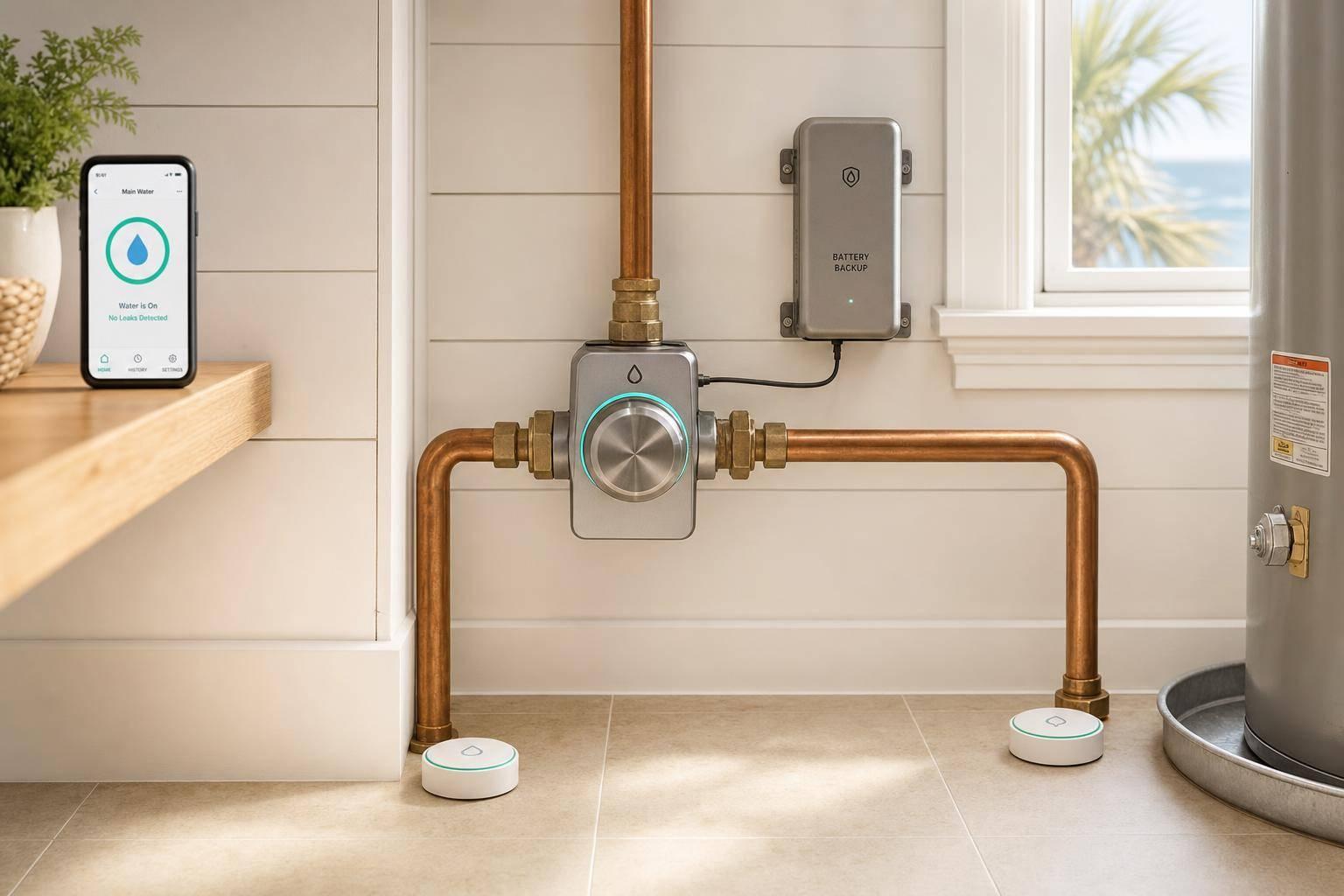
_A water leak can cost about _$12,000_ on average, and mold can start in 24 to 48 hours._* If you live in Charleston, Bluffton, or Palmetto Bluff, a smart shut-off system can help stop a burst pipe or slow leak before the damage spreads.
Here’s the short answer: Flo by Moen is a solid pick for simple app use and backup power, Phyn Plus stands out for leak-detection accuracy, StreamLabs Control fits homes where you want to avoid pipe work, and Leak Defense is built for large homes with more complex plumbing.
If I were narrowing it down fast, I’d focus on these points:
- Older homes: look for no-moving-part sensors and strong leak detection
- Vacation or rental homes: remote alerts and automatic shutoff matter most
- Storm outage areas: battery backup can make a big difference
- Large properties: make sure the system fits bigger lines and multi-zone plumbing
- Before buying: check for Wi-Fi, a 120V outlet, pipe size, and main-line access
Quick Comparison
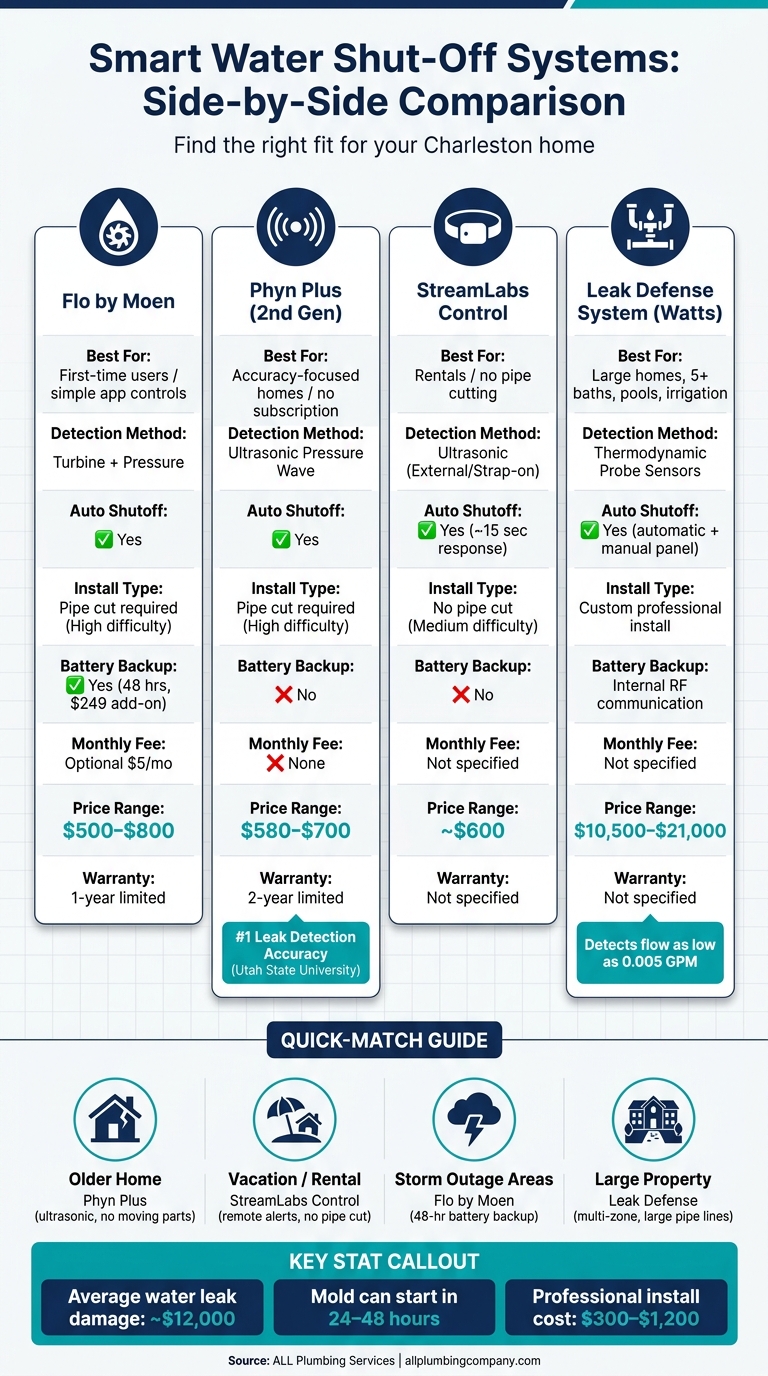
Smart Water Shut-Off Systems Compared: Flo by Moen vs Phyn Plus vs StreamLabs vs Leak Defense
| System | Best Fit | Main Detection Style | Auto Shutoff | Install Type | Price |
|---|---|---|---|---|---|
| Flo by Moen | Homes that want simple controls | Turbine + pressure | Yes | Pipe cut needed | $500–$800 |
| Phyn Plus (2nd Gen) | Homes focused on detection accuracy | Ultrasonic pressure wave | Yes | Pipe cut needed | $580–$700 |
| StreamLabs Control | Homes that want no pipe cutting | External ultrasonic | Yes | Easier install | About $600 |
| Leak Defense | Large homes with pools, irrigation, or 5+ baths | Probe-based sensing | Yes | Custom install | $10,500–$21,000 |
One more thing: install fit matters as much as brand name. In many Charleston homes, pipe age, valve access, sediment, and outage risk will shape the right choice more than app features alone.
sbb-itb-998eb83
How We Evaluated Smart Water Shut-Off Systems
We looked at six main factors: detection method, shutoff speed, app quality, pipe compatibility, installation requirements, and price. The goal was simple: see how these systems fit older homes, rentals, and second homes in the Charleston area.
We also weighed how each system holds up during power or internet outages. That matters more than many buyers think. A system with battery backup or local communication has a better shot at staying useful when the grid is down. With those points in mind, here’s how the three systems stack up.
Detection Methods, Shut-Off Performance, and App Controls
These systems don’t all spot leaks the same way.
Flo by Moen uses a mechanical turbine along with pressure monitoring. Phyn Plus relies on ultrasonic pressure wave sensors and has no moving parts. StreamLabs Control uses ultrasonic tech too, but with sensors that mount outside the pipe, which means no pipe cutting.
Shutoff speed is a big deal during a burst pipe. The best systems can stop water flow in 1 to 20 seconds after confirming a leak. We also looked at app features, including real-time alerts, remote manual shut-off, and water usage tracking. Phyn Plus can also spot slow leaks, like a toilet that keeps running for 12 minutes.
Performance comes first. Then it’s about how well the system fits the home and how hard it is to install.
Installation Fit for Charleston Properties
Most of these systems need the main water supply line to be cut, so hiring a plumber in Charleston, SC is the safest move. That’s especially true in older Charleston homes, where main-line access can be tight and supply lines may be showing their age.
A licensed plumber can verify the pipe size – most often 3/4-inch, 1-inch, or 1-1/4-inch – and make sure the work meets local code. For a standard home install, labor usually runs about $300–$500.
Placement matters too. The shut-off device should go downstream of any irrigation or fire-sprinkler branches to help avoid false alerts or unwanted shutoffs.
Here’s a quick side-by-side look:
| Product | Detection Method | Automatic Shutoff | Installation Difficulty | Best For | Price Range (USD) |
|---|---|---|---|---|---|
| Flo by Moen | Turbine & Pressure | Yes | High; pipe cut required | First-time users | $500 – $800 |
| Phyn Plus (2nd Gen) | Ultrasonic Pressure Wave | Yes | High; pipe cut required | Accuracy-focused homes | $580 – $700 |
| StreamLabs Control | Ultrasonic (External) | Yes | Medium; no pipe cut | No-cut installs | ~$600 |
Best Smart Water Shut-Off Systems for Charleston Homes
Here’s how the top systems stack up based on home type, pipe access, and how hard they are to install.
Flo by Moen Smart Water Monitor and Shutoff
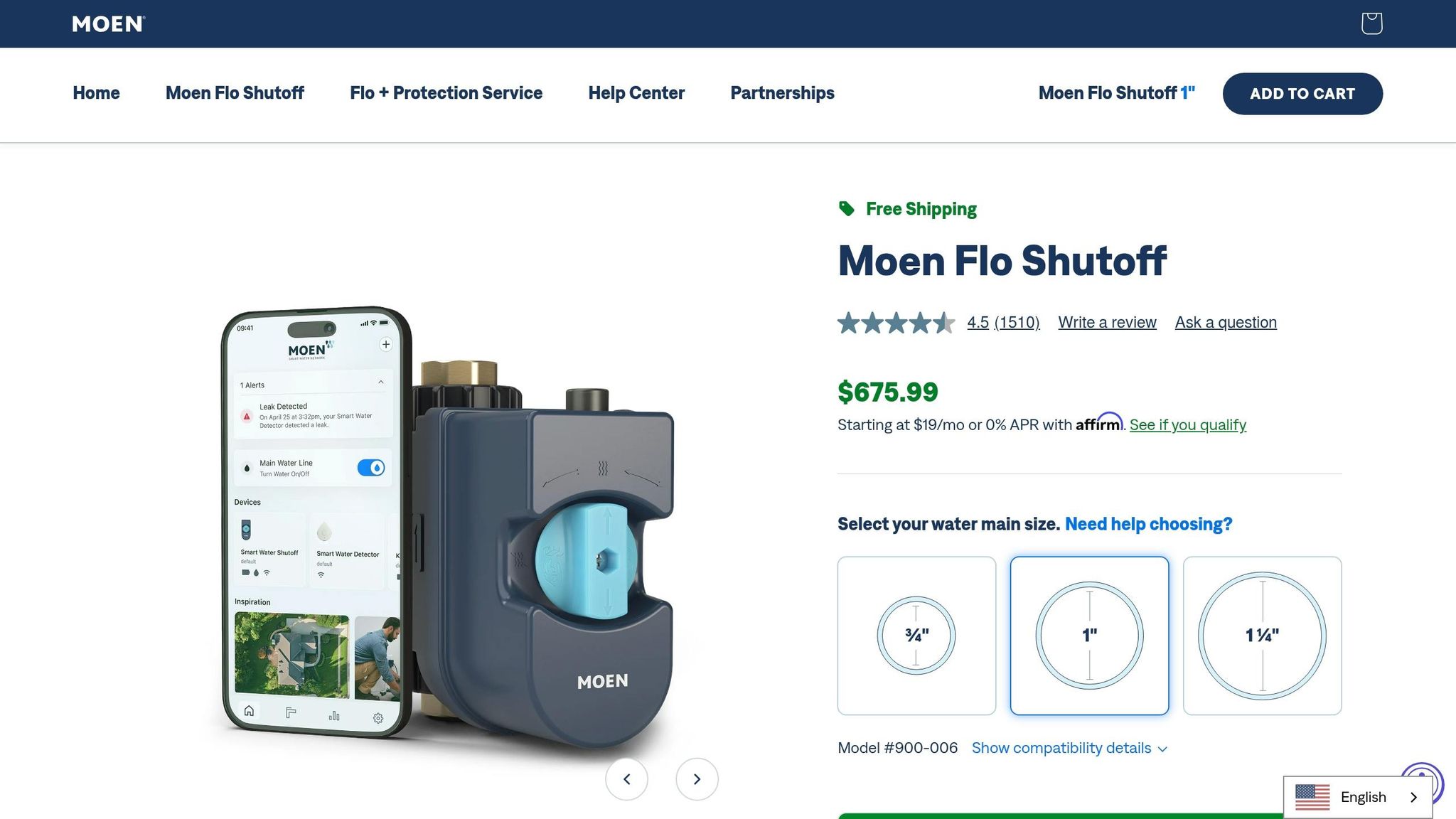
Flo by Moen is a good fit for older Charleston homes that need simple app controls, fast alerts, and backup power. Claims data shows fewer paid water-damage losses for Flo users. If power outages are a concern, the optional $249 battery backup can keep the valve working for up to 48 hours. It also offers automated phone-call alerts, which can be a lot harder to ignore than a standard app notification. Pricing starts at about $499 for the 3/4-inch model.
| Pros | Cons |
|---|---|
| Easy, beginner-friendly app | Plastic turbine can wear over time |
| Automated phone-call alerts for urgent leaks | Can miss some micro-leaks |
| Optional 48-hour battery backup | Optional $5/month for extra data features |
| Short 7-day learning phase | 1-year limited warranty |
| Works with 3 pipe sizes | Moving parts can be affected by sediment |
Phyn Plus Smart Water Assistant and Shutoff
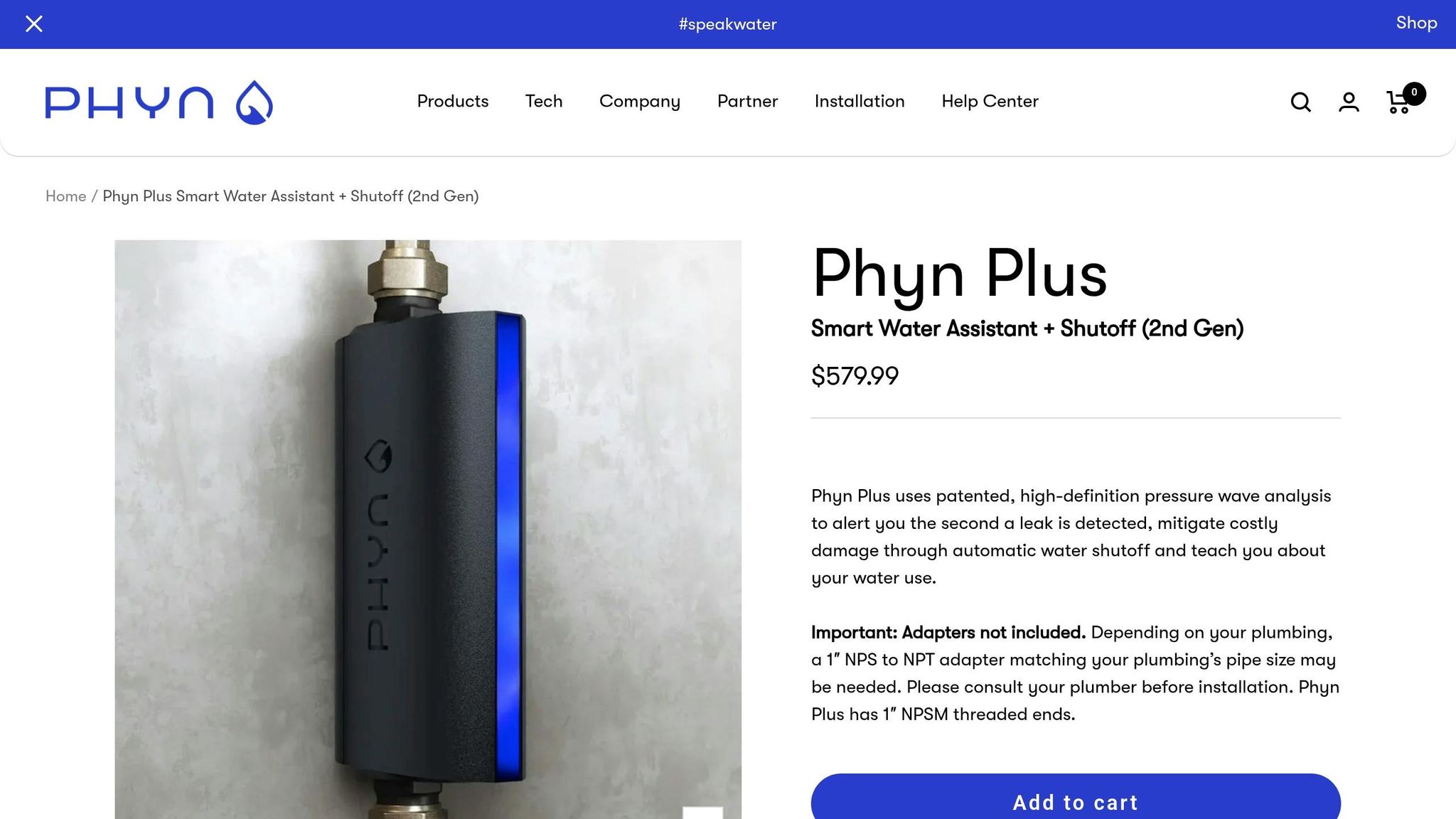
Phyn Plus works well for larger Charleston homes that want strong detection accuracy without a monthly fee. In an independent Utah State University study, it ranked #1 for leak detection accuracy. That said, it needs about 1,000 hours, or roughly 3 weeks, before alerts hit full accuracy. The unit costs around $580.
| Pros | Cons |
|---|---|
| Highest detection accuracy | About a 3-week learning phase |
| No moving parts | App interface is more complex |
| No monthly subscription fees | Push notifications only |
| 2-year limited warranty | No battery backup |
| Fits larger homes and part-time residences | Requires professional install for warranty |
StreamLabs Control and Leak Defense System
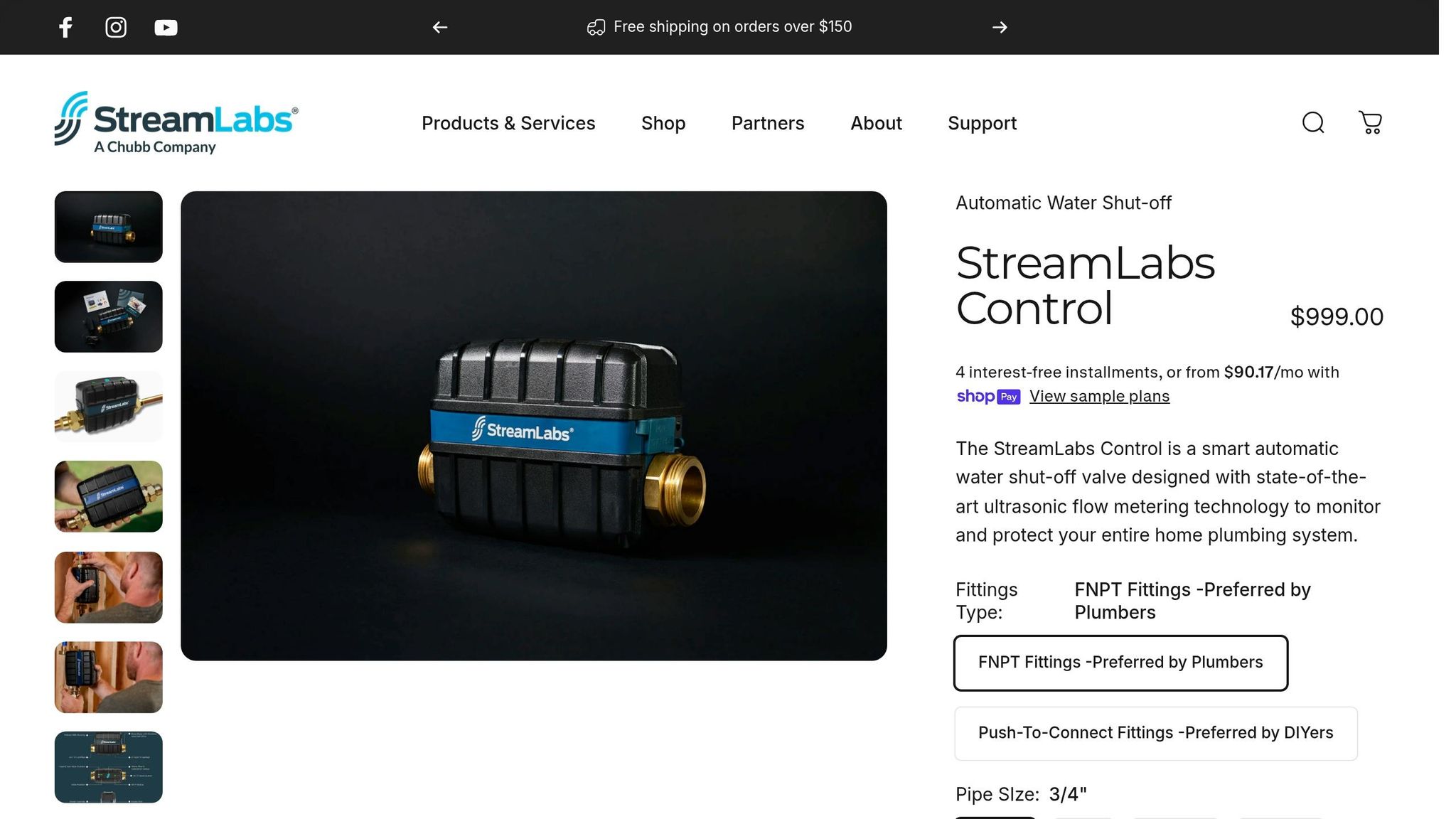
StreamLabs Control makes sense when you want a no-cut, renter-friendly setup. Leak Defense is built for larger custom systems with more complex water lines. Put simply, StreamLabs leans toward easier installs, while Leak Defense is meant for bigger, more complicated homes.
StreamLabs Control is less sensitive to micro-leaks than the other systems, but it avoids pipe modifications. That can matter a lot in homes where cutting into the plumbing isn’t ideal.
Leak Defense System from Watts is a premium, custom-installed option for large homes with 5 or more bathrooms, complex irrigation and pool lines, or main water lines from 1.25 inches to 4 inches. It uses thermodynamic probe sensors and can detect unusual water flow as low as 0.005 gallons per minute on 3/4-inch systems. Its internal components communicate by radio frequency. StreamLabs Control costs about $600, while Leak Defense installs usually range from $10,500 to $21,000.
| Detection Method | Shutoff Capability | Ideal Home Type | Installation Notes | Relative Cost | |
|---|---|---|---|---|---|
| StreamLabs Control | Ultrasonic (strap-on, external) | Automatic; about 15-second response | Rentals, DIY installs, no-cut requirements | Non-invasive installation | Moderate |
| Leak Defense System | Thermodynamic probe sensors | Automatic and manual via panel | Large homes, 5+ bathrooms, complex irrigation/pool lines | Custom-installed; professional installation required | Premium |
A licensed plumber can confirm pipe size, shutoff location, and install requirements before you buy. If you need professional assistance, a Charleston plumber can ensure your system is set up correctly. Then you can match the system to your pipe size, layout, and shutoff location.
How to Choose the Right System and Get It Installed
Matching Systems to Older Homes, Rentals, and Larger Properties
Now that the top systems are clear, the next step is matching one to your home’s plumbing and how the property is used. The best fit usually comes down to a few simple factors: the age of the home, access to the shut-off valve, Wi-Fi strength, and how often someone is there.
Older homes often have aging galvanized steel or polybutylene pipes. In those cases, high-sensitivity ultrasonic sensors should be near the top of your list. Full-time homes often do best with detailed water-use tracking and battery backup. Rentals and vacation homes usually need remote monitoring and automatic shutoff. And if you have a larger Lowcountry property with more involved water lines, look for a system built to handle higher flow rates and multiple zones.
Before you book installation, check two things at the main shut-off valve location:
- A strong Wi-Fi signal
- Access to a standard 120V outlet
If one of those is missing, fix it first. Otherwise, you may end up with a system that looks good on paper but doesn’t work well where it matters most.
Why Professional Installation Matters
In Charleston homes, professional installation is often the smart move. Older plumbing and tight valve access can make the fit tricky, and that’s where small mistakes turn into bigger problems. Wrong sizing or a poor fit can cause leaks.
Professional installation usually costs $500 to $1,200, depending on the valve model and your home’s plumbing layout.
ALL Plumbing Services can inspect your layout, confirm the pipe material, valve size, and shut-off location before installation. They can also check for hidden leaks first.
With the system shortlist in place, the final step is picking the setup that matches your plumbing layout and level of risk.
Conclusion: Picking the Right Smart Shut-Off System for Your Plumbing Setup
After comparing detection methods, shutoff speed, and install fit, one thing stands out: the right system depends on your plumbing setup, not just the name on the box. The best match comes down to your pipe layout and how often the home sits occupied or empty.
The biggest upsides are automatic shutoff and remote monitoring. That matters most for homes that sit empty for stretches of time. It can be especially useful in older Charleston homes, vacation properties, and larger plumbing systems with multiple zones.
Key Points to Remember Before You Buy
Use these final checks to narrow your options fast. Match the system to your pipe size, access points, and leak risk.
For older plumbing or systems prone to sediment, it makes sense to lean toward ultrasonic sensors with no moving parts. If your home tends to lose power during storms, put battery backup near the top of your list. And if the property runs on a private well, place the shutoff after the main filtration system so sediment stays away from the valve.
One step many homeowners miss: call your insurance provider before you buy. Some insurers offer discounts for homes with whole-home shutoff systems. Over time, that can help cover a meaningful share of the install cost.
Before installation, have the line inspected so the system starts with accurate leak data. ALL Plumbing Services works with Charleston and Bluffton homeowners and offers leak detection and repair services to spot hidden issues before a new system goes in. A pre-install leak check can catch problems early, when they’re still easier to deal with.
FAQs
Which system is best for an older Charleston home?
For older Charleston homes with aging plumbing, a whole-home smart shut-off system is usually the best fit. It watches water flow and pressure across the house and can shut the water off on its own if it spots unusual activity.
For added protection, place point-of-use leak sensors in high-risk spots, like older water heaters or plumbing connections. Professional installation by ALL Plumbing Services helps make sure the system works well with your home’s plumbing.
Can a smart shut-off system work during a power outage?
Yes – many smart water shut-off systems can still work during a power outage if they have battery backup.
For a Charleston home, look for a system with battery backup or a local fail-safe. Most also include a manual override, so you can operate the valve without power or a network connection.
Do I need a plumber to install a smart water shut-off system?
It depends on the system. Whole-home smart shut-off systems should be installed by a licensed plumber because they connect to the main water line and need precise, permanent connections.
By contrast, simple point-of-use sensors are often battery-powered and easy for homeowners to place on their own.
ALL Plumbing Services installs and calibrates advanced smart leak detection systems.